 how-to
How to Track Auto Body Repair Progress: 2026 Guide
Table of Contents
- How to Track Auto Body Repair Progress
- How to Check Auto Body Repair Status
- Collision Repair Stages: What Each Milestone Means
- Auto Body Repair Timeline: Setting Realistic Expectations
- Questions to Ask a Body Shop About Your Repair Progress
- Insurance Coordination and Repair Supplements
- Conclusion: Staying Informed and Getting Back on the Road
- Frequently Asked Questions
Last Updated: October 9, 2026
How to Track Auto Body Repair Progress
Learning how to track auto body repair progress keeps you in control after an accident.
A repair status is your vehicle's current stage in the collision repair process, knowing it means fewer surprises and faster answers.
At Rubio's Custom Repair inc, we have spent over 30 years helping drivers in Manteca and San Joaquin County understand where their vehicle stands.
The California Department of Insurance guide to auto claims explains how the claims process works alongside repairs.
How to Check Auto Body Repair Status
The fastest way to check auto body repair status is through your shop's customer portal or a quick phone call. Most facilities give you a repair identifier or claim number at drop-off; use it to log in or call.
Here are the main ways to check your vehicle status:
- Log into the shop's customer portal with your repair identifier
- Call the front desk and ask for your service advisor
- Reply to a text or email update with a question
- Visit the shop in person during business hours
- Ask your insurance adjuster for the latest notes on file
A good shop makes this easy. You should never have to chase down basic information about your own car.
Customer Portals and Mobile Access
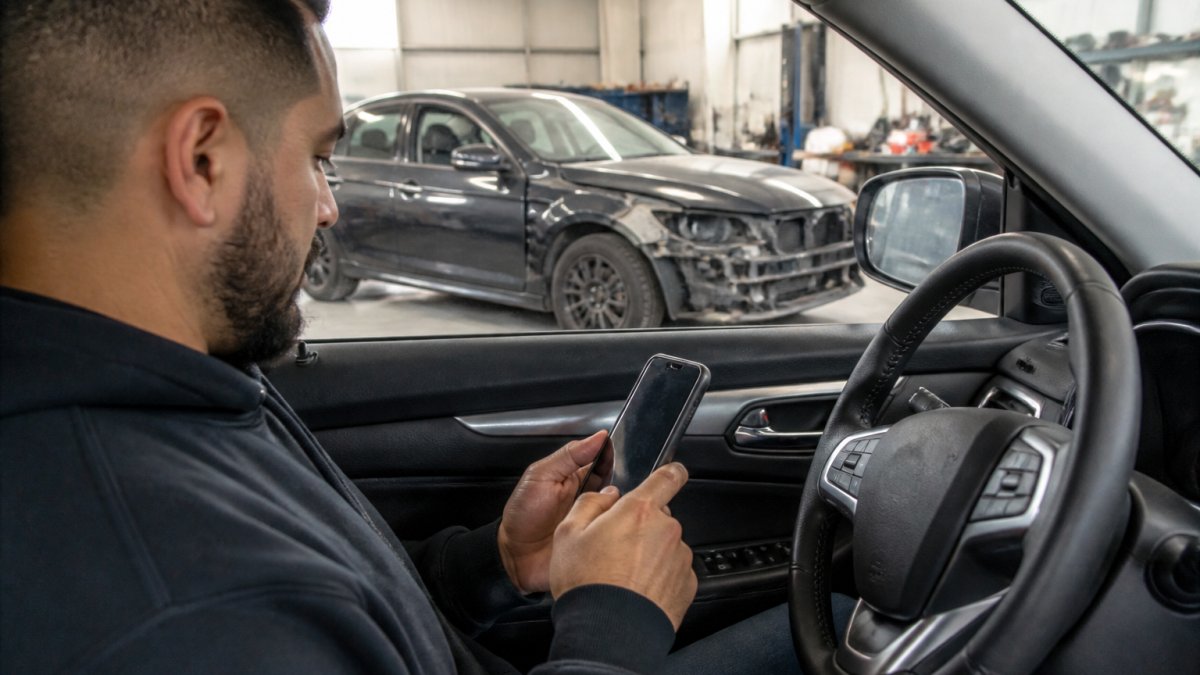
Customer portals put repair progress in your pocket, with photos, estimates, and stage updates on your phone.
A typical portal shows:
- A progress bar with your vehicle's current stage
- Photos of the damage and the repair
- Your repair estimate and any approved changes
Mobile access matters when you are at work or away from home, check in during a lunch break instead of playing phone tag.
Tracking Without an Online Portal
Not every shop offers a portal, but you can still track your repair without one.
Ask your service advisor these questions at drop-off:
- Who is my main point of contact?
- How often will you update me?
- Will I get text message updates or email notifications?
Set a standing check-in: a quick call every few days keeps you current. Keep your repair identifier handy.
Collision Repair Stages: What Each Milestone Means
Collision repair stages describe the steps your vehicle moves through from drop-off to pickup, helping you judge whether a repair is on track.
Most collision repair workflows follow this order:
| Stage | What Happens | What It Means for You |
|---|---|---|
| Drop-off and check-in | Vehicle inspected, paperwork started | Your repair officially begins |
| Estimate and authorization | Damage assessed, insurer approves | Work can start once approved |
| Parts ordering | Needed parts are located and ordered | Delays often happen here |
| Teardown and structural repair | Damaged panels removed, frame straightened | The heavy work begins |
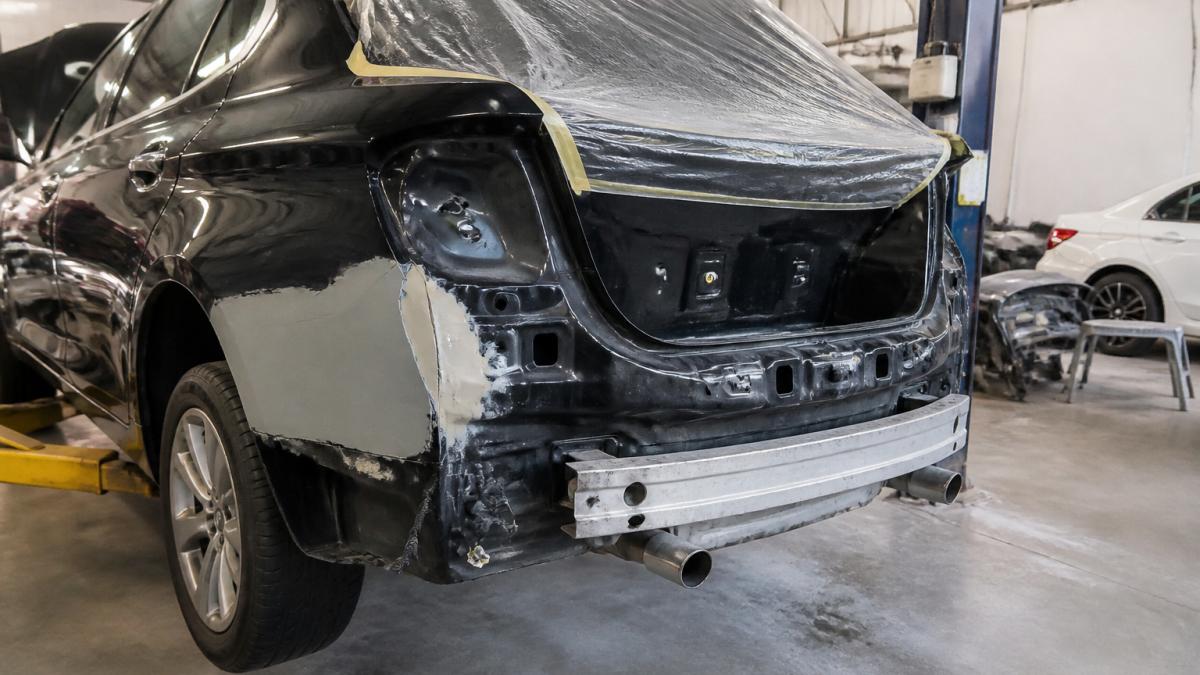
| Body and paint | Panels repaired, prepped, and painted | Your car starts looking whole again |
| Reassembly | Parts refitted, systems reconnected | The finish line is close |
| Quality inspection | Final checks on fit, finish, and safety | Any issues get fixed now |
| Vehicle pickup | Keys returned, payment settled | You get your car back |
Parts availability is the most common bottleneck. If a part is on backorder, the whole timeline shifts. Ask early whether your parts are in stock.
Auto Body Repair Timeline: Setting Realistic Expectations
A realistic auto body repair timeline depends on the damage, parts, and insurance approval. Minor cosmetic work can finish in days; major structural repairs can take weeks.
Here is what shapes your timeline:
- How bad the damage is
- Whether parts are in stock or on backorder
- How fast your insurer approves the estimate
The National Highway Traffic Safety Administration notes that structural damage can affect how your vehicle performs in a future crash. That is why shops take extra time on frame and structural work. Rushing it is never worth it.
What Can Delay Your Repair
Delays happen, and most are outside anyone's control. Knowing the common causes helps you plan.
- Parts backorders. A single unavailable part can stall the whole job.
- Supplemental estimates. Hidden damage found during teardown needs new approval.
- Insurance back-and-forth. Slow approvals push everything back.
How to Handle a Moving Completion Date
The harder skill is knowing what to do when the date you were given stops being true. Treat every completion date as an estimate tied to a stage, not a promise tied to a calendar.
When your date slips, work through it in this order:
- Ask which stage the vehicle is actually in. A date can only move for a reason, and the reason lives in a stage. "Waiting on parts" and "in paint" are very different problems.
- Ask what specifically is blocking the next stage. A backordered bracket, an unapproved supplement, and a full paint booth are three separate fixes with three separate timelines.
- Ask for the new date in writing. A text or portal message with the revised date gives you something to hold the shop to and something to show your insurer or rental company.
- Ask what you can do to unblock it. Sometimes the answer is a signature, a payment authorization, or a call to your adjuster. Sometimes it is nothing, and that is useful to know too.
- Ask how often you will be updated until it is done. A shop that resets the check-in cadence after a delay is managing you well.
The first date you hear is based on visible damage; the second is based on what teardown found. That gap is normal, what matters is whether the shop explains it.
Parts Backorders: The Most Common Single Cause
Parts availability is the most common bottleneck in collision repair, a backordered part shifts the whole timeline, no matter how fast the shop works.
Ask these questions the moment a delay is mentioned:
- Which specific part is holding up the job?
- Is it on backorder from the manufacturer, or just not yet ordered?
- Is there an approved aftermarket or recycled alternative your insurer will accept?
Some insurers will approve a used or aftermarket part to avoid a long backorder; some will not. The decision belongs to you and your insurer, so ask before anyone substitutes a part you did not agree to.
Rental Cars and Out-of-Pocket Time
If your policy includes rental reimbursement, it usually has a daily and total cap. A moving completion date can push you past that cap, and the overage is typically yours. Ask your adjuster early how many days your policy allows and whether the revised date fits inside it, request an extension before the rental runs out, not after.
Questions to Ask a Body Shop About Your Repair Progress
The right questions to ask a body shop keep you informed and protect your wallet. Ask them at drop-off and every check-in; clear answers signal a well-run shop.
Ask these questions:
- What stage is my vehicle in right now?
- Are all my parts in, or are any on backorder?
- Has my insurer approved the full estimate?
That last question matters: a trustworthy shop never pads a bill with work you did not approve, and you should see every change in writing first.
Insurance Coordination and Repair Supplements
Insurance coordination is how your shop and insurer agree on what gets fixed and who pays. A supplemental estimate covers damage found after the first estimate.
Here is how the pieces fit together:
- You file an insurance claim after the accident
- The shop writes an initial repair estimate
- Your insurer reviews and approves it
A good shop works directly with your insurer so you are not stuck in the middle. Rubio's Custom Repair inc coordinates with insurers and uses original parts for most repairs, which helps claims move smoothly.
Insurance Information Institute offers plain-language guidance on auto claims and what to expect from your insurer.
How Supplements Change Your Repair Stage
A supplement is not just a paperwork event, it is a stage event that can move your vehicle backward before it moves forward.
Here is the pattern to expect:
| What Happens | Stage Effect | What You Should See |
|---|---|---|
| Teardown finds hidden damage | Vehicle pauses at teardown | A supplement request appears in your portal or inbox |
| Shop submits supplement to insurer | Vehicle holds at teardown or parts ordering | Status may not change for a few days |
| Insurer reviews the supplement | Vehicle still holds | This is the most common silent delay |
| Insurer approves the supplement | Vehicle moves to parts ordering or body work | New parts may need to be ordered |
| Insurer partially approves or denies | Vehicle may hold again | Shop and insurer negotiate; you may be asked to decide |
When your status seems frozen, ask one question first: is a supplement pending? If yes, the delay is usually in the approval step, not the shop's work.
What to Do When a Supplement Is Pending
- Ask who is waiting on whom. Is the shop waiting on the insurer, or is the insurer waiting on the shop for more documentation?
- Ask for the supplement in writing. You are entitled to see what additional work is being requested and why.
- Ask what happens if the insurer denies part of it. Some denied items are safety-related and worth appealing. Some are cosmetic and optional. Know which is which before you decide.
Direct Repair Programs and What They Change
Many insurers maintain direct repair programs (DRPs), where the insurer and a network of shops agree in advance on rates, parts, and procedures. In-network shops often move supplements faster thanks to agreed pricing; outside the network, expect more back-and-forth and a possible gap between what the insurer pays and what the shop charges.
Ask at drop-off whether the shop is in your insurer's network. The answer tells you a lot about how smooth the supplement process will be.
Who Pays What
Your insurer pays what your policy covers, minus your deductible. A supplement does not change your deductible, it changes what the insurer pays on top of the original estimate. If a supplement is denied, the denied portion is typically yours to pay or decline. Ask for a written breakdown before authorizing work outside the approved estimate.
Conclusion: Staying Informed and Getting Back on the Road
Tracking your repair should never feel like a mystery. Use the portal, ask the right questions, and understand each stage so delays never catch you off guard.
When you want a shop that keeps you informed from drop-off to pickup, Rubio's Custom Repair inc is here.
Schedule an Appointment with Rubio's Custom Repair inc and get back on the road with confidence.
Frequently Asked Questions
How can I check the status of my auto body repair?
You can check auto body repair status through a customer portal, by calling the shop, or by using a repair tracking app if the shop offers one. Many shops send text message updates and email notifications with a progress bar. If you don't have online access, ask for a direct contact person and schedule regular check-ins. Always keep your repair order number handy for quick reference.
What are the stages of collision repair?
Collision repair stages typically include: vehicle drop-off and initial inspection, teardown and damage assessment, insurance approval and parts ordering, structural and body repairs, paint and refinishing, reassembly, quality inspection, and final vehicle pickup. Understanding these milestones helps you know what to expect and when to ask questions. Each stage may take different amounts of time depending on parts availability and repair complexity.
Why is my auto body repair taking longer than expected?
Delays in auto body repair can happen due to parts availability, additional hidden damage discovered during teardown, insurance supplemental estimate approvals, or high shop workload. The auto body repair timeline is often affected by backordered parts or delayed insurance responses. If your completion date changes, ask your shop for a revised estimate and the specific reason for the delay. Staying in regular communication helps you plan accordingly.
Can I track my car repair online?
Many body shops now offer online status checks through a customer portal or mobile app. You can view repair progress, see photos, and receive email or text updates. If your shop doesn't have an online portal, you can still track progress by calling or visiting in person. Ask your shop about their communication preferences and what tracking options they provide.