 how-to
How to Choose a Body Shop: 7 Steps for Quality Repairs
Table of Contents
- Step 1: Check Online Reviews and Word-of-Mouth Referrals
- Step 2: Verify Certifications and Technician Training
- Step 3: Questions to Ask Before Collision Repair
- Step 4: Understanding the Auto Body Shop Repair Estimate Process
- Step 5: Insurance Approved vs Independent Body Shops
- Step 6: Evaluate the Facility and Equipment
- Step 7: How to Choose a Body Shop You Can Trust
- Frequently Asked Questions
Last Updated: September 19, 2026
Step 1: Check Online Reviews and Word-of-Mouth Referrals
Start with these sources:
- Google and Yelp reviews, sorted by newest first
- Facebook recommendations from local groups
- Friends, family, and coworkers who've had collision repair done
- Your insurance agent, who hears which shops get complaints
Word-of-mouth still carries real weight for collision repair. Someone who's seen a shop's paint matching months after the job gives you better information than any star rating.
Step 2: Verify Certifications and Technician Training
Certifications tell you whether a shop's team has been tested on modern repair methods. Ask what technician certification the staff holds and whether it's current.
Here's what to look for:
- I-CAR training, the industry standard for collision repair education
- ASE certification for individual technicians
- Manufacturer-specific certifications for your vehicle's brand
- Ongoing training records, since vehicle materials change fast
Step 3: Questions to Ask Before Collision Repair
Knowing the right questions to ask before collision repair saves money and headaches. Ask these before handing over your keys:
- Are you BBB-rated, and can I see reviews?
- Will you use OEM parts or aftermarket parts?
- What does your repair warranty cover, and for how long?
- Do you work directly with my insurance company?
- How long will the repair take?
- Can I get a written estimate before work starts?
- What happens if you find hidden damage?
Warranty, Parts, and Guarantees
A repair warranty and service guarantee are your safety net. Ask what's covered, how long it lasts, and whether it's in writing.
Step 4: Understanding the Auto Body Shop Repair Estimate Process
The auto body shop repair estimate process should be transparent, but the day-one estimate is rarely final. Understanding why is the biggest thing most drivers miss.
How the Estimate Process Actually Flows
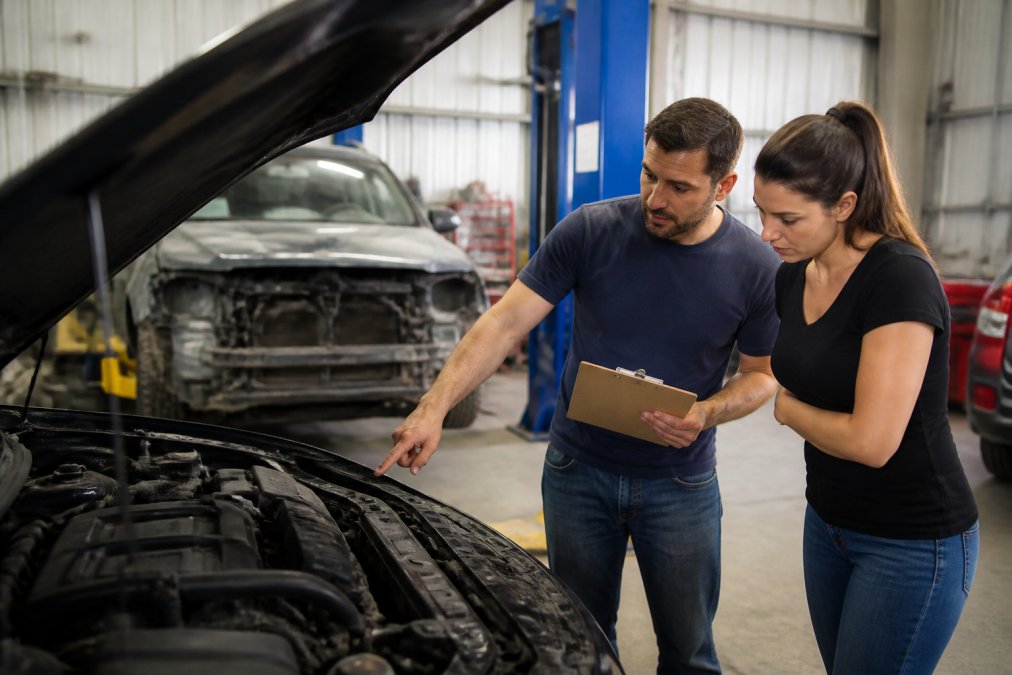
A good shop inspects your vehicle, documents the damage, and gives you a written estimate before work begins. Then the real process starts:
- Shop inspects the vehicle and photographs the damage
- Shop prepares a written estimate listing parts, labor operations, and materials
- You review and approve before repairs start
- Shop orders parts and schedules the work
- Shop tears down the vehicle and finds hidden damage
- Shop files a supplement, an updated estimate, with you and your insurer
- You approve the supplement before additional work proceeds
How to Read a Written Estimate
A written estimate should list every part, labor charge, and fee. Look for:
- Parts listed by name and part number, not just "miscellaneous" or "bumper assembly"
- Labor rates shown per hour, with the number of hours per operation (body, paint, frame, mechanical)
- Paint and materials charges broken out, refinish time and materials are billed separately
- Clear notes on OEM versus aftermarket parts, including whether used or recycled parts are specified
- A separate line for any diagnostic scan or recalibration required after the repair
OEM vs. Aftermarket Parts: What the Price Difference Buys
This is the trade-off most estimates bury. OEM parts come from your vehicle's manufacturer, engineered to the original crash and fitment specs. Aftermarket parts are made by third parties and vary widely in quality.
Why it matters:
- Fitment: Aftermarket panels often need more labor to align, which can eat the savings
- Corrosion protection: OEM panels typically come with factory-applied coatings; some aftermarket panels don't
- Crash performance: Bumper reinforcements and structural components are designed as part of a system, a non-OEM part may not deform the way the vehicle was engineered to
- Warranty: Some manufacturer warranties on the vehicle can be affected by non-OEM structural repairs
Questions to Ask About the Estimate
Before you sign, get clear answers to these:
- Is this estimate based on a teardown, or just a visual inspection?
- What parts are OEM, aftermarket, or recycled, and can you show me the part numbers?
- What's your labor rate, and is it the same rate my insurer will pay?
- If you find hidden damage, how do you handle the supplement?
- Are diagnostic scans and recalibrations included, or billed separately?
- Is there a storage or administrative fee if the repair takes longer than expected?
Write the answers down. A shop that dodges these questions is telling you something.
Step 5: Insurance Approved vs Independent Body Shops
The choice between insurance approved vs independent body shops is where consumer rights get tricky. Insurers often steer drivers toward a direct repair program (DRP), also called a preferred facility program. Understanding how that arrangement works is the difference between controlling your repair and handing it over.
What a Direct Repair Program Actually Is
A DRP is a contract between an insurer and a shop. In exchange for referred jobs, the shop agrees to the insurer's pricing rules, parts guidelines, and cycle-time targets, the mechanism behind both the speed advantage and the pressure you may feel.
Here's what that means for you:
- The shop is paid on the insurer's negotiated labor rate, which is often below the shop's posted rate
- Parts decisions may default to the insurer's parts policy (often aftermarket or recycled) unless you object
- The shop's incentive is to keep the claim moving, not necessarily to maximize your repair
Your Right to Choose Your Own Shop
Here's the point most drivers never hear: in most states, you have the legal right to choose your own auto body shop. Insurers must generally pay for a repair at a shop of your choosing, though they may negotiate the price and won't pay above what they consider reasonable for your area.
A few practical realities to understand:
- Your insurer can't force you to use a DRP shop, but it can decline to pay above its own rate ceiling at a non-network shop
- You may be responsible for the difference between the shop's rate and the insurer's approved rate in some states
- Some states require insurers to tell you about your right to choose, ask if you weren't told
| Factor | Insurance-Approved (DRP) Shop | Independent Shop |
|---|---|---|
| Who sets the rules | Insurer's DRP contract | You and the shop |
| Parts default | Insurer's parts policy | Negotiated with you |
| Claims handling | Shop files directly with insurer | You may coordinate |
| Speed | Often faster | Depends on shop and parts |
| Rate ceiling | Insurer's negotiated rate | Shop's posted rate |
| Repair control | Shared with insurer | Yours |
How to Push Back on Insurance Steering
Insurance steering happens when an insurer, adjuster, or call-center rep pushes you toward its network, sometimes implying you have no other option. You do. How to handle it:
- Ask for the claim number and the adjuster's name in writing (email is fine)
- State clearly: "I'm choosing my own shop. Please confirm in writing that you'll work with them."
- If they resist, ask them to cite the specific policy language or state rule they're relying on
- If you're still blocked, contact your state's department of insurance and file a complaint
Hidden Damage and Post-Repair Inspection
Hidden damage is what nobody sees until the bumper comes off: bent frame rails, damaged sensors, cracked mounts behind cosmetic panels. A good shop documents it with photos and files a supplement, an updated estimate sent to the insurer, before fixing it. If a shop skips the supplement and just "handles it," ask why.
- Paint match under daylight, not shop lights
- Panel gaps even on both sides
- Doors, hood, and trunk close smoothly
- Warning lights off, and any driver-assist systems (lane keep, blind spot, adaptive cruise) functioning
- No overspray on glass, trim, or wheel wells
Step 6: Evaluate the Facility and Equipment
Walk into the shop and look around. Facility cleanliness and diagnostic equipment tell you more than any brochure.
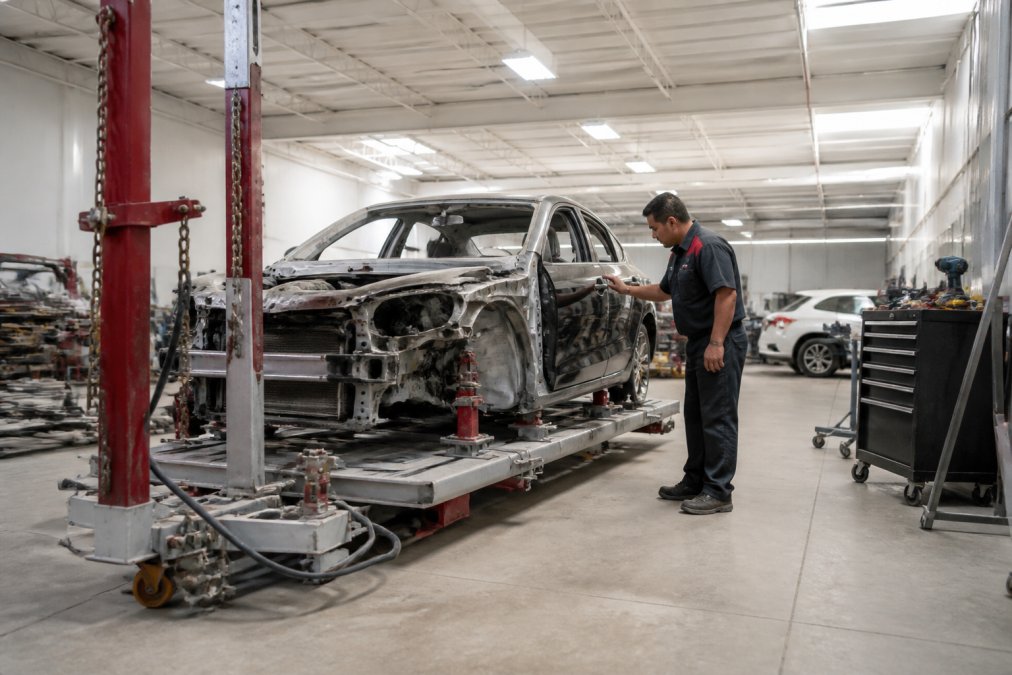
What to check:
- Is the shop organized, or is debris everywhere?
- Do you see diagnostic equipment and a frame alignment rack?
- Is there a dedicated paint booth for paint matching?
- Are vehicles stored safely, not crammed together?
Step 7: How to Choose a Body Shop You Can Trust
Choosing a body shop you trust comes down to evidence, not promises: reviews, certifications, written estimates, parts policy, and how the shop treated you during the estimate.
Trust these signals:
- Clear answers to every question
- A written estimate with no vague line items
- A real repair warranty in writing
- Proof of technician certification
- A clean shop with proper diagnostic equipment
Frequently Asked Questions
How do I know if a body shop is good?
Look for verified customer reviews, current technician certifications, and a written warranty on parts and labor. A good shop provides a detailed written estimate, uses OEM parts for most repairs, and explains the repair process in plain language. Ask whether they work with your insurance company and how they handle hidden damage discovered after teardown. A clean, organized facility with modern diagnostic equipment is another strong indicator of quality workmanship.
What are the red flags of a bad auto body shop?
Warning signs include refusing to provide a written estimate, pressuring you to sign a repair authorization before you understand the scope, using vague language about parts sourcing, and having no posted certifications or warranty policy. A shop that discourages you from asking questions, won't let you see the repair area, or promises an unusually fast turnaround time without inspecting your vehicle is worth avoiding. Trust your instincts if something feels off.
Do I have to use the body shop recommended by my insurance company?
No. In most states, you have the legal right to choose your own repair facility. Your insurer may recommend a preferred facility program, but you are not required to use it. If you choose an independent shop, the insurer must still cover reasonable repair costs according to your policy. Ask the shop whether they work directly with your insurance adjuster to reduce your coordination burden.
How should I prepare my vehicle for a collision repair estimate?
Remove personal belongings, take photos of all visible damage before the appointment, and gather your insurance claim information and any police report. Write down symptoms you notice, such as pulling to one side, unusual noises, or doors that don't close smoothly. These details help the shop identify hidden damage during the estimate. Ask whether the estimate is based on a visual inspection alone or includes teardown, which reveals structural issues that aren't visible from the outside.