 how-to
Can You Drive Your Car After a Minor Collision?
Table of Contents
- Can You Drive Your Car After a Minor Collision? The Quick Answer
- What to Check After a Minor Car Accident Before You Turn the Key
- Signs of Frame Damage After an Accident You Should Never Ignore
- How to Spot Dishonest Auto Shops Before You Hand Over Your Keys
- When It's Illegal or Unsafe to Drive a Damaged Car
- How to Document the Damage and Work With Your Insurance
- When to Call a Professional for a Post-Collision Inspection
- Conclusion
- Frequently Asked Questions
Last Updated: October 8, 2026
Can You Drive Your Car After a Minor Collision? The Quick Answer
You can usually drive car after a minor collision, but only after you check for fluid leaks, tire damage, and warning lights. If the steering pulls, the brakes feel soft, or a headlight is out, do not drive it. Skipping a two-minute inspection can turn a small fender-bender into a much bigger repair bill. This guide shows you exactly what to check, when driving is illegal, and how to handle the insurance side without getting burned.
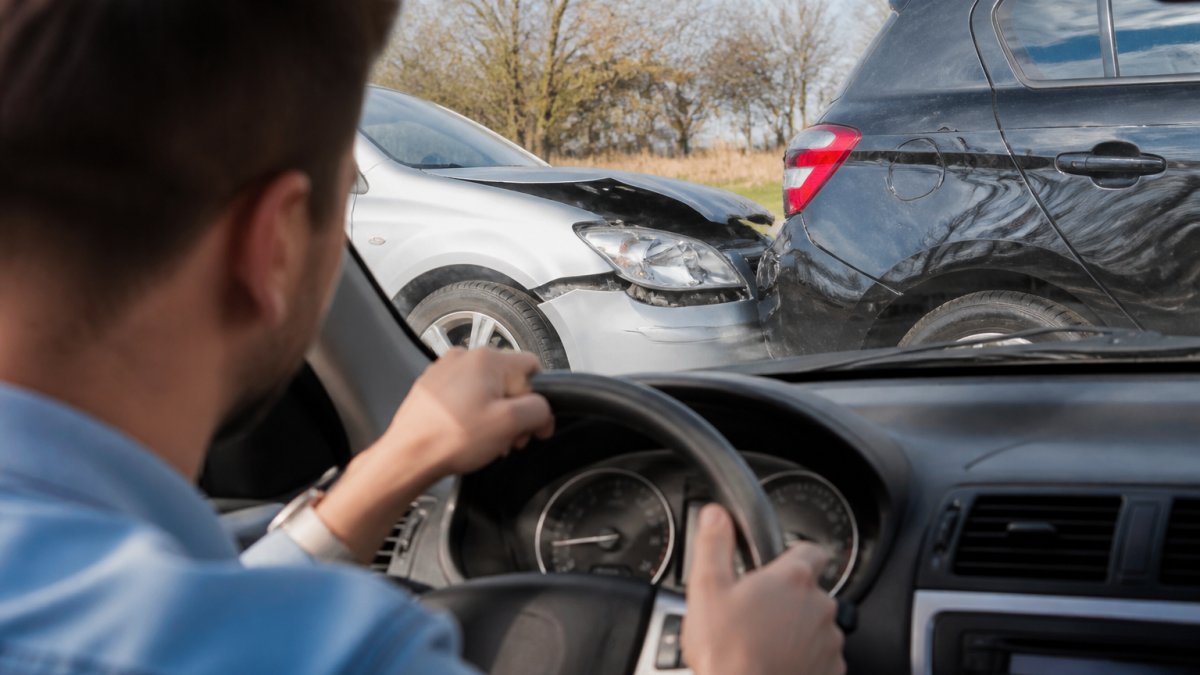
Here is the short version. A minor collision is one where the bumper, fender, or door takes the hit and the car still sits level on its wheels. Cosmetic scrapes rarely stop you from driving. Hidden damage does.
So before you turn the key, walk around the car. Then ask yourself three questions:
- Is anything leaking onto the pavement?
- Does the car sit level, or is one corner low?
- Do the lights, mirrors, and doors all still work?
If you answer "yes" to a leak, a low corner, or broken lights, park it and call a shop.
The National Highway Traffic Safety Administration tracks crash data and vehicle safety defects through NHTSA crash and safety data, and its guidance is clear: a vehicle that no longer handles or lights up correctly is not safe to operate. That is the standard we use at our shop every day.
What to Check After a Minor Car Accident Before You Turn the Key
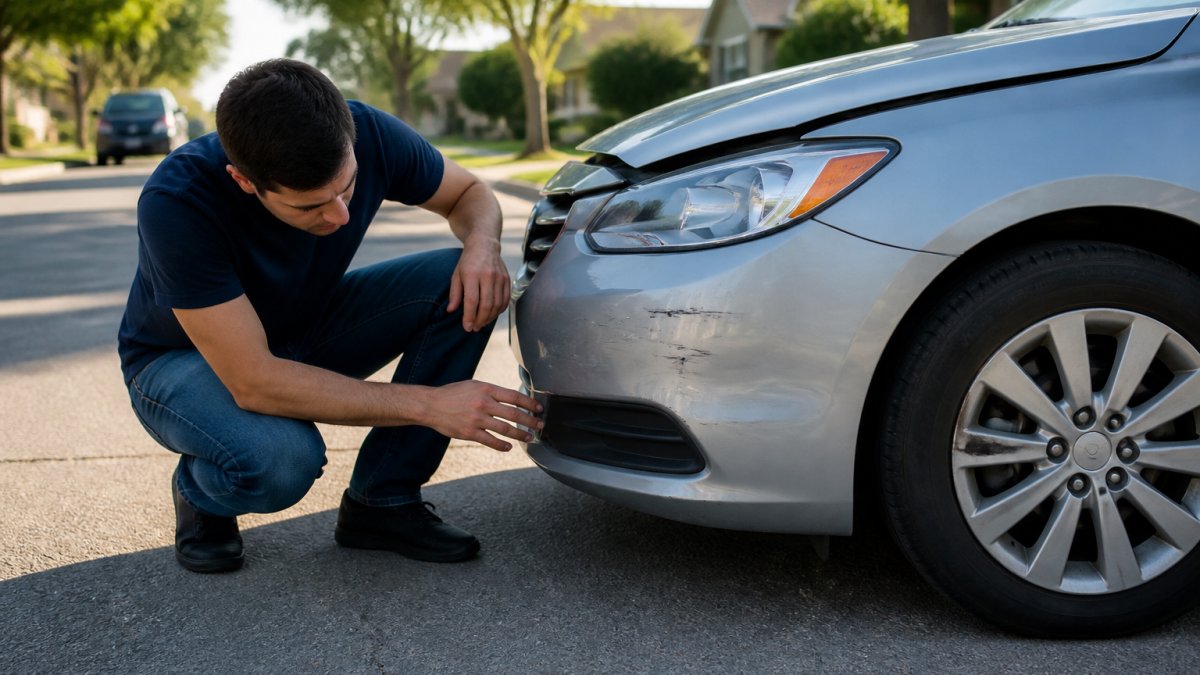
What to check after a minor car accident comes down to four things: fluids, tires, lights, and body panel gaps. Run this check before you drive anywhere, even if the damage looks cosmetic.
Start with the ground under the car. Fresh red, green, or amber fluid means trouble. Clear water from the AC is normal. Anything else is not.
Then check the tires. A hard hit can knock a wheel out of alignment or slice a sidewall. A tire that looks fine can still be losing air.
Fluid Leaks and Tire Condition
Look for puddles under the engine, transmission, and radiator. Even a slow drip can drain a system fast once you start driving.
Check each tire for:
- A visible bulge or cut in the sidewall
- A wheel that sits at a strange angle
- Low air pressure on one side only
A car that pulls hard to one side is not one you should drive car with a steering or suspension problem. Do not drive it far.
Lights, Mirrors, and Body Panel Gaps
Turn on every light: headlights, brake lights, turn signals, and hazards. If one is out, you are a hazard to other drivers.
Then look at the gaps between panels. Uneven gaps around the hood, doors, or trunk are a red flag. They often mean the body has shifted.
Signs of Frame Damage After an Accident You Should Never Ignore
Signs of frame damage after an accident include uneven panel gaps, a crooked stance, doors that stick, and a steering wheel that will not sit straight. Frame damage is the one thing you should never "drive around."
Here is the problem. Frame damage often hides behind a clean-looking bumper. The car looks fine in the driveway. Then it chews through tires or refuses to track straight at highway speed.
Watch for these clues:
- The car sits lower on one corner
- A door or trunk will not close smoothly
- The steering wheel is off-center when you drive straight
- You hear a new rattle or clunk over bumps
Any one of these means the structure may be bent. A bent frame is a safety issue, not a cosmetic one. It changes how the car absorbs a second impact.
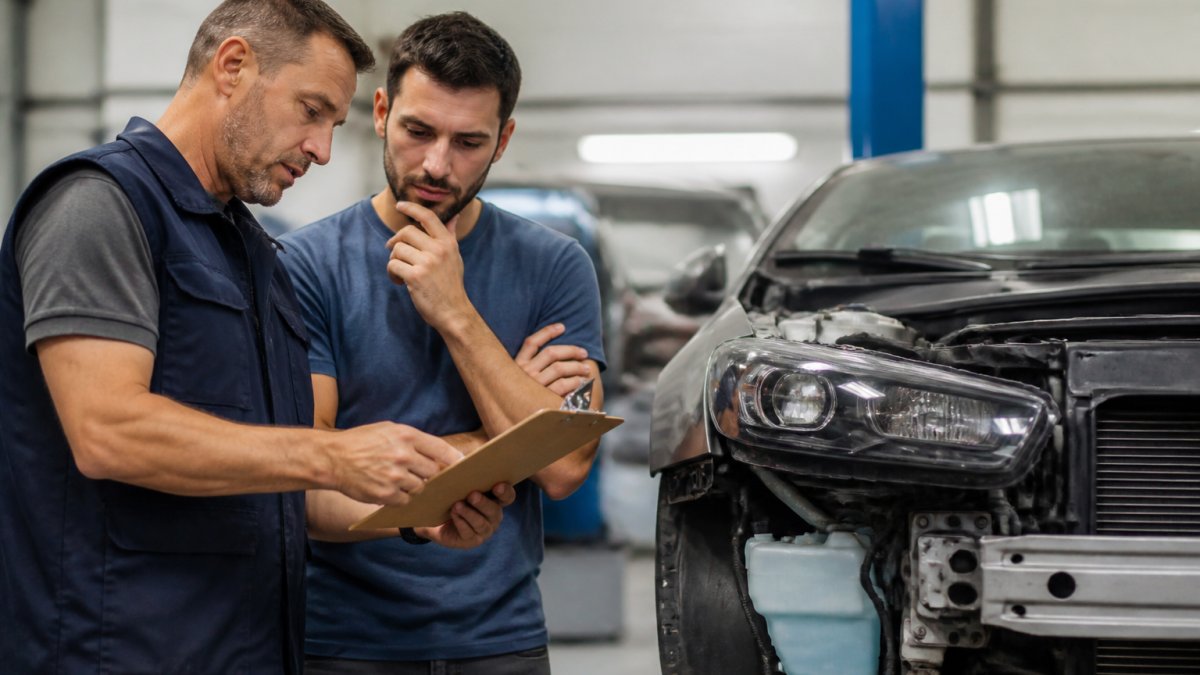
This is where a quick professional inspection pays for itself. A shop with the right measuring tools can confirm frame damage in minutes. Guessing is not worth the risk.
How to Spot Dishonest Auto Shops Before You Hand Over Your Keys
How to spot dishonest auto shops comes down to pressure and paperwork. A trustworthy shop explains the damage, shows you the parts, and puts the estimate in writing. A bad one rushes you and pads the bill.
We hear the same worry from customers all the time. "How do I know you won't tell me I need a bunch of repairs I don't actually need?" That is a fair question, and it is exactly why you should screen any shop before you commit.
Red flags to watch for:
- A shop that refuses to give a written estimate
- Pressure to sign before you understand the work
- No clear answer about whether parts are original or aftermarket
- A price that changes after you drop the car off
- No warranty offered on the repair or paint
Ask direct questions. A good shop welcomes them. Ask whether they use original parts, what brand of paint they spray, and what their guarantee covers. If the answers are vague, walk away.
When It's Illegal or Unsafe to Drive a Damaged Car
It is illegal to drive a damaged car when it fails basic safety rules: a broken light, a missing mirror, a dragging bumper, or a cracked windshield in your line of sight. It is unsafe when the car no longer steers, stops, or tracks correctly.
Every state sets its own equipment rules, and most require working lights, mirrors, and a clear view of the road. A car that fails those rules can get you stopped, ticketed, or worse.
Do not drive if:
- A headlight, brake light, or turn signal is out
- The windshield is cracked in the driver's view
- The bumper drags or a panel scrapes the tire
- The brakes feel soft or the pedal sinks
- The car overheats or a warning light stays on
If any of these apply, have the car towed. A tow costs far less than the damage from a blowout or a brake failure at speed.
How to Document the Damage and Work With Your Insurance
Document the damage with photos from every angle, then file your claim and let a shop handle the insurance back-and-forth. Good documentation protects you if the insurer disputes the estimate.
Take these photos before anything gets moved or repaired:
- Wide shots of the whole car from all four corners
- Close-ups of every scratch, dent, and crack
- A shot of the other car and its plate, if there was one
- The odometer and the scene, if it is safe to do so
Then call your insurer. Report the claim and get a claim number. Keep every message and receipt.
Here is where a good shop saves you headaches. Many shops work directly with insurers so you are not stuck in the middle. At Rubio's Custom Repair inc, we handle the coordination with your insurance company and use original parts for most repairs, backed by our guarantee to get you back on the road in no time.
| Situation | What to Do | Why It Matters |
|---|---|---|
| Light cosmetic damage | Photograph, then drive if safe | Protects your claim |
| Fluid leak or low corner | Park it, call a tow | Prevents bigger damage |
| Steering pulls or brakes soft | Do not drive, get it inspected | Safety risk |
| Insurance claim filed | Let the shop coordinate | Fewer delays for you |
When to Call a Professional for a Post-Collision Inspection
Call a professional for a post-collision inspection any time the damage is more than a scratch, the car drives differently, or you simply are not sure. A trained eye catches hidden damage that a driveway check cannot.
Even a low-speed hit can bend a bracket, crack a radiator support, or throw off the alignment. Those problems do not always show up right away. They surface weeks later as uneven tire wear or a nagging pull.
Get a professional inspection if:
- The car pulls, wanders, or vibrates
- A warning light came on after the hit
- You see uneven panel gaps or a crooked stance
- The airbags deployed, even slightly
- You plan to sell the car soon
A proper inspection uses measuring tools and a lift, not just a visual once-over. That is how a shop confirms whether the frame is straight and the steering is true.
If you are near Manteca and want a straight answer about your car, our team can take a look and tell you exactly what it needs. No guesswork, no padding.
Conclusion
A minor collision does not have to mean weeks without your car, but it does mean you should check before you drive. Fluids, tires, lights, and stance tell you most of what you need to know in two minutes. If anything looks off, get it inspected before you risk a bigger problem.
Rubio's Custom Repair inc has spent over 30 years helping drivers get back on the road with repairs they can trust. We use original parts for most repairs, spray premium PPG products, and stand behind every job with our guarantee. We also work directly with your insurance company so you are not stuck in the middle.
Schedule an Appointment with Rubio's Custom Repair inc and get a clear, honest answer about your car.
Frequently Asked Questions
Is it illegal to drive a car with minor accident damage?
It depends on the damage and your state's laws. If the collision broke a headlight, taillight, turn signal, or made the vehicle unsafe to operate, driving it on public roads can lead to a citation. Most states require working lights, an unobstructed windshield, and a vehicle that tracks and brakes correctly. If any of those are compromised, you should not drive the car until it is repaired or inspected by a professional.
How do I know if my car is safe to drive after a collision?
Walk around the vehicle and check for fluid leaks under the car, tire damage, bent wheels, misaligned panels, and broken lights. Sit inside and confirm the doors open and close smoothly, the seatbelts latch, and the dashboard has no new warning lights. If the steering pulls to one side, the car vibrates at speed, or you hear grinding or scraping, those are signs of frame damage after an accident and you should have it towed to a shop for inspection.
Does driving a damaged car void my insurance coverage?
Driving a damaged car does not automatically void your policy, but it can complicate your claim. If you continue driving after a collision and cause additional damage, your insurer may treat the new damage as a separate incident or deny the portion it considers preventable. Report the accident promptly, document the damage with photos, and ask your adjuster whether the vehicle is safe to drive before you get back on the road.
When should I call a professional for a post-accident inspection?
Call a professional any time you are unsure whether the car is safe, when airbags deployed, when there is visible frame or suspension damage, or when warning lights appear after the collision. Even a low-speed impact can bend a radiator support, knock a wheel out of alignment, or crack a hidden component. A shop with collision repair experience can put the car on a lift, measure the frame, and tell you what actually needs fixing.