 ultimate-guide
Insurance Claim Collision Repair: A Complete Guide
Table of Contents
- Understanding Your Insurance Claim Collision Repair Coverage
- Filing Your Initial Claim After an Accident
- Documenting the Accident Scene and Damage
- Insurance Adjuster vs Body Shop Estimate: What's the Difference
- How Long for Collision Repair: Timeline Expectations
- Vehicle Repair Process: From Disassembly to Refinishing
- Supplemental Insurance Claims for Auto Repair
- Your Right to Choose Your Own Repair Shop
- Frequently Asked Questions
Last Updated: September 19, 2026
Understanding Your Insurance Claim Collision Repair Coverage
Most policies cover repair costs after an accident, minus your deductible, but the details matter significantly.
Collision coverage protects you from impact damage, while comprehensive coverage handles theft and weather. Understanding this distinction shapes how your insurance claim collision repair process unfolds.
Coverage limits determine the maximum your insurer will pay; you're responsible for any excess. At Rubio's Custom Repair inc, we help clients understand what their coverage includes before moving forward with repairs.
Your policy outlines whether you can choose your own repair shop. This right varies by state and policy type, but many drivers have more freedom than they realize.
Filing Your Initial Claim After an Accident
Contact your insurance company within 24 to 48 hours of a collision. Have your policy number, accident details, and witness information ready.
When you call to file your insurance claim collision repair case, provide facts only: date, time, location, parties involved, and damage description. Don't speculate about fault or admit liability; adjusters evaluate fault based on evidence.
Your insurer will assign a claim number. Reference it in all future communications to track your collision repair insurance claim. Request the adjuster's contact information and confirm the inspection timeline.
Ask whether your policy requires pre-approval before repairs begin. Some insurers assess damage first; others allow you to proceed with a shop estimate. Understanding this prevents delays.
Documenting the Accident Scene and Damage
Documentation strengthens your collision repair insurance claim. Gather evidence at the scene to clarify your claim.
Photograph vehicle damage, the accident scene, road conditions, traffic signals, and debris from multiple angles. Include wide shots and close-ups. These images are critical if disputes arise about damage or fault.
Collect the other driver's name, phone, address, insurance info, license plate, and vehicle details. Get witness contact information. Request the police report number and file a copy with your claim.
Write your account of the accident while details are fresh, noting weather, visibility, speed, and contributing factors. This statement, combined with photographs and witness accounts, creates comprehensive documentation.
Insurance Adjuster vs Body Shop Estimate: What's the Difference
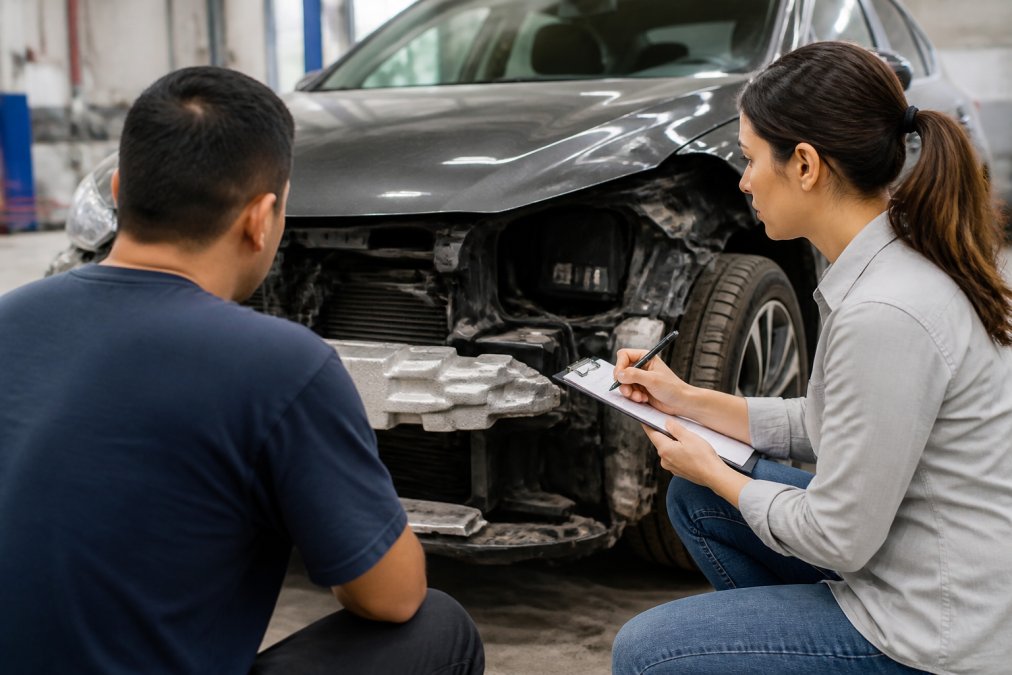
Insurance adjusters and auto body shops often estimate the same damage differently. Understanding why protects you from underfunding your collision repair.
How Long for Collision Repair: Timeline Expectations
The timeline for collision repair varies dramatically based on damage severity, parts availability, and shop capacity. Understanding realistic timeframes prevents frustration during the repair process.
Vehicle Repair Process: From Disassembly to Refinishing
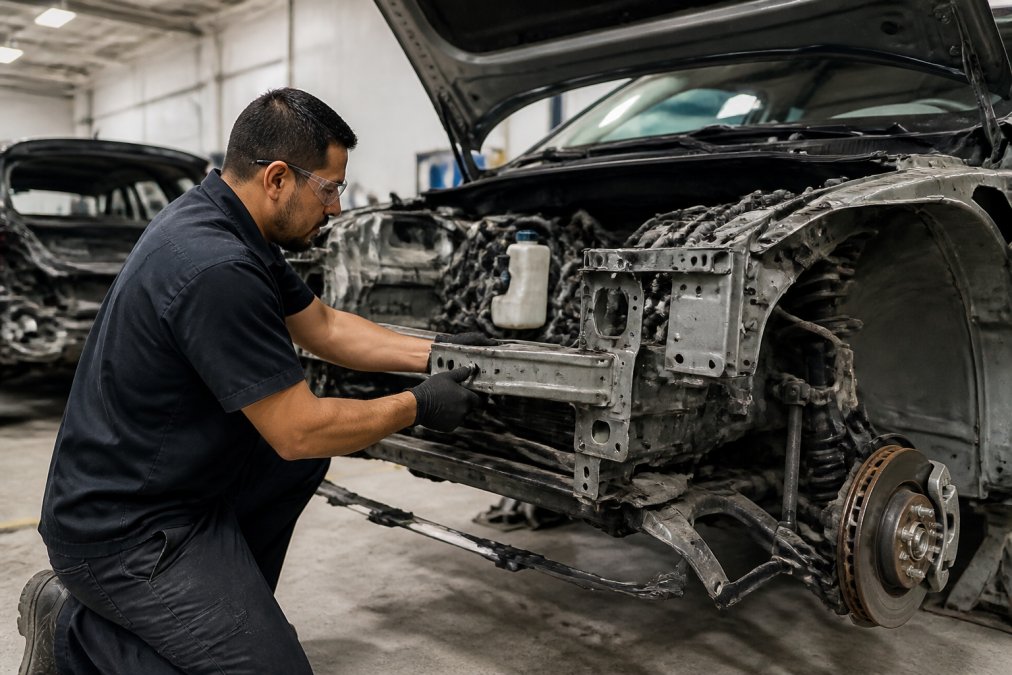
The actual collision repair process follows a structured sequence that begins the moment your vehicle arrives at the auto body shop. Understanding each phase helps you grasp why quality repairs take time.
Supplemental Insurance Claims for Auto Repair
A supplemental estimate is an additional claim filed when the auto body shop discovers damage not visible during the initial insurance adjuster inspection. This is a normal part of the collision repair insurance claim process, not a sign of incompetence or dishonesty.
Your Right to Choose Your Own Repair Shop
Many vehicle owners don't realize they have the right to choose their own collision repair facility. Insurance companies cannot require you to use their preferred shops, though they may pressure you to do so.
Frequently Asked Questions
What is the biggest mistake to avoid when filing a collision repair insurance claim?
The most common mistake is failing to document everything thoroughly. Take photos and videos of the accident scene, vehicle damage from multiple angles, and all accident details before the vehicle is moved. Keep copies of your police report, witness statements, and all correspondence with your insurance company. Many vehicle owners also rush to authorize repairs without understanding their coverage limits or deductible, which can lead to unexpected out-of-pocket expenses. Don't sign anything until you fully understand what your policy covers and what you're responsible for paying.
How long does collision repair typically take?
Repair timelines vary significantly based on damage severity, parts availability, and shop workload. Minor repairs like bumper replacements or small dent repairs may take 3-7 days. Moderate damage involving frame work, paint matching, and component replacement typically requires 1-3 weeks. Severe structural damage or total loss situations can extend to 4-8 weeks or longer. Parts availability is a major factor, OEM parts may take longer to arrive than aftermarket alternatives. Your auto body shop can provide a more accurate timeline after the insurance adjuster's inspection and your repair facility completes its damage assessment.
What is the difference between an insurance adjuster's estimate and a body shop estimate?
An insurance adjuster's estimate is prepared by the insurance company to determine their liability and payout amount. Adjusters follow insurance company guidelines and may use software to estimate repair costs. A body shop estimate comes from the actual repair facility that will perform the work and is based on hands-on inspection of the vehicle. Body shop estimates are often more detailed and accurate because technicians can identify hidden damage that becomes apparent during disassembly. If these estimates differ significantly, you can request a supplemental estimate to address the gap. Your repair facility should work directly with your insurance company to resolve any discrepancies and ensure proper authorization for all necessary work.
Am I required to use the insurance company's preferred repair shop?
No. You have the right to choose your own auto body shop for collision repairs, even if your insurance company has preferred provider networks. Your policy should cover repairs at any licensed, qualified repair facility. However, using a preferred shop may offer benefits like direct billing to insurance and streamlined claim processing. If you choose an independent shop, you may need to handle more coordination between the repair facility and your insurance company. Before selecting a shop, verify it has proper licensing, BBB ratings, experience with insurance claims, and uses quality parts and products. Discuss your coverage and authorization process with both your insurance company and your chosen repair facility to avoid delays.
What happens if my repair estimate increases after work begins?
During vehicle disassembly, technicians often discover additional damage not visible in the initial inspection. This is common in collision repair and leads to supplemental estimates. Your repair facility should document these findings with photos and provide a supplemental estimate to your insurance company for approval before proceeding. You are not responsible for paying these additional costs if they result from accident damage, your policy's collision coverage should apply. However, any damage unrelated to the accident (pre-existing wear, maintenance issues) may not be covered. Your insurance adjuster will review the supplemental claim and authorize payment if the damage is legitimate. This is why working with an experienced shop that communicates clearly with insurers is essential.
Will filing a collision claim increase my insurance premiums?
Filing a collision claim may increase your premiums, but the impact depends on your policy, your insurance company, and whether you were at fault. If you're found not at fault, many insurers won't raise your rates or may offer accident forgiveness programs. If you're at fault, expect a rate increase that typically lasts 3-5 years. The increase amount varies by insurer and your driving history. Some companies offer discounts for bundling policies, maintaining a clean driving record, or completing defensive driving courses. Before filing a claim, you can ask your insurance agent whether your policy includes accident forgiveness or what the estimated premium impact will be. For minor damage, you might compare the repair cost against your deductible and potential premium increase to decide if filing is worthwhile.
How does the insurance payout process work for auto body repairs?
After you file a claim, your insurance company assigns an adjuster who inspects the vehicle and prepares a damage estimate. Once approved, you authorize repairs at your chosen shop. The repair facility typically bills your insurance company directly (called direct repair), and you pay only your deductible. The insurer pays the approved repair costs minus your deductible. If supplemental damage is discovered during repairs, the shop submits a supplemental estimate for additional authorization and payment. Once repairs are complete and quality-assured, the insurer processes final payment. Some shops may require your deductible upfront, while others bill you after insurance pays. Confirm payment terms and authorization procedures with your repair shop and insurance company before work begins to avoid confusion or delays.
What is the difference between OEM and aftermarket parts for collision repairs?
OEM (Original Equipment Manufacturer) parts are made by your vehicle's manufacturer and match factory specifications exactly. Aftermarket parts are made by third-party manufacturers and are often less expensive but may vary in fit, finish, and durability. OEM parts typically cost 20-40% more but offer guaranteed compatibility and quality. Your insurance company may push for aftermarket parts to reduce claim costs, but you can often request OEM parts, especially for visible or structural components. For safety-critical parts like airbag sensors or frame components, OEM is generally preferred. Discuss your preference with your repair shop and insurance adjuster, many shops will use OEM parts if the claim allows it. Quality repair shops stand behind their work regardless of parts choice, so ask about warranties on both labor and materials.