 How-to
Honest Local Mechanic: How to Find One You Can Trust
Last Updated: November 4, 2026
Quick Summary
Start with referrals from people who own the same make and model, then check recent reviews, certifications, and complaint records. A good honest local mechanic explains every repair in plain language and gives a written estimate before any work begins.
- Ask friends and neighbors who drive the same make and model for referrals.
- Read several recent reviews, and watch for many posts in a short window.
- Check ASE certification and state attorney general and Better Business Bureau complaint records.
- Get a written estimate and confirm in writing that no extra work happens without approval.
- Treat pressure to approve repairs today and verbal-only estimates as warning signs.
Table of Contents
- Start With Referrals and Local Reviews
- Check Certifications, Affiliations and Complaint History
- Compare Independent Shops With Dealership Service Departments
- Questions to Ask a Mechanic Before Repair
- Red Flags of a Bad Mechanic
- How Long Does Collision Repair Take, and What Your Estimate Should Show
- Booking Your Visit to Rubio's Custom Repair inc
- Frequently Asked Questions
Start With Referrals and Local Reviews
Finding an honest local mechanic starts with the people you already trust. The best search begins with a few smart questions and a careful look at what others say.
A survey from ConsumerAffairs (2026) of 1,000 drivers looked at how much people trust their mechanics and what they do when they are unsure about a diagnosis. The results point to one clear lesson: drivers want a shop they can talk to honestly, and they want to hear the reasons behind every repair.
Where to Look for Recommendations
Start with people who have used a shop and had a good result. Ask friends, family, neighbors, and coworkers who drive similar vehicles. A referral from someone who has seen the work up close is worth more than a star rating.
- Ask people who own the same make and model as you
- Ask about the shop's communication, not just the price
- Ask whether the shop explained each repair before doing it
- Note any shop that comes up more than once
How to Verify Reviews and Recommendations
Online reviews help, but they need checking. Read several reviews, not just the top ones, and look at the dates and the details. A review that names the repair, the problem, and how the shop handled it tells you far more than a vague five-star rating.
Watch for a few warning signs:
- Many reviews posted in a short window
- Reviews that all sound the same
- No replies from the shop to negative feedback
- A large gap between the star rating and the written comments
Check local listings and the shop's own website too. A shop with a real address, a working phone number, and clear service information is easier to verify.
The article's advice on referrals and reviews, summarised for quick scanning:
| Source | What to look for | Red flag |
|---|---|---|
| Friends and neighbors | Owners of the same make and model | Only star ratings, no detail |
| Recent reviews | Several reviews, not just the top ones | Many posts in a short window |
| Shop responses | Replies to negative feedback | No replies from the shop |
| Star rating vs. comments | Written comments that match the rating | Large gap between rating and comments |
| Shop website and listings | Real address and working phone number | Vague or missing service information |
Check Certifications, Affiliations and Complaint History
Credentials are one of the easiest ways to screen a shop. The Federal Trade Commission advises consumers to check that certifications are current.
Look for these signs of professional standing:
- ASE certification for technicians, which shows tested knowledge of specific repair areas
- Approved repair facility status when your vehicle or insurer requires it
- Industry affiliations that come with a code of conduct or a complaint process
- Years in business at the same address and under the same name
Then check the complaint history. Your state attorney general's office and the Better Business Bureau keep records of consumer complaints. Step-by-step guide to checking a mechanic's certification walks you through confirming credentials before you hand over the keys.
Compare Independent Shops With Dealership Service Departments
Dealerships and independent shops each have strengths. A dealership service department typically works on one brand's vehicles, while an independent shop may serve many makes and models.
Neither choice is automatically the right one. Consider these questions:
- Does the shop have experience with your make and model?
- Does the shop explain repairs in plain language?
- Does the shop offer a written estimate before any work begins?
- Does the shop stand behind its work with a clear warranty?
Questions to Ask a Mechanic Before Repair
Good shops welcome good questions. The answers tell you how the shop communicates before you approve any work. Use these questions before you hand over your keys:
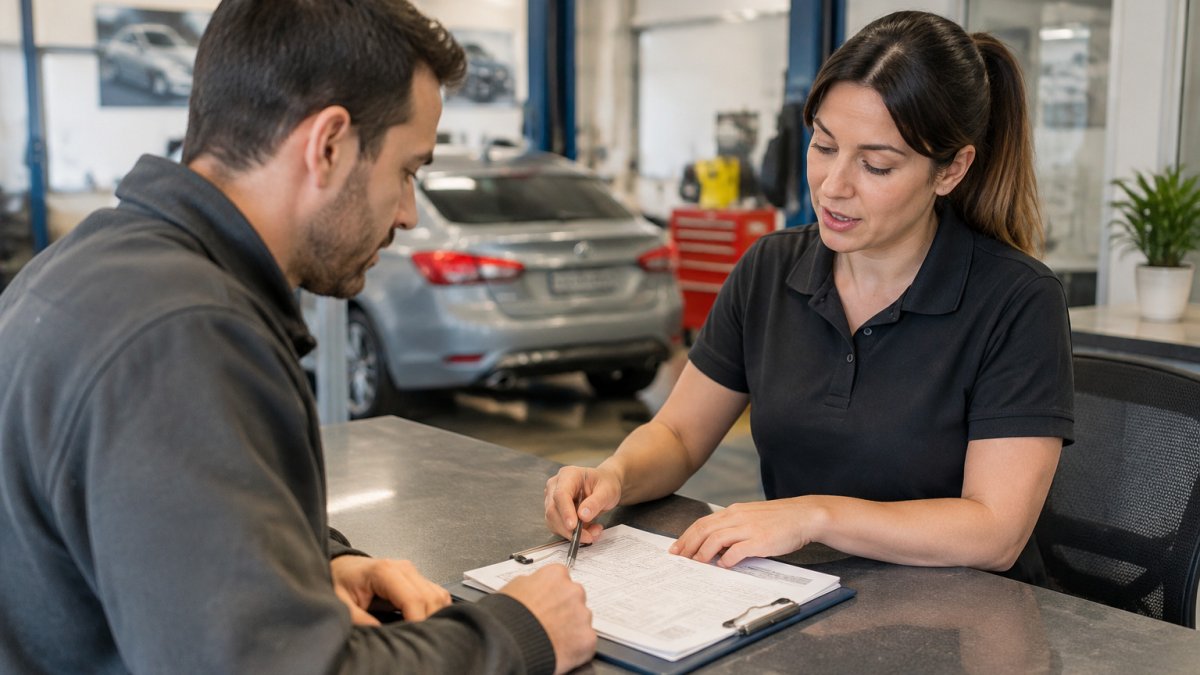
- What is the diagnostic fee, and is it applied to the repair if I authorize the work?
- Can you show me the problem on my vehicle or send a photo or video of the defect?
- Which repairs are required now for safety or reliability, and which can wait?
- Will you use new, rebuilt, or used replacement parts, and what is the warranty difference?
A shop that answers these questions clearly and without pressure is usually a good sign. A shop that pushes you to decide right away is worth a second look.
How to Read a Written Estimate Line by Line
A written estimate is only useful if you can compare it consistently. Most estimates break into the same buckets, and reviewing each one separately keeps you from comparing a total price against a different scope of work.
- Labor: Look for the hourly labor rate and the number of hours billed per operation. A lower rate with inflated hours is not a bargain. Ask whether the hours come from a published labor guide or an estimate.
- Parts: Note whether each part is new, rebuilt, remanufactured, or used, and whether it is original equipment or aftermarket. Ask for the part number on major items so you can compare like for like.
- Diagnostic fee: Confirm the amount up front and whether it is credited toward the repair if you authorize the work. A diagnostic fee that is never applied is a separate charge, not a deposit.
- Taxes and shop supplies: These should appear as separate lines with a stated rate or cap. A vague "shop supplies" charge with no ceiling deserves a question.
When you have two estimates for the same job, put them side by side and compare labor hours, part type, and warranty term rather than the bottom line alone. A higher total with new original equipment parts and a longer labor warranty may be the better value; a lower total with used parts and no warranty may not be.
Ask for the estimate in writing, keep a copy, and confirm in writing, text or email is fine, that no work beyond the estimate will be performed without your approval.
Red Flags of a Bad Mechanic
Some warning signs show up early. Watch for these before you agree to any repair:
- Vague or verbal-only estimates
- Pressure to approve work today with no time to think
- Refusal to show you the old or damaged parts, or to share photos of the defect
- Repairs that do not appear on the written estimate
If a shop shows any of these, do not feel bad about getting a second opinion. A fair shop will not object. What to do if a mechanic overcharges you explains the steps to take if you suspect you have been treated dishonestly.
When a Shop Recommends Unexpected Repairs
A recommendation you did not expect is not automatically a red flag, vehicles often reveal additional problems once they are on the lift. What matters is how the shop handles your questions. A calm, step-by-step process protects you either way:
- Pause authorization. Tell the shop in writing that you are not approving the additional work yet. A text or email creates a record of what you did and did not authorize.
- Ask for evidence. Request photos or video of the defect, the part number, and a written explanation of why the repair is needed now rather than later. Good shops document defects as a matter of routine.
- Separate safety from maintenance. Ask directly whether the vehicle is safe to drive without the repair. If it is, you have time to think.
- Get a second opinion for large or surprising recommendations. A second inspection fee is small compared with an unnecessary repair. Ask the second shop to inspect the same item, not to re-diagnose the whole vehicle.
- Put your decision in writing. Whether you approve or decline, confirm it in a text or email so the record is clear.
Watch out: a shop that refuses to release your vehicle, or that has already performed work you did not authorize, is a different situation from a shop that simply recommended more work. In that case, ask for the signed authorization on file and keep every message.
Your Rights and What to Do If the Bill Changes
Consumer protection rules generally require that you authorize repairs before they are performed and that the final bill match what you approved. Practices vary by state, and your state attorney general's office is the place to confirm the specific rules that apply to you.
If the final bill is higher than the estimate or includes work you did not approve:
- Ask for an itemized final invoice and compare it line by line with the estimate you signed.
- Point out any charge you did not authorize and ask the shop to remove it or explain it in writing.
- Keep copies of the estimate, the authorization, all messages, and the final invoice.
- If you cannot resolve it with the shop, file a complaint with your state attorney general's consumer protection division and, where relevant, your state's auto repair regulator or licensing board.
Documentation is the whole game. A written estimate, a written authorization, and a written record of any change give you a clear position if the bill and the agreement diverge.
How Long Does Collision Repair Take, and What Your Estimate Should Show
After a crash, the timeline matters as much as the price. Collision repair time depends on the damage, the parts, and any paint work that is needed.
Review the estimate with the same care you would use for any repair. It should list the damage clearly and explain each charge. Learn what labor, parts, paint, and diagnostics cover so you can review your collision estimate with confidence.
Booking Your Visit to Rubio's Custom Repair inc
Rubio's Custom Repair inc is a family-owned and operated auto body shop in Manteca, California, with over 30 years of experience in collision repair and paint.
Ready to talk through your repair? Schedule an appointment to get your vehicle assessed and an estimate you can review. For tips on tracking progress during your repair, read how to track auto body repair progress.
Frequently Asked Questions
How do I know if a mechanic is trustworthy?
Look for consistent positive reviews across several platforms, current certifications such as ASE credentials, and a shop that explains repairs in writing before any work begins. A trustworthy shop will show you the damaged parts, answer your questions without pressure, and provide a written estimate you can compare. Ask whether the shop offers a warranty on parts and labor, since a shop that stands behind its work will say so plainly. Checking with the Better Business Bureau can also show how complaints have been handled over time.
What are the red flags of a bad mechanic?
Watch for vague estimates, pressure to authorize repairs immediately, and requests for cash-only payment. Be cautious if a shop insists that unrelated repairs are urgent or refuses to return replaced parts when you ask. Another warning sign is a repair that was never fully explained or a quote that changes significantly after the car is in the shop. If you feel rushed or confused, ask for a written breakdown and consider a second opinion before approving the work.
Should I get a second opinion before authorizing expensive car repairs?
Yes, especially when a repair is costly or the diagnosis seems unusual. Request a written estimate from a second shop and compare the recommended repairs, parts and labor line by line. Differences in estimates are normal, but large gaps or different diagnoses are worth investigating. Ask each shop to explain why the repair is needed, and authorize only the work you understand and believe is necessary.
Is it better to go to a dealership or an independent local shop?
Dealerships offer manufacturer training and factory parts, which can matter for complex electronics or warranty work. Independent shops often provide lower labor rates and more direct access to the technician who will work on your car. Choose based on your vehicle's needs, the type of repair, and the shop's experience with your make and model.
Finding a trustworthy shop takes a little effort, but it pays off. Rubio's Custom Repair inc is here to earn your trust with clear communication and quality work.