 How-to
7 Ways to Find Reliable Auto Body Repair in Manteca
Last Updated: November 16, 2026
Quick Summary
To find reliable auto body repair in Manteca, screen shops against a written seven-point checklist instead of shopping by star rating. Confirm California Bureau of Automotive Repair registration, I-CAR or factory training, a written estimate, named parts, warranty terms, insurer coordination, and review patterns. Running that list takes about 20 minutes and eliminates most of the guesswork.
- Verify a shop's current California Bureau of Automotive Repair registration yourself before authorizing any work.
- Ask how many technicians hold current I-CAR or factory credentials, since certification is per-technician, not per-shop.
- Read the two- and three-star reviews first and look for repeated themes rather than the average score.
- Ask whether calibration of driver-assist cameras and sensors is included in the estimate and who performs it.
- In California you have the right to choose your own repair shop, not your insurer's recommendation.
Table of Contents
- Start With a Vetting Checklist, Not a Star Rating
- Verify Certifications, Registrations, and Insurance Coordination
- How to Read a Manteca Collision Repair Estimate Line by Line
- What Auto Body Repair Reviews in Manteca Actually Tell You
- Questions to Ask About Parts, Paint, and Repair Procedures
- Setting Realistic Collision Repair Turnaround Time Expectations
- Know Your Insurance Rights Before You Authorize Anything
- Book a Repair Consultation and Get Your Estimate in Writing
- Frequently Asked Questions
Start With a Vetting Checklist, Not a Star Rating
Learning how to find reliable auto body repair in Manteca starts with a simple shift: stop shopping by star rating and start interviewing shops against a written checklist.
Below, we'll show you exactly how to screen a shop in about 20 minutes, and the seven-point checklist we would use ourselves if we were the customer. For a fuller walkthrough, see our step-by-step guide on how to find honest auto body shops.
The Seven-Point Shop Checklist
- Confirm the shop holds a current California Bureau of Automotive Repair registration
- Ask whether technicians hold I-CAR or factory training credentials
- Get a written estimate before authorizing any work
- Ask which parts will be used: OEM, aftermarket, or salvage
- Confirm the warranty terms in writing, including paint coverage
That list takes minutes to run and eliminates most of the guesswork. The sections below unpack each point, plus the parts of the process most guides skip entirely.
Here is the seven-point checklist the article recommends running through before you hand over your keys.
| Checklist item | What to confirm |
|---|---|
| State registration | Current California Bureau of Automotive Repair registration |
| Technician credentials | I-CAR or factory training credentials |
| Written estimate | Get it before authorizing any work |
| Parts | OEM, aftermarket, or salvage identified |
| Warranty | Terms in writing, including paint coverage |
| Insurance | How the shop coordinates with your insurer |
| Reviews | Read for patterns, not just the average score |
Verify Certifications, Registrations, and Insurance Coordination
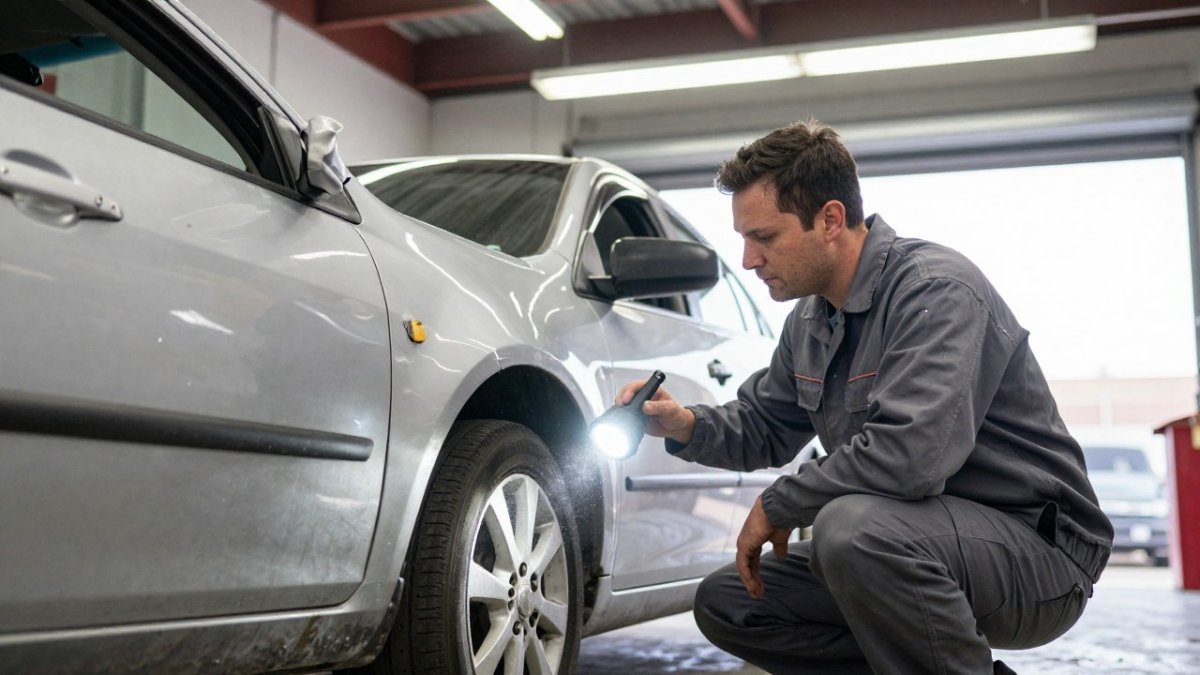
Three credentials separate a professional collision repair shop from a garage with a paint booth: state registration, technician certification, and documented insurer communication. Start with the California Bureau of Automotive Repair, which licenses and regulates auto repair shops statewide and publishes consumer guidance on written estimates. Ask to see the registration number, then verify it yourself.
Next, ask about technician training. I-CAR certification signals that a technician has completed industry-recognized collision repair training, and many automakers run their own factory certification programs. What most guides miss is that certification is per-technician, not per-shop, so ask how many of the crew hold current credentials.
Then there is insurance. A shop that works with insurers regularly should be able to document a damage assessment, submit photos, and request a supplemental estimate when hidden damage appears.
How to Read a Manteca Collision Repair Estimate Line by Line
A collision repair estimate is an itemized repair plan, not a single price.
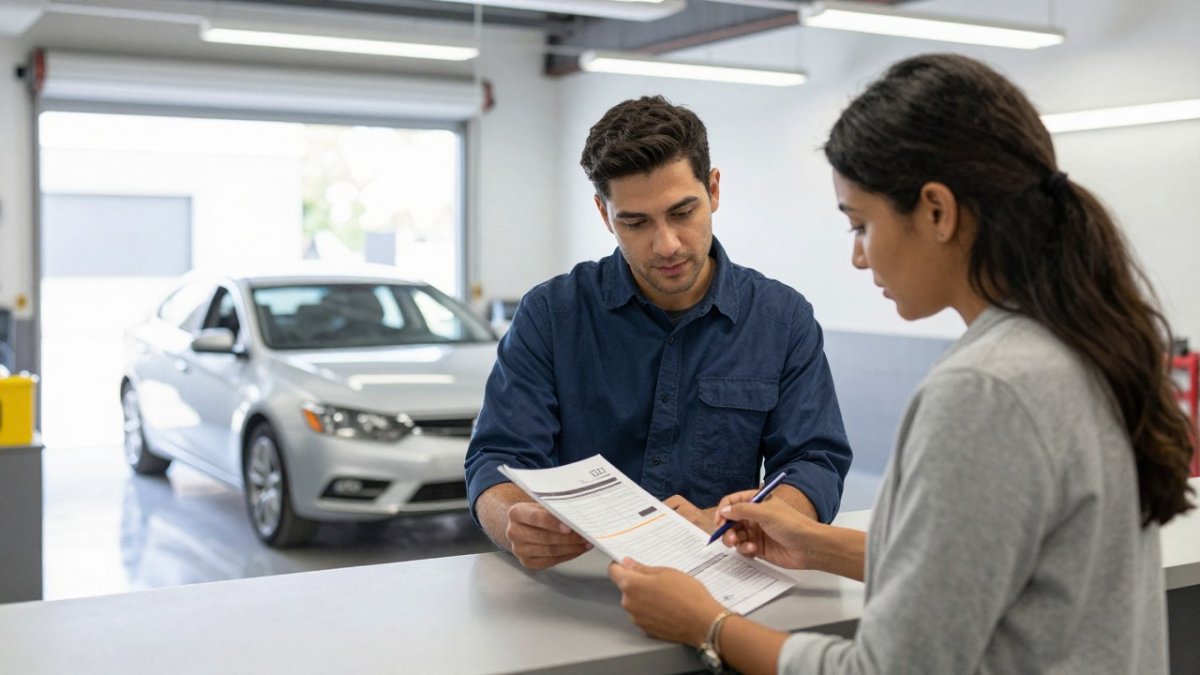
Read it in this order:
- Labor hours and rate. Confirm the body labor and paint labor hours are listed separately, with the hourly rate shown.
- Parts list. Every replacement part should be named, with OEM, aftermarket, or salvage identified.
- Paint and materials. Refinishing should appear as its own line, not folded into labor.
- Diagnostics. If your vehicle has driver-assist features, look for a scan or recalibration line.
- Supplemental language. A good estimate notes that hidden damage may require a supplemental estimate after teardown.
Two estimates are only comparable when you compare line by line. A cheaper total often means aftermarket parts or skipped recalibration. For a fuller breakdown of what belongs on the page, see our guide to what's included in collision estimates.
What Auto Body Repair Reviews in Manteca Actually Tell You
Auto body repair reviews in Manteca are most useful when you read them for patterns rather than scores.
Watch out: a shop with a perfect average and very few reviews tells you almost nothing.
The same logic applies to certifications and complaint history. A shop that answers criticism calmly and publicly is usually a shop that will answer your phone call the same way.
Questions to Ask About Parts, Paint, and Repair Procedures
The parts and paint conversation is where repair quality is actually decided, so ask about it directly and ask for documentation.
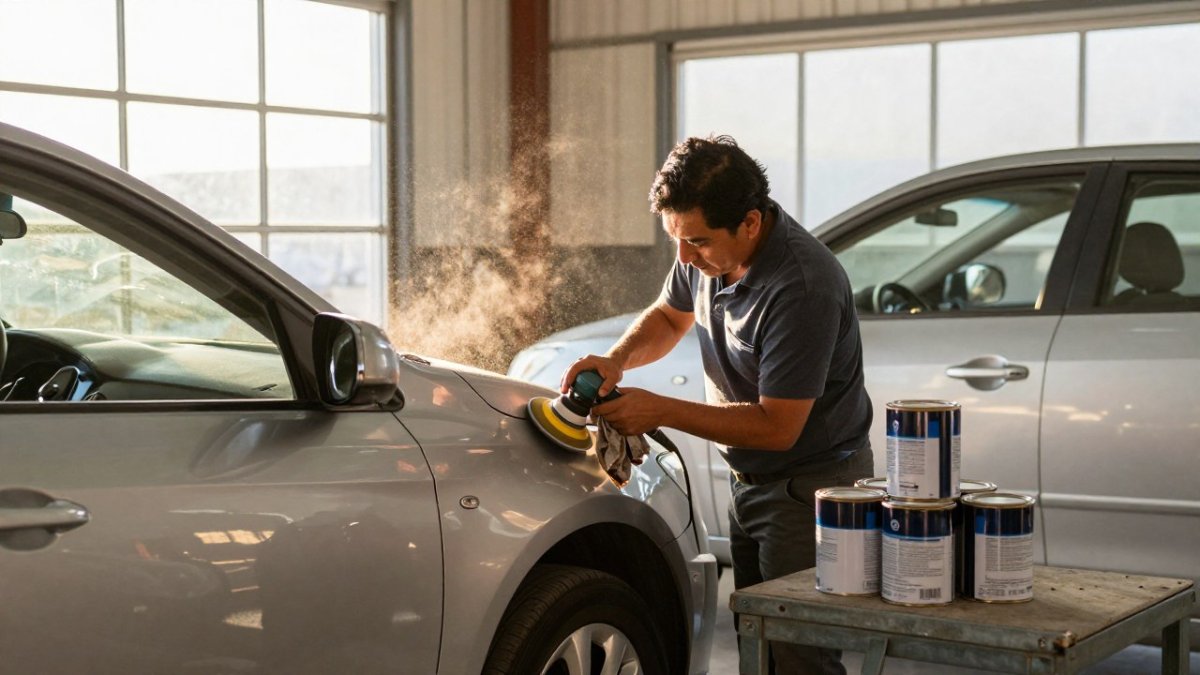
On paint, ask what product line the shop uses and how it matches color.
Parts and procedures are where the real questions live. Ask these, and ask the shop to show you the answer on paper:
- "Which parts are OEM, aftermarket, or salvage, and will you show me the parts before installation?" A shop that documents parts on the estimate and lets you inspect them before they go on the car is a shop that expects to be held to its word.
- "Will you follow the manufacturer's repair procedures for my vehicle?" Automakers publish position statements and repair procedures for their vehicles, and those documents specify things like sectioning locations, weld types, and adhesives. A shop that can name the procedure it will follow is a shop that has done the homework.
- "Does this repair require any calibration or safety system reset afterward?" If your vehicle has driver-assist features, forward collision warning, lane keeping, adaptive cruise, a backup camera, the cameras and sensors behind the bumper and windshield may need recalibration after a collision or a glass or bumper replacement. Calibration can be static (in a controlled shop setup) or dynamic (a road test under specified conditions), and the requirement depends on the vehicle and the repair. Ask whether calibration is included in the estimate, who performs it, and how you will receive proof it was completed.
- "How do you verify paint color match, and what happens if I am not satisfied?" Ask about the color-match process and the warranty on the finish, not just the paint brand.
- "What documentation will I receive when I pick up the vehicle?" Ask for the final invoice, the parts list, the calibration record if applicable, and the warranty terms in writing.
That last set of questions matters more than most drivers realize, because the paperwork is what protects you after you drive away. For deeper detail on why genuine components protect your vehicle, read our page on the benefits of using original car parts.
Watch out: a verbal assurance that "we always use good parts" is not documentation. If the estimate does not name the parts and the procedures, ask for a revised estimate that does before you authorize the repair.
Setting Realistic Collision Repair Turnaround Time Expectations
Collision repair turnaround time depends on damage severity, parts availability, insurer authorization speed, and whether hidden damage appears after teardown.
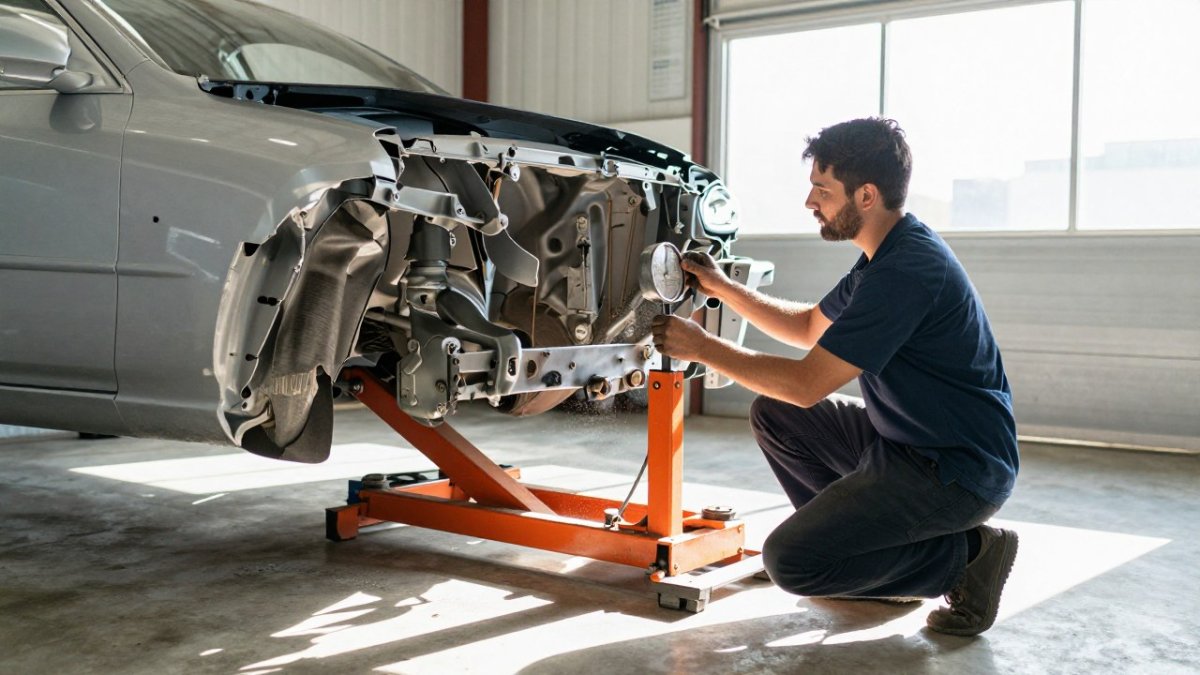
Ask the shop to walk you through the repair process stage by stage: teardown and damage assessment, parts ordering, structural and frame repair, bodywork, paint and refinishing, reassembly, and a final safety inspection.
A shop that gives you a confident one-week promise on a heavy hit without seeing the structure is guessing. Our full guide to auto body repair time estimates breaks down what drives each stage.
Know Your Insurance Rights Before You Authorize Anything
You have the right to choose your own repair shop, and in California that choice belongs to you, not your insurer.
Here is how the insurance side actually works, step by step, so you can tell whether a shop is managing the claim or just waiting on it.
- The claim and the initial estimate. After you file a claim, the insurer typically sends an adjuster or asks for photos to write its own estimate. That estimate is the insurer's view of the repair, not the final word. A shop that writes its own itemized estimate and compares it to the insurer's is one approach worth looking for.
- Approval and the authorization to repair. The insurer approves a scope of work, and you authorize the shop to begin. Read the authorization: it should match the written estimate, name the parts, and state what happens if hidden damage is found.
- Supplements. Collision damage is often worse under the sheet metal. A supplement is a documented request for additional work, additional parts, labor, or paint, after teardown reveals more damage. Ask the shop directly: "Who writes the supplement, who submits it, and how long does approval usually take?" Handling supplements in-house can help keep a repair moving, while being sent elsewhere can add time.
- Labor rate surveys. Insurers report labor rates they pay in a region, and the California Department of Insurance makes labor rate survey information available to the public. Those surveys are useful context when two estimates show very different hourly rates, they tell you what is typical in the area rather than what one shop decided to charge.
- Parts and the estimate. The insurer's estimate may specify aftermarket or salvage parts to control cost. You are entitled to know what is going onto your vehicle, and you can ask the shop to document the parts choice and any warranty difference before work begins.
Before you sign a repair authorization, confirm four things: the estimate is written and itemized; you understand how a supplemental estimate will be handled; the warranty terms are documented in writing; and you know who communicates with the adjuster. Never authorize open-ended work on a verbal promise.
Watch out: an insurer recommendation can be perfectly legitimate, but it can also steer you toward a shop chosen for cost and cycle time rather than repair quality.
Book a Repair Consultation and Get Your Estimate in Writing
The final step is the one that protects you most: get the estimate in writing before anyone touches your vehicle.
If you are searching for auto body repair near me in Manteca or anywhere in San Joaquin County, start with the checklist above, then bring your vehicle in and ask your questions face to face. You can also get a collision repair quote in Manteca to start your free estimate.
Finding a shop that will show you the parts, explain the estimate, and stand behind the paint should not feel like a gamble.
Frequently Asked Questions
How do I know if an auto body shop is actually good?
Look past the star rating. Check that the shop holds current registrations and technician certifications such as I-CAR, ask whether it uses OEM or aftermarket parts, and request a written estimate that itemizes labor, parts, and paint separately. Read the written reviews for details about communication and timelines, not just scores. A shop that explains the repair plan and puts warranty terms in writing is giving you more to work with than one that only shows a rating badge.
What should I look for when comparing collision repair estimates?
Compare the line items, not the bottom line. A Manteca collision repair estimate should list parts by type (OEM, aftermarket, or recycled), labor hours per operation, paint and refinishing materials, and any diagnostic or safety system scans. A much lower total often means aftermarket parts or skipped procedures. Ask each shop to explain any line the other estimate includes and theirs does not, and confirm whether the estimate is preliminary pending teardown.
Can I choose my own auto body repair shop after an accident?
In California, you can generally choose the shop that repairs your vehicle, and your insurer cannot require you to use a specific one. Your policy still governs what the insurer pays, so the shop and insurer may need to negotiate a supplemental estimate if teardown reveals more damage. Confirm your policy terms and ask the shop whether it works directly with insurers so you are not relaying documents back and forth.
How long does collision repair usually take?
Collision repair turnaround time depends on the extent of damage, parts availability, and whether the insurer must approve a supplemental estimate after teardown. A minor panel and paint job can move quickly, while structural or frame repair with backordered OEM parts takes longer. Ask the shop for a written timeline with milestones and how it handles parts delays, so you can plan around your vehicle being unavailable.