 blog
10 Things Included in Collision Estimates
Table of Contents
- What a Collision Repair Estimate Includes
- Vehicle and Claim Information on Your Estimate
- Damage Inspection and Visible Damage Assessment
- How to Read a Collision Repair Estimate
- Collision Repair Estimate Breakdown: Labor, Parts, and Paint
- Hidden Damage and Supplemental Estimates
- Insurance Estimate vs Body Shop Estimate
- Diagnostics, Mechanical Checks, and ADAS Calibration
- Frequently Asked Questions
Last Updated: October 17, 2026
What a Collision Repair Estimate Includes
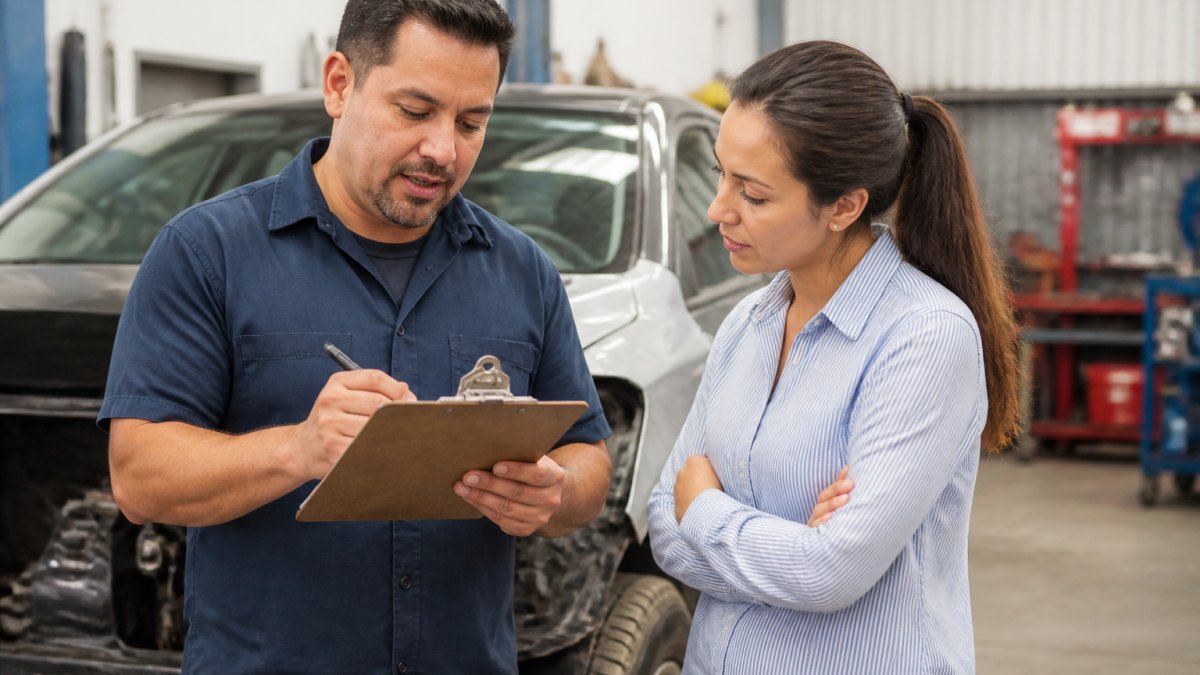
A collision repair estimate is a detailed written breakdown of all the work, parts, and materials needed to repair your vehicle after an accident.
At Rubio's Custom Repair inc, we create thorough estimates that help you understand exactly what repairs your vehicle needs and why. Our team inspects every inch of damage, visible and hidden, to make sure nothing gets missed.
An accurate estimate serves three critical purposes. First, it gives you a clear picture of repair costs before work begins. Second, it provides your insurance company with documented justification for the claim.
Most vehicle owners don't realize that the 10 things included in collision estimates go far beyond just parts and labor. It captures vehicle information, damage findings, supplemental repairs, paint materials, diagnostics, and mechanical checks.
Vehicle and Claim Information on Your Estimate
Every collision repair estimate starts with basic vehicle identification and claim details. This section records who you are, what vehicle was damaged, and how the insurance company will be involved.
Your estimate should clearly show:
- Vehicle year, make, model, and color
- VIN (Vehicle Identification Number)
- Current mileage
- Insurance company name and claim number
- Date of loss (accident date)
- Your name and contact information
- Repair shop name and contact details
This information matters because it ties the estimate to your specific vehicle and insurance claim. If the VIN doesn't match your car, the estimate won't align with your policy coverage. Insurance companies use the claim number to track authorization and payment. Mileage helps establish the vehicle's condition at the time of repair.
When you review your estimate, verify every detail in this section. A single error, wrong year, incorrect VIN, or mismatched claim number, can delay your repair or create payment disputes with your insurer.
Damage Inspection and Visible Damage Assessment
The damage inspection section documents everything the estimator found during their physical examination of your vehicle. This is where the estimate describes dents, cracks, broken parts, and other obvious harm caused by the collision.
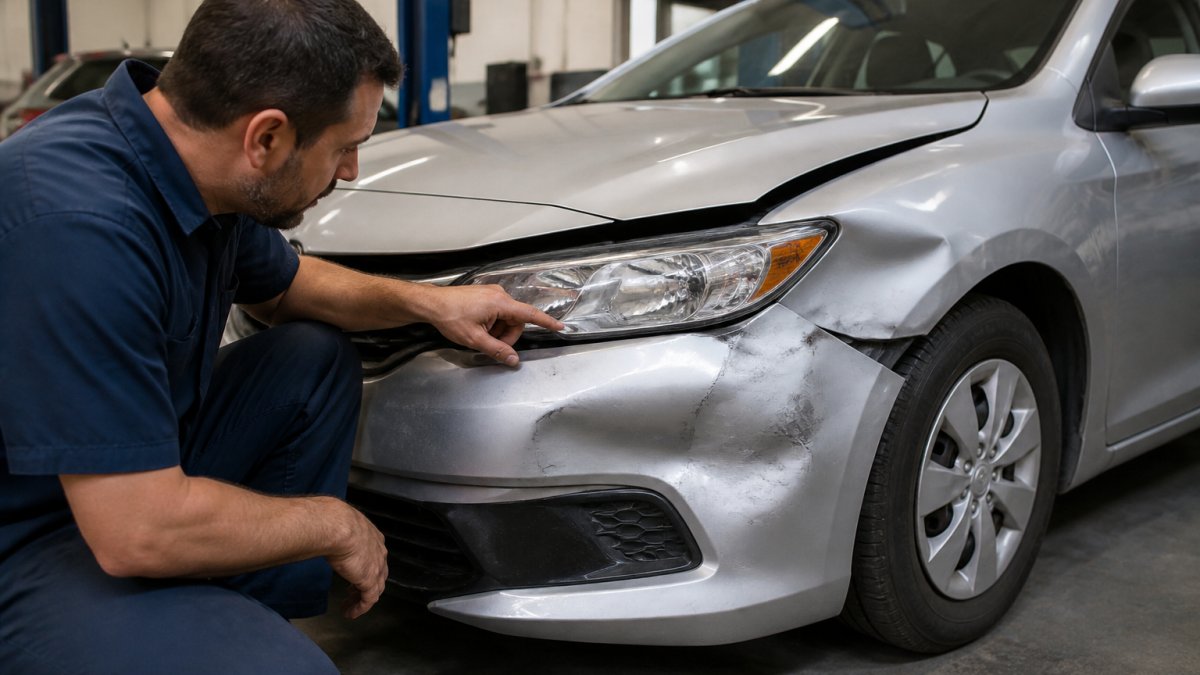
Visible damage typically includes:
- Dented or crumpled body panels (fender, hood, doors, trunk)
- Broken or damaged bumper covers and trim pieces
- Shattered or cracked headlights, taillights, and mirrors
- Bent or misaligned frame components
- Damaged windows or windshield
- Paint chips, scratches, and areas needing refinishing
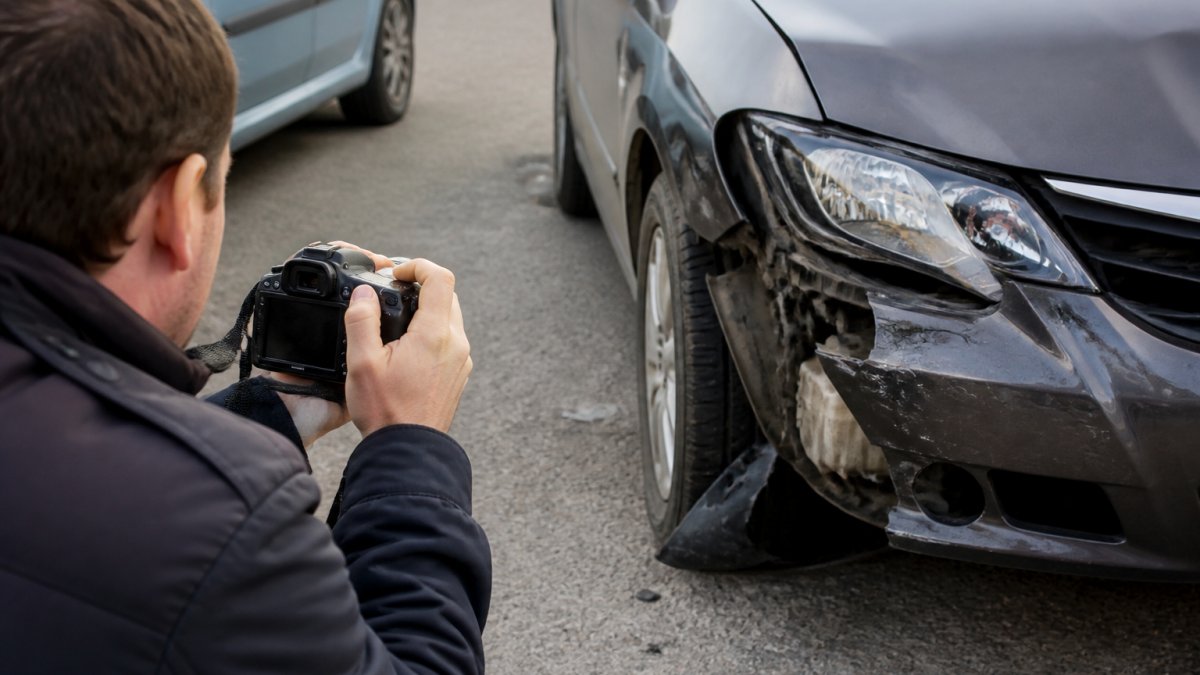
The estimator photographs this damage and documents it in writing. These photos become part of your claim file. They show the insurance company exactly what happened and justify the repair work.
What most vehicle owners miss is that visible damage is only part of the story. A dented fender might hide frame damage underneath. A broken headlight assembly might indicate suspension impact that needs checking.
How to Read a Collision Repair Estimate
Reading a collision repair estimate means understanding how the document is organized and what each section tells you. Most estimates follow a standard format that groups repairs by category.
The estimate typically flows like this. First comes vehicle information and claim details. Next is the damage inspection summary. Then comes the detailed line-item breakdown, this is the longest section, listing every repair operation, part, and material cost.
Each line item on the estimate shows a description, labor hours, labor rate, parts cost, and total cost for that specific repair.
Understanding this structure helps you spot what's included and what's missing. If you don't see paint labor listed separately, ask why. If there's no diagnostics line, that's a red flag. A well-organized estimate makes these gaps obvious.
Collision Repair Estimate Breakdown: Labor, Parts, and Paint
The heart of any collision repair estimate is the detailed breakdown of labor, parts, and paint costs. These three categories account for the vast majority of your repair bill.
Labor Charges and Repair Operations
Labor charges represent the time and skill your repair shop invests in fixing your vehicle. The estimate lists each repair operation separately, removing damaged parts, straightening frames, welding panels, aligning components, and reassembling everything.
Labor is calculated as hours multiplied by an hourly rate. A typical labor rate ranges depending on the shop type. The estimate should clearly show how many hours each operation requires and what that operation accomplishes.
Common repair operations include:
- Remove and replace damaged body panels
- Straighten or repair frame components
- Remove and reinstall bumper covers and trim
- Weld or solder broken seams
- Align doors, hoods, and trunk lids
- Remove and reinstall glass and weather seals
Each operation gets its own line on the estimate. This transparency lets you see exactly what work the shop plans to do and how long it will take. If an operation seems unclear, ask for clarification before authorizing repairs.
Replacement Parts and Body Panels
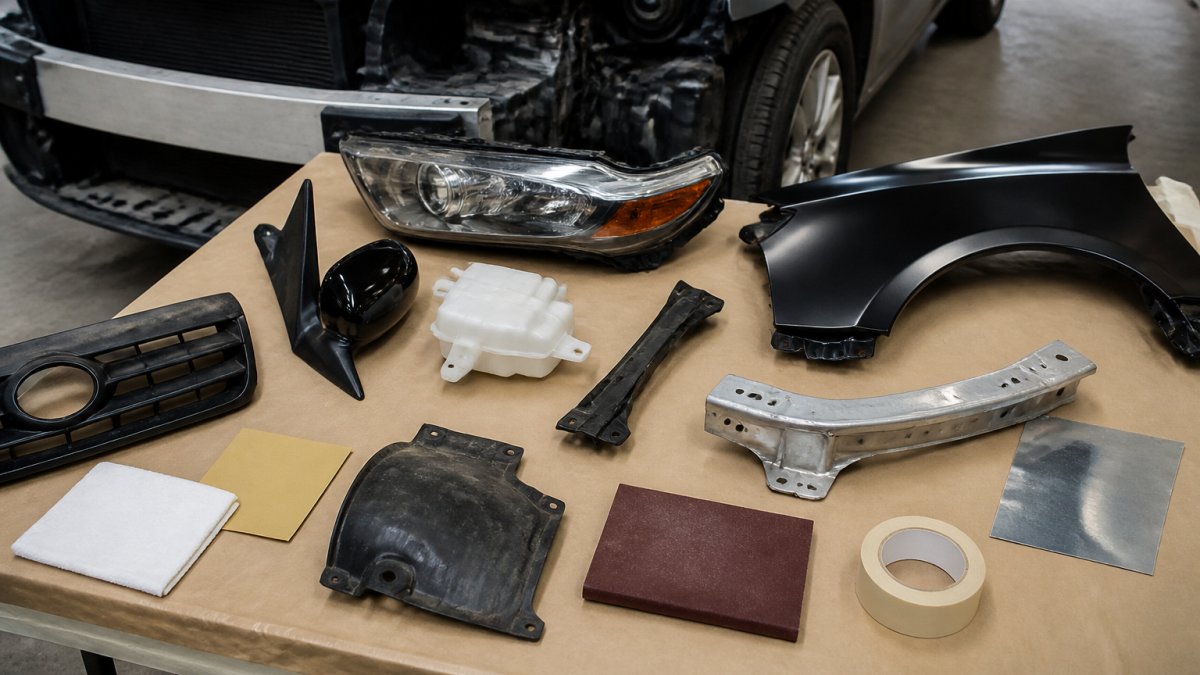
Parts costs cover everything physical that gets removed and replaced or repaired. Body panels are the largest part category, fenders, doors, hoods, trunk lids, and bumper covers.
Parts fall into four main categories:
OEM (Original Equipment Manufacturer) parts - Parts made by your vehicle's manufacturer. These are the most expensive but guarantee exact fit and quality.
Aftermarket parts - Parts made by third-party manufacturers. These cost less than OEM but vary in quality. Some aftermarket parts are excellent; others are poor fits.
Recycled parts - Used parts salvaged from other vehicles. These are the cheapest option but carry unknown history and may not be warrantied.
Reconditioned parts - Used parts that have been cleaned, tested, and restored. These split the difference between recycled and new parts on cost and reliability.
Your estimate should specify which type of part is being used for each component. If your insurance company approves only aftermarket parts but the estimate lists OEM, that's a mismatch that needs resolving.
Paint and Refinishing Materials
Paint is its own category because it involves both materials and specialized labor. The estimate lists paint materials separately from the labor required to apply them.
Paint costs include:
- Base coat and clear coat materials
- Primer and undercoat (if needed)
- Sandpaper, masking tape, and prep materials
- Color matching and blending supplies
Paint labor is listed separately and covers surface preparation, application, blending, and quality checks. Proper paint work requires skill, poor application leads to color mismatch, runs, and durability problems.
The estimate should specify the paint brand and type. Premium PPG products, which we use at Rubio's Custom Repair inc, deliver superior durability and color matching compared to budget alternatives. If the estimate doesn't name a paint brand, ask what's being used.
Hidden Damage and Supplemental Estimates
Hidden damage is harm that doesn't show on the surface until the shop begins disassembly. A collision might bend frame rails inside the door, crack welds in the roof, or damage suspension components that aren't visible until the damaged body panels come off.
When hidden damage is discovered, the shop issues a supplemental estimate, an additional document listing the extra work and costs. This is normal and expected on collision repairs. Most vehicles have some hidden damage.
Common hidden damage includes:
- Bent or cracked frame rails and structural members
- Damaged suspension components
- Broken welds or seams inside body panels
- Electrical damage to wiring or modules
- Fluid leaks from impact damage
Your insurance company must approve supplemental repairs before the shop can proceed. This protects you from unexpected bills but also means repair timelines can extend if significant hidden damage is found. At Rubio's Custom Repair inc, we communicate supplemental findings immediately and help coordinate approval with your insurer.
Insurance Estimate vs Body Shop Estimate
Insurance companies often send their own estimators to inspect your vehicle and create an estimate. Your repair shop also creates its own estimate. These two documents frequently differ, sometimes significantly.
The insurance estimate reflects what the insurer believes the repair should cost. It's based on industry databases and the adjuster's experience. The body shop estimate reflects what your specific shop believes the repair will actually cost based on their inspection.
Differences usually stem from:
- Different labor rates (insurance uses regional averages; shops use their actual rates)
- Different parts choices (insurance might approve aftermarket; you prefer OEM)
- Hidden damage discovery (insurance estimate made before disassembly; shop estimate includes findings)
- Variation in repair approaches (different shops use different techniques)
If your shop's estimate is higher than the insurance estimate, the shop must justify the difference. If it's lower, that's good news for your out-of-pocket costs. Never assume the insurance estimate is automatically correct; it's an estimate, not the final word.
When estimates conflict, ask your shop to itemize the differences. Sometimes the shop's estimate includes work the insurance adjuster missed. Sometimes the shop is proposing a different (often better) repair method.
Diagnostics, Mechanical Checks, and ADAS Calibration
Modern vehicles contain complex electronic systems. After a collision, these systems need diagnostic testing to ensure they're functioning properly. The estimate should include a diagnostics line that covers computer scans and system checks.
Diagnostics typically include:
- Full vehicle computer scan for error codes
- ABS (anti-lock braking system) testing
- Airbag system verification
- Transmission and engine control module checks
- Electrical system testing
ADAS (Advanced Driver Assistance Systems) calibration is increasingly important. ADAS systems include lane-keeping assist, adaptive cruise control, collision avoidance, and automatic braking. A front-end collision can knock these systems out of alignment.
ADAS calibration requires specialized equipment and training. The estimate should list this separately if your vehicle has ADAS features.
After repair completion, your shop should perform a road test to verify all systems function correctly. This final check ensures your vehicle is genuinely ready for the road, not just cosmetically repaired.
| Estimate Component | What It Covers | Why It Matters |
|---|---|---|
| Vehicle & Claim Info | Year, VIN, mileage, insurance details | Ensures estimate matches your vehicle and policy |
| Damage Inspection | Visible dents, broken parts, paint damage | Documents what the collision caused |
| Labor Charges | Hours and rates for each repair operation | Shows the work required and its cost |
| Replacement Parts | OEM, aftermarket, recycled, reconditioned | Determines part quality and durability |
| Paint & Refinishing | Materials, labor, color matching, blending | Ensures paint matches and lasts |
| Hidden Damage | Frame, suspension, welds, electrical | Discovered after disassembly; requires supplements |
| Diagnostics | Computer scans, system checks, ADAS | Verifies electronic systems work properly |
| Supplemental Repairs | Additional work discovered during repair | Normal; requires insurance approval |
| Deductible & Out-of-Pocket | Your responsibility after insurance pays | Shows what you owe |
| Total Repair Cost | Sum of all labor, parts, and materials | Final bill amount |
Understanding the 10 things included in collision estimates helps you make informed decisions about your vehicle's repair.
When you're ready to move forward with repairs, choose a shop that stands behind its work. We use original parts and premium PPG products to ensure your vehicle is restored to its best condition.
Frequently Asked Questions
What should a collision repair estimate include?
A complete collision repair estimate should list vehicle information (year, make, model, VIN), visible and hidden damage findings, labor hours and rates, replacement and repair parts with OEM or aftermarket options, paint and refinishing materials, diagnostics and mechanical checks, and any supplemental work discovered during inspection. It should also show insurance claim details, your deductible, and the total repair cost.
How do I read a collision repair estimate?
Start by verifying your vehicle's year, make, model, and VIN at the top. Review the damage inspection section to confirm all visible damage is documented. Check labor charges by looking at the repair operations listed and the hours and hourly rate applied. Examine parts to see whether they're OEM, aftermarket, or recycled, as this affects cost and quality. Look for paint labor separately from materials. Finally, scan for any supplemental items or exclusions your insurer may not cover. Ask your estimator to explain any line item you don't understand.
What is the difference between an insurance estimate and a body shop estimate?
An insurance estimate is prepared by the insurer's appraiser and sets the maximum they will pay for repairs. A body shop estimate is prepared by your repair facility and reflects the actual work and parts needed. Insurance estimates sometimes underestimate hidden damage or use lower-cost parts, while body shop estimates are often more thorough because the shop inspects the vehicle directly.
Can a collision repair estimate change after work begins?
Yes. Hidden damage discovered during disassembly often requires supplemental estimates. For example, frame damage, internal corrosion, or mechanical failures may not be visible until technicians remove body panels. A reputable shop will contact you and your insurer with a supplemental estimate before proceeding. This protects you from surprise bills and ensures your insurer approves additional work. Always ask your shop to get approval before performing work beyond the original estimate.