 How-to
How to Tell If a Damaged Car Is Safe to Drive
Last Updated: November 19, 2026
Quick Summary
A damaged car is safe to drive only when its steering, brakes, tires, lights and structure all still work, and visible scratches alone do not tell you that. If the car pulls, leaks fluid, shows warning lights, or has a soft brake pedal, stop driving and arrange a tow. Hidden damage can disable safety systems, so a professional inspection is the reliable way to know.
- Stop driving if the airbag light stays on or airbags have deployed.
- Stop if the steering is off-center, the car pulls hard, or the brake pedal feels soft.
- Do a visual check of lights, tires, bumpers and glass before any road test.
- Hidden damage can disable cameras, radar and airbag sensors without visible signs.
- Ask your insurer whether towing and storage are covered before arranging a tow.
Table of Contents
- Is It Safe to Drive After Collision Damage? Start With the Basics
- Signs a Car Is Unsafe to Drive After an Accident
- How to Check a Car for Collision Damage Step by Step
- Hidden Damage and Modern Safety Systems That Can Fail Quietly
- When to Call a Tow Truck Instead of Driving
- What to Do With an Undriveable Car After an Accident
- Can You Get Pulled Over for Driving a Damaged Car in California?
- Book a Safety Inspection at Rubio's Custom Repair in Manteca
- Frequently Asked Questions
Is it safe to drive after collision damage? Often the honest answer is no, and the only way to know for sure is to look closely and test carefully.
Here is the core idea: a driveable car and a safe car are not the same thing. Before any repair, it helps to know what quality collision repair involves, including ADAS calibration.
This guide walks through the warning signs, a step-by-step check, and the situations where you should stop driving and call a tow truck.
Is It Safe to Drive After Collision Damage? Start With the Basics
A damaged car is safe to drive only when every part that controls it still works. That means steering, brakes, tires, lights and the parts that hold the car together. Visible scratches tell you little. A cracked frame rail or a bent suspension arm can sit under a clean-looking hood.
Start with three simple questions:
- Does the car steer straight and stop evenly?
- Are all the lights working and visible?
- Is anything hanging loose, leaking or grinding?
If you answer no to any of these, stop driving. Your safest move is a tow.
Signs a Car Is Unsafe to Drive After an Accident
Certain signs mean the car should not be on the road at all. Watch for any of these:
- Airbag warning light stays on or the airbag has deployed
- Steering wheel is off-center or the car pulls hard to one side
- Brake pedal feels soft, sinks low or the car takes longer to stop
- Grinding, scraping or rubbing sounds from a wheel
- Visible fluid leaks under the car, especially oil, coolant or brake fluid
- Engine temperature gauge climbs or the engine overheats
- Tire is flat, bulging or the wheel is bent
- Parts hanging loose, such as a bumper, fender or trim with sharp edges
- Headlights, taillights or turn signals are out or aimed wrong
- Dashboard warning lights stay on after a restart
A single sign can be enough. Do not talk yourself into a short drive to test it.
The table below lists the warning signs that mean a damaged car should not be driven, along with what each one suggests.
| Warning sign | What it points to | Action |
|---|---|---|
| Airbags deployed or airbag light stays on | Restraint system may be faulty | Stop driving, tow |
| Steering off-center or car pulls hard | Steering or suspension damage | Stop driving, tow |
| Soft brake pedal or longer stopping distance | Brake system problem | Stop driving, tow |
| Grinding or scraping from a wheel | Rubbing or wheel damage | Stop driving |
| Oil, coolant or brake fluid leaking | Fluid system damage | Stop driving, tow |
| Temperature gauge climbing | Engine overheating | Stop driving, tow |
| Flat, bulging tire or bent wheel | Tire or wheel damage | Stop driving |
| Dashboard warning lights stay on after restart | Hidden fault | Stop driving, inspect |
How to Check a Car for Collision Damage Step by Step
Do this check in a safe spot off the road, with the engine off and the parking brake on. Take your time. A careful look now can prevent a dangerous failure later.
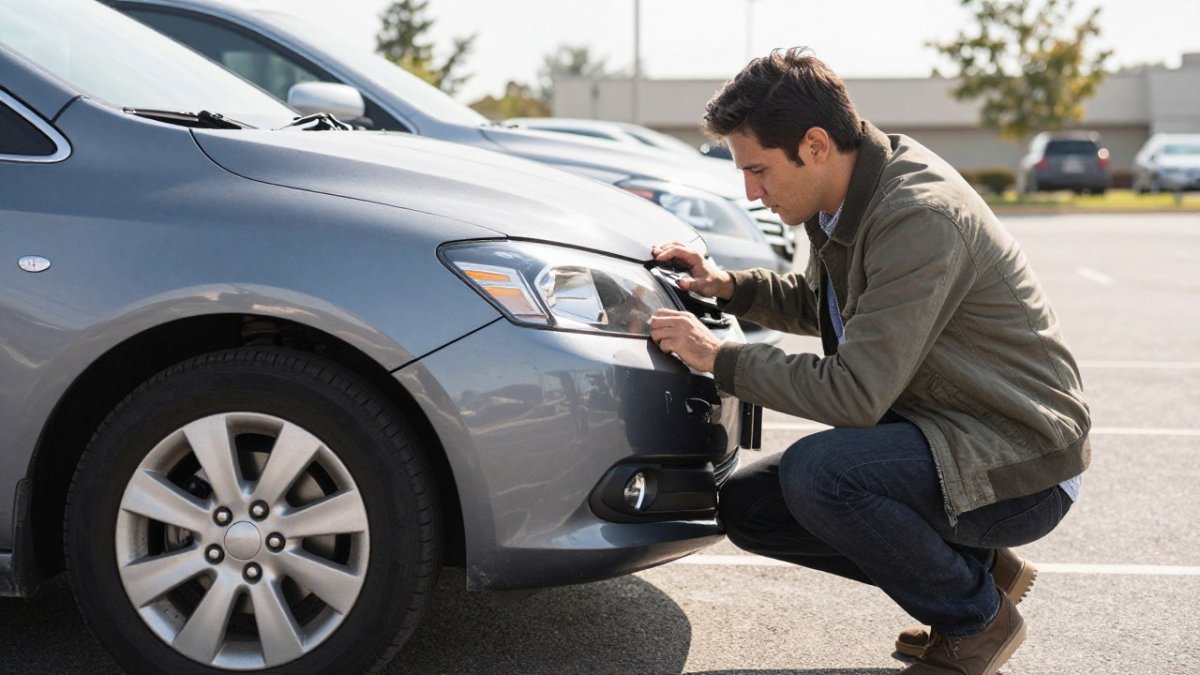
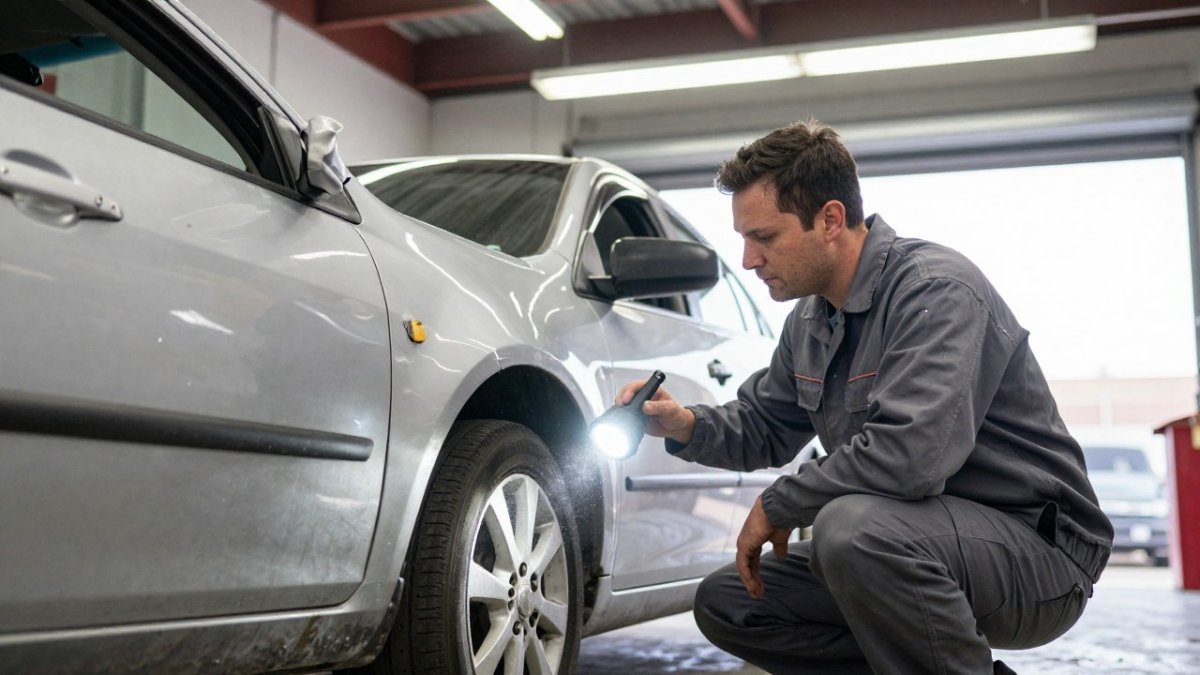
- Walk around the car and look for obvious damage to the body and frame.
- Check the lights, tires and glass.
- Look under the car for leaks and hanging parts.
- Start the engine and watch the dashboard.
- Run a short road test in a quiet area only if the earlier checks look clean.
Visible Damage Checklist: Lights, Tires, Bumpers and Glass
Use this checklist before you touch the keys:
- Headlights and taillights are intact and aimed straight
- Turn signals and hazard lights work
- Tires hold air, show no bulges and the wheels are not bent
- Bumper is firmly attached with no sharp edges
- Windshield has no crack spreading across your line of sight
- Mirrors are secure and show the road clearly
- Hood and trunk latch shut and stay closed
A cracked windshield in your direct line of sight is a reason to stop. So is a light that is out or aimed at the sky.
Fluids, Steering and Brakes: Road Tests to Run in a Safe Spot
Before any road test, check the ground under the car for drips. Then, in an empty lot at low speed, test the basics:
- Brakes: Press the pedal gently and then harder. It should feel firm and stop the car in a straight line.
- Steering: Turn the wheel lock to lock. It should move smoothly without pulling or grinding.
- Alignment: On a straight, flat stretch, let go of the wheel briefly. A car that drifts hard to one side needs a shop.
If the car pulls, pulsates or the pedal feels spongy, do not drive further. Those problems often hide structural or suspension damage.
Hidden Damage and Modern Safety Systems That Can Fail Quietly
A collision that leaves the car looking fine can still disable the systems that protect you in the next crash.
Here is what commonly hides after a hit that looks minor:
- Forward cameras and radar. Units mounted behind the windshield or in the front bumper feed automatic emergency braking, lane keeping, and adaptive cruise control. A cracked windshield, a bent bumper bracket, or a misaimed sensor can leave those features disabled or, worse, active but inaccurate.
- Parking and blind-spot sensors. Small ultrasonic sensors in bumpers and radar units in rear quarter panels are easily knocked loose or cracked. A sensor that reads phantom obstacles can trigger sudden braking; one that reads nothing leaves a blind spot unmonitored.
- Airbag sensors and the airbag control module. Impact sensors and the restraint control module record crash severity and decide whether to fire airbags and seat-belt pretensioners. Even without deployment, a crash can set fault codes or damage wiring, and the system may not deploy correctly in a subsequent collision.
- Seat-belt pretensioners. These pyrotechnic devices lock and tighten belts in a crash. Once fired, sometimes without an obvious sign, they must be replaced, and a used or unreplaced pretensioner will not protect an occupant the same way.
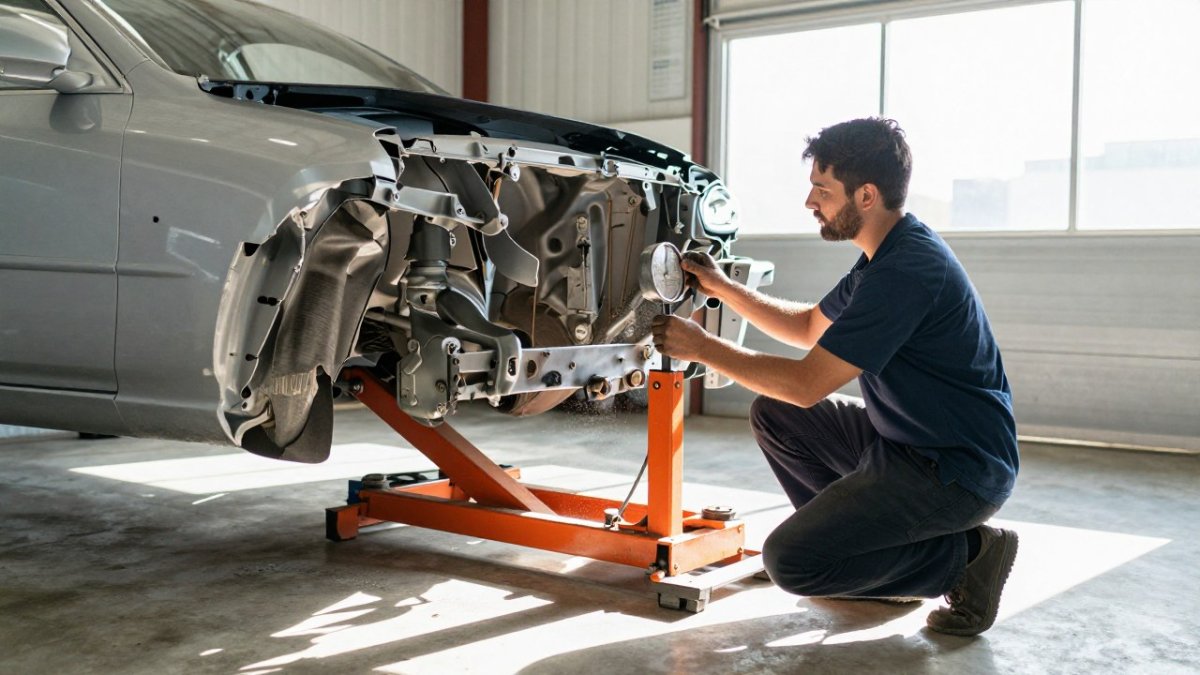
- Structural and frame damage. Bent frame rails, crushed crush zones, and deformed suspension mounts change how force travels through the car in a future impact. A vehicle can align and drive straight while its crash structure is compromised.
Watch out: Do not assume that a car with no airbag light and no visible damage has intact safety systems.
If you want to understand how structural repair quality is judged, read our guide on is frame repair safe? What you need to know.
When to Call a Tow Truck Instead of Driving
Use a simple stop-or-go decision before you turn the key.
Stop and call a tow if any of these are true:
- Airbags deployed, or the airbag warning light stays on after a restart
- The steering wheel is off-center, the car pulls hard, or steering feels loose or notchy
- The brake pedal is soft, sinks toward the floor, or the car takes noticeably longer to stop
- You see fluid leaking, smoke, or the temperature gauge climbing
- A tire is flat, bulging, or a wheel is visibly bent
- Any part is hanging, dragging, or has a sharp edge exposed to traffic
- The windshield is cracked across the driver's line of sight, or lights are out or aimed wrong
- You are simply unsure, uncertainty is a valid reason to tow
Towing costs money, but a failed brake line or a detached bumper at highway speed costs far more.
While you wait for the tow:
- Turn on hazard lights and, if safe, set out reflective triangles or flares behind the car
- Move people behind a barrier or well off the shoulder, away from traffic
- Do not stand between the car and oncoming traffic
- Avoid touching leaking fluids or loose, sharp, or hot parts
- Keep the keys with you and tell the driver exactly where the car sits
Watch out: Staying inside a car stopped in a live travel lane is dangerous.
If the car is undriveable, document the damage with photos before it is moved, then have it towed to a shop you trust for a written estimate.
What to Do With an Undriveable Car After an Accident
If the car cannot be driven safely, have it towed to a shop you trust. Document the damage with photos before anyone moves it. Then get a written estimate.
Collision repair is not a one-size-fits-all job. For help with the next step, see our guide to getting a collision repair quote in Manteca.
If you want to understand the first steps after a minor crash, can you drive your car after a minor collision? and what should you do after a minor fender bender? cover the common next moves.
Can You Get Pulled Over for Driving a Damaged Car in California?
California law requires vehicles to be in safe working order, and an officer can cite a driver whose car has dangerous damage. Check the California Vehicle Code and your local police guidance for current details. The safest path is to repair the damage before you drive on public roads.
Book a Safety Inspection at Rubio's Custom Repair in Manteca
If you are unsure whether your car is safe, bring it to Rubio's Custom Repair inc in Manteca for a professional inspection. A trained eye can find problems you might miss, from hidden frame damage to a misaligned sensor. Our family-owned shop has served Manteca drivers for over 30 years.
Disclaimer: This article offers general guidance and does not replace a professional mechanic or collision inspection. If you have any doubt about whether your vehicle is safe to drive, have it inspected before you drive it.
Frequently Asked Questions
How can I tell if my car is safe to drive after a collision?
Start with a walk-around. Look for fluid under the car, tires that rub or look bent, a steering wheel that sits off-center, lights that do not work, and parts hanging loose or touching the wheels. Test the brake pedal in a safe, low-speed area and listen for grinding or scraping. If any of these show up, or if you are unsure, do not drive the car. Have a professional inspect it first, since hidden frame or suspension damage often cannot be seen by the owner.
What collision damage makes a car unsafe to drive?
Damage to parts that control the car or let you see the road is the main concern. That includes steering and suspension components, brakes and brake lines, tires and wheels, headlights and taillights, and the windshield. Damage that causes fluid leaks, overheating or warning lights also means the car should not be driven. Structural or frame damage can affect how the car handles even when it looks fine, so a professional inspection is the safest way to confirm.
Can I drive my car if the airbags deployed?
Usually not. When airbags deploy, the vehicle has typically been in a significant impact, and the airbag control system often needs to be checked and reset. If the airbag warning light stays on, the system may not work in a future crash. Deployment also often means the front end or other structural areas were damaged. Have the vehicle inspected and towed to a shop before driving it.
Should I have a collision-damaged car inspected before driving it?
Yes, whenever there is any doubt. A professional inspection can find structural, suspension, steering and fluid problems that are not visible from outside. Rubio's Custom Repair in Manteca offers collision repair and paint work backed by a guarantee. Call the shop or visit its website to schedule an appointment and ask about current pricing, since prices depend on the damage and the parts needed.