 How-to
How to Check If a Mechanic Is Certified Before You Hand Over the Keys
Table of Contents
- Why a Certified Mechanic Matters for Your Repair
- How to Check If a Mechanic Is Certified in Four Steps
- Using the Bureau of Automotive Repair License Lookup
- Checking the ASE Certified Mechanic List
- What to Look for in a Reputable Auto Body Shop
- Verifying Mobile Mechanics and Spotting Fake Credentials
- Schedule an Appointment With a Shop You Can Verify
- Frequently Asked Questions
Last Updated: November 2, 2026
Why a Certified Mechanic Matters for Your Repair
Knowing how to check if a mechanic is certified is one of the most practical skills a car owner can learn. A certification is a third-party record showing a technician passed standardized testing on a specific repair area.
At Rubio's Custom Repair inc, we have worked on collision-damaged vehicles for over 30 years. Paperwork matters, but it is not the whole story. Certification proves a baseline of technical expertise. It does not prove the shop will treat you fairly.
That gap is where most drivers get hurt. They see a framed certificate, relax, and stop asking questions.
Shop Licensing vs. Technician Certification
These two things get mixed up constantly, and the confusion costs people money.
- Shop licensing is a business-level permit. The state allows the facility to operate and sets rules for how it handles your car, your estimate, and your bill.
- Technician certification is a personal credential. It follows the individual mechanic and confirms they passed a written examination and, in many cases, a hands-on competency assessment.
A shop can be fully licensed and still employ technicians with zero certifications. A licensed facility is not a certified facility. Check both, separately.
The Michigan Department of State's mechanics licensing page shows how one state handles its testing and fee structure, which gives you a sense of how these programs vary from state to state. Your own state's rules will differ, so look up the specific agency that oversees repair facilities where you live.
How to Check If a Mechanic Is Certified in Four Steps
The whole process takes about ten minutes if you have the right information ready. Here is the sequence we would follow.
- Ask the shop for the technician's name and certification number. A reputable shop hands this over without hesitation.
- Look up the number in the certifying body's verification database. Most major certification programs offer a free public lookup.
- Confirm the certification category matches your repair. Brakes and structural work are not the same credential.
- Check the expiration date. A lapsed certification is not a current certification.
What Information You Need Before You Look Anything Up
You need three things to run a credential lookup: the technician's full name, the certification number, and the name of the certifying organization. Get all three in writing if you can.
A common mistake is accepting a verbal confirmation over the phone. Ask for it on the estimate or in a text. If a shop cannot produce a certification number for the person assigned to your car, that is your answer.
For a broader walkthrough of vetting a shop from the first phone call onward, our guide on how to find honest auto body shops covers the questions to ask and the certifications worth confirming.
Using the Bureau of Automotive Repair License Lookup
In states with a dedicated automotive repair regulator, the license lookup is your first stop. These databases confirm whether the shop itself is registered and in good standing.
Many states maintain a public license search where you can pull a facility's registration status.
Search by the shop's business name or license number. Then check for three things:
- Active status. A suspended or expired license is a serious red flag.
- Complaint history. Many databases show disciplinary actions.
- Registered address. Confirm it matches where your car actually sits.
This step covers the business. It does not tell you whether the individual turning wrenches holds a certification. That requires a separate check.
Checking the ASE Certified Mechanic List
The fastest way to confirm a technician's credentials is the ASE certification lookup. The National Institute for Automotive Service Excellence maintains a public database where you enter a name and certification number to see current status.
The ASE certification program tests and verifies automotive technicians across specific repair areas. Each certification covers a defined category, so the listing tells you exactly what that person is qualified to work on.
What the Lookup Actually Returns
When you run a search, the database returns a status line for the technician and the specific certifications attached to that record. Read it in this order:
- Current status. The record should show the credential as active. A lapsed or expired status means the technician has not completed the renewal requirements.
- Certification series and category. ASE organizes credentials by repair system. Engine repair, automatic transmission, manual drivetrain, suspension and steering, brakes, electrical, heating and air conditioning, engine performance, and collision repair are separate credentials. A technician can hold one, several, or all of them.
- The "Master" designation. A technician who passes the full set of required tests in a series earns Master Technician status in that series. Master status is a useful shorthand, but confirm the specific category you need is included rather than assuming the title covers everything.
- Recertification date. ASE credentials require periodic renewal through testing or documented training. The record shows when the credential was last renewed, which tells you whether the technician is keeping current.
Matching the Category to Your Repair
What most drivers miss is the category detail. A technician certified in suspension and steering is not automatically certified in collision repair or refinishing. If your car needs structural work after an accident, confirm the credential matches the job. Ask the shop which specific certification the assigned technician holds, then look for that exact category in the record, not just the technician's name.
Watch out: a shop that answers "he's ASE certified" without naming the category is giving you a partial answer. The category is the part that matters for your repair.
Reading the Result Like an Editor
A record with an active status, the right category, and a recent renewal date is a clean result. A record that is missing, expired, or limited to an unrelated category is not a reason to panic, but it is a reason to ask the shop who else is assigned to your vehicle.
If the shop cannot produce a certification number for the technician assigned to your car, that is your answer. Legitimate shops expect the check and will hand over the number without hesitation.
What to Look for in a Reputable Auto Body Shop
Certification is the floor, not the ceiling. A trustworthy shop pairs credentials with transparency, and you can spot the difference in the first five minutes.
Reading the Wall and the Paperwork
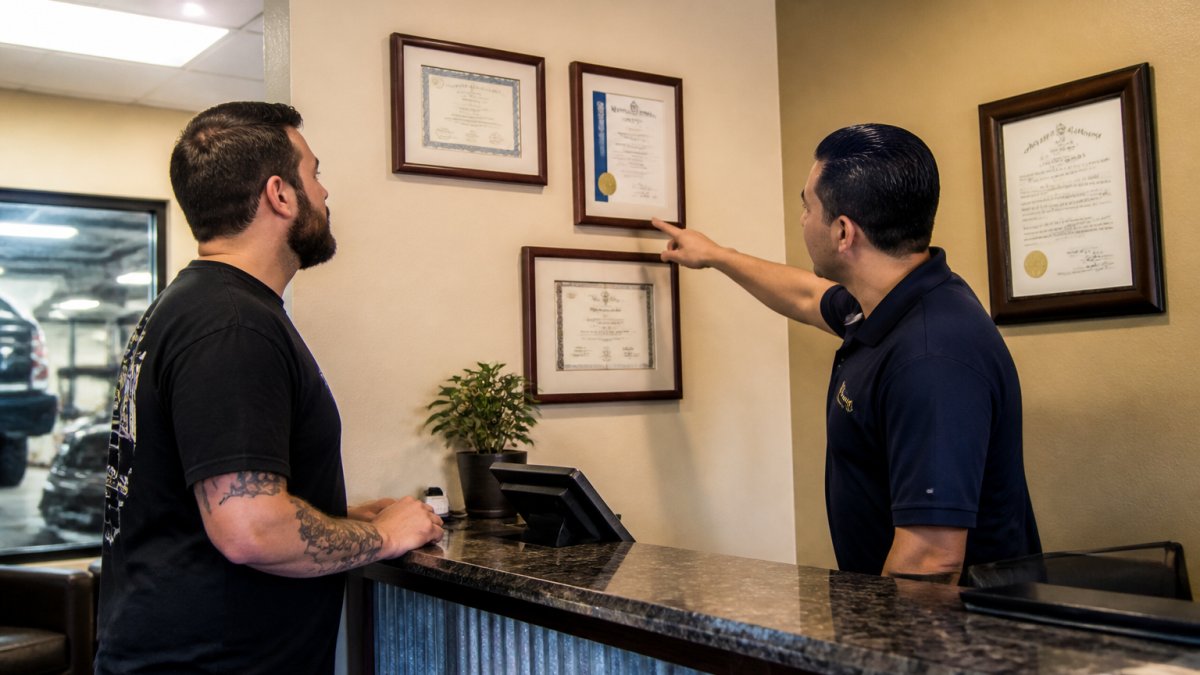
Look at what is actually displayed. Certificates should be current, framed, and name specific technicians, not just the business.
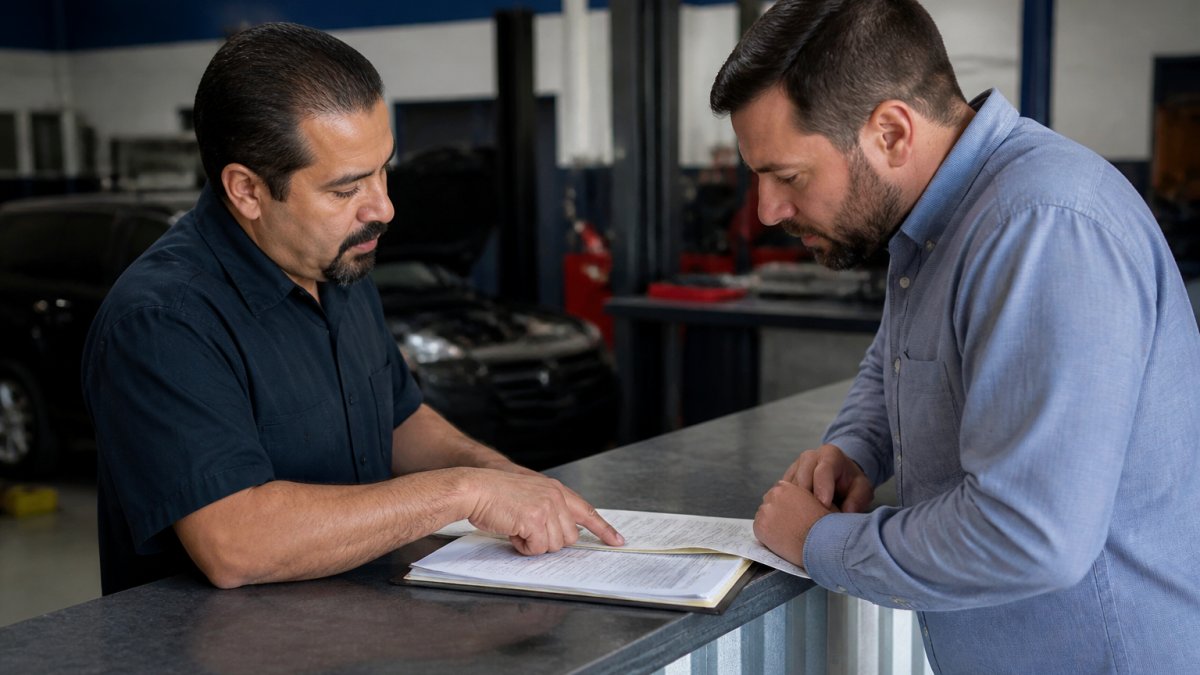
Then read the estimate. It should list parts by type, labor by operation, and paint materials separately. Vague line items like "misc. repairs" are where padding hides.
Watch out: a shop that rushes you past the paperwork or refuses to put the estimate in writing is telling you something. Walk away from that conversation.
What to Do If a Shop Misrepresents Its Credentials
This is the part most guides skip. If a shop claims a technician is certified and the lookup shows otherwise, you have concrete options:
- Document the claim. Save the estimate, any text or email that states the certification, and a photo of the wall display if one was shown to you. A verbal claim is harder to prove, which is why you ask for it in writing.
- File a complaint with your state's consumer protection office. Deceptive trade practices, including false claims about credentials, fall within the scope of most state consumer protection agencies. The office will tell you what it can and cannot act on.
- Contact the certifying organization. ASE and similar bodies take misuse of their marks seriously and maintain a process for reporting unauthorized use of their name or logo.
- Use small claims court for monetary disputes. If the misrepresentation led to a repair you would not have authorized, small claims court covers disputes under your state's monetary limit. Bring the documentation above.
None of these steps require a lawyer for the first pass. The records you keep at the counter are what make a complaint stick later.
Our breakdown of how to spot dishonest auto shops lists the estimate red flags worth memorizing before your next visit.
Verifying Mobile Mechanics and Spotting Fake Credentials
Mobile mechanics are the hardest to vet, and most guides skip them entirely. A technician who comes to your driveway has no shop wall to inspect, so the paperwork has to do all the work.
Ask for the certification number before they arrive, and run the lookup before work begins.
Fake credentials follow a few predictable patterns:
- Logos without numbers. A sticker on a van proves nothing. Ask for the credential number.
- Generic "certified" claims. Certified by whom? Get the organization's name.
- Pressure to skip verification. Legitimate technicians expect the check.
- Cash-only demands before work begins. This is a scam pattern, not a convenience.
If you suspect fraud after the fact, you have options. Your state's consumer protection office handles deceptive trade complaints, and small claims court covers disputes under your state's monetary limit. Our step-by-step guide on how to avoid auto repair scams walks through the complaint process and the records that make a case stick.
Schedule an Appointment With a Shop You Can Verify
Verification works best when the shop makes it easy. Ask directly, and a good shop answers without flinching.
Here is the short version of everything above:
| Step | What You Check | Where to Look |
|---|---|---|
| 1 | Shop license status | State repair regulator database |
| 2 | Technician certification | ASE or certifying body lookup |
| 3 | Certification category | Matches your repair type |
| 4 | Expiration date | Current, not lapsed |
| 5 | Estimate detail | Line items, parts, labor |
At Rubio's Custom Repair inc, we are family-owned and operated, with over 30 years of experience. We use original parts for most repairs and premium PPG products, and every repair is backed by our guarantee.
If you are ready to move forward, you can contact Rubio's Custom Repair inc for a quote and to schedule an appointment.
Frequently Asked Questions
How do I know if a mechanic is legit and actually certified?
Ask for the technician's name and certification number, then look both up in the certifying body's database. ASE maintains a searchable list of certified professionals, and California's Bureau of Automotive Repair publishes shop license status online. A legitimate mechanic will give you that information without hesitation. If a shop dodges the question or claims certification without a number, treat that as a warning sign and get a second opinion before authorizing any work.
What is the difference between a state license and ASE certification?
A state license covers the shop itself: it confirms the business is registered and allowed to operate. ASE certification applies to the individual technician and confirms they passed standardized testing in specific repair areas like brakes, engines, or collision repair. A shop can be licensed while none of its techs hold certification, so check both.
Does a mechanic need to be certified by law?
In most states, individual technicians are not legally required to hold ASE certification, though shops must meet state licensing and registration rules. That means certification is largely voluntary, which is exactly why checking matters. A certified mechanic has passed an independent written examination and met experience requirements, and many pursue recertification to stay current. When you confirm certification status yourself, you are relying on verified competency rather than a shop's marketing claims.
How can I check a repair shop's license status online?
Look up the shop in your state's licensing database. Most state licensing databases let you search by shop name or license number to check whether a registration is active. Confirm the name and address match the shop in front of you, not a parent company or a closed location. If the listing is expired or missing, ask the shop to explain before you leave your vehicle. It takes about two minutes and prevents a lot of headaches.
The difference between a repair that lasts and one that fails six months later usually comes down to who did the work and how they were trained. Ask for the certification number. Run the lookup. Then choose a shop that welcomes the question. Get started with Rubio's Custom Repair inc and put a verified, guaranteed team on your repair.