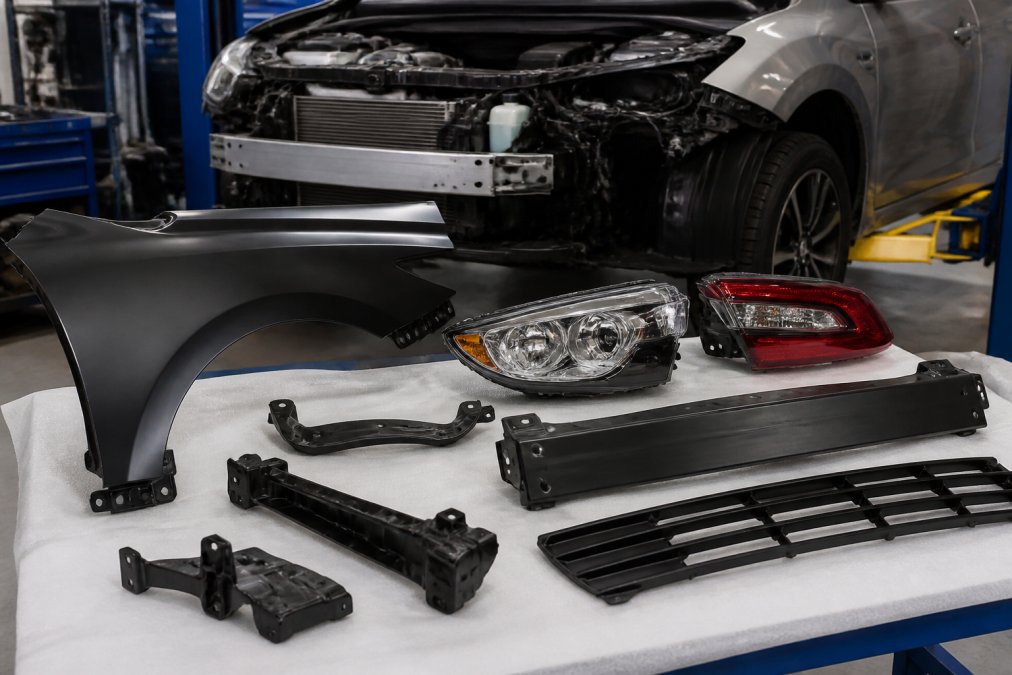
 ultimate-guide
Benefits of OEM Car Parts: Fit, Safety, and Value
Table of Contents
- What OEM Car Parts Are and Why They Matter
- OEM vs. Aftermarket: A Side-by-Side Comparison
- How to Spot Dishonest Auto Shops
- Does Insurance Cover OEM Parts for Collision Repairs?
- The Impact of Aftermarket Parts on Vehicle Warranty
- Counterfeit Parts, Environmental Impact, and When Aftermarket Wins
- Frequently Asked Questions
Last Updated: September 17, 2026
What OEM Car Parts Are and Why They Matter
OEM car parts are components manufactured by the original equipment manufacturer, the same company that built your vehicle, to factory specifications. These parts carry the automaker's part number and are engineered to match your car's exact tolerances, materials, and safety systems. At Rubio's Custom Repair inc, we've handled collision repairs for over 30 years, and we understand how this distinction plays out in real-world scenarios.
The benefits of OEM car parts start with one word: certainty. When a fender, bumper, or structural component comes from the original manufacturer, it was designed for your specific make, model, and trim. No guessing. No shaving brackets to make something fit.
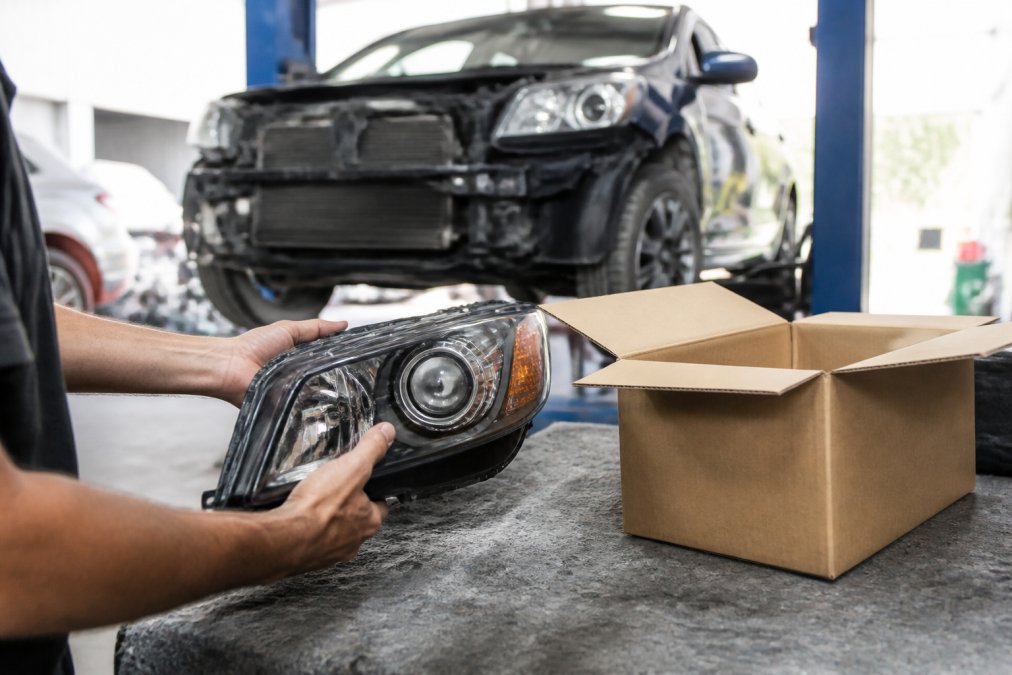
That certainty extends to safety. Modern vehicles are engineered as systems, with crumple zones, sensor placements, and airbag timing calibrated around specific part geometry. A part that's close but not exact can change how your car behaves in the next impact.
OEM vs. Aftermarket: A Side-by-Side Comparison
The practical difference between OEM and aftermarket comes down to who makes the part, what tooling they use, and what standard the part is held to. OEM parts come from the original equipment manufacturer or its licensed suppliers, built on the same dies, molds, and fixtures used for the assembly line. Aftermarket components come from third-party manufacturers who either reverse-engineer an existing part or design an independent replacement.
That distinction shows up in four places:
- Tooling and tolerances. OEM parts are stamped, molded, or machined to the tolerances in the automaker's engineering drawings. Aftermarket makers often work from a physical sample rather than the drawing, so a bracket that is a few thousandths of an inch off can still bolt on but sit slightly out of position.
- Materials and coatings. An OEM bumper cover uses the same polymer blend and paint adhesion promoter as the factory part. Aftermarket covers may use a different blend that flexes differently in a low-speed impact or holds paint less consistently over time.
- Warranty flow. OEM parts carry the automaker's parts warranty and, when installed by a dealer, are tied to the vehicle's service history. Aftermarket parts carry only the part maker's warranty, which usually covers the part itself and not the labor to replace it if it fails.
- Documentation. OEM parts come with the automaker's part number stamped or labeled on the component. That number is what an insurer, a dealer, or a future buyer can verify. Aftermarket parts often carry only a manufacturer's own number, which is harder to trace.
| Factor | OEM Parts | Aftermarket Components |
|---|---|---|
| Source | Original equipment manufacturer or licensed supplier | Third-party manufacturers |
| Tooling | Factory dies, molds, and fixtures | Often reverse-engineered from a sample |
| Fitment | Exact factory specifications | Varies by brand and quality tier |
| Materials | Matched to original build and coatings | Often lighter or substituted |
| Warranty | Backed by automaker; may tie to service history | Backed by part maker only; labor usually excluded |
| Documentation | Automaker part number on the component | Manufacturer's own number |
| Cost | Higher | Lower |
| Best For | Collision repair, safety systems, newer vehicles | Older vehicles, cosmetic fixes, discontinued parts |
Neither column is automatically "good" or "bad." The right choice depends on what the part does, how long you plan to keep the vehicle, and whether the part sits inside a safety system.
Pros and Cons of OEM Parts
Pros:
- Guaranteed fit and compatibility with your exact model and trim
- Engineered to meet the automaker's safety and durability standards
- Warranty coverage flows through the dealer network
- Preserves resale value because the repair history stays consistent
- No fitment issues, no drilling, no modification
Cons:
- Higher upfront cost than most aftermarket options
- Availability can lag for older or low-volume models
- Sourcing sometimes takes longer than off-the-shelf alternatives
Pros and Cons of Aftermarket Components
Pros:
- Lower price, which matters on older vehicles with modest value
- Wider availability and faster turnaround on common parts
- Some specialty makers build performance upgrades the factory never offered
- Good enough for cosmetic or non-structural repairs when quality is verified
Cons:
- Fitment issues are common on cheaper tiers
- Materials and corrosion protection vary widely
- Warranty coverage is limited to the part, not the repair
- Can complicate insurance claims and resale disclosures
How to Spot Dishonest Auto Shops
Learning how to spot dishonest auto shops protects your wallet and your safety. The warning signs are consistent: vague estimates, pressure to approve work before you've seen a written breakdown, and reluctance to show you the parts being installed.
Watch for these red flags:
- Estimates that change after the vehicle is already disassembled
- Refusal to put the parts source in writing
- "We'll match any price" without naming the part brand
- No written warranty terms on the repair itself
- Pressure to skip your insurance adjuster's inspection
- A shop that won't let you see the old parts after removal
A trustworthy shop will hand you a written estimate, name the parts, and explain why each one is being replaced. If a shop can't do that, walk.
Does Insurance Cover OEM Parts for Collision Repairs?
Insurance coverage for OEM car parts depends on your policy language and your state's rules, not on what the shop prefers. Most standard policies pay for "like kind and quality" parts, which lets insurers specify aftermarket or recycled components to control costs. If you want OEM parts guaranteed, you usually need to request an OEM endorsement or pay the difference out of pocket.
Here's where it gets complicated. Many states have laws requiring insurers to disclose when they're specifying non-OEM parts, and some require your consent before installation. The National Association of Insurance Commissioners publishes consumer guidance on these disclosure rules, and your state insurance department enforces them locally.
The practical move: read your policy's parts clause before you file the claim.
The Impact of Aftermarket Parts on Vehicle Warranty
The impact of aftermarket parts on vehicle warranty is narrower than most drivers fear, but it is real and it has specific mechanics. Under the Magnuson-Moss Warranty Act, a manufacturer cannot void your entire warranty just because you used a non-OEM part. The law puts the burden on the manufacturer: to deny coverage for a specific failure, they have to show the aftermarket part caused that failure.
How that plays out in practice:
- Unrelated failures stay covered. If you install an aftermarket suspension component and your transmission fails, the transmission is still covered. The manufacturer has to connect the part to the failure, not just point at it.
- Related failures are on you. If the same aftermarket part causes a related failure, that repair is your responsibility, and the manufacturer can deny that specific claim.
- The dealer still has to prove causation. In practice, dealers often deny first and explain later. If you believe the denial is wrong, ask for the denial in writing with the specific causal explanation. That written explanation is what you would use if you escalate to the manufacturer's regional office or, in some cases, to your state's consumer protection office.
Counterfeit Parts, Environmental Impact, and When Aftermarket Wins
Counterfeit parts are the hidden risk in the aftermarket supply chain. These are unlicensed components sold as genuine OEM, often with forged packaging and part numbers. They fail at higher rates, sometimes catastrophically, and they're nearly impossible to spot without checking the source directly. The NHTSA guidance on counterfeit auto parts warns that counterfeit brake, airbag, and steering components pose direct safety risks.
And yes, there are cases where aftermarket genuinely wins:
- Performance upgrades the factory never offered
- Obsolete parts for vehicles the automaker no longer supports
- Cosmetic trim where fitment risk is low and cost matters
- Budget repairs on high-mileage vehicles nearing end of life
Frequently Asked Questions
What are the disadvantages of OEM car parts?
OEM car parts typically cost more than aftermarket alternatives, which is their main drawback. Availability can also be slower since parts often come from the manufacturer rather than a local warehouse. For older vehicles, some OEM parts may be discontinued entirely. However, the higher upfront price often balances out through better fit, longer component durability, and preserved resale value.
Does insurance cover OEM parts for collision repairs?
Coverage depends on your policy and state regulations. Many standard policies specify aftermarket or recycled parts for older vehicles, while newer cars may qualify for OEM coverage. Some insurers offer OEM parts coverage as an add-on. Review your policy language carefully and ask your adjuster directly before authorizing repairs so there are no surprises.
How do I know if a repair shop is using genuine OEM parts?
Ask for an itemized written estimate that lists every part by name and number. Genuine OEM parts arrive in manufacturer-branded packaging with part numbers you can verify. Request to see the packaging or invoices before installation. If a shop hesitates to show documentation or gives vague answers about part sourcing, it's a red flag worth taking seriously.
Will aftermarket parts void my vehicle warranty?
Using aftermarket parts does not automatically void your entire warranty under the Magnuson-Moss Warranty Act. The manufacturer must prove the aftermarket part caused the specific failure before denying a warranty claim. However, if a non-OEM component directly damages a covered system, that related repair may be denied. OEM parts eliminate this risk entirely.