 how-to
Why Paint Matching Looks Bad: A Complete Guide
Table of Contents
- Why Paint Matching Looks Bad: The Real Reasons
- How Auto Body Paint Blending Techniques Solve Mismatch
- How to Fix Mismatched Car Paint: Step-by-Step
- Is a Mobile Car Paint Repair Service Worth the Cost?
- What You Need to Know Before Attempting a Fix
- Frequently Asked Questions
Last Updated: September 18, 2026
Why Paint Matching Looks Bad: The Real Reasons
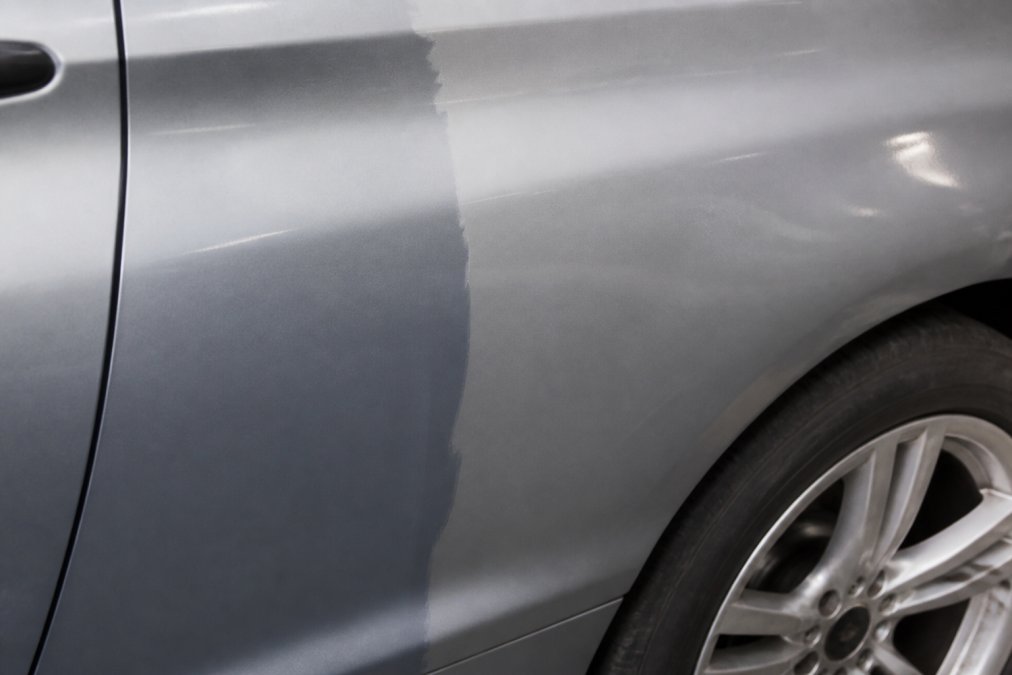
When you get your car repaired after an accident, the paint job should look seamless. But often it doesn't. The touch-up paint looks noticeably different from the original, or the newly painted panel doesn't blend with the rest of your vehicle. This frustration is common, and there are real reasons why paint matching looks bad, even when the shop claims they're using the right formula.
At Rubio's Custom Repair inc, we've spent over 30 years in the industry, understanding why paint color mismatch happens and what it takes to fix it properly. The issue isn't usually carelessness. It's a combination of factors that most car owners don't realize affect paint color. Understanding these reasons helps you know what to expect and how to spot quality work.
UV Exposure and Color Fading Over Time
Your car's paint fades. The sun damages it constantly through UV exposure. Original paint on your vehicle has been exposed to years of sunlight, heat, and weather. That exposure breaks down the polymers in the paint and oxidizes the pigments. The result is subtle but real: the color shifts slightly over time.
When you apply new paint to a repaired panel, that paint is fresh. It hasn't experienced any UV degradation yet. So even if the formula matches perfectly, the aged original paint and the new paint look different under natural light. One appears slightly faded. The other looks richer and newer.
This gap widens the longer your vehicle has been on the road. A five-year-old car will show more color variance between old and new paint than a one-year-old car. The effect is especially noticeable on darker colors and metallic finishes, where even small shifts in hue become obvious.
Paint Batch Variance and Formula Changes
Paint manufacturers don't produce paint in one giant batch. They make it in smaller runs. Even when using the exact same formula, slight variations occur between batches. The pigment dispersion can differ slightly. The viscosity might be marginally different. These small differences add up to noticeable color shifts.
Manufacturers also change formulas over time. They reformulate paint for durability, environmental compliance, or cost reasons. If your car was painted five years ago and you need a touch-up now, the current formula for your color code might be slightly different from what was originally used. The color code stays the same, but the actual paint composition has changed.
This is why getting the exact year and production batch of your original paint matters. Shops that do this work properly track the original paint batch and try to source a matching batch from the manufacturer.
The Metamerism Phenomenon
Here's something most guides don't explain: metamerism is why two paints can match under one light source but look completely different under another. This happens because paint color isn't just about pigment. It's about how light bounces off the surface and how your eye perceives it.
Two paint samples with different pigment compositions can look identical under fluorescent light in a shop but appear noticeably different in natural sunlight or under incandescent bulbs. This is metamerism. The color appears to shift based on the light source. It's not an optical illusion, it's real physics.
Most paint matching happens indoors under artificial lighting. The technician uses a tinting machine or manual color matching under shop lights. The paint looks perfect. But when you drive the car outside in daylight, the color suddenly looks wrong. The metamerism effect is now visible.
Quality shops test paint matches under multiple light sources, not just the shop lights where the tinting machine operates. They check it under natural daylight, under the hood, and under different angles.
How Auto Body Paint Blending Techniques Solve Mismatch
When a professional body shop does the work right, they don't just paint the damaged panel and call it done. They use blending techniques to make the repair invisible. This involves painting adjacent panels partially, feathering the paint so the transition is gradual rather than a hard line.
Blending works because it spreads the color transition across a larger area. Instead of a sharp boundary between old and new paint, the blend creates a gradual fade. Your eye doesn't catch a hard line. The color shift happens over several inches, so it's much less noticeable.
Spectrophotometer Color Matching vs. Manual Eye Matching
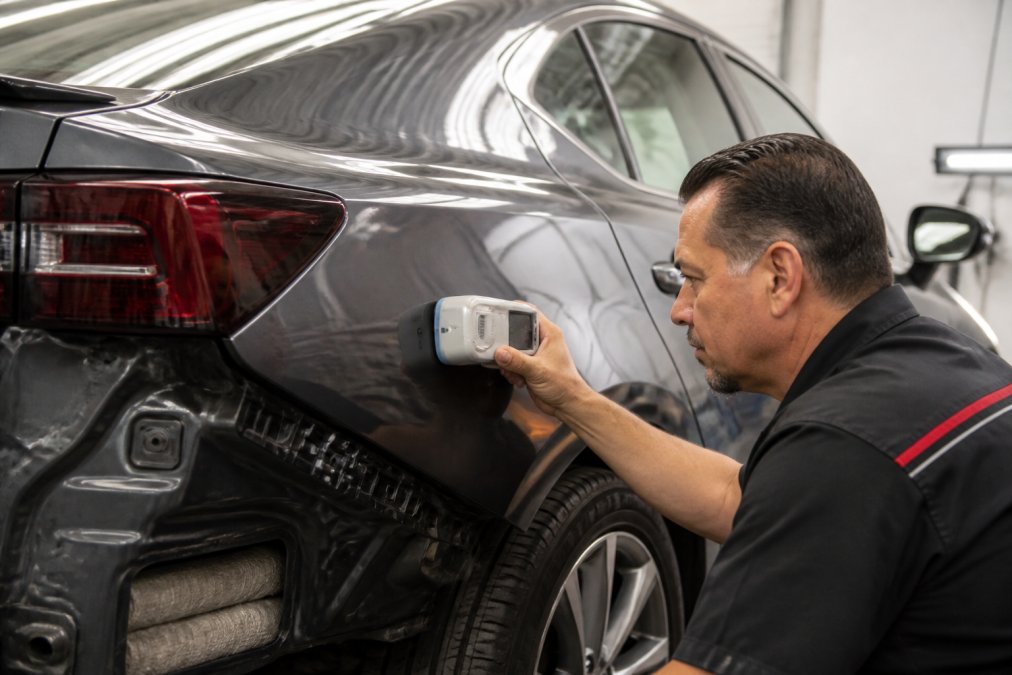
A spectrophotometer is a precision instrument that measures color with scientific accuracy. It reads the light reflectance value (LRV) and the exact hue, saturation, and color profile of a paint sample. This removes guesswork from the matching process.
Manual eye matching relies on a technician's visual judgment. They look at the original paint, mix the paint formula by hand or with a tinting machine, and compare it under shop lighting. This method depends entirely on the technician's experience and the quality of the lighting. Small variations in how the light hits the sample can lead to mismatches.
Spectrophotometers are more accurate, but they're not foolproof. They measure the paint as it is at that moment. They don't account for aging, UV degradation, or metamerism. A spectrophotometer reading of fresh paint will never perfectly match aged original paint. But spectrophotometer matching gives you a scientific starting point. Manual matching gives you a guess.
Shops using spectrophotometers typically charge more. The technology doesn't solve every problem, but it solves the biggest one: getting the base color formula as close as possible.
Primer, Substrate, and Surface Preparation Impact
The surface underneath the paint matters more than most people realize. If the substrate, the surface being painted, isn't properly prepared, the paint won't adhere correctly. Poor adhesion can cause the paint to look dull, uneven, or like it's sitting on top rather than bonded to the surface.
Primer is the foundation. It seals the substrate and gives the topcoat something to grip. The wrong primer or inadequate primer coverage creates problems. The paint might look slightly different because it's not sitting on a uniform base. Some areas might have better adhesion than others, causing subtle color variations.
Surface preparation is tedious and expensive, so some shops rush it.
How to Fix Mismatched Car Paint: Step-by-Step
If your car already has mismatched paint, you have options. Some fixes are simple. Others require repainting larger areas. Here's how to approach it.
Step 1: Assess the Color Drift and Identify the Root Cause
Start by looking at the mismatch in different lighting conditions. Take your car outside in natural daylight. Look at it under a covered area where there's no direct sun. Check it under streetlights at night. The mismatch might be obvious in one light and barely visible in another.
Step 2: Obtain the Correct Color Formula and Paint Base
If the formula is wrong, you need the original paint code and batch information. This is found in your vehicle's documentation or on a paint label inside the driver's door jamb. Get the exact year, make, model, and color code.
Step 3: Blending and Curing Process
Once you have the correct paint, the application method matters. The technician should blend the repair onto adjacent panels. This spreads the color transition so it's not obvious.
Is a Mobile Car Paint Repair Service Worth the Cost?
Mobile paint repair services come to your location and fix paint issues on-site. They're convenient, but they have limitations. Understanding these limits helps you decide whether mobile service is right for your situation.
What You Need to Know Before Attempting a Fix
Before you decide how to fix your paint mismatch, understand what's involved and what could go wrong.
Common Mistakes to Avoid
Trying to fix it yourself. Automotive paint requires specialized equipment and knowledge. The spray pattern, paint thickness, and blending technique are hard to get right without training.
Frequently Asked Questions
Why does paint matching not work perfectly every time?
Paint matching fails for multiple reasons: UV exposure fades original paint over time, manufacturers change paint formulas between batches, and metamerism causes colors to appear different under various light sources. Even with spectrophotometer technology, achieving a perfect match requires accounting for the vehicle's existing paint condition, the substrate underneath, and environmental factors. Professional shops blend paint into adjacent panels to minimize visible color shifts, but perfect matches aren't always possible on heavily aged vehicles.
How accurate is paint color matching with modern technology?
Digital color matching using spectrophotometers is far more accurate than manual eye matching. However, accuracy depends on several factors: the age of the original paint, whether the vehicle has been exposed to intense UV degradation, and the quality of the paint base and primer used. Tinting machine calibration errors and human error during the mixing process can also affect results. Professional shops account for these variables, but slight variations may still be visible in certain lighting conditions due to metamerism.
What should I do if my paint job doesn't match after repair?
Contact your repair shop immediately and document the mismatch with photos in different lighting conditions. Professional auto body shops should stand behind their work and offer correction options, which may include reblending the paint into adjacent panels, applying additional clear coat, or refinishing the affected area. The fix depends on the severity of the mismatch and the underlying cause. Rubio's Custom Repair inc backs every paint job with a service guarantee, so you're protected if color matching issues arise after your repair is complete.
Does surface preparation really affect how well paint matches?
Yes, surface preparation is critical to paint matching success. The substrate, primer quality, and wall texture all influence how paint adheres and how color appears. If the original surface wasn't properly prepped before the touch-up, the new paint won't cure correctly or reflect light the same way as the surrounding panels. This is why professional shops invest time in sanding, priming, and preparing the repair area before applying color.