 how-to
Auto Body Repair Warranty Coverage Explained
Table of Contents
- What an Auto Body Repair Warranty Actually Covers
- Collision Repair Warranty Duration: Lifetime vs. Limited Terms
- Common Exclusions in Collision Repair Warranties
- OEM Parts vs. Aftermarket Components: How Parts Warranties Differ
- How to File a Warranty Claim for Auto Body Work
- Transferability, Insurance Claims, and Digital Records
- Frequently Asked Questions
Last Updated: September 11, 2026
What an Auto Body Repair Warranty Actually Covers
An auto body repair warranty coverage explained in plain terms comes down to one promise: if the shop's work fails, the shop fixes it. Most policies cover two things, workmanship and labor, plus the paint work itself. The parts used in your repair usually carry their own separate manufacturer warranty.
Below, we'll break down exactly what's protected, what isn't, and how to file a claim if something goes wrong.
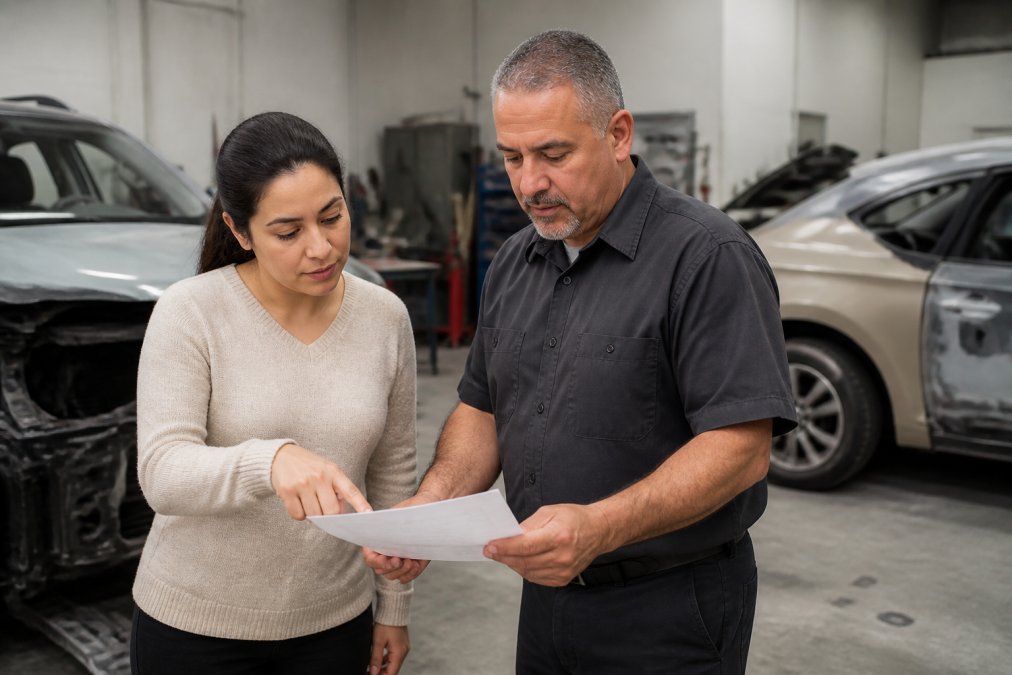
Workmanship and Labor Guarantees
A workmanship guarantee covers the quality of the repair itself. If a panel starts to rattle, a seam fails, or a weld breaks within the warranty period, the shop redoes the labor at no cost to you.
The Federal Trade Commission's guide to warranties draws a clear line between full warranties and limited ones. Most collision repair warranties are limited, meaning they cover specific defects for a set period rather than everything that could go wrong. Ask which type you're getting before you sign anything.
Paint Refinishing and Color Matching
Paint refinishing coverage protects against defects like peeling, blistering, and premature fading. Color matching is the harder promise, since a shop has to blend new paint into your existing finish under real lighting.
A common mistake is assuming a paint warranty covers a scratch you picked up later. It doesn't. It covers defects in the shop's own application, not new damage.
Collision Repair Warranty Duration: Lifetime vs. Limited Terms
Collision repair warranty duration varies widely, and the word "lifetime" rarely means what drivers assume. A lifetime warranty typically lasts as long as you own the vehicle, not forever, and often transfers only under specific conditions.
Here's how the two main types compare:
| Warranty Type | Typical Duration | Coverage Focus | Best For |
|---|---|---|---|
| Lifetime | As long as you own the vehicle | Workmanship and paint defects | Long-term owners keeping the car |
| Limited | Set period, often a few years | Specific listed defects | Drivers who may sell soon |
| Parts warranty | Varies by manufacturer | Defective parts only | Any repair using new parts |
The thing nobody tells you about lifetime warranties is the ownership clause. Sell the car, and the coverage often ends with you.
Common Exclusions in Collision Repair Warranties
Common exclusions in collision repair warranties usually fall into a few predictable buckets: wear and tear, rust, environmental damage, and work the shop didn't perform. Knowing these limits ahead of time prevents surprise bills later.
Normal Wear and Tear, Rust, and Environmental Damage
Normal wear and tear is never covered, because it isn't a defect in the repair. Rust is a frequent exclusion too, especially when it develops from a previous repair or from road salt exposure.
Environmental damage from hail, tree sap, or bird droppings also falls outside most policies. These are new perils, not failures of the shop's workmanship.
Aftermarket Parts and Sublet Repairs
Aftermarket components often carry weaker warranties than OEM parts. If a shop installs a non-original part to save money, the coverage on that part may be shorter or void entirely.
Sublet repairs are another gap. When a shop sends your vehicle to a specialist for part of the job, the warranty on that portion may come from the specialist rather than your primary repair facility.
OEM Parts vs. Aftermarket Components: How Parts Warranties Differ
OEM parts come from the vehicle manufacturer and typically carry the strongest warranties. Aftermarket components are made by third parties and vary widely in both quality and coverage.
A material defect in an OEM part is usually covered by the manufacturer directly. Aftermarket parts warranties depend entirely on the maker, and some offer no coverage at all.
What most guides miss is that the labor to replace a defective part may not be covered even when the part itself is. Confirm whether your repair facility covers the labor on a parts claim.
How to File a Warranty Claim for Auto Body Work
To file a warranty claim for auto body work, contact the shop that performed the repair first, not the part manufacturer. Bring your original repair estimate and any documentation you received at pickup. Most warranties require you to give the original shop a chance to inspect and correct the work before you authorize anyone else to touch it, skip that step and you can void the coverage entirely.
The Notice Clock Most Drivers Miss
Many collision repair warranties include a notice requirement buried in the terms: you must report a defect within a set number of days of discovering it, often 15 to 30 days (the FTC). Wait until the next oil change to mention peeling clear coat, and the shop can deny the claim on timeliness alone. Put the defect in writing, email or text is fine, the same week you notice it, and keep a copy.
Step-by-Step Claim Process
- Document the defect immediately. Photograph it in daylight from multiple angles, plus a wide shot showing the panel's location on the vehicle.
- Pull your paperwork. You need the repair estimate, the warranty certificate, and the repair date.
- Notify the shop in writing. Email or text the manager with photos, your VIN, the repair date, and a one-sentence description of the defect. Written notice creates a timestamp.
- Schedule the inspection. Let the shop see the vehicle before you get a second opinion or authorize outside work.
- Get the decision in writing. Ask for the approved remedy, the scheduled date, and whether the repair is covered at no cost or prorated.
- If denied, ask why in writing. A written denial forces the shop to cite the specific exclusion, which is the document you need if you escalate.
When the Shop Pushes Back
If the shop denies a claim you believe is valid, escalate in this order: the shop manager, then the owner or regional manager if it is a network shop, then the insurer if the repair was insurance-paid and the insurer's guarantee applies. For disputes over the warranty terms themselves, the Federal Trade Commission's guidance on warranties explains what a written warranty must disclose and what it cannot disclaim. Your state attorney general's consumer protection division handles pattern-of-practice complaints against a shop. Small claims court is a realistic option for repair costs under your state's limit, and you usually do not need a lawyer.
A common mistake is taking the car to a different shop before the original one inspects it. That can void your coverage entirely, and it also hands the original shop a clean defense if the dispute goes further.
Do not authorize a second shop to redo the work until the original shop has inspected it in person and either declined the claim in writing or missed a reasonable repair window. Verbal denials are hard to prove later.
Keep a digital folder with your repair estimate, warranty certificate, and defect photos. When a defect appears months later, having the file ready speeds up the claim and proves the repair date, which is the first thing every shop asks for.
Transferability, Insurance Claims, and Digital Records
Warranty transferability is where most drivers lose coverage without realizing it. Many lifetime warranties are non-transferable, so a new owner inherits the car but not the protection. Others allow a one-time transfer if the seller notifies the shop in writing within a set window, often 30 days of the sale, and provides the new owner's name, address, and the current odometer reading. Miss the window or skip the notice, and the warranty is void for the buyer even though the repair itself is still under the original term.
If you are the seller, treat the warranty like a title document. Hand over the original repair estimate, the warranty certificate, and any paint code or part-number sheet at closing, and ask the shop to issue a transfer endorsement in the new owner's name. If you are the buyer, call the shop before you hand over cash and ask three questions: Is the warranty transferable, what is the transfer fee if any, and what documents do you need from me? Get the answers in writing, a text or email from the shop manager is enough to create a record.
How Insurance-Mandated Repairs Interact With the Shop Warranty
When your insurer directs you to a preferred or DRP (direct repair program) shop, two warranties are in play at once, and they are not the same document. The shop's own workmanship warranty covers the quality of the repair. The insurer's guarantee, often marketed as a "lifetime guarantee" on preferred-shop work, typically covers the repair only as long as you own the vehicle and only if you used a shop in that insurer's network. If you later take the car to an out-of-network shop for a related issue, the insurer's guarantee usually ends.
A common pattern is for the insurer's guarantee to be narrower than the shop's warranty on paint and broader on structural work, or vice versa. Read both. Ask the shop whether its warranty is primary or secondary to the insurer's guarantee, and ask the insurer what happens if the shop closes. The answer to that last question is often "nothing", which is why the next section matters.
What Happens If the Shop Goes Out of Business
This is the scenario most warranty guides skip, and it is the one that turns a paper promise into a real loss. If the shop that performed your repair closes, your workmanship warranty generally dies with it unless one of three things is true:
- The shop was part of a national or multi-shop network (MSO) with a written guarantee that survives individual location closures. Ask before the repair whether the warranty is backed by the network or only by the location.
- The insurer's preferred-shop guarantee applies. Many insurers will reimburse a covered repair at another network shop if the original DRP shop closes, but only for the work the insurer paid for, not for customer-pay portions.
- The parts manufacturer's warranty is still in force. OEM and major aftermarket parts warranties usually run through the manufacturer, not the shop, so a defective part can still be claimed even if the installer is gone. Labor to replace it typically is not covered.
Before you authorize a repair, ask the shop manager one direct question: "If this location closes, who honors this warranty?" A shop that cannot answer is offering a warranty backed only by its own balance sheet.
Digital Record-Keeping: The Documents That Prove Eligibility Years Later
Paper receipts fade, get lost in moves, and are useless when a claim arises five years later. Build a digital file the day you pick up the car. At minimum, save:
- The final repair estimate and the signed authorization
- The warranty certificate with the start date and term length
- Before-and-after photos of the damaged area
- The paint code and any blend formula the shop used
- Part numbers and whether each part was OEM, aftermarket, or salvage
- The shop's legal business name, address, and phone number (not just the sign out front)
- Your insurer's claim number and the adjuster's name, if insurance paid
Store these in a cloud folder, not just on your phone. If you sell the car, copy the folder to the buyer and keep your own copy, you may need it to prove the repair date if a dispute arises later.
Consumer Financial Protection Bureau resources on consumer protections
Before you drive away, ask four questions: What's covered, for how long, does it transfer if I sell the car, and who honors it if this shop closes? The answers tell you whether the warranty is real protection or fine print.
Frequently Asked Questions
Are auto body repair warranties standard across all shops?
No. Auto body warranty terms vary widely by shop. Some offer a lifetime warranty on workmanship, while others limit coverage to 90 days or one year. Coverage for paint, parts, and labor also differs. Before authorizing repairs, ask for the warranty in writing and confirm what is covered, how long it lasts, and whether it is transferable if you sell the vehicle.
What are two items typically not covered in a collision repair warranty?
Most collision repair warranties exclude normal wear and tear and rust damage that develops after the repair. They also commonly exclude damage from new accidents, misuse, or environmental events like hail. Pre-existing rust near the repair area is another frequent exclusion. Review your shop's written terms so you know exactly which repairs fall outside coverage before you pick up your vehicle.
Does a collision repair warranty cover paint defects?
Reputable shops cover paint defects that result from their workmanship, such as peeling, blistering, or premature fading caused by poor surface prep or application. However, paint damage from rock chips, scratches, or accidents after the repair is not covered. Coverage length for paint refinishing varies, so confirm the specific terms in your warranty document.
How do I document a repair for warranty purposes?
Keep a folder with your repair estimate, final invoice, warranty document, and photos of the damage before and after the repair. Record the vehicle identification number, date of service, and the shop's contact details. If your shop provides digital records, save copies. This documentation makes filing a warranty claim faster and gives you proof of the original repair if you sell the car.
A warranty is only as good as the shop standing behind it. At Rubio's Custom Repair inc, every repair is backed by our guarantee, and we use original parts and premium PPG products to get the finish right the first time. With over 30 years of experience and our 50% off deductible offer, we handle the paperwork and work directly with your insurer so you're not stuck in the middle. Schedule an appointment with Rubio's Custom Repair inc and get back on the road with confidence.