 comparison
9 Best Paint Protection Methods for Daily Drivers
Last Updated: October 27, 2026
Quick Summary
The best paint protection for a daily driver is usually paint protection film on high-impact areas like the hood, front bumper and mirrors, combined with a ceramic coating on the rest of the car. Film absorbs rock chips and road debris, while the coating adds chemical resistance, UV protection and easier washing. Wax and sealants serve as low-cost upkeep layers, not primary protection.
- Paint protection film absorbs impacts from gravel and road debris, making it the strongest physical barrier.
- Ceramic coating resists bird droppings, bug residue and sap but does not stop rock chips.
- Apply paint correction first, then film on impact zones, then ceramic coating over the rest.
- Wax and sealants need reapplication every few months and do not protect against rock chips.
Table of Contents
- Paint Protection Film: Strongest Physical Barrier
- Ceramic Coating: Gloss, Chemical Resistance and Its Limits
- Ceramic Coating vs Paint Protection Film for Everyday Driving
- Wax and Sealants: Low-Cost Upkeep Layers
- How to Protect Car Paint From Rock Chips and Road Debris
- Choosing the Right Method for Your Commute, Parking and Climate
- Getting Your Paint Ready and Booking Your Protection
- Frequently Asked Questions
Your car's paint takes a beating every day, even when you think you're being careful. Rock chips from highway traffic, bird droppings baking in the sun, tree sap, road salt, and the slow grind of automatic car washes all add up.
The threats fall into a few groups. Physical impacts, such as gravel and debris kicked up at speed, cause chips and scratches that go straight through to the surface.
Paint Protection Film: Strongest Physical Barrier
Paint protection film, usually called PPF or "clear bra," is a thick, clear urethane film applied directly over the painted surface. Compare PPF and ceramic coatings to see whether professional protection is worth it for your vehicle.
PPF is most worth the investment on high-impact areas: the hood, front bumper, mirrors, and rocker panels. Full-body installs cost more but protect the entire vehicle.
How Long Paint Protection Film Lasts
Quality PPF is generally designed to last several years before it starts to yellow or lose its self-healing ability. Lifespan depends on climate, how often the car is driven, and how well the film is maintained. Vehicles parked outdoors in hot, sunny regions tend to see shorter service lives than those kept in garages. Ask your installer for the manufacturer's warranty terms before committing.
Ceramic Coating: Gloss, Chemical Resistance and Its Limits
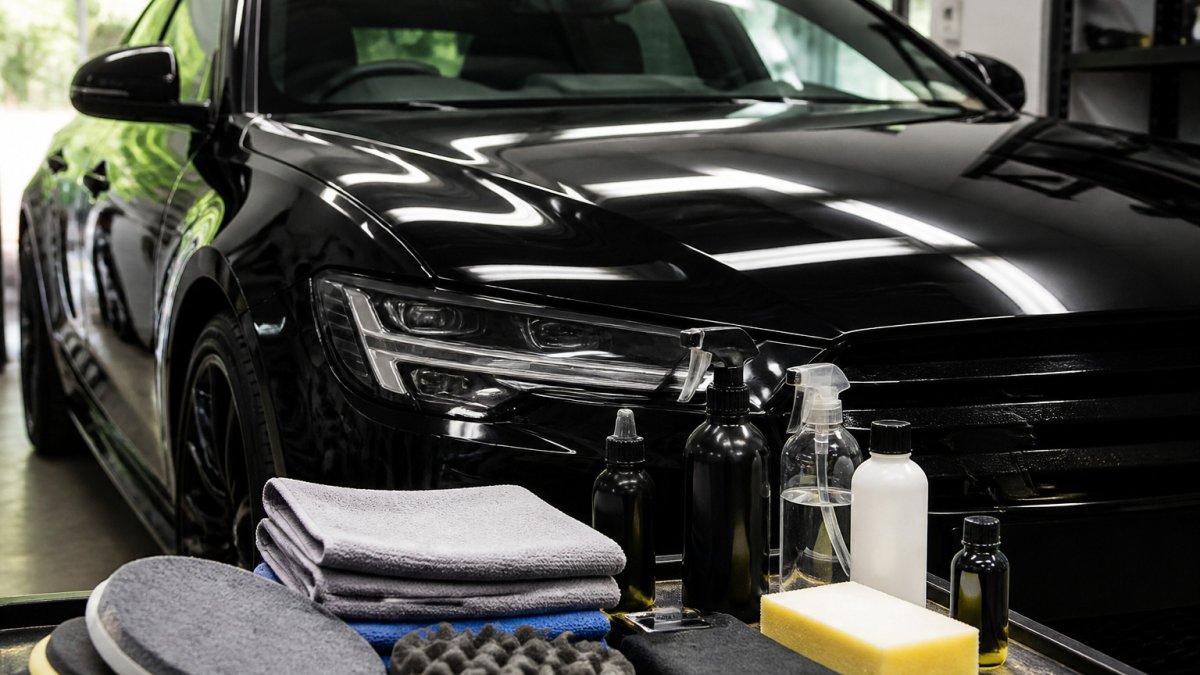
Ceramic coating is a liquid polymer that bonds chemically to the clear coat, creating a hard, slick layer. Its main strengths are gloss, water beading, and resistance to chemical stains like bird droppings and bug residue.
Ceramic coating does not stop rock chips. The coating is thin, so it offers little physical protection against gravel or impact. Treating it as a shield against road damage is a common and costly mistake.
Ceramic Coating vs Paint Protection Film for Everyday Driving
Most comparisons frame this as a binary choice. For a daily driver, it usually is not. PPF and ceramic coating solve different problems, and the strongest setups use them together in a specific order. Understanding what each product actually does, and what it cannot do, prevents the two most common and expensive mistakes: expecting a coating to stop rock chips, and expecting film to deliver coating-level gloss and easy washing on its own.
What each product actually does
| Threat | PPF | Ceramic coating |
|---|---|---|
| Rock chips and gravel impact | Yes, urethane film absorbs the impact | No, the layer is far too thin |
| Light swirl marks from washing | Yes, self-healing top coats smooth minor marring | Minimal, adds slickness but not impact resistance |
| Bird droppings, bug residue, tree sap | Yes, sacrificial layer over paint | Yes, chemical resistance and easier removal |
| UV fading and oxidation | Partial, blocks UV at covered panels | Yes, UV inhibitors in quality coatings |
| Water spotting and washing effort | Moderate | Strong, hydrophobic top coat sheds water |
| Gloss enhancement | Minimal | Noticeable depth and slickness |
A common pattern among experienced installers: film is a physical barrier, coating is a chemical and cosmetic barrier. Neither replaces the other.
The combined strategy and the order that works
The sequence matters. The standard professional approach is:
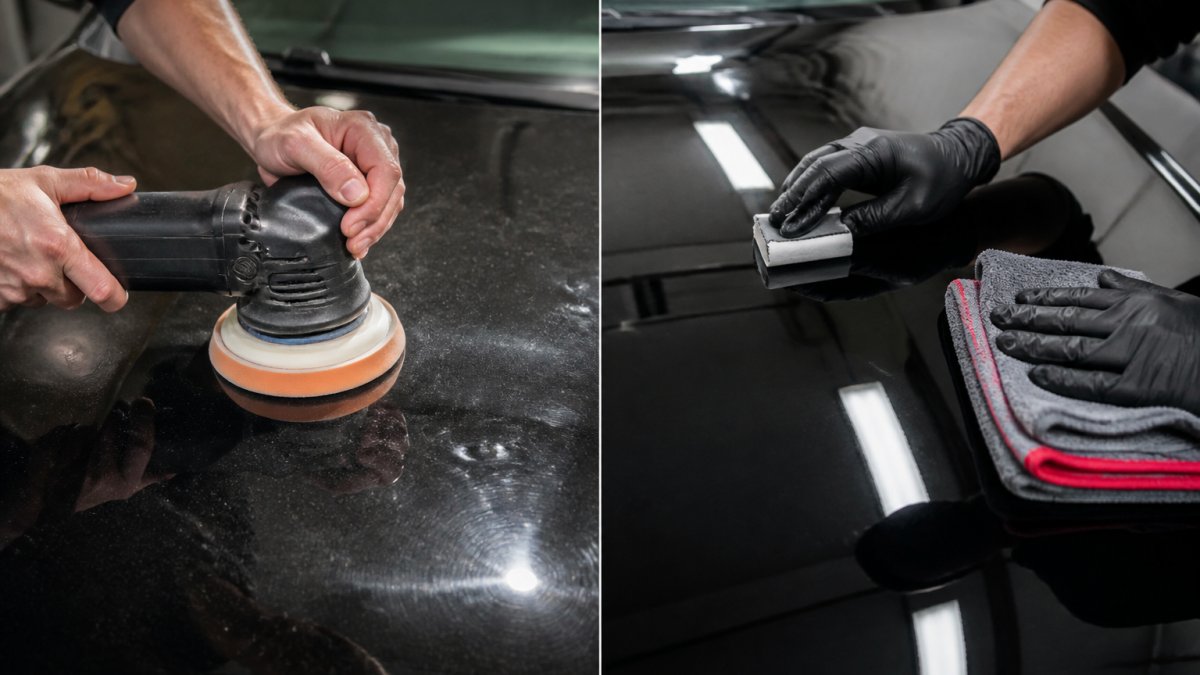
- Inspect and correct the paint first. Wash, decontaminate with clay, and polish out swirls, oxidation, and light scratches. Any defect sealed under film or coating is permanent until the product is removed.
- Apply PPF to impact zones. Front bumper, partial or full hood, mirror caps, A-pillars, rocker panels, and the area behind the rear wheels. These are the panels that take gravel, road debris, and scuffs.
- Apply ceramic coating over the film and the remaining paint. Quality PPF accepts coating on top, which adds slickness, UV resistance, and easier washing to the film itself. Coating the unprotected panels gives gloss and chemical resistance where impact risk is lower.
- Maintain with a coating-safe wash and periodic topper. Avoid wax on top of coating; use a coating maintenance spray or rinse aid.
Compatibility and installation cautions
- Confirm the film manufacturer approves coating on top of its product. Most major brands do, but warranty terms vary.
- Do not apply film over a freshly coated panel unless the coating has fully cured and the film installer confirms adhesion. Coating first, film second is generally the wrong order on impact panels.
- Self-healing films need heat to recover from light marring; a coating on top does not prevent this, but heavy-handed washing still causes damage.
- Removal is part of the cost picture: film is removed and replaced on impact zones every several years, while a coating is polished off and reapplied. Plan for both.
Realistic total cost of ownership
Purchase price alone misleads. A more honest comparison tracks:
- Upfront: film on impact zones costs more than a coating on the same panels; a full-body film install costs more than a full-body coating.
- Maintenance: coating-safe shampoo, maintenance spray, and microfiber supplies are recurring costs either way. Wax and sealant users add reapplication product every few months.
- Reapplication: coatings typically need refreshing or reapplication every few years depending on climate and washing habits; film on impact zones is replaced when it yellows, lifts, or loses self-healing.
- Repair: a chipped panel under film may need film removal and reinstallation; a chipped panel under coating needs paint repair plus reapplication. Film usually wins on repair avoidance, not repair cost.
Wax and Sealants: Low-Cost Upkeep Layers
Carnauba wax and synthetic paint sealants are the most affordable options. Before layering these on, you can learn what professional restoration removes such as swirl marks and oxidation.
These products do not protect against rock chips or serious chemical damage. Think of them as maintenance layers that keep the paint looking good between more durable treatments, not as primary protection.
How to Protect Car Paint From Rock Chips and Road Debris
Rock chips are the most common form of physical paint damage on daily drivers. The most effective defense is film on the high-impact zones. Paint protection film absorbs impacts that would otherwise chip the paint.
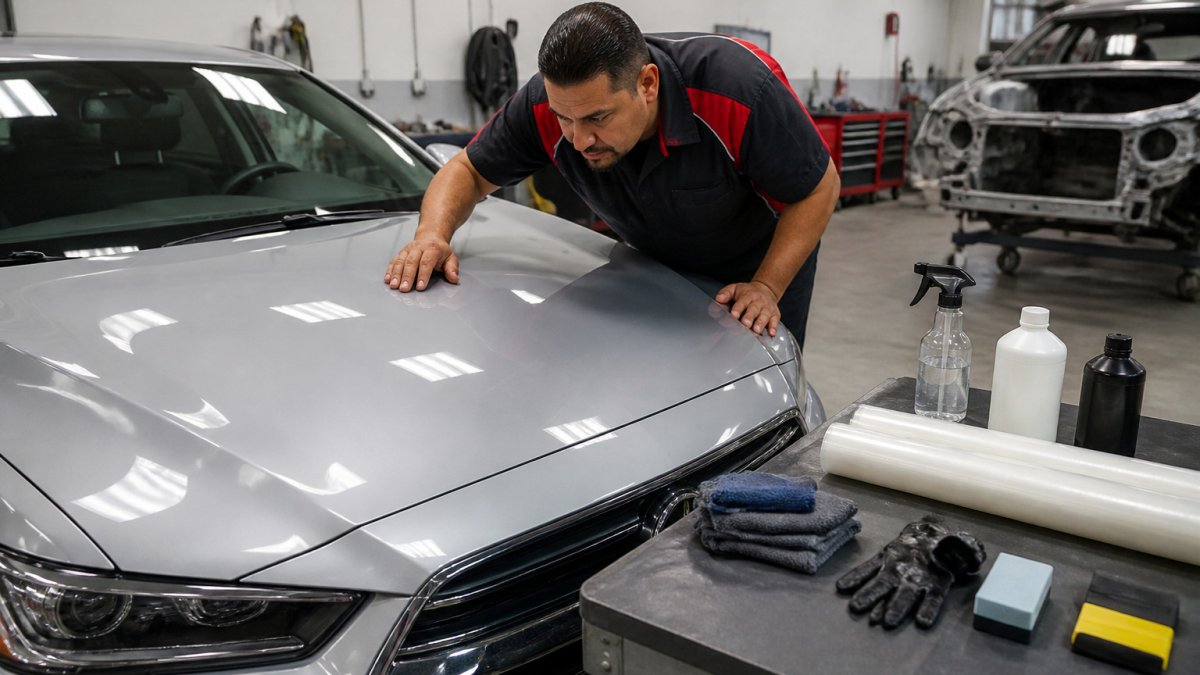
Practical steps help too:
- Keep a safe following distance from trucks carrying loose loads.
- Address small chips quickly with touch-up paint to stop rust from forming. Follow step-by-step guidance on repairing paint chips with touch-up paint, primer, and proper prep.
- Wash off bird droppings and tree sap within a day or two.
Watch out: applying touch-up paint over a chip without cleaning and sealing the edges can trap moisture and lead to rust underneath the paint.
Choosing the Right Method for Your Commute, Parking and Climate
Generic rankings do not help a daily driver decide. What matters is your actual exposure profile: how many miles you drive, where the car sits when parked, what the climate throws at the paint, and what kind of debris you meet. Use the matrix below to narrow the choice, then confirm with a paint inspection before booking.
Decision matrix by driving and parking profile
| Profile | Typical exposure | Recommended primary protection | Add-ons |
|---|---|---|---|
| Long highway commute, outdoor parking | High-speed gravel, UV, bird droppings | PPF on front bumper, hood, mirrors, A-pillars | Ceramic coating on remaining panels; coating-safe wash routine |
| Short city commute, garage kept | Low impact, occasional sap and droppings | Ceramic coating full body | Sealant or spray topper between coating services |
| High annual mileage (well above average), mixed roads | Sustained impact and contaminant load | PPF on impact zones plus coating elsewhere | Periodic film inspection; touch-up paint for any exposed chips |
| Low annual mileage, weekend use | Sun and sitting contaminants more than impact | Ceramic coating or quality sealant | Cover when parked outdoors for long periods |
| Gravel or construction route | Heavy chip risk on lower panels and rockers | PPF on front end, rockers, and behind wheels | Coating on roof and upper panels |
| Coastal or road-salt region | Salt spray, corrosion risk at chip edges | PPF on impact zones; prompt chip repair | Regular undercarriage and panel washing; coating for easier salt removal |
Climate and seasonal trade-offs
- Strong sun and heat: UV breaks down clear coat and shortens film life. Prioritize UV-resistant coating on exposed panels and expect film on outdoor-parked cars to need replacement sooner.
- Road salt and winter brine: Salt attacks any exposed chip edge. Film on the front and lower panels plus prompt touch-up of chips is the practical defense. Wash the underside and wheel arches regularly in season.
- Tree sap and bird droppings: These etch clear coat within hours in heat. A coating makes removal easier, but neither film nor coating removes the need to clean promptly.
- Gravel and loose debris: Following distance and film on impact zones do more than any chemical product.
- Outdoor parking under trees: A cover plus coating reduces sap and dropping exposure; film does not help with chemical etching.
Annual mileage as a rough guide
There is no universal threshold, but the pattern is consistent: the more miles and the more highway or gravel exposure, the more the budget should shift toward film on impact zones. Lower-mileage, garage-kept cars get more value from coating and a disciplined wash routine. If you are unsure, film the front end first, it is the area where damage is most likely and most expensive to reverse.
Getting Your Paint Ready and Booking Your Protection
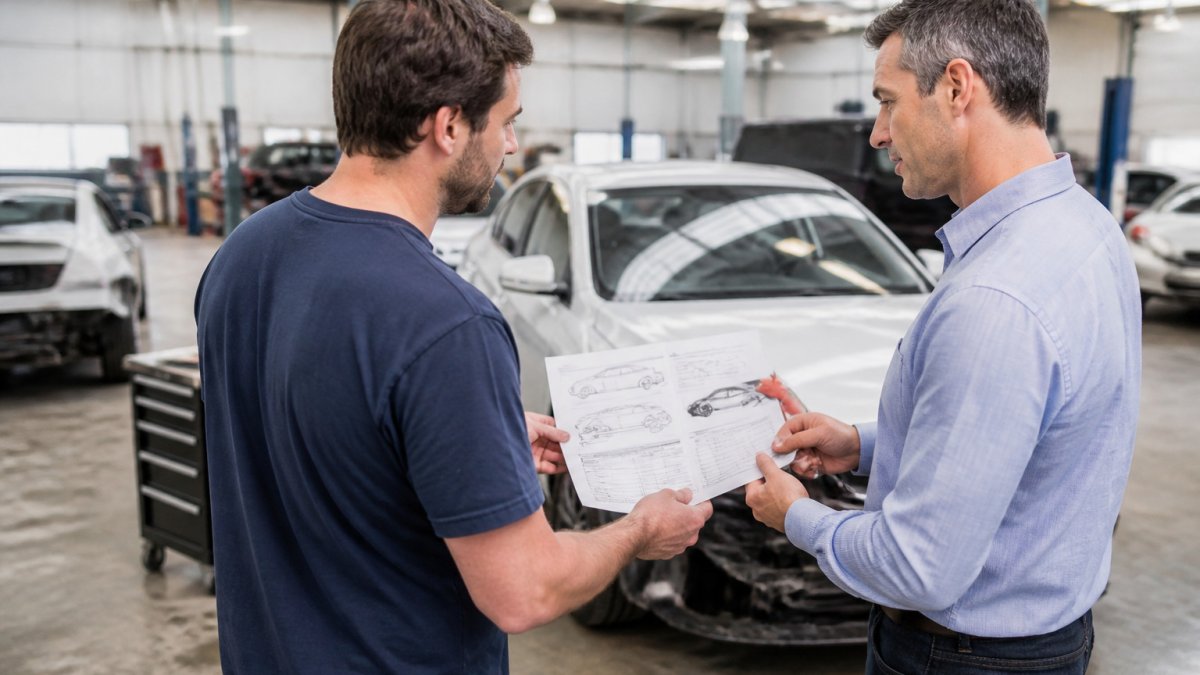
Protection only works well on a clean, smooth surface. If you're ready to book, follow these steps to choose a body shop you can trust with the work.
At Rubio's Custom Repair inc, we are a family-owned and operated auto body shop in Manteca, California, with over 30 years of experience in collision repair and paint. We use original parts for most repairs and premium PPG products for paint work.
Frequently Asked Questions
What is the best paint protection for a daily driver?
For most daily drivers, paint protection film gives the strongest physical defense against rock chips, road debris and minor impacts, while ceramic coating offers better gloss and easier cleaning. Many owners combine both, applying film to high-impact areas such as the front bumper, hood and mirrors, then coating the rest of the vehicle. Your commute, parking habits and how long you plan to keep the car should guide the choice.
How long does paint protection film last?
Quality paint protection film commonly lasts several years on a daily driver, depending on film thickness, climate, sun exposure and how the vehicle is washed. Film can yellow, lift at edges or collect scratches over time, and it is not a permanent fix. Regular hand washing with pH-neutral soap and avoiding abrasive automated washes will extend its life. Rubio's Custom Repair inc can inspect your film and advise when replacement or maintenance makes sense.
Is paint protection film worth the cost for a daily driver?
Paint protection film is worth considering when your car sees highway driving, gravel roads, or parking in exposed locations where rock chips and debris are common. The cost is higher than wax or sealant, but it prevents damage that would otherwise require paint repair. Compare the expected repair costs you want to avoid against the price of a full or partial film application. Rubio's Custom Repair inc provides quotes based on your specific vehicle and coverage needs.