 comparison
Are Insurance Preferred Body Shops Better for You?
Last Updated: October 30, 2026
Quick Summary
Insurance preferred body shops can be a good choice for fast, straightforward claims because they coordinate paperwork directly with your insurer. Preferred status does not automatically mean better repair quality, so check parts, procedures, and warranty terms before approving work.
- Preferred shops have an agreement with your insurer, often called a direct repair program (DRP).
- You can usually choose your own body shop, even if your insurer recommends a preferred one.
- Confirm parts types and whether your insurer approves aftermarket or recycled parts.
- Ask whether the shop follows manufacturer repair procedures and documents sensor calibration.
- Get written warranty terms, including length, scope, and who backs the repair, before work begins.
Table of Contents
- What an Insurance Preferred Body Shop Actually Is
- Can I Choose My Own Body Shop After an Accident?
- Insurance Preferred Body Shop Pros and Cons
- Parts, Repair Quality, and Warranties Compared
- Body Shop Repair Estimate Before Filing a Claim
- Questions to Ask a Body Shop After an Accident
- Booking Your Repair: Deciding Where Your Car Goes Next
- Frequently Asked Questions
What an Insurance Preferred Body Shop Actually Is
If you have ever asked whether it is better to use insurance preferred body shops, the honest answer starts with what the term means.
Under a DRP, the insurer sends your vehicle to a shop in its network and the two coordinate the estimate, parts approval, and billing. Many drivers find this convenient because the paperwork flows between the insurer and the shop instead of through them. Preferred-shop programs are often described as offering faster approvals and simplified paperwork.
Preferred status does not automatically mean a better repair. It means the shop has an agreement with the insurer. Before you assume the arrangement works in your favor, it helps to understand who benefits from the relationship and what you give up.
Can I Choose My Own Body Shop After an Accident?
Yes, in most cases you can. The choice of repair shop generally belongs to you, even when your insurer recommends a particular facility. Insurers may suggest a preferred shop, but a recommendation is not a requirement.
Some drivers feel pressure to use the shop their insurer names. Some consumer advocates argue that preferred-shop referrals give insurers more control over repair costs, so drivers may want to consider an independent shop.
Before you choose, confirm three things with your insurer: whether your policy requires a specific shop, how the claim will be handled if you go elsewhere, and whether any rental coverage depends on your choice. Get those answers in writing when you can. To see what warranty protection a quality shop offers regardless of network status, review the coverage terms before you decide.
Insurance Preferred Body Shop Pros and Cons
Preferred shops offer real advantages, but they come with tradeoffs worth weighing against your situation.
Potential advantages:
- Faster claim approvals because the shop and insurer already share a process
- Less back-and-forth on paperwork and parts authorization
- Possible insurer-backed warranties, depending on the program
- Convenience, since you may not need to manage communication with the insurer yourself
Potential drawbacks:
- Less freedom to pick a shop you already trust or that is closer to home
- Repair decisions may be shaped by network pricing and insurer guidelines
- A shop's priority may lean toward the insurer's cost targets, which may not match your priorities
- Disputes about the estimate can be harder to resolve when the insurer and shop are already connected
Use this trade-off as a starting point, not a verdict. A preferred shop can be a solid choice for a minor claim where speed matters most. For a complex repair, the balance may tilt toward an independent shop you have vetted yourself.
Parts, Repair Quality, and Warranties Compared
Parts and workmanship are where preferred and independent shops most often differ in practice.
Parts: know what is going on your vehicle. Collision repairs can use original equipment manufacturer (OEM) parts, aftermarket parts, or recycled (used) parts. Each has trade-offs:
- OEM parts are made by or for the vehicle manufacturer to the original specification. They typically fit best and preserve warranty coverage, but cost more.
- Aftermarket parts are made by third parties. Quality varies widely; some are excellent, some are not. Fit and finish can differ from OEM.
- Recycled parts are salvaged from other vehicles. They can be a good value for older vehicles but carry condition risk.
Ask the shop for a written parts list showing each part, its type, and its part number.
Repair procedures: the part most drivers never check. Modern vehicles often require specific repair procedures, pre-repair and post-repair diagnostic scans, calibration of cameras and radar sensors, and sectioning or welding methods specified by the manufacturer. Ask the shop whether it follows the manufacturer's published repair procedures for your make and model, and ask how it documents that it did. For vehicles with advanced driver-assistance systems, ask specifically how sensors will be calibrated and whether that calibration is included in the estimate.
Warranties: compare the terms, not just the promise. Ask each shop for its written workmanship and paint warranty and compare:
- Length, how many years or miles does coverage run?
- Scope, does it cover workmanship only, or also paint and materials?
- Who backs it, the shop alone, the insurer, or both?
- Transferability, does it transfer if you sell the vehicle?
A warranty you cannot read in writing is not a warranty you can rely on.
Who is responsible if something goes wrong. Clarify this before repairs begin.
| Factor | Insurance Preferred Shop | Independent Shop |
|---|---|---|
| Claim paperwork | Usually coordinated with insurer | You or the shop manage it |
| Shop choice | Limited to network | Your choice |
| Parts options | May follow insurer approval | Often negotiated with you |
| Manufacturer procedures | Ask; varies by shop | Ask; varies by shop |
| Warranty source | Shop, insurer, or both | Typically the shop |
| Best for | Fast, straightforward claims | Complex repairs or specific shop preference |
A practical verification checklist. Before you authorize repairs at any shop, preferred or independent:
- Get the written parts list and confirm part types
- Confirm the shop follows manufacturer repair procedures and will document it
- Confirm scan and calibration requirements are in the estimate
- Get the written warranty terms and the claims contact
Repair quality depends more on the technicians, equipment, and procedures than on network status.
Body Shop Repair Estimate Before Filing a Claim
Getting an estimate before you formally file can clarify your costs and your options, but the estimate is not a single number, it is a process. To learn how to get a collision repair quote quickly, see what to bring and how estimates are prepared.
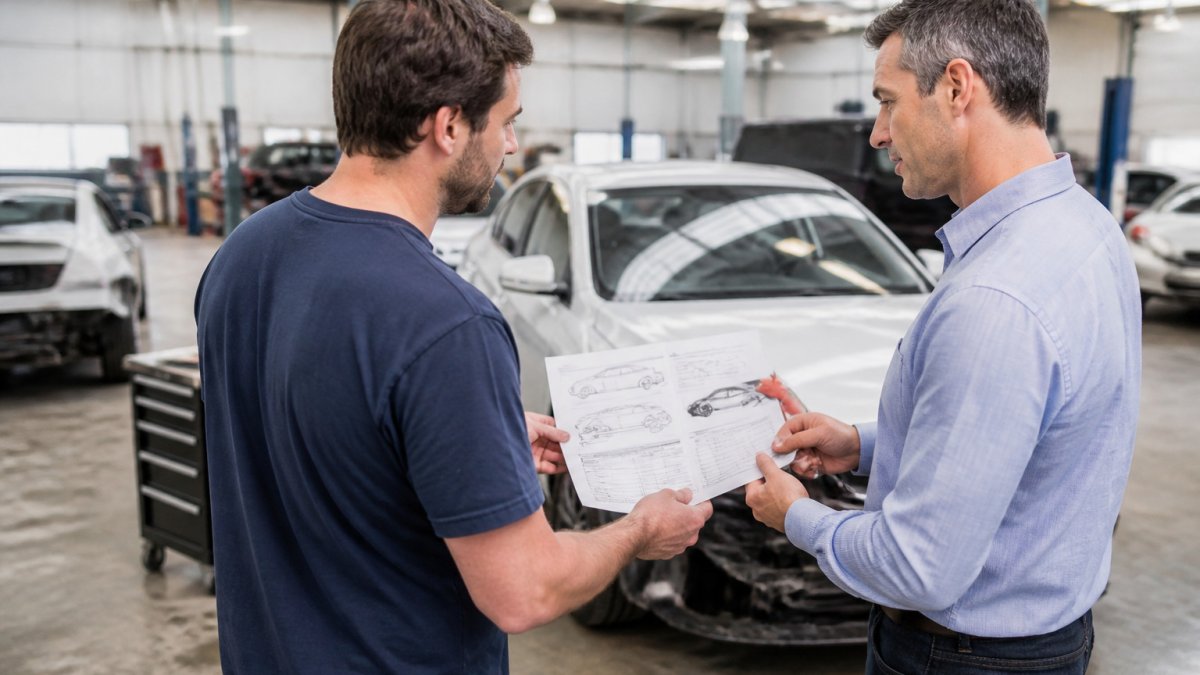
What a written estimate should contain. A complete collision estimate typically lists labor hours by operation, parts with part numbers and type (OEM, aftermarket, or used), paint and materials charges, and any sublet work such as wheel alignment or sensor calibration. For guidance on verifying an estimate's accuracy before approving any work, check each line item against this list.
Why the insurer's estimate and the shop's estimate differ. It is normal for the two to diverge. Common reasons include:
- Different part types (the insurer may specify aftermarket or recycled parts where the shop quoted OEM)
- Different labor times (insurers use estimating databases; shops may include procedures the database omits)
- Procedures the insurer did not include, such as pre-repair scans, post-repair scans, or calibration of advanced driver-assistance systems
- Hidden damage that was not visible until disassembly
How supplements work. A supplement is a revised estimate submitted when the shop finds additional damage after repairs begin. The shop documents the additional damage, usually with photos and a revised estimate, and submits it to the insurer for approval.
How to keep the claim moving when estimates differ.
- Request a line-by-line comparison of the two estimates. Ask the shop to explain each difference in plain terms, part type, labor operation, or a procedure the insurer left out.
- Ask the insurer to explain its figures the same way. If the insurer omitted a manufacturer-required procedure, ask the shop to cite the procedure so you can pass it along.
- Put questions in writing. Email creates a record and tends to get faster, more specific answers than phone calls.
- Ask about the supplement timeline up front. How long does the insurer typically take to approve a supplement? Who submits it, the shop or you?
- Do not authorize repairs on an incomplete estimate just to speed things up. If hidden damage is likely, ask the shop to disassemble and document before final approval.
State rules vary. Insurance claim and repair rules are set at the state level, and consumer protections differ. If you have a dispute you cannot resolve with the insurer, contact your state's insurance regulator for guidance on your rights and the complaint process.
Out-of-pocket implications. Your deductible applies regardless of which shop you use. Beyond that, watch for betterment charges (when a repair improves a worn part), charges for parts upgrades you request, and any difference between what the insurer approves and what the shop charges.
Questions to Ask a Body Shop After an Accident
A short list of direct questions can reveal a great deal about a shop before you commit. For a practical framework to evaluate shops step by step, work through each stage before booking.
- Do you work with my insurer, and will you handle the claim communication?
- What parts will you use, and will the insurer need to approve any substitutions?
- Do you follow manufacturer repair procedures for my vehicle?
- What warranty do you provide on workmanship and paint, and for how long?
- How do you handle supplemental damage found after work starts?
Written answers are better than verbal ones. A shop that stands behind its work should be willing to put its warranty terms in writing.
Booking Your Repair: Deciding Where Your Car Goes Next
Once you have compared your options, the decision usually comes down to three questions: how complex the damage is, how much control you want over the process, and how much you trust the shop's workmanship and warranty.
For a simple claim with a shop your insurer prefers, the convenience may be worth it. If you want to see local options and what to look for near you, compare shops in the Manteca area before you book.
Rubio's Custom Repair inc is a family-owned auto body shop in Manteca, California, with over 30 years of experience. We specialize in collision repair and paint, use original parts for most repairs, and use high-quality PPG products.
Frequently Asked Questions
Do I have to use the body shop my insurance company recommends?
No. In most cases you have the right to choose any licensed repair facility, even if your insurer has a preferred network. Your insurer may suggest a shop, and preferred shops often process claims faster because they have direct communication channels with the carrier. However, the recommendation is not a requirement unless you chose a policy or program that specifically mandates a network. Check your policy language and ask your adjuster directly before you commit to a shop, and get the repair estimate in writing so you can compare it with the insurer's estimate.
Will my insurance cover repairs at a shop outside its preferred network?
Usually yes, though the process can differ. Insurers pay for covered collision damage at the agreed amount under your policy, and the shop you choose may need to agree to the insurer's estimate or negotiate any differences. If the shop's price is higher, you may owe the difference. Ask the independent shop whether it will work with your insurer on the estimate, how it handles supplemental damage, and whether the insurer must approve parts or labor rates before work begins.
What are the pros and cons of an insurance-preferred body shop?
Preferred shops can offer faster claim approvals, streamlined paperwork, and direct communication with your insurer, which may reduce your time without a vehicle. Some also offer insurer-backed warranties. The main drawback is that a preferred relationship can mean the insurer has more influence over repair costs and parts decisions, which some consumer advocates criticize. Independent shops give you more control over the repair plan and the parts used, but may require more coordination on your part. Compare the written estimate, warranty terms, and turnaround time from each option before deciding.
Should I get an estimate before filing a claim?
Getting a written estimate from a shop before you file can help you understand the likely cost and whether the damage is worth claiming. Repair estimates from a body shop include parts, labor, paint, and any calibration work. If the estimate is close to your deductible, filing may not make financial sense. Keep in mind that hidden damage often appears once a technician begins disassembly, so ask the shop how it handles supplemental estimates and approvals before work starts.