 how-to
How to File a Diminished Value Claim After an Accident
Quick Summary
A diminished value claim seeks payment for the drop in your car's market value after it has been properly repaired, since buyers and dealers often discount cars with an accident history. To file, check whether your policy or the at-fault driver's insurer covers it, gather repair and appraisal documents, and send a written claim before your state's deadline.
- Diminished value is separate from the cost of the repair itself.
- Coverage depends on your state and your policy, so check both before filing.
- Collect the police report, repair invoice, photos and a written appraisal before contacting the insurer.
- Diminished value is the gap between pre-accident and post-repair value.
- Each state sets its own filing deadline, and missing it can cost you the claim.
Table of Contents
- What a Diminished Value Claim Covers After a Crash
- Check Whether Your Policy or the At-Fault Insurer Owes You
- Gather the Diminished Value Claim Documentation You Need
- How to Calculate Diminished Value of a Car
- Write a Diminished Value Claim Letter Template That Gets Read
- Watch the Diminished Value Claim Filing Deadline
- Handling Pushback and Submitting Your Claim
- Scheduling Your Repair and Next Steps With Rubio's Custom Repair
- Frequently Asked Questions
What a Diminished Value Claim Covers After a Crash
A diminished value claim seeks payment for the drop in your car's market value after it has been properly repaired. Even a clean repair can leave a vehicle worth less, because buyers and dealers often discount cars with an accident history. Diminished value is a separate issue from the cost of the repair itself.
Here is what usually matters. The claim targets the loss in resale value, not the repair bill. Coverage depends on your state and your policy, so check both before you file.
Diminished value claims generally fall into two types:
- Inherent diminished value: The loss that comes from the accident history itself
- Repair-related diminished value: The loss tied to repair quality, such as mismatched paint or aftermarket parts
A written appraisal early can give you concrete numbers to support your claim.
Check Whether Your Policy or the At-Fault Insurer Owes You
Start by finding out who should pay. If another driver caused the crash, you can usually file a diminished value claim against that driver's insurer. If you were at fault, your own policy may not cover it at all.
Not every policy includes diminished value coverage. Not every policy includes diminished value coverage, so ask your insurer: Find out what a claim supplement is and whether it applies to your repair.
- Does my policy cover diminished value?
- Who should I file with: my insurer or the other driver's?
- What documents do you need from me?
If your claim is denied or undervalued, you still have options. Learn how to handle an insurance claim denial step by step. Read the denial letter closely and ask for the specific reason in writing.
Gather the Diminished Value Claim Documentation You Need
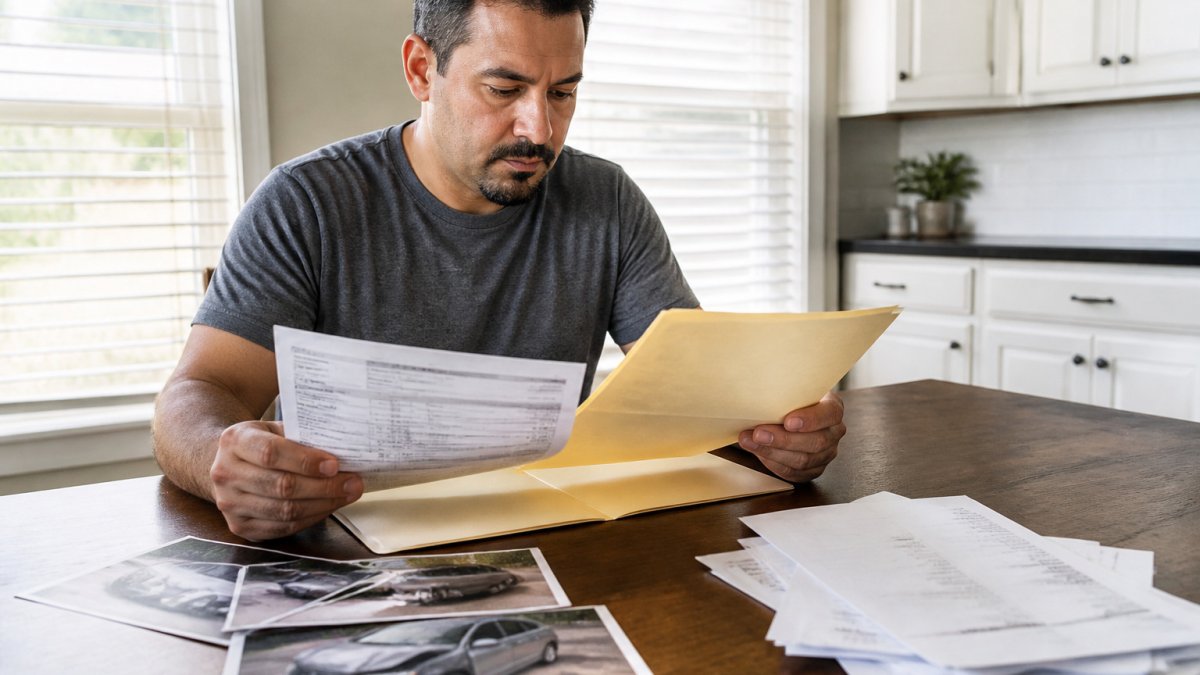
Strong documentation supports diminished value claims. Collect these items before you contact the insurer:
- The police report and claim number
- Photos of the vehicle before and after the accident
- The final repair invoice and repair order
- Parts records showing whether original (OEM) parts were used
- Paint records and the paint codes used
- Your vehicle's title, registration and mileage at the time of the crash
- A written appraisal from a qualified appraiser
Keep copies of everything and organize the files by date. Insurers often ask for the same documents more than once, so a clean folder saves time.
How to Calculate Diminished Value of a Car
Diminished value is the difference between what your car was worth before the accident and what it is worth after repair. Appraisers use a few standard methods, and the best one depends on your vehicle and your state's rules.
A simple way to think about it:
- Pre-accident value: What the car was worth before the crash
- Post-repair value: What the car is worth now, with the accident history
- Diminished value: The gap between the two
Appraisers often weigh factors such as the car's age, mileage, make and model, and how severe the damage was. Structural damage usually costs more in value than cosmetic damage. Ask the appraiser to explain the method in writing so you can defend it if the insurer disputes the number.
The gap between pre-accident and post-repair value is what a diminished value claim seeks to recover, and the table below sums up the three figures involved.
| Figure | What it means | Note |
|---|---|---|
| Pre-accident value | What the car was worth before the crash | Set by the car's pre-crash condition |
| Post-repair value | What the car is worth now, with accident history | Reflects the accident history |
| Diminished value | The gap between the two values | The amount you seek to recover |
| Structural damage | Damage that usually costs more in value | Weighs more than cosmetic damage |
| Appraiser method | The calculation approach used | Ask for it in writing |
Write a Diminished Value Claim Letter Template That Gets Read
A clear, short letter helps your claim move. Use this template and fill in the brackets:
Dear [Insurer Name] Claims Department,
I am filing a diminished value claim for the accident on [date], claim number [number], involving my [year, make, model, VIN].
My vehicle was repaired at [shop name] at a cost of [amount]. An independent appraisal dated [date] shows a diminished value of [amount]. I have enclosed the appraisal, the repair invoice, photos and the police report.
Please review this claim and respond in writing within [number] days.
Sincerely, [Your name, address, phone number, email]
Send the letter by certified mail or through the insurer's claim portal so you have proof of delivery.
Watch the Diminished Value Claim Filing Deadline
Each state sets its own time limit for filing, and missing that window can cost you the right to file. Check the rule that applies where you live.
Check your deadline as soon as the accident happens. Write the date on your calendar and file early. Waiting until the repair is done, or until you feel ready, can cost you the claim.
Handling Pushback and Submitting Your Claim
Insurers sometimes push back on diminished value claims at first, and an initial rejection does not mean your claim lacks merit.
When pushback comes:
- Ask for the denial or offer in writing
- Compare the insurer's number with your appraisal line by line
- Submit any missing documents quickly
- Request a supervisor review if the answer does not make sense
- Consider a consumer complaint with your state insurance department if the insurer stalls
Keep every call log and email. A paper trail protects you if the claim goes further.
Scheduling Your Repair and Next Steps With Rubio's Custom Repair
Good repair records help support a diminished value claim. At Rubio's Custom Repair inc, our family-owned shop in Manteca has more than 30 years of collision and paint experience. We use original parts for most repairs and premium PPG paint products, and we back our work with a guarantee.
Ready to get your car back on the road? Schedule an appointment with us. Learn how to track your auto body repair progress.
Frequently Asked Questions
What is a diminished value claim?
A diminished value claim seeks compensation for the drop in a vehicle's market value after it has been damaged in a crash and properly repaired. Even a well-repaired car can sell for less because it has an accident history on its record. In most cases the claim is filed against the at-fault driver's insurer, though some policies do not cover diminished value at all, so confirm coverage before you file. Documenting the pre-accident value and the repair work makes the claim much easier to support.
Can I file a diminished value claim if the accident was not my fault?
Yes, a diminished value claim is usually filed against the at-fault party's insurance company rather than your own. Your insurer may be able to help you start the process, but the at-fault party's liability coverage is where the claim typically goes. Your own policy may or may not include diminished value coverage, so check the terms. Gather the accident report, repair invoices and vehicle valuation evidence before contacting the insurer.
How long do I have to file a diminished value claim?
The deadline depends on your state's statute of limitations for property damage claims. Because timing rules can vary and some insurers set their own internal deadlines, file as early as you reasonably can. Waiting too long can weaken your claim or make it harder to document the vehicle's pre-accident value. If you are close to the deadline, consider consulting an attorney who handles auto claims.