 listicle
Best Auto Body Shop Manteca: 2026 Buyer's Guide
Table of Contents
- How We Found the Best Auto Body Shop in Manteca
- Quick Comparison: Top Auto Body Shop Manteca Options
- Understanding Your Collision Repair Cost Estimate
- What to Expect: The Auto Body Repair Timeline
- How to Choose a Collision Repair Center You Can Trust
- The Rubio's Custom Repair Difference: 30 Years of Local Expertise
- Navigating Insurance Claims Without the Headache
- Conclusion: Your Next Step to a Flawless Finish
- Frequently Asked Questions
Last Updated: September 8, 2026
Finding a reliable repair shop after an accident is stressful, and the search for the best auto body shop Manteca drivers can trust often feels overwhelming. The difference between a flawless repair and a recurring headache comes down to expertise, transparency, and material quality. At Rubio's Custom Repair inc, we've spent over 30 years perfecting the collision repair process.
A quality auto body shop manteca residents recommend combines certified technician expertise with honest communication and guaranteed workmanship. Most shops can fix a dent; fewer can restore a vehicle to its pre-accident condition with precision paint matching and structural integrity.
How We Found the Best Auto Body Shop in Manteca
Our evaluation focused on repair quality, estimate transparency, and workmanship guarantees.
We prioritized shops with I-CAR certified technicians, signaling ongoing training in modern diagnostics and repair techniques. We also weighed the use of original parts versus generic alternatives, as this impacts repair longevity and safety.
Quick Comparison: Top Auto Body Shop Manteca Options
When comparing your local options, you are essentially choosing between a few distinct business models, each with its own tradeoffs.
| Shop Type | Typical Turnaround | Paint Quality | Warranty | Best For |
|---|---|---|---|---|
| Dealership Collision Center | Slower (30+ days) | OEM Standards | Strong | Newer cars under factory warranty |
| National Franchise | Moderate (14-21 days) | Good | Varies by location | Convenience and consistent branding |
| Independent Specialist | Fastest (7-14 days) | Premium (e.g., PPG) | Guaranteed | Custom paint jobs and classic cars |
| Mobile Repair Service | 1-3 days | Limited | Limited | Minor dent repair and bumper scuffs |
The independent specialist model, like Rubio's Custom Repair inc, often provides a good balance of speed and quality.
Understanding Your Collision Repair Cost Estimate
The biggest source of post-repair disputes is a misunderstanding of the estimate. A legitimate estimate is not a quote; it is a detailed blueprint based on physical disassembly of the damaged area.
Here is what a transparent, itemized estimate from a reputable collision center in this area should look like, broken down by the three core cost drivers:
-
Parts (The Largest Variable): This line item is where costs diverge most dramatically. The estimate must specify whether each part is an Original Equipment Manufacturer (OEM) part, a certified aftermarket part, or a recycled OEM part from a salvage yard. Your insurance policy often dictates the default choice, many standard policies require aftermarket or recycled parts to control costs, while OEM coverage is an optional rider. A shop that automatically defaults to OEM without asking may be inflating the estimate; a shop that refuses to discuss aftermarket options may be limiting your choices. OEM parts for late-model vehicles can be more expensive than certified aftermarket equivalents, but they guarantee a perfect fit and factory corrosion protection.
-
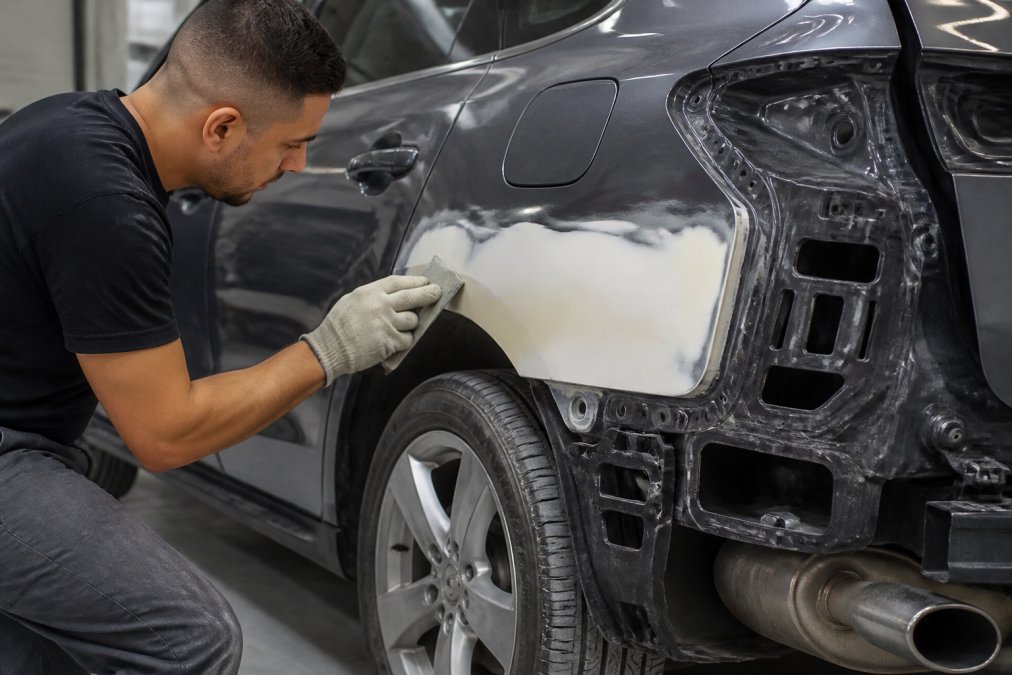
Labor (The Hidden Complexity): Labor is not a single hourly rate; it is a sum of hours for distinct operations. A proper estimate will show separate line items for structural repair, body panel replacement, and refinishing. For example, replacing a quarter panel on a unibody vehicle involves not just unbolting the part, but also measuring the frame, welding the new panel, applying corrosion inhibitors, and blending paint into adjacent panels. Each of these steps has a standard labor time published by the manufacturer (often measured in tenths of an hour). A shop that quotes a flat 'body labor' fee without this breakdown is either overcharging or planning to skip critical steps like rust-proofing the weld seams.
-
Paint and Materials (The Quality Differentiator): This line item covers the consumables: primer, paint, clear coat, and the materials used for masking and sanding. The difference between a $200 paint job and a $1,200 paint job is not the color; it is the product line. Premium systems like PPG's Envirobase or Axalta's Cromax are waterborne, low-VOC formulas that offer superior UV resistance and color matching (ppg.com). A reputable shop will name the specific paint system they use in the estimate. If the estimate just says 'paint supplies,' ask for the brand and product line.
Always ask for a written, itemized estimate before authorizing work. In California, you have the right to a written estimate before repairs begin, and the shop must contact you for approval if the final cost exceeds the estimate by more than 10% (bar.ca.gov).
What to Expect: The Auto Body Repair Timeline
A realistic auto body repair timeline depends on the extent of the damage, but most standard collision repairs take between one and two weeks.
Here is a breakdown of the typical phases and their durations:
- Estimate and Authorization (1-2 days): The shop inspects the damage, provides the estimate, and coordinates with your insurance company.
- Parts Ordering (2-5 days): Original parts must be sourced, which can take longer for less common vehicle models.
- Structural Repair and Bodywork (3-5 days): Technicians handle frame alignment, dent repair, and replacement of damaged panels.
- Painting and Refinishing (2-3 days): The vehicle is prepped, primed, and painted in a controlled booth environment.
- Final Assembly and Quality Check (1-2 days): The car is reassembled, and the shop verifies panel gaps, paint matching, and alignment.
The biggest delay factor is almost always the insurance approval process, not the actual repair work.
How to Choose a Collision Repair Center You Can Trust
Choosing a collision repair center requires looking past glossy marketing and focusing on verifiable signals of quality. Check whether the shop publishes genuine customer reviews and holds a Better Business Bureau (BBB) rating.
Beyond reviews, ask about the repair warranty and staff training. A certified facility should employ I-CAR certified technicians who specialize in areas like painting or structural repair. Also ask about the paint system; premium products like PPG offer better color matching and durability.
The Rubio's Custom Repair Difference: 30 Years of Local Expertise
With over three decades of serving the Manteca community, Rubio's Custom Repair inc stands apart as a family-owned and operated auto body shop that treats every vehicle like its own. Our specialization in collision repairs and paint is backed by a commitment to using original parts for most repairs and premium PPG products for every paint job.
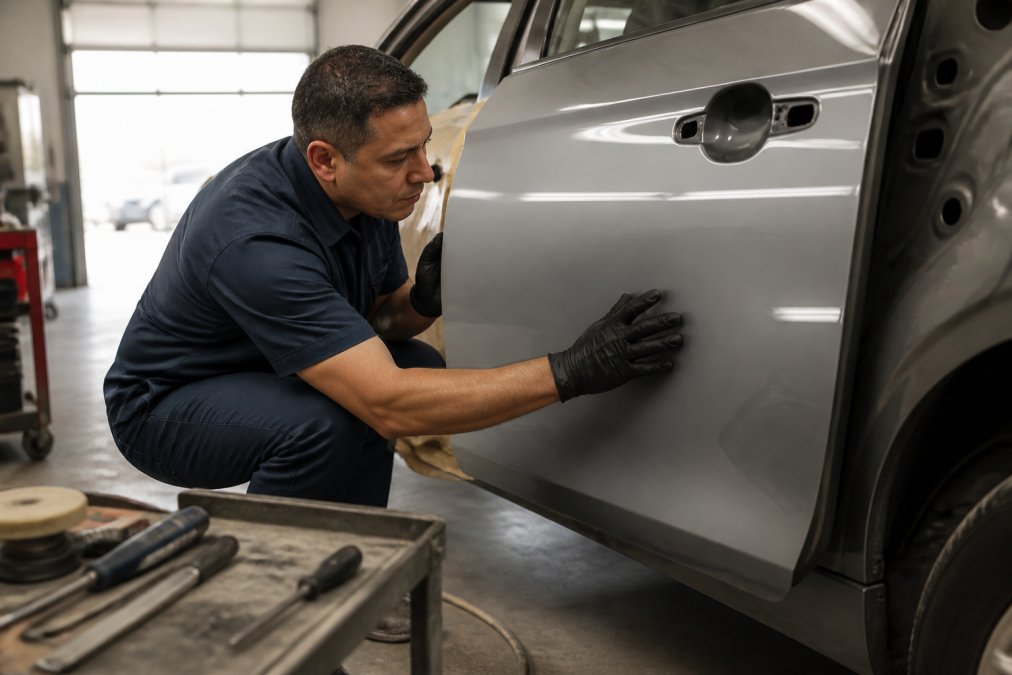
Finish quality depends as much on preparation as the paint itself. Our technicians properly sand, prime, and blend new paint with the factory finish. This craftsmanship is backed by our guarantee on repairs and paint products.
Navigating Insurance Claims Without the Headache
Most guides stop at 'we work with your insurance.' That is not enough. The claims process in San Joaquin County has a specific rhythm, and knowing the steps in advance can save you weeks of delays and hundreds of dollars.
Step 1: File the Claim Immediately, But Do Not Authorize Repairs Yet.
Your first call should be to your insurance provider to open a claim. You will receive a claim number and be assigned an adjuster. This step is critical because it starts the clock on your rental car coverage (if you have it) and the repair timeline. However, you are not obligated to use the shop the adjuster recommends. In California, you have the legal right to choose your own repair facility (insurance.ca.gov). The insurance company cannot force you to use their 'preferred shop,' and they cannot legally require you to obtain more than one estimate.
Step 2: Get Your Independent Estimate Before the Adjuster's Inspection.
Bring your vehicle to a shop like ours for a thorough disassembly-based estimate before the insurance adjuster performs their initial inspection. This is the single most effective way to avoid a lowball settlement. Our estimator will document all visible damage and note areas of likely hidden damage. When the adjuster arrives, we can point to specific evidence, like a bent inner structure behind a cracked bumper cover, that is not visible in a photo. This proactive approach often results in a more accurate initial estimate.
Step 3: Understand the 'Preferred Shop' vs. Your Choice Trade-off.
Insurance companies often have a network of 'preferred shops' that have agreed to a specific labor rate and parts pricing in exchange for being listed as a referral. Using a preferred shop can sometimes streamline the process because the shop has a direct line to the insurer's claims system. However, this convenience can come at a cost: these shops may be contractually obligated to use aftermarket parts or to adhere to the insurer's labor rate, which can be lower than what a premium independent shop charges. If you choose a non-preferred shop like ours, the process is slightly different: we will write the estimate, submit it to your adjuster, and negotiate on your behalf. This often results in a higher-quality repair.
Step 4: The Supplement Process, What to Expect.
When our technicians begin disassembly, they will often find damage that was not visible during the initial estimate. This is not a scam; it is the nature of collision repair. For example, a bumper impact that looks like a simple cover replacement often reveals a cracked energy absorber and a bent impact bar underneath. When this happens, we document the additional damage with photos and send a 'supplement request' to your adjuster. The adjuster must approve this before we proceed with the additional work. This approval can take 2-5 business days, depending on the insurer's workload. The key to minimizing this delay is having a shop that provides clear, photographic evidence and a precise parts order, so the adjuster does not have to make a second physical visit.
Step 5: Know Your Rights Regarding Diminished Value.
This is the most overlooked aspect of a collision claim in San Joaquin County. After a significant accident, your vehicle's resale value drops even after a perfect repair. This is called 'diminished value.' In California, you have the right to file a separate claim for diminished value against the at-fault party's insurance. This is not something the body shop handles; it is a separate negotiation between you and the insurer. A reputable shop will not inflate your repair bill to cover this, but they will provide you with the detailed repair documentation you need to support your diminished value claim. If your vehicle is less than five years old and has a clean title, pursuing a diminished value claim can often recover a significant amount, depending on the severity of the damage and the vehicle's pre-accident value.
Conclusion: Your Next Step to a Flawless Finish
The search for the best auto body shop in Manteca comes down to finding a partner who values your vehicle's safety and appearance as much as you do.
At Rubio's Custom Repair inc, our 30 years of experience, use of original parts and premium PPG products, and our family-owned commitment to community trust make us the clear choice for drivers throughout San Joaquin County. We manage the insurance claims process and back every repair with our guarantee. Schedule an appointment with Rubio's Custom Repair inc today.
Frequently Asked Questions
How do I know if an auto body shop in Manteca is good?
Look for certifications like I-CAR, check customer reviews on Google and the BBB, and ask about their repair warranty. A reputable shop will provide a detailed written estimate and explain the repair process. Visit the facility to see if it's clean and organized. Ask about the parts they use, like original equipment manufacturer (OEM) parts, and their paint brand. Shops that stand behind their work with a written guarantee show they are confident in their quality.
What should I look for in a collision repair cost estimate?
A thorough collision repair cost estimate should break down the cost of parts, labor, and paint materials separately. It should detail the specific repairs needed, such as fender repair or bumper replacement, and list any necessary paint codes for matching. Be wary of estimates that are vague or significantly lower than others. A good shop will walk you through the estimate and work with your insurance company to ensure all damage is accounted for before work begins.
How long does the auto body repair timeline typically take?
The auto body repair timeline varies based on the damage. Minor dent repair or a bumper replacement can take a few days, while major collision repair involving structural work and paint refinishing can take one to three weeks. The timeline depends on parts availability and the shop's workload. A quality shop will provide a clear schedule upfront and keep you updated. Delays can happen, but a shop with good communication will explain why and give you a revised completion date.
Are dealership body shops better than independent shops?
Not necessarily. While dealerships may use original parts, many independent shops also do. Independent shops like Rubio's Custom Repair often offer more personalized service and have highly experienced technicians with I-CAR certifications. They also work directly with all major insurance companies. The best choice depends on the specific shop's reputation, warranty, and quality of work, not just whether it is a dealership.