 blog
7 Pros and Cons of Recycled Auto Parts for Your Repair
Quick Summary
Recycled auto parts usually cost less than new parts and keep components out of landfills, which suits older vehicles. The main drawbacks are uncertain condition and history, possible fitment problems, and warranty terms that often exclude labor.
- Recycled parts usually cost less than new OEM parts, which can lower the repair bill.
- Hidden cracks, rust, or stress damage may not show at first glance.
- Verify the part number against your VIN before paying for any recycled part.
- Get warranty terms in writing and confirm whether labor is covered.
- Have a professional inspect safety-critical components before installation.
Table of Contents
- Why Recycled Auto Parts Are Worth Considering
- The Main Advantages: Lower Cost and Less Waste
- The Main Drawbacks: Condition, History, and Fitment Risk
- Used vs Remanufactured Auto Parts: Knowing the Difference
- Recycled Auto Parts Warranty: What Coverage to Expect
- How to Inspect Used Auto Parts Before Installation
- Questions to Ask Before Approving Recycled Parts for Your Repair
- Final Word
- Frequently Asked Questions
7 Pros and Cons of Recycled Auto Parts for Your Repair
Last Updated: November 9, 2026
Why Recycled Auto Parts Are Worth Considering
Recycled auto parts are used components taken from donor vehicles and sold for repairs. Recycled auto parts are a established option in the repair market. Many owners now consider them alongside new parts.
This guide walks through the pros and cons so you can decide with clear facts. It also explains what to ask before you approve any part on your car.
Used parts are not automatically the right choice. They work well for some repairs and poorly for others. Knowing the difference saves money and avoids repeat trips to the shop.
The Main Advantages: Lower Cost and Less Waste
The biggest draw is price. Recycled parts usually cost less than new parts, which can lower the total repair bill. That matters most on older vehicles, where new parts may be hard to find or expensive.
Reuse also keeps parts out of the landfill. Research reported by Worcester Polytechnic Institute found that reusing auto parts lowers greenhouse-gas emissions and can strengthen domestic supply chains (Worcester Polytechnic Institute study on reusing auto parts).
Key advantages at a glance:
- Lower purchase price than most new OEM parts
- Less waste because the part is reused, not manufactured
- Good fit for older cars where new parts are scarce
- Lower environmental footprint from skipping new manufacturing
The article's key advantages and drawbacks of recycled parts, at a glance:
| Factor | Recycled parts | Note |
|---|---|---|
| Purchase price | Usually lower than new OEM parts | Biggest draw of recycled parts |
| Waste | Reused, not manufactured | Keeps parts out of the landfill |
| Older cars | Good fit where new parts are scarce | New parts may be hard to find |
| Condition | Often uncertain | Cracks or rust may not show at first |
| Fitment | Can differ by trim or model year | May need extra labor to install |
| Paint | Color can vary from factory finish | Check paint match on body panels |
The Main Drawbacks: Condition, History, and Fitment Risk
The main risk is not knowing what you are getting. A used part's condition and history are often uncertain.
Fitment can also be a problem. A part from a different trim or model year may not line up perfectly. Mounting holes, wiring connectors, and paint color can all differ.
Common drawbacks include:
- Unknown history: You may not know prior damage or repairs
- Hidden wear: Cracks, rust, or stress damage may not show at first glance
- Fitment issues: Parts may need extra labor to install
- Paint mismatch: Color can vary from the factory finish
Watch out: A used part with hidden structural damage can fail under load. Never use a recycled safety component without a thorough inspection.
Used vs Remanufactured Auto Parts: Knowing the Difference
Used parts come straight from a donor vehicle with no rebuilding. Remanufactured parts are disassembled, cleaned, tested, and rebuilt to meet a standard. The two are not the same, and sellers sometimes blur the line.
Ask the seller which category the part falls into and get that answer in writing.
Always compare both the price and the protection.
Recycled Auto Parts Warranty: What Coverage to Expect
Warranty terms are where recycled parts deals are won or lost. Two sellers can quote the same price for the same part, but one backs it with a 90-day replacement guarantee and the other sells as-is. That difference matters more than the sticker price when a part fails after installation.
Most recyclers fall into one of three warranty tiers. The first is a short fit-and-function guarantee, typically 30 to 90 days, that covers the part if it does not work or does not fit as described. The second is a replacement-only warranty, where the seller ships another part but does not refund your money. The third is an as-is sale with no coverage at all, which is common at pull-your-own yards and online marketplaces.
A warranty is only as good as its exclusions. Read the terms carefully before you pay.
- Labor coverage: Most recycled-part warranties exclude labor. If a bad part must come off after installation, you may pay the shop twice. Ask the seller directly whether labor is reimbursed and get the answer in writing.
- Return window: A 30-day window may be too short if your shop is booked out. Confirm the clock starts on delivery, not on order date.
- Restocking fees: Some sellers charge a percentage to accept a return, even on a defective part. Ask what the fee is and whether it applies to warranty claims.
- Shipping responsibility: Determine who pays return freight on a defective part. On a heavy component like a transmission, that cost can erase the savings.
- Consequential damage: Nearly all recycled-part warranties exclude damage the part causes to other components. That risk sits with you.
A seller who refuses to put warranty terms in writing is a warning sign.
Watch out: A warranty that requires you to ship the part back at your own expense before any replacement is issued can cost more than the part is worth on heavy components. Confirm the return process before you buy.
Compare the warranty side by side with the price. A part that costs 20% more but carries a 90-day replacement guarantee and covers return freight is often the cheaper option once you account for the risk of a repeat repair. For how warranty protection fits into a shop's overall quality commitment, see our guide to our quality guarantee, and for how OEM coverage compares, read about the benefits of OEM car parts.
How to Inspect Used Auto Parts Before Installation
Inspection starts before the part arrives. The most common cause of a wrong or poor-fitting recycled part is a mismatch in part number, trim level, or model year, and most of that can be screened out before you pay.
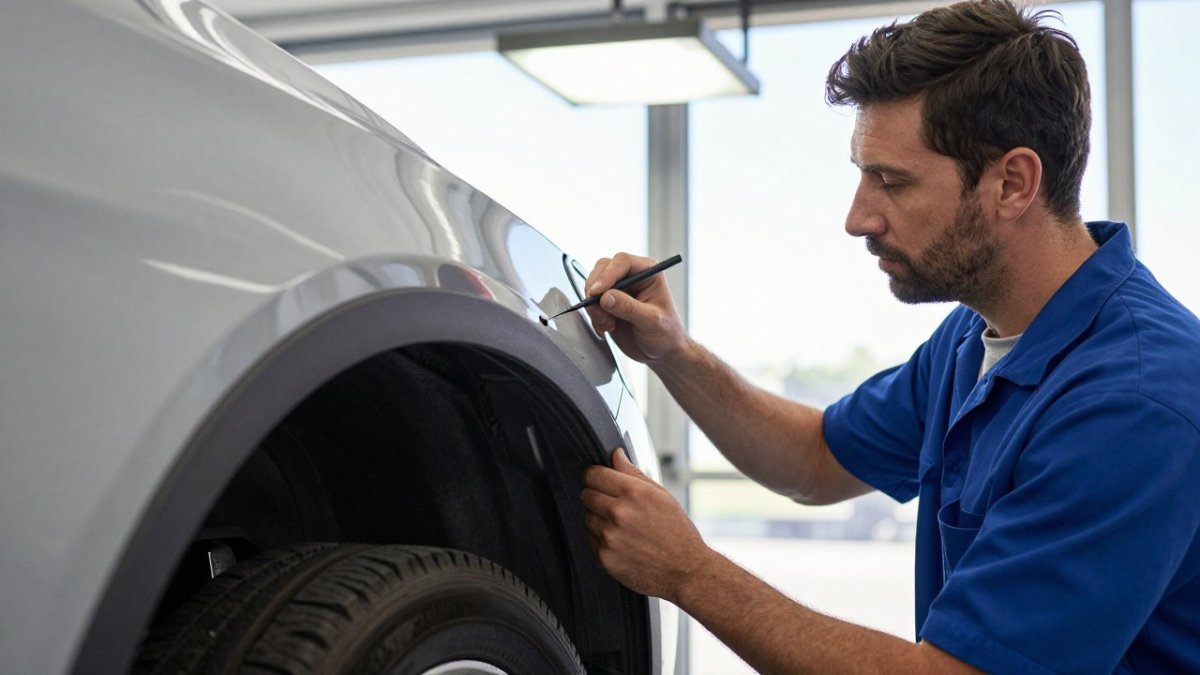
Step 1: Verify the part number. Every OEM component carries a part number stamped or labeled on the housing. Ask the seller for a photo of that number and compare it to the number your shop pulled for your VIN. Part numbers change across model years and trim levels even when the part looks identical, so a visual match is not enough. If the seller cannot provide the number, treat that as a reason to look elsewhere.
Step 2: Confirm vehicle compatibility. A part that fits a base model may not fit a sport trim with different cooling, suspension, or wiring. Confirm the donor vehicle's year, make, model, trim, engine, and drivetrain, and compare each to your vehicle. For body panels, confirm paint code and whether the panel has sensor cutouts or parking-assist holes your vehicle requires.
Step 3: Ask about donor-vehicle provenance. Good questions include the donor's mileage, why it was totaled, whether the part was tested before removal, and how the seller grades condition. A seller who cannot answer basic provenance questions is asking you to take on unknown risk.
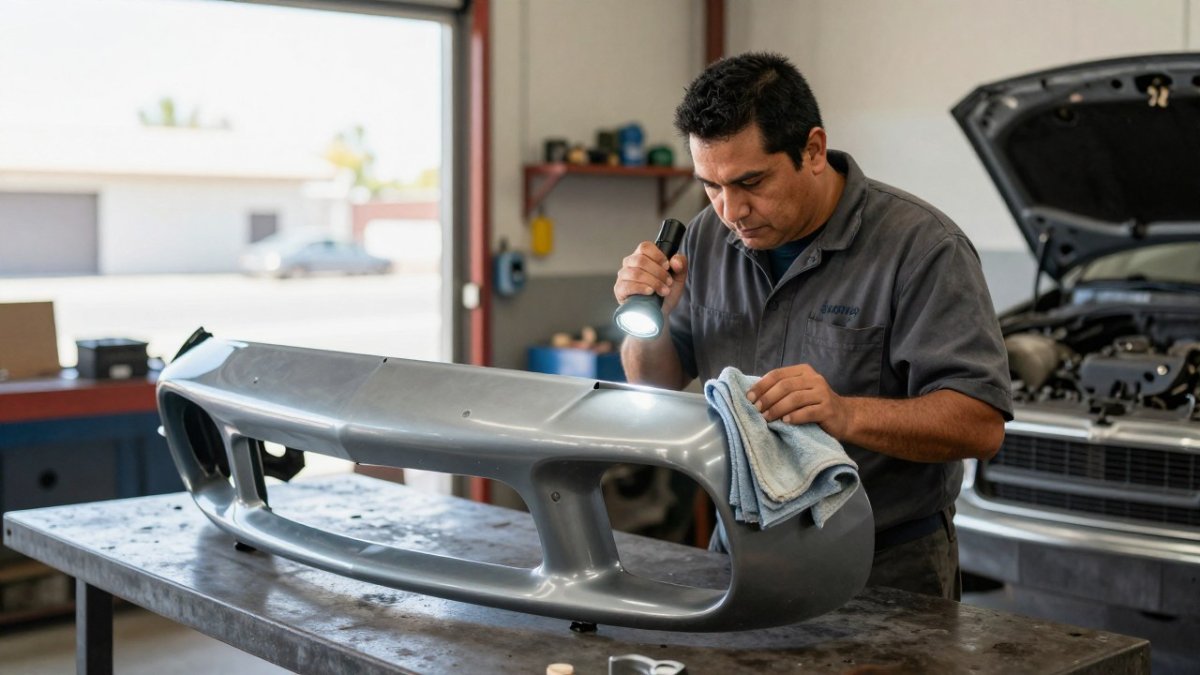
Step 4: Inspect physically on arrival. Look for cracks, deep dents, rust, oil leaks, and repaired damage. Check mounting points, threaded holes, and connectors against your original part. On electrical components, look for corrosion at the pins and confirm the connector keying matches. On body panels, shine a light across the surface at a low angle to spot ripples, filler, or texture differences that indicate prior repair.
Step 5: Test fit before final installation. Hold the part against the vehicle and confirm bolt holes line up and the part sits flush. Do not force a part into place; misalignment usually means the wrong part, not a stubborn install.
Use this checklist:
- Part number matches the number pulled for your VIN
- Donor year, make, model, trim, engine, and drivetrain confirmed
- Donor mileage and reason for total loss disclosed
- No cracks, rust, leaks, or repaired damage
- Mounting holes and connectors match the original
- Paint code and sensor cutouts match on body panels
- Test fit confirms flush seating before final installation
- Warranty terms provided in writing
Watch out: A part that requires drilling, bracket modification, or wiring adapter work to fit is usually the wrong part. Stop and re-verify the part number before modifying anything.
For safety-critical components such as airbags, seat-belt pretensioners, brake calipers, and steering components, have a professional assess the part before installation.
Questions to Ask Before Approving Recycled Parts for Your Repair
Before you say yes to a used part, ask direct questions. Good answers protect your budget and your safety.
Start with these:
- Is this part used, remanufactured, or new?
- What is the donor vehicle's year, make, and model?
- What warranty covers this part, and for how long?
- Who pays for labor if the part fails or does not fit?
- Can the shop inspect the part before installation?
Also ask your shop how the recycled part affects the total repair cost. A cheap part that needs extra labor may cost more in the end. Verify the estimate line by line. For tips on reviewing a bill, read how to verify auto repair estimates before you approve work. You can also check how to avoid overcharged car repair bills.
Final Word
Recycled auto parts can save money and reduce waste, but they carry real risks around condition and fit. Weigh the pros and cons against your vehicle, your budget, and the repair itself. Contact Rubio's Custom Repair inc through our website for current pricing or a quote, and to schedule an appointment.
Frequently Asked Questions
Are recycled auto parts reliable?
Reliability depends on the part's condition, its history, and how well it fits your vehicle. Recycled parts come from donor vehicles, so wear and prior damage can vary. A reputable recycler will document where the part came from and what was checked. Ask about the donor vehicle's mileage and any repairs to the part. For safety-critical components such as airbags, steering parts, and brake components, have a professional assess the part before installation.
Do recycled auto parts come with a warranty?
Many recyclers offer a limited warranty, but coverage varies widely. Some cover defects for a short period, such as 30 to 90 days, while others offer only an exchange for a wrong-fit part. Read the written terms before you buy and confirm whether labor for reinstallation is covered. Ask whether the warranty covers the part alone or also any shipping and return costs.
Are recycled auto parts cheaper than new parts?
Recycled parts usually cost less than new OEM parts, but the savings depend on the part, the vehicle, and the seller. The price should be weighed against condition, warranty, and installation time. Ask for an itemized quote from your repair shop and compare it with new and aftermarket options. Pricing varies by part and seller, so request current quotes from your repair shop or the parts supplier.
What is the difference between recycled, used, and remanufactured auto parts?
Recycled and used parts are taken from donor vehicles and may show wear. Remanufactured parts are disassembled, cleaned, tested, and restored to meet specifications, often with new wear components. Remanufactured parts usually carry a more defined warranty than a typical used part. Your repair shop can tell you which category a given part falls into and what condition to expect.