 blog
10 Steps to Document Car Accident Damage
Table of Contents
- Why Documenting Car Accident Damage Matters
- Step 1: Ensure Safety and Call Emergency Services
- Step 2: Create a Car Accident Photo Checklist Before You Shoot
- Step 3: Exchange Driver and Insurance Information
- Step 4: Collect Witness Names and Contact Information
- Step 5: Write Down Accident Details While Fresh
- Step 6: Obtain and Review the Police Report
- Step 7: Document Hidden and Delayed Car Damage After an Accident
- Frequently Asked Questions
Last Updated: October 21, 2026
Why Documenting Car Accident Damage Matters
When you're in a car accident, the first instinct is often to panic. But what you do in those first moments, and the hours that follow, especially how you document car accident damage, can make or break your insurance claim. Documenting car accident damage properly creates a record that protects you when disputes arise. Insurance companies need evidence. Repair shops need documentation. And you need proof of what happened, especially if the other driver contests fault or their insurance denies your claim.
We've seen countless claims delayed or denied because owners didn't gather enough evidence at the scene. The damage photos were blurry. The witness information was incomplete. The written notes were vague. Then, weeks later, when memory fades and the other party's story shifts, there's nothing to fall back on.
This guide covers the 10 steps to document car accident damage so you have ironclad evidence for your claim. We'll walk through exactly what to photograph, what information to collect, and what to preserve. By the end, you'll know exactly how to protect yourself.
Step 1: Ensure Safety and Call Emergency Services
Before you document anything, make sure you and your passengers are safe. Turn on your hazard lights. If you're on a busy road, move to the shoulder if it's safe to do so. If anyone is injured, call 911 immediately. Do not move an injured person unless there's immediate danger.
Once everyone is safe, call the police non-emergency line if the accident involves significant damage or injury. In many cases, a police report is essential for your insurance claim. The officer will document the scene and create an official record of what happened. Get the officer's name, badge number, and the report number before they leave.
Even if police don't attend, document the accident scene yourself. Take note of the date, time, and exact location. Write down weather conditions: was it raining, snowing, or clear? Was the sun in anyone's eyes? These details matter for establishing fault.
Step 2: Create a Car Accident Photo Checklist Before You Shoot
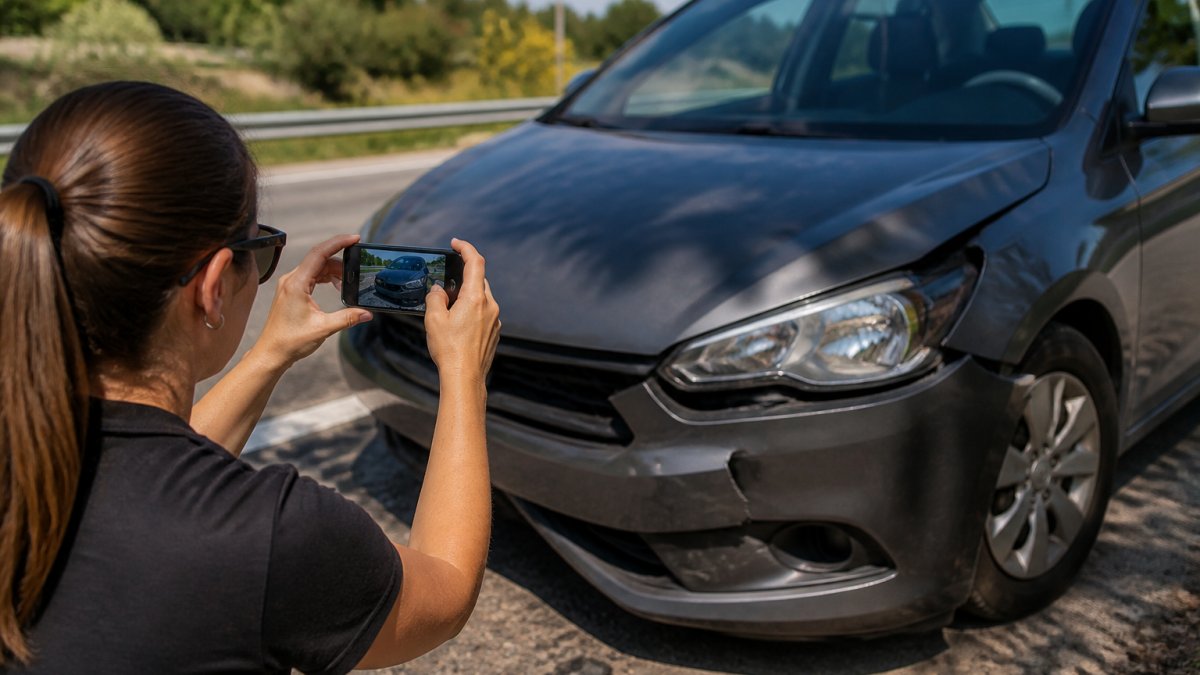
Before you start taking photos, have a plan. Random photos are less useful than a systematic approach. You want wide-angle shots that show the overall scene, close-ups that reveal specific damage, and context photos that show road conditions and vehicle positions.
Wide-Angle Scene Photos
Start with wide shots. These establish context and show how the vehicles came to rest. Take photos from multiple angles: from each vehicle's front, rear, and sides. Include surrounding landmarks like street signs, traffic lights, or building names. These help establish the location and can be useful if there's a dispute about where the accident occurred.
Photograph the overall accident scene from at least 10 feet away. You want to see both vehicles, the road markings, and any relevant traffic signals or signs. Take these photos from different positions around the scene. If one vehicle is partially off the road, capture that in your photos. Show the relationship between the vehicles and any obstacles like parked cars, trees, or poles.
Close-Up Vehicle Damage Photos
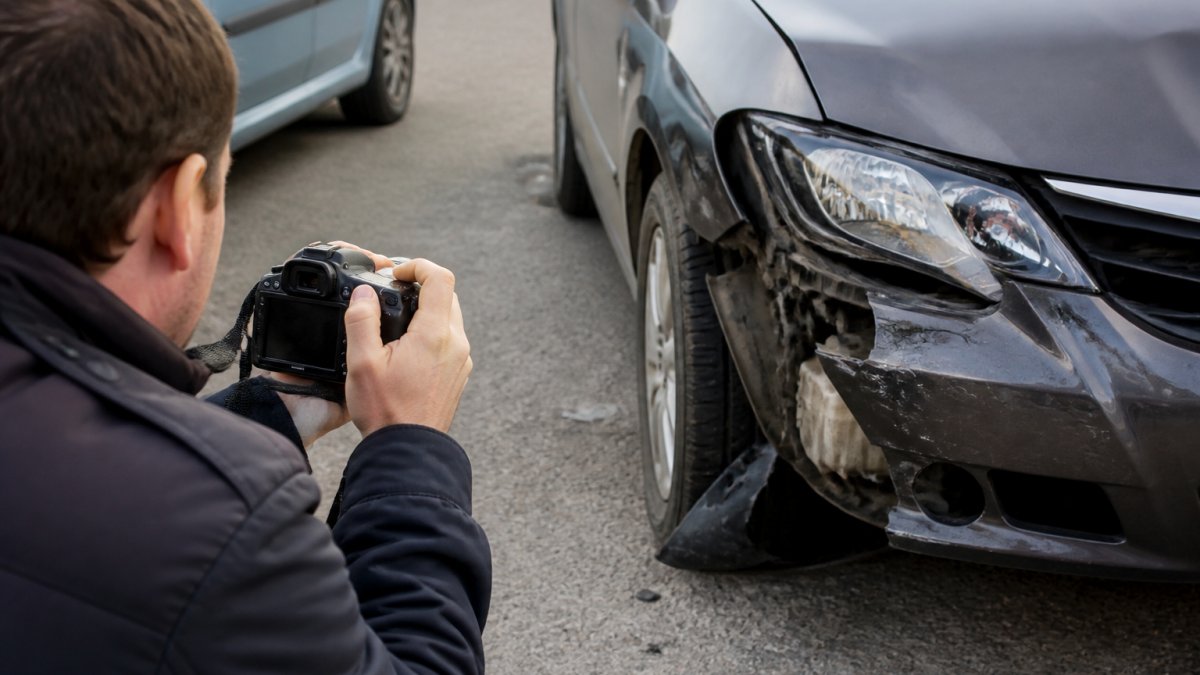
Now zoom in on the damage. Photograph every dent, scratch, broken light, and bent panel. Get close enough that the damage is clearly visible. Take multiple shots of the same damaged area from different angles, this shows depth and the true extent of the damage.
For your vehicle, photograph all damage: the front, rear, sides, roof, and undercarriage if there's visible damage. Photograph the interior if airbags deployed or if seats or dashboard are damaged. Open doors and trunk to show interior damage. If glass is broken, photograph the broken pieces and the area where they fell.
Also photograph the other vehicle's damage. This may seem counterintuitive, but it's important. If the other driver later claims your vehicle caused less damage than it actually did, your photos of their vehicle tell the true story. The damage patterns often show which vehicle hit which, and at what angle.
Road Conditions and Context
Photograph the road surface where the accident occurred. Is the pavement cracked or potholed? Is there gravel or debris? Are there skid marks? All of this is context. Take photos of traffic signals, stop signs, and lane markings. Show whether the road was wet, icy, or clear.
Capture weather conditions in your photos. If it's raining or snowing, that should be visible. If the sun is low on the horizon and could have caused glare, photograph that too. These environmental factors can affect fault determination.
Step 3: Exchange Driver and Insurance Information
Once you've documented the scene, exchange information with the other driver. Get their full name, phone number, and address. Write down their driver's license number and state of issue. Record their vehicle's license plate number, make, model, year, and color.
Ask for their insurance company name and policy number. Write this down exactly as they provide it. If they refuse to share insurance information, that's a red flag, note it and report it to police if they haven't already arrived.
Also get the name of the other driver's employer if they were driving a company vehicle. This can affect which insurance policy covers the claim. If a third party was involved, a delivery driver, rideshare driver, or commercial vehicle, get their company information too.
Take a photo of the other driver's license and insurance card if they allow it. This creates a backup record. If you can't photograph it, write down every detail carefully. Accuracy matters here. A transposed digit in a policy number can delay your claim.
Step 4: Collect Witness Names and Contact Information
If anyone witnessed the accident, get their information. Ask for their full name, phone number, and email address. Write down what they saw. Did they see the moment of impact? Did they see which vehicle entered the intersection first?
Get at least two pieces of contact information for each witness, phone and email, or two phone numbers. People move and change phone numbers. Multiple contact methods increase the chance you can reach them later if your insurance company needs a statement.
Ask witnesses if they're willing to provide a written statement. Some will, some won't. If they will, ask them to write down what they saw, when they saw it, and where they were standing. Have them sign and date it. Take a photo of their statement.
If a witness is reluctant to get involved, respect that. But at minimum, get their contact information. You can follow up later if needed. Many people are more willing to help once the immediate stress of the accident has passed.
Step 5: Write Down Accident Details While Fresh
While everything is fresh in your mind, write down what happened. Don't rely on memory. Write the date, time, and exact location.
Include details about traffic signals and signs. Was the light red or green? Was there a stop sign? Did either driver fail to yield? Write down the weather and road conditions. Was it raining? Was visibility poor? Was the road icy or slick?
Describe any injuries, even minor ones. Did anyone complain of neck or back pain? Did anyone feel dizzy or confused? Write it down. Some injuries appear hours or days later, so a contemporaneous record of what you felt at the scene is important.
Write down your emotional state too, if relevant. Were you distracted? Were you tired? Were you sober? This isn't about self-incrimination, it's about being honest and complete. If you were distracted, your insurance company will likely learn that anyway.
Keep these notes. Store them safely, along with your photos and other documentation. They're part of your evidence file.
Step 6: Obtain and Review the Police Report
If police responded to the accident, they'll file a report. Get the report number at the scene. Ask the officer where and when you can access the report. Some departments allow online access; others require you to visit in person or request it by mail.
Obtain a copy of the police report as soon as possible. Review it carefully. Does it accurately describe what happened? Does it correctly identify the vehicles and drivers? Check the officer's conclusions about fault. Sometimes officers make errors or misinterpret what they were told.
If the report contains errors, contact the police department and request a correction. Provide evidence, your photos, witness statements, or other documentation, that supports your correction. Some departments will amend the report; others won't. Either way, you've created a record of the discrepancy.
The police report is often the most credible document in your claim file. Insurance companies weigh it heavily. If the report supports your version of events, that's powerful evidence.
Step 7: Document Hidden and Delayed Car Damage After an Accident
Some damage isn't visible immediately. A vehicle's frame might be bent even if the exterior looks okay. Suspension components might be damaged.
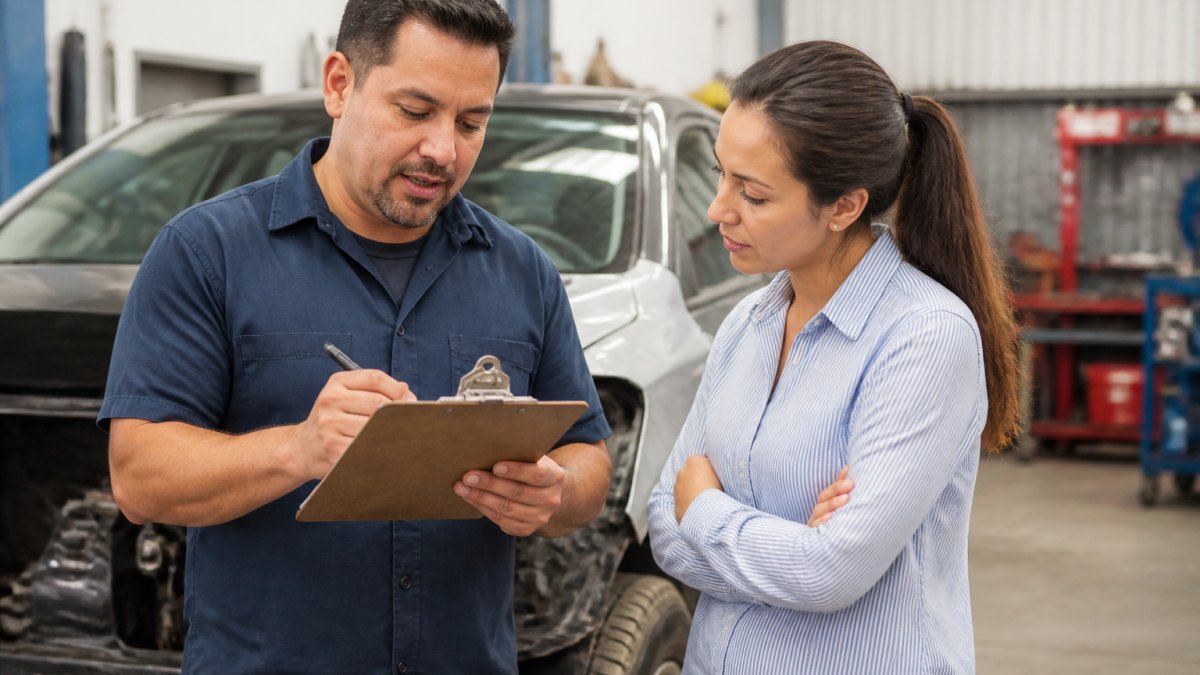
After the accident, have your vehicle inspected by a trusted repair shop. We perform thorough damage assessments that identify both visible and hidden damage.
Document any new damage or symptoms that appear in the days and weeks after the accident.
This is crucial: some damage only becomes apparent after you've driven the vehicle. A bent frame might cause alignment issues that show up as uneven tire wear. Suspension damage might cause the vehicle to handle differently.
Keep all repair estimates and invoices. If you have work done to address hidden damage, that documentation becomes part of your claim file. It proves the damage existed and that it was related to the accident.
| Documentation Element | When to Collect | Why It Matters |
|---|---|---|
| Scene photos (wide-angle) | At the scene, immediately | Establishes context and vehicle positions |
| Damage photos (close-up) | At the scene, immediately | Proves extent of visible damage |
| Driver information | At the scene, immediately | Required for insurance claim |
| Witness contact info | At the scene, immediately | Supports your version of events |
| Written notes | At the scene or within hours | Captures details while fresh |
| Police report | Within days | Official documentation of accident |
| Repair estimates | Within days to weeks | Documents damage and repair costs |
| Medical records | Ongoing after accident | Proves injury and treatment |
Documenting car accident damage thoroughly protects you when disputes arise. The evidence you gather, photos, witness statements, police reports, and written notes, becomes the foundation of your insurance claim.
Frequently Asked Questions
What photos should I take after a car accident?
Take wide-angle photos of the overall accident scene, the positions of both vehicles, road conditions, traffic signals, and weather. Then capture close-up photos of all visible damage on your vehicle from multiple angles. Include photos of the other driver's vehicle damage, license plates, and vehicle identification numbers. Document the accident location, street signs, and any skid marks or debris on the roadway. These photographic evidence images are essential for your insurance claim.
How do I document hidden car damage after an accident?
Hidden damage often appears days or weeks later. Schedule a professional damage assessment with a collision repair shop within 5-7 days of the accident. Photograph any new damage you notice, including interior issues or mechanical problems. Get a detailed written estimate from a qualified repair facility that identifies structural damage and frame damage. Keep all medical records if you have delayed injuries, as these can indicate impact severity. Document when you first noticed each problem with dates and photos.
What information should I collect at the scene of a car accident?
Exchange the other driver's name, phone number, address, driver's license number, license plate, vehicle make and model, and insurance company name and policy number. Record the date, time, and exact location of the accident. Collect names and contact information from all witnesses who saw the accident. Get the responding officer's name and badge number, and request the police report number. Note weather conditions, traffic conditions, and any visible injuries. Write down what you remember about how the accident happened while details are fresh.
Should I get a repair estimate before filing an insurance claim?
Yes. Contact a reputable collision repair shop within 3-5 days of the accident to get a professional damage assessment and written estimate. This documentation provides your insurance company with detailed proof of damage, repair costs, and any hidden damage discovered during inspection. A professional estimate protects you by establishing the true cost of repairs before the insurance company makes an offer. Keep copies of all estimates and repair records for your claim file and future reference.