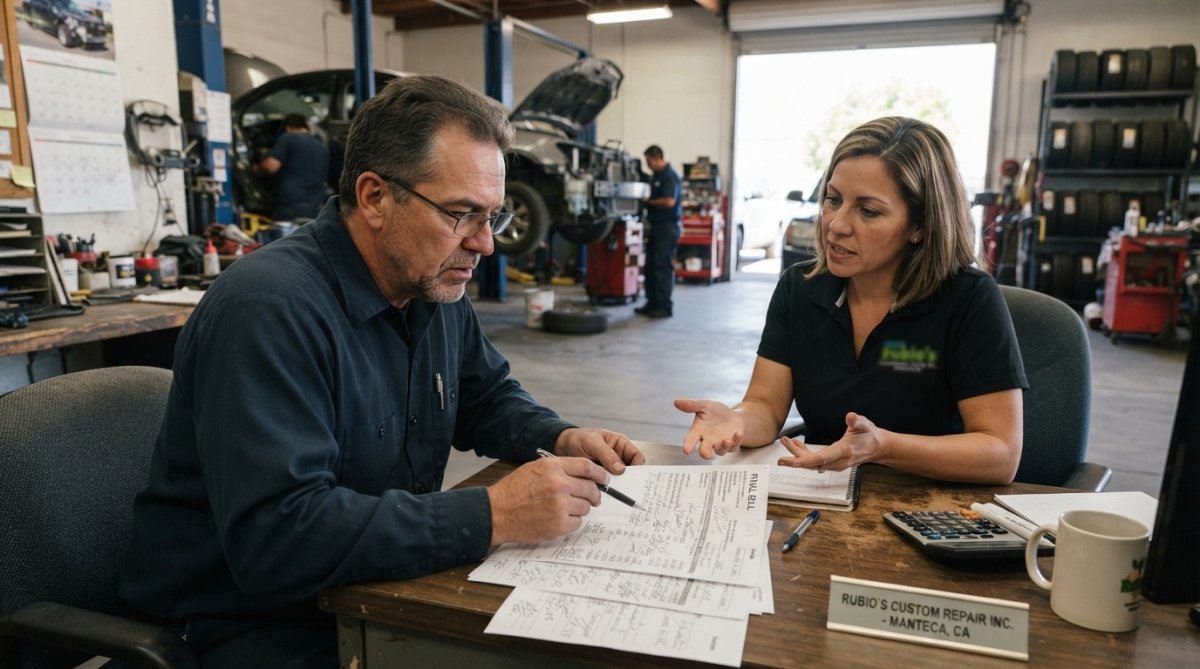
 how-to
Avoiding Overcharged Car Repair Bills: A Guide
Table of Contents
- Research Average Repair Costs Before You Commit
- How to Spot Dishonest Auto Shops
- Questions to Ask a Mechanic Before Repairs
- Request a Written, Itemized Estimate
- Get a Second Opinion on Major Work
- How to Dispute a Mechanic Bill
- Preventative Maintenance Reduces Surprise Bills
- Frequently Asked Questions
Last Updated: September 23, 2026
Research Average Repair Costs Before You Commit
The biggest mistake car owners make is walking into a repair shop without any idea what they should pay. You end up negotiating blind, accepting whatever number the service advisor quotes, and hoping it's fair. It rarely is.
Before you commit to any repair, use a dedicated pricing database to establish a baseline labor rate and parts cost for your specific vehicle and repair type. This takes 15-20 minutes and shifts you from passive to informed.
Use these tools to research real-time local rates:
RepairPal (repairpal.com), Enter your vehicle year, make, model, zip code, and the repair you need. RepairPal returns the average cost for your region, broken down by parts and labor. It also shows the cost range (low, average, high) so you know if a quote is an outlier. This is one of the most widely used benchmarks because it aggregates data from thousands of repairs.
Kelley Blue Book (KBB) (kbb.com), Navigate to the "Maintenance & Repair" section, enter your vehicle details, and search for your repair. KBB provides estimated labor hours and average parts costs by region. It's particularly useful for understanding what "normal" labor hours should be for your repair, if a shop quotes 8 hours and KBB says 3-4, that's a red flag.
AAA Approved Auto Repair Shops (aaa.com), If you're an AAA member, you can search for certified repair shops in your area. AAA-approved shops agree to transparent pricing and dispute resolution, which reduces (though doesn't eliminate) overcharge risk. The directory also shows customer reviews and complaint history.
Call three shops and ask the same question about your repair. You'll hear different labor rates, different diagnostic fees, and different timelines. Write them down. The outlier, the shop that's significantly higher or lower, is a red flag worth investigating. When you call, ask specifically: "What is your hourly labor rate?" and "How many hours do you estimate for this repair?" This lets you calculate the total labor cost independently and compare it against what RepairPal or KBB suggests.
Many shops count on owners not knowing the market rate. They quote high, hoping you'll accept it without question. Armed with data from a pricing database and three phone quotes, you shift the power dynamic entirely. You're no longer a target; you're an informed buyer.
How to Spot Dishonest Auto Shops
Not every shop that overcharges is intentionally dishonest. Some genuinely miscalculate labor hours or use inflated parts markups. But some shops deliberately recommend unnecessary work to pad the bill. The difference matters.
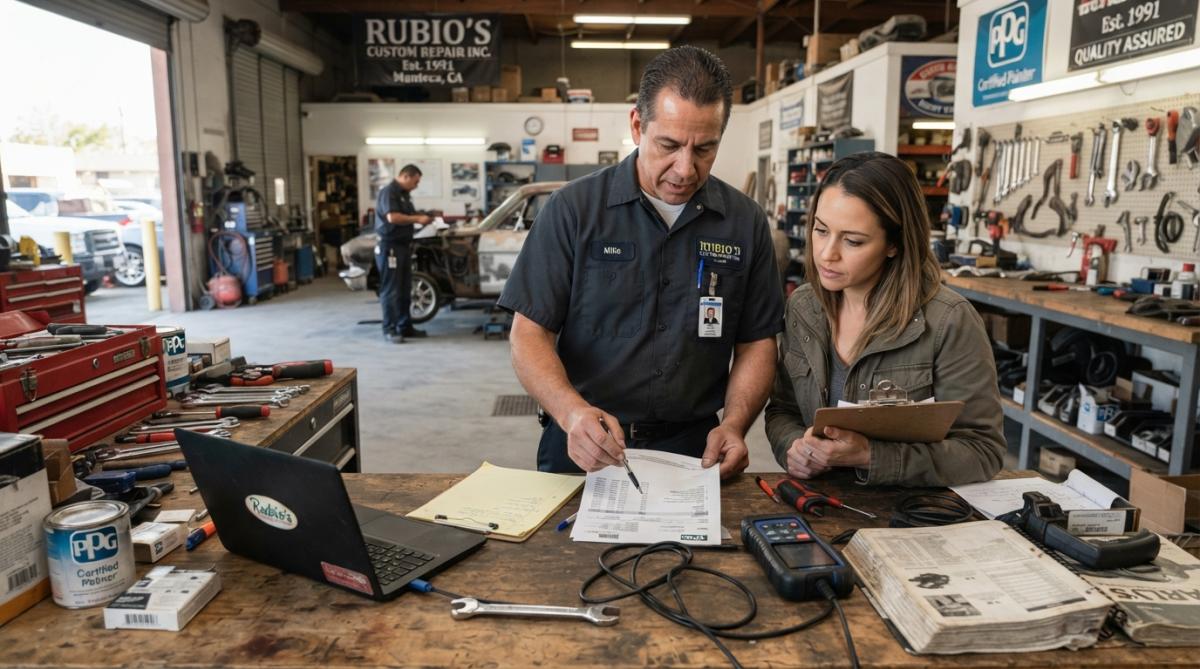
Watch for shops that recommend work without showing you the problem. A reputable mechanic will show you the worn brake pad, the corroded battery terminal, or the cracked hose. If they're telling you that you need work but can't point to it, that's a sign to get a second opinion.
Also pay attention to shops that push you to authorize repairs immediately. Pressure tactics, "We need to start today" or "This can't wait", create urgency that clouds your judgment. Legitimate shops will give you time to think and get a second estimate.
Look for these warning signs:
- Refusing to provide a written estimate before work begins
- Charging diagnostic fees without explaining what they found
- Using only aftermarket parts when OEM parts are standard
- Recommending major work without visual evidence
- Pressuring you to authorize repairs on the spot
At Rubio's Custom Repair inc, we believe transparency builds trust. We show you the damage, explain what needs to happen, and provide a written estimate before we touch your vehicle.
Questions to Ask a Mechanic Before Repairs
The right questions separate shops that respect you from shops that exploit you. Ask these before authorizing any work.
What's the diagnostic fee, and does it apply to the repair cost if I proceed? Many shops charge for diagnosis. Some credit that fee toward the repair. Others don't. Know the terms upfront.
Are you using OEM parts or aftermarket? Original equipment manufacturer parts match your vehicle exactly. Aftermarket parts are cheaper but may not fit or perform the same way. Ask which one the shop uses and why.
What's your labor rate, and how many hours do you estimate for this repair? Labor rates vary widely. Some shops charge flat rates for common repairs. Others bill hourly. Either way, get the number in writing.
What's your warranty on this repair? A shop standing behind its work will warranty the repair for a set period. If they won't give you a warranty, question why.
Will you call me before doing any work beyond the estimate? A good shop won't exceed the estimate without permission. This protects you from surprise bills.
How long will this take? You need to know if your car will be ready in a day or a week. This affects your transportation and your ability to verify the work.
Request a Written, Itemized Estimate
This is non-negotiable. A written estimate protects you legally and gives you a baseline for comparison.
An itemized estimate breaks down:
- Parts needed (with part numbers)
- Labor hours and rates
- Diagnostic fees
- Shop supplies or disposal fees
- Total cost
When you have this in writing, you can take it to another shop for a second opinion. You can also dispute the bill later if the final cost exceeds the estimate without your approval.
Many shops will provide an estimate over the phone. Push back. Ask for it in writing. Email counts. A text message doesn't. You need documentation.
The estimate should also state what happens if the mechanic finds additional problems during the repair.
Get a Second Opinion on Major Work
Major repairs, engine work, transmission service, structural damage, warrant a second opinion. The cost of a second diagnostic is small compared to the cost of unnecessary work.
How to Dispute a Mechanic Bill
If your final bill exceeds the estimate or includes charges you didn't authorize, you have legal rights and practical options. Understanding both strengthens your position.
- Written estimate requirement: Many states require shops to provide a written estimate before beginning work. If a shop started work without one, you may have grounds to dispute the entire bill or demand a refund for unauthorized work.
- Authorization for overages: If the final bill exceeds the estimate, the shop must have called you for authorization before proceeding. If they didn't, you can refuse to pay the overage. Document this in writing, email the shop stating, "I did not authorize charges beyond the $X estimate."
- Diagnostic fee credits: Some states require shops to credit diagnostic fees toward the repair if you authorize the work, or refund the fee if you don't. Check your state's consumer protection agency website to confirm your state's rule.
Step 2: Request an itemized invoice if you don't have one. The invoice should show:
- Each part replaced (with part number and cost)
- Labor hours and hourly rate
- Diagnostic fees
- Shop supplies or disposal fees
- Any authorization notes (e.g., "Customer approved additional $X work on [date]")
Preventative Maintenance Reduces Surprise Bills
The best way to avoid overcharged car repair bills is to avoid needing major repairs in the first place. Preventative maintenance catches small problems before they become expensive ones.
Frequently Asked Questions
What steps should you take if you suspect a mechanic is overcharging you?
Start by requesting a detailed, written itemized estimate before work begins. Once you have the final bill, compare it against quotes from other shops and industry pricing databases. If the charges seem excessive, ask the mechanic to explain each line item, including labor hours and parts costs. Document everything in writing. If you believe you've been overcharged, contact your state's Attorney General office or file a complaint with the Better Business Bureau. Many states allow consumers to dispute charges within a set timeframe if work was done without proper authorization.
How can you verify if an auto repair estimate is fair?
Get at least two estimates from different shops for the same work. Review each estimate carefully for labor rates, parts costs, and diagnostic fees. Check if the shop is using OEM parts or aftermarket parts, as this affects pricing. Ask about flat-rate versus hourly labor charges. Research your vehicle's service schedule to confirm the recommended maintenance intervals match what's being quoted. Contact your vehicle manufacturer or consult online repair databases to see typical labor hours for the job. A fair estimate should be transparent about all costs upfront, with no hidden fees.
What are the most common hidden fees in auto repair bills?
Common hidden fees include diagnostic fees charged even if you don't authorize repairs, shop supplies or waste disposal charges not disclosed upfront, disposal fees for old parts, tire rotation or fluid top-offs added without permission, and inflated labor hours. Some shops charge for vehicle inspection separately. Upselling is also common, where technicians recommend unnecessary repairs beyond what you authorized. Always ask for a repair authorization form before work begins, specify which repairs you approve, and request an itemized invoice showing every charge. This protects you from unexpected costs on your final bill.
What consumer rights do you have if a mechanic overcharges you?
Most states require shops to provide a written estimate before starting work and to get your approval before exceeding that estimate by a certain percentage, typically 10%. You have the right to receive a detailed, itemized invoice showing parts, labor hours, and rates. If you believe you've been overcharged, you can dispute the charge with your credit card company if you paid by card. File a complaint with your state's Attorney General office or the Better Business Bureau. Some states have specific auto repair laws that protect consumers; check your state's regulations for exact requirements and dispute procedures.