 ultimate-guide
Why Use Premium PPG Products for Auto Paint
Table of Contents
- The Real Difference Between Premium and Budget Auto Paint
- Benefits of PPG Automotive Paint: Durability and Longevity
- Why Premium PPG Products Deliver Superior Color Accuracy
- Importance of OEM-Approved Paint Systems for Your Vehicle
- Application Efficiency and Productivity in Professional Shops
- How to Identify High-Quality Auto Paint Work
- DIY vs. Professional Grade: Why the Gap Matters
- Long-Term ROI: Why Premium PPG Products Cost Less Over Time
- Frequently Asked Questions
Last Updated: September 21, 2026
The Real Difference Between Premium and Budget Auto Paint
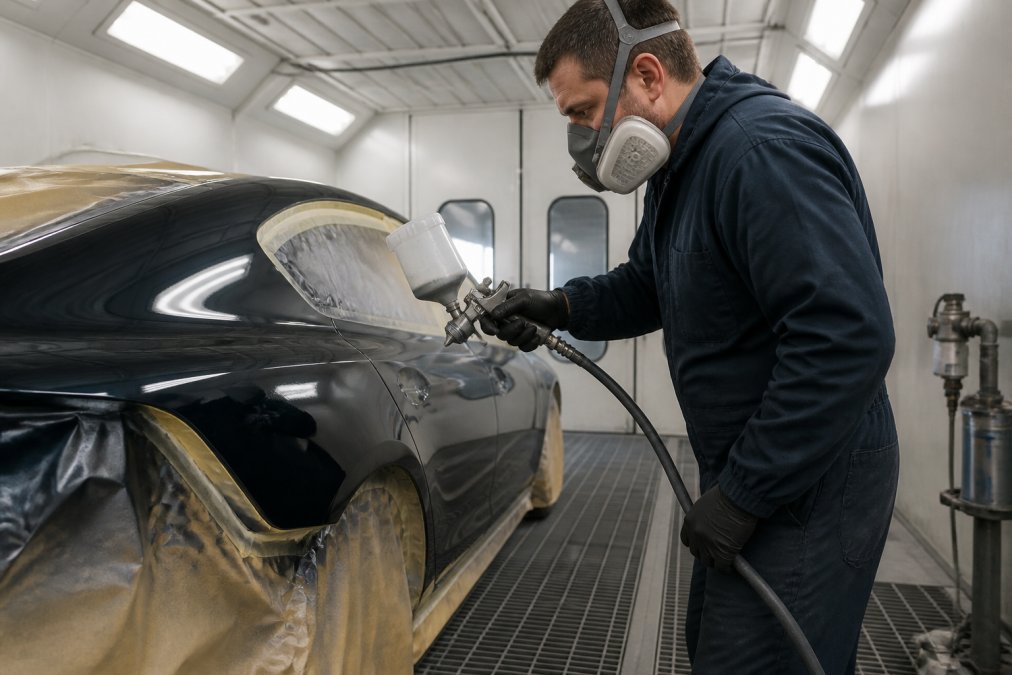
Walk into any auto body shop after a collision and you'll face a decision most drivers never think about until it's too late: what actually goes on your vehicle once the panels are straightened. Why use premium PPG products instead of whatever paint is cheapest that week? Because the coating is the only layer standing between bare metal and everything the road throws at it.
Benefits of PPG Automotive Paint: Durability and Longevity
The benefits of PPG automotive paint come down to one thing: the coating holds up longer under real conditions. Premium refinish systems are engineered around durability, corrosion resistance, and UV protection rather than a low price point.
Corrosion Resistance and Chemical Protection
Corrosion resistance starts at the primer layer: a high-performance primer bonds tightly to properly prepared metal and seals out moisture before it reaches the substrate. Chemical resistance matters just as much, because road salt, bug splatter, bird droppings, and fuel spills all attack the finish. A weak coating etches and stains; a properly formulated one wipes clean.
UV Protection and Weatherability
Weatherability is where cheap paint gives itself away. UV light breaks down low-grade clearcoats, which is why budget jobs often chalk, fade, or peel within a few summers. Premium clearcoats include UV inhibitors that slow that breakdown, keeping color stable and the surface glossy through sun exposure and temperature swings, extending the maintenance cycle for anyone parking outdoors year-round.
Why Premium PPG Products Deliver Superior Color Accuracy
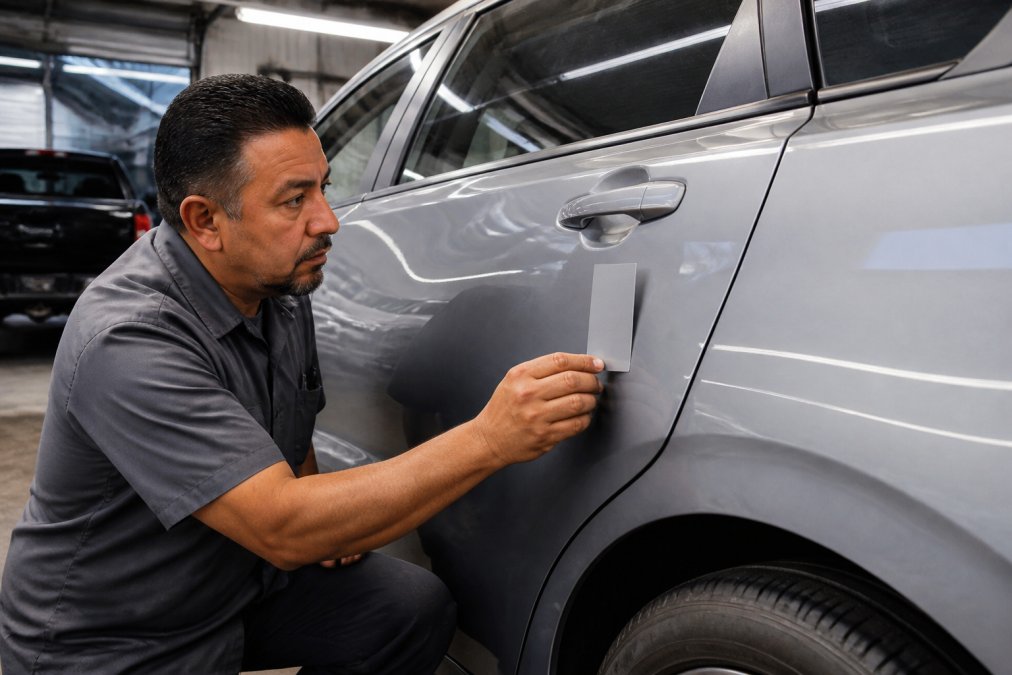
Color accuracy is the difference between a repair that disappears and one you notice every morning. Premium paint systems are built around precise color matching, which depends on how tightly basecoat formulation and color retrieval data are controlled.
Importance of OEM-Approved Paint Systems for Your Vehicle
The importance of OEM-approved paint systems comes down to three things that show up long after you drive away: warranty coverage, resale documentation, and adhesion on modern substrates. When a manufacturer approves a refinish system, it has been tested against that factory's standards for adhesion, color match, and durability on specific vehicle platforms, not just "paint that looks good."
What "OEM-Approved" Actually Means
Approval is a documented process, not a marketing label. A manufacturer evaluates a refinish system against published criteria, adhesion to the specified substrate, color variant accuracy, gloss retention, and resistance to weathering and chemicals. When it passes, the vehicle maker lists it as approved, and the supplier publishes a technical data sheet (TDS) and safety data sheet (SDS) for each product.
Adhesion on Modern Substrates
Adhesion decides whether paint stays put, and it depends on surface preparation, film thickness, and curing time working together. That matters more today because modern vehicles mix steel, aluminum, and plastic, each behaving differently:
- Steel requires proper cleaning and a primer that seals out moisture before corrosion starts.
- Aluminum forms an oxide layer almost immediately and needs specific preparation and primers to bond correctly.
- Plastic bumper covers are flexible and need adhesion promoters and flex additives so the coating moves with the panel instead of cracking.
The Warranty and Documentation Angle
There's a practical angle too. Vehicles repaired with approved systems and documented materials hold their value better at trade-in, because a buyer or inspector can verify the work was done to standard. Unapproved paint leaves no such trail, and that uncertainty shows up in resale.
- The paint system name and the specific products used (primer, basecoat, clearcoat)
- The TDS and SDS for each product
- The color variant code and the mixing ratio used
- The warranty terms in writing, including what is covered and for how long
Why This Protects You, Not Just the Shop
When a manufacturer approves a refinish system, it's saying the product meets the factory's bar for that vehicle. That gives you a defensible position if a finish fails early: the materials and process were documented, so the failure is a warranty conversation rather than a he-said-she-said. It also means the repair meets a standard an insurer, lender, or future buyer can verify, the difference between a repair that adds value and one that quietly subtracts it.
Application Efficiency and Productivity in Professional Shops
Application efficiency isn't just a shop concern; it directly affects how long you're without your car. Premium coatings spray consistently, reducing rework, cutting application complexity, and shortening time in the booth.
How to Identify High-Quality Auto Paint Work
Knowing how to identify high-quality auto paint work protects you at pickup, when you still have leverage. Quality shows up in details a rushed job skips.
What to Check Before You Accept the Keys
Run through this checklist in daylight, not under shop fluorescents:
- View the repaired panel from multiple angles and look for color shift against adjacent panels
- Check for orange peel texture differences between the repaired area and factory panels
- Look for overspray on trim, glass, and rubber seals
- Inspect panel gaps and edges for thin or missed coverage
- Ask for the paint system and materials documentation
- Confirm the warranty terms in writing before you drive away
| What to Inspect | Warning Sign | What It Means |
|---|---|---|
| Color under daylight | Visible shade difference | Poor color matching or wrong variant |
| Surface texture | Uneven orange peel | Inconsistent spray technique or film thickness |
| Panel edges | Thin or bare spots | Rushed application |
| Trim and seals | Overspray present | Inadequate masking |
| Documentation | None provided | Unverified materials and process |
DIY vs. Professional Grade: Why the Gap Matters
The gap between DIY and professional grade isn't about effort; it's about equipment, environment, and materials. Aerosol cans and consumer-grade products are formulated for convenience, not the durability, color accuracy, and corrosion resistance a vehicle needs over years of driving.
Long-Term ROI: Why Premium PPG Products Cost Less Over Time
Premium coatings cost less over time because they delay the next repair. Most people still flinch at the upfront number because nobody shows them the math, so here it is, framed the way a fleet manager would: cost per year of ownership, not cost per invoice.
The Cost-Per-Year Framework
Comparing paint quotes by invoice total is the wrong unit of measure. The right one is cost per year of service life. A finish that costs more today but lasts twice as long can be cheaper per year, before you count the secondary costs of failure.
Think of it as a simple calculation:
- Budget finish: lower upfront cost, shorter service life, higher chance of an early failure that triggers a full respray.
- Premium finish: higher upfront cost, longer service life, lower chance of early failure, and a finish that still looks right years later.
The Hidden Costs of a Failed Finish
A failed budget finish doesn't just cost you the original job again. It triggers costs the original quote never mentioned:
- Stripping and re-prepping the failed panel, which is labor-intensive and often exceeds the original prep cost.
- Blending into adjacent panels so the respray matches, which expands the job beyond the panel that failed.
- Downtime, days without the vehicle, plus the scheduling friction of a second visit.
- Diminished resale value from a car with visible paint problems or a repair history that shows a repeat respray.
What Actually Drives the Difference
The premium-versus-budget gap isn't one thing; it's a stack of formulation and process choices that each extend service life:
- Film thickness and clearcoat quality, the clearcoat carries most of the UV and chemical protection, and it's the layer most often downgraded to hit a lower quote.
- UV inhibitors that slow the breakdown that causes chalking, fading, and peeling.
- Corrosion-resistant primers that seal moisture out of the substrate before rust starts.
- Color variant accuracy that avoids the half-shade mismatch that forces a redo.
- Controlled curing in a proper booth, which determines how the coating actually performs over years, not days.
The Shop-Side Math
For a vehicle owner, it means a repair that still looks right when the loan is paid off. That's the real return: not a cheaper job, but a job you don't have to repeat.
Frequently Asked Questions
Is PPG paint as good as Sherwin-Williams?
Both brands meet OEM standards and produce professional-grade finishes. PPG is widely used in collision repair shops for its color matching accuracy and corrosion resistance. The best choice depends on your specific vehicle make, the shop's training, and the refinish system they use. What matters most is that your shop uses an OEM-approved system and follows the manufacturer's surface preparation and curing specifications.
What makes PPG paint more durable than budget alternatives?
Premium PPG products use advanced resin and pigment formulations that resist UV fading, chemical exposure, and chipping. Budget paints often have lower film thickness and weaker adhesion, which shortens the maintenance cycle. PPG coatings are tested to OEM standards for weatherability and scrub-resistance, meaning your finish holds up longer before needing a repaint. That durability translates directly into fewer repair cycles over the life of your vehicle.
How does PPG paint technology improve color matching accuracy?
PPG maintains a color library that covers thousands of OEM factory shades, including variant formulas for the same paint code. Their spectrophotometer technology reads your vehicle's actual finish, accounting for age and fading, then calculates the closest match. This reduces the risk of a panel that looks different under sunlight or parking lot lighting. Shops using premium PPG products can blend adjacent panels for a seamless repair.
Does using premium paint affect the resale value of my vehicle?
A high-quality refinish that matches the factory color and meets OEM standards protects your vehicle's resale value. Poor paint work, such as mismatched panels or premature peeling, raises red flags for buyers and inspectors. When you have documentation showing premium PPG products were used, it signals the repair was done right. That record gives potential buyers confidence and helps you avoid price negotiations over paint quality.