 How-to
How to Identify Counterfeit Automotive Replacement Parts
Quick Summary
To learn how to identify counterfeit automotive replacement parts, start with the packaging, labels, and printed part numbers, then compare the part against a known genuine component. Counterfeits often show spelling errors, blurred logos, and part numbers that do not match the vehicle. Be especially cautious of unusually low prices from online sellers.
- Over 211,000 counterfeit automotive parts were seized in 2024, almost double the 2023 figure.
- Check packaging for sharp printing, correct spelling, and a security seal or hologram.
- Verify part numbers on the manufacturer's site or with an authorized dealer.
- Do not install a suspected counterfeit part, even temporarily; set it aside in its packaging.
- Document the part, packaging, and order with photos and receipts before contacting the seller or manufacturer.
Table of Contents
- How to Identify Counterfeit Automotive Replacement Parts
- What Counterfeit Automotive Parts Are and Why They Matter
- Genuine vs. Counterfeit Auto Parts: Key Differences to Compare
- Step 1: Inspect Packaging, Labels, and Logos
- Step 2: Verify Printed Part Numbers and Serial Numbers
- Step 3: Compare the Part Against a Known Genuine Component
- How to Identify Counterfeit Automotive Replacement Parts Online
- Counterfeit Auto Parts Warning Signs and What to Do Next
- Booking a Verified Repair With Rubio's Custom Repair inc
- Frequently Asked Questions
How to Identify Counterfeit Automotive Replacement Parts
Last Updated: November 12, 2026
Counterfeit car parts are a growing problem, and they can be dangerous. Rubio's Custom Repair inc, a family-owned auto body shop in Manteca, California, knows how much a bad part can cost a driver. Knowing how to identify counterfeit automotive replacement parts is the first defense for any car owner.
Enforcement numbers show the scale of the issue. More than 211,000 counterfeit automotive parts were seized in 2024, almost double the number seized in 2023 (Aftermarket Matters report on the Brakes on Fakes campaign). Seizures do not show how many fakes are still on the road, but they do show the problem is real.
This guide walks through practical checks you can do yourself. This guide walks through practical checks you can do yourself, including packaging, labels, part numbers, and side-by-side comparison with a genuine part.
What Counterfeit Automotive Parts Are and Why They Matter
A counterfeit part is an imitation made to look like a genuine part from a known brand. It often copies the logo, packaging, and labels. The goal is to sell cheap parts at a genuine-part price.
Why does it matter? Brake pads, steering components, and airbag parts are built to protect people. A fake that fails under load can cause a crash.
- Brake and steering parts can fail under stress
- Fake airbag components may not deploy correctly
- Counterfeit parts often skip the testing that genuine parts go through
Genuine vs. Counterfeit Auto Parts: Key Differences to Compare
Genuine parts are made to the maker's specifications, while counterfeits are generally made without that oversight.
Keep these differences in mind when you look at a part:
- Fit: Genuine parts line up cleanly. Fakes may need force or modification.
- Finish: Genuine castings and molding are smooth. Fakes often show rough edges.
- Materials: Genuine metal and plastic feel solid. Fakes may feel light or brittle.
- Markings: Genuine parts carry consistent, sharp markings. Fakes often look blurred or uneven.
Our advice: a genuine part is worth paying for. For a deeper look at what OEM parts offer in fit, safety, and warranty coverage, read our guide on Benefits of OEM Car Parts: Fit, Safety, and Value. It also explains the trade-offs between OEM and cheaper alternatives.
Step 1: Inspect Packaging, Labels, and Logos
Start with the box. Counterfeiters often get packaging wrong.
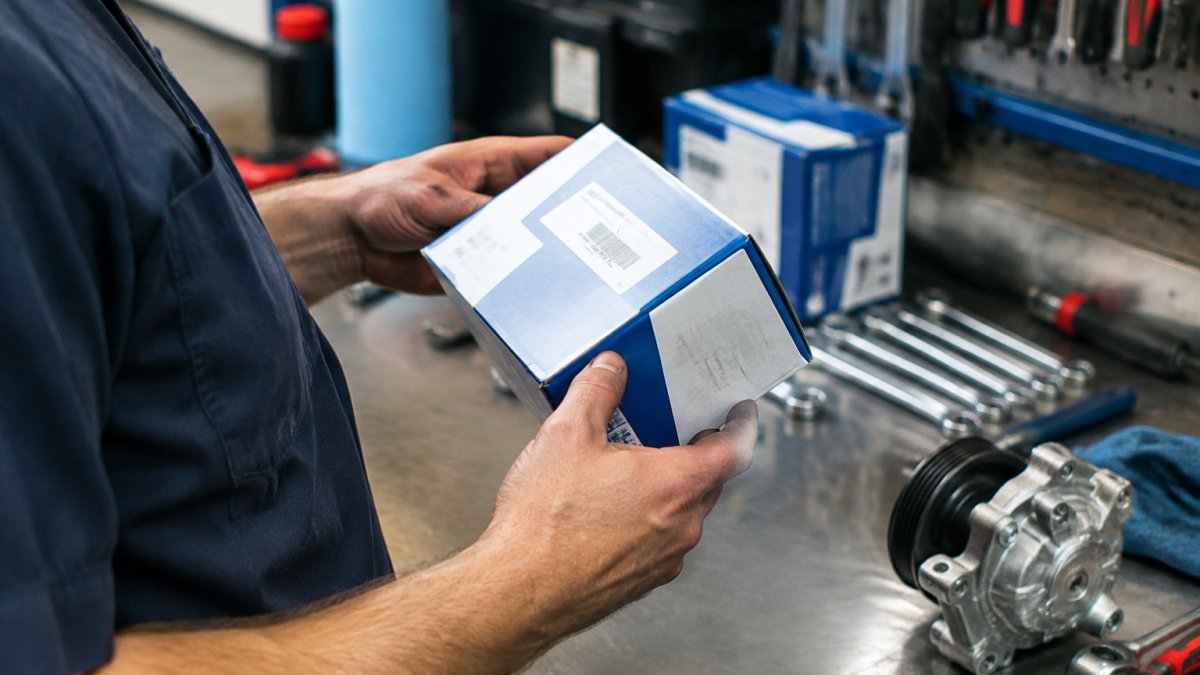
- Check the printing. Genuine boxes typically have sharp text and clean logos.
- Look for spelling mistakes or odd fonts in the brand name.
- Compare the box with a known genuine box if you have one.
- Check that the label matches the part inside.
- Look for a security seal, hologram, or tamper-proof feature.
Watch out: a perfect-looking box can still hold a fake part. Packaging is one clue, not proof.
Step 2: Verify Printed Part Numbers and Serial Numbers
Part numbers are one of the best checks you have. Look up the number on the manufacturer's site or with an authorized dealer.
- Find the part number on the box and on the part itself
- Confirm the number matches your vehicle's requirements
- Check that the printed marks are crisp and evenly spaced
- Look for a serial number where the maker uses one, and check it against the maker's records
Corsearch reports that deceptive online listings may use genuine OEM part numbers, stock images, and vague seller profiles (Corsearch on counterfeit online listings). A correct-looking part number alone does not prove a part is genuine.
Step 3: Compare the Part Against a Known Genuine Component
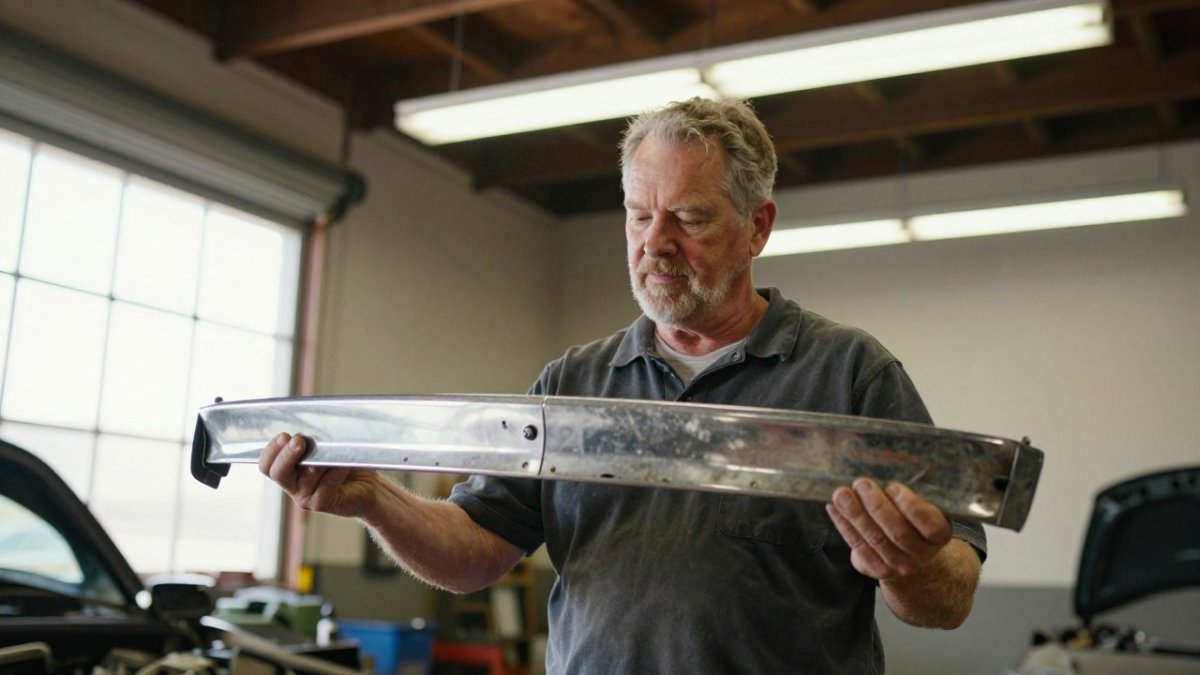
If you have a genuine part, put the two side by side. Look at weight, color, texture, and mounting points. But a side-by-side comparison only works if you know what to look for on that specific part type. Visual clues vary widely between brakes, filters, airbags, and steering components, so a generic checklist can miss the tell that matters most.
Start with the basics that apply to any part:
- Mounting holes line up in the same place
- Weight feels the same in your hand
- Surface finish and color match
- Welds, seams, and edges look clean
- Casting or molding marks sit in the same location
Then go part-specific. These are the checks most practitioners find most useful on safety-critical components:
Brake pads and rotors. Genuine pads usually carry a shim, slot pattern, and friction-material stamp that match the maker's spec. Fakes often skip the shim, use a rougher friction surface, or show a wear indicator that does not match the caliper. On rotors, check the hat height, vane count, and balance marks against a known genuine rotor. A counterfeit rotor may be thinner at the friction ring or lack the maker's rust-preventive coating.
Airbags and inflators. These are the highest-risk fakes because a failed inflator can send shrapnel into the cabin. Genuine airbag modules carry a label with the maker's part number, a production date, and a lot code. Check that the connector keying matches the vehicle harness and that the mounting bracket has the same stampings. Never buy an airbag from a seller who cannot show a traceable chain of custody.
Oil, air, and cabin filters. Genuine filters usually have a pleat count, media color, and end-cap construction that match the maker's spec. Fakes often use fewer pleats, thinner media, or a loose end cap that bypasses unfiltered air or oil. Compare the bypass valve and anti-drainback valve on oil filters; a counterfeit may omit one or use a weaker spring.
Steering and suspension components. Tie rod ends, ball joints, and control arms should match in thread pitch, taper angle, and boot material. Genuine boots are usually neoprene or a specified rubber; fakes may use a stiff plastic boot that cracks early. Check that the grease fitting, castle nut, and cotter pin hole line up with the genuine part.
Watch out: a convincing visual match is still only one clue. Counterfeiters copy castings and markings well enough that a side-by-side look can pass while the metallurgy or internal construction fails. A UK government consumer guide notes that simply looking at a part might not be enough to identify a fake (UK government guidance on fake parts).
Use this quick reference to see which checks matter most for each type of part.
| Part type | Check | Red flag |
|---|---|---|
| Brake pads and rotors | Shim, slot pattern, friction stamp | Missing shim or rougher friction surface |
| Airbags and inflators | Part number, production date, lot code | No traceable chain of custody |
| Oil, air, cabin filters | Pleat count, media color, end cap | Fewer pleats, thinner media, loose end cap |
| Steering and suspension | Thread pitch, taper angle, boot material | Stiff plastic boot that cracks early |
| Any part | Mounting holes, weight, finish | Holes misaligned or weight feels off |
How to Identify Counterfeit Automotive Replacement Parts Online
Online shopping raises the risk. Many counterfeit listings look like legitimate ones.
- Buy from authorized sellers or the maker's own store when you can
- Read seller reviews, and be wary of new accounts with no history
- Be cautious of unusually low prices for brand-name parts
- Ask for a purchase receipt and check the return policy
- Compare the seller's photos with the part you receive
If a deal seems too good to be true, the part is often fake. Cheap pricing is one of the most common warning signs.
Counterfeit Auto Parts Warning Signs and What to Do Next
Watch for these red flags:
- Packaging with spelling errors or blurred logos
- Part numbers that do not match the vehicle
- Missing documentation or product manuals
- Prices far below the genuine part
- A seller who avoids questions about origin
- A QR code or serial number that fails the maker's online check
Finding a red flag is not the end of the process. What you do next determines whether you get your money back and whether the seller keeps targeting other buyers.
1. Stop and do not install the part. Once you suspect a counterfeit, do not bolt it on, even temporarily. A fake brake pad or airbag that fails during a test drive is the exact outcome you are trying to avoid.
2. Document everything before you contact anyone. Photograph the part, the packaging, the label, the part number, and the serial number. Keep the listing screenshot, the order confirmation, and the receipt. Note the seller name, the platform, and the date of purchase.
3. Contact the seller in writing. Ask for a refund and a return label, and state that you believe the part is counterfeit. Keep the exchange in the platform's messaging system so there is a record. If the seller stalls, escalate to the platform's buyer-protection team.
4. Contact the manufacturer. Most major automakers and parts brands have a brand-protection or customer-support channel that will verify a part number or serial number and tell you whether the part is genuine.
5. Report the suspected fraud. File a report with the platform, and consider reporting to the manufacturer's brand-protection team. For suspected fraud that crosses state lines or involves online sales, the Federal Trade Commission's consumer complaint system is the standard federal channel.
6. Have the repair inspected before you drive. If the counterfeit part was already installed, have a qualified technician inspect the repair and replace the part with a verified genuine or reputable aftermarket component. Do not rely on a visual check alone after installation.
Watch out: a copied QR code or serial number can pass an online check because counterfeiters reuse genuine codes. Treat a passing check as one data point, not proof, and lean on the manufacturer's written confirmation when the part is safety-critical.
For more help spotting shady work, see our guide on How to Avoid Auto Repair Scams: A Step-by-Step Guide.
Booking a Verified Repair With Rubio's Custom Repair inc
Checking parts yourself is useful, but a trusted shop removes much of the guesswork. At Rubio's Custom Repair inc, we use original parts for most repairs and premium PPG paint products. We have over 30 years of experience and a guarantee on our repairs, so you can get back on the road with confidence.
If your vehicle needs collision work, our guide to quality collision repair services explains what to look for in a repair shop. You can also find expert collision repair near you to compare options before you book.
Ready to get your car checked by people who know parts? Schedule an appointment with Rubio's Custom Repair inc today.
Frequently Asked Questions
How can you tell if an auto part is counterfeit?
Start with the packaging, labels, logos, and printed part numbers. Counterfeit parts often have blurry logos, misspelled text, or part numbers that do not match the manufacturer's catalog. Compare the part against a known genuine component for fit, finish, and material quality. Visual checks alone may not be enough, so also verify the seller and the listing before you install anything.
Are aftermarket parts the same as counterfeit parts?
No. Aftermarket parts are made by companies other than the original manufacturer and are sold under their own brand, often legally. Counterfeit parts copy another company's trademark, packaging, or part numbers without permission. Aftermarket parts can still vary in quality, so check the brand, documentation, and seller reputation either way.
Can a VIN or part number verify that a replacement part is genuine?
A part number can help you confirm that a component matches your vehicle's specifications, but it does not prove authenticity, since counterfeiters can copy genuine part numbers. Check the number against the manufacturer's catalog, and buy from authorized sellers where possible. Keep the purchase receipt in case you need to return or dispute the part.
What should you do if you think a car part is counterfeit?
Stop before installing the part. Contact the seller in writing and request a refund or replacement, and keep the receipt, photos, and listing details. You can report suspected counterfeit parts to the manufacturer and to the U.S. Immigration and Customs Enforcement (ICE) Homeland Security Investigations unit. Ask your repair shop for advice on whether the part is safe to use.