 how-to
How to Avoid Auto Repair Scams: A Step-by-Step Guide
Table of Contents
- Recognize Common Auto Repair Scams Before They Happen
- Signs of a Dishonest Mechanic to Watch For
- Questions to Ask Your Mechanic Before Authorizing Work
- Verify Repairs and Request to See Replaced Parts
- What to Do If a Mechanic Overcharges You
- Step 1: Document Everything
- Step 2: Contact the Shop and Request a Refund
- Step 3: File a Complaint with Your State's Attorney General
- Step 4: File a Complaint with Your State's Consumer Protection Bureau
- Step 5: Report to the Better Business Bureau (BBB)
- Step 6: Dispute the Charge with Your Credit Card Company
- Step 7: File a Claim in Small Claims Court
- Step 8: Consult a Consumer Protection Attorney (For Large Overcharges)
- Timeline and Expectations
- Get a Second Opinion on Major Repairs
- Protect Yourself: Documentation and Your Rights
- Frequently Asked Questions
Last Updated: October 4, 2026
Recognize Common Auto Repair Scams Before They Happen
To avoid auto repair scams, which come in many forms, knowing what to look for is your first line of defense. The most common scams involve unnecessary repairs, inflated labor charges, and hidden fees that appear only after work begins. Understanding these tactics helps you protect yourself and your wallet.
Common scams include: diagnostic fee traps (charging to identify problems, then pressuring expensive repairs), parts markup schemes (charging far more than actual cost), and ghost labor (charging for work never performed).
Shops often recommend unnecessary fluid flushes (transmission, coolant, brake) using scare tactics about engine damage to pressure approval.
The bait-and-switch quotes low prices, then calls with "discoveries" requiring expensive additional work once your vehicle is disassembled.
Signs of a Dishonest Mechanic to Watch For
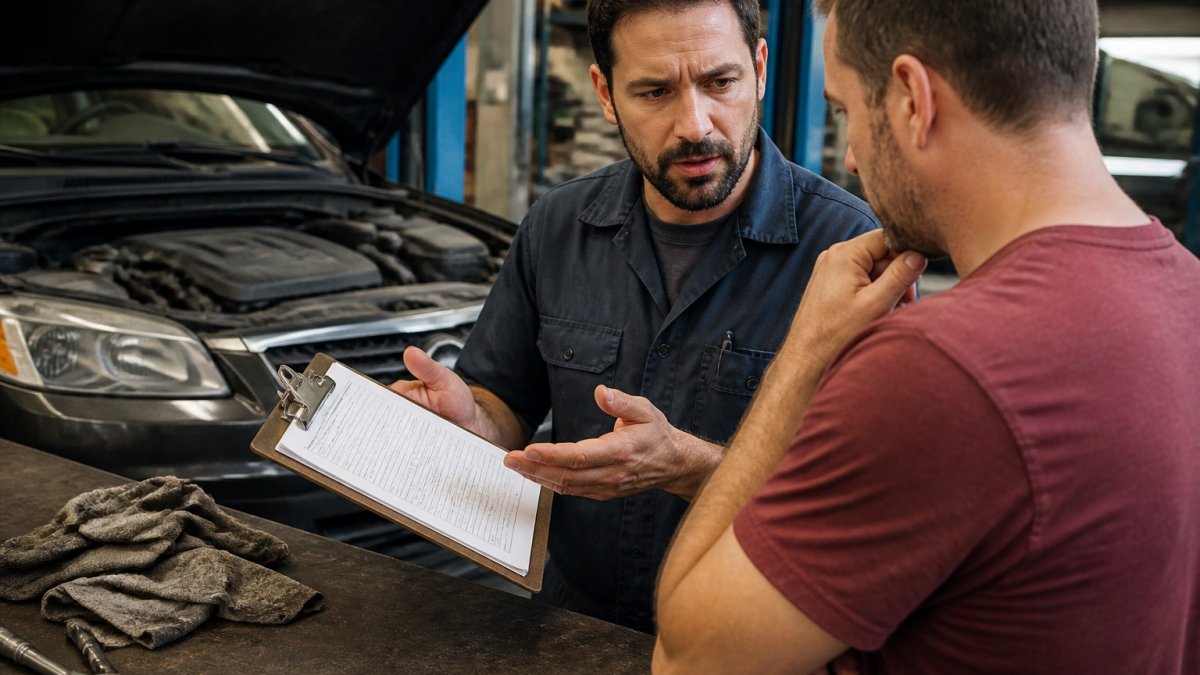
Shops that won't let you see replaced parts are hiding something. Request to see every part removed before you pay.
Pressure tactics, rushing you, using fear language, or implying you're foolish for questioning, indicate dishonesty. Trustworthy technicians explain repairs and give you time to decide.
Shops that won't provide written estimates before starting work are problematic.
Shops that won't disclose hourly rates or apply them inconsistently are suspicious.
Questions to Ask Your Mechanic Before Authorizing Work
Asking the right questions protects you. Honest shops welcome them; dishonest ones don't.
Ask what the problem is and why the repair is necessary. A good technician explains this in plain language. You should understand what's wrong and why the fix matters.
Ask about alternatives. Multiple solutions often exist (rebuild vs. flush, new vs. refurbished parts), and understanding your options helps you decide.
Request a Written Estimate and Itemized Invoice
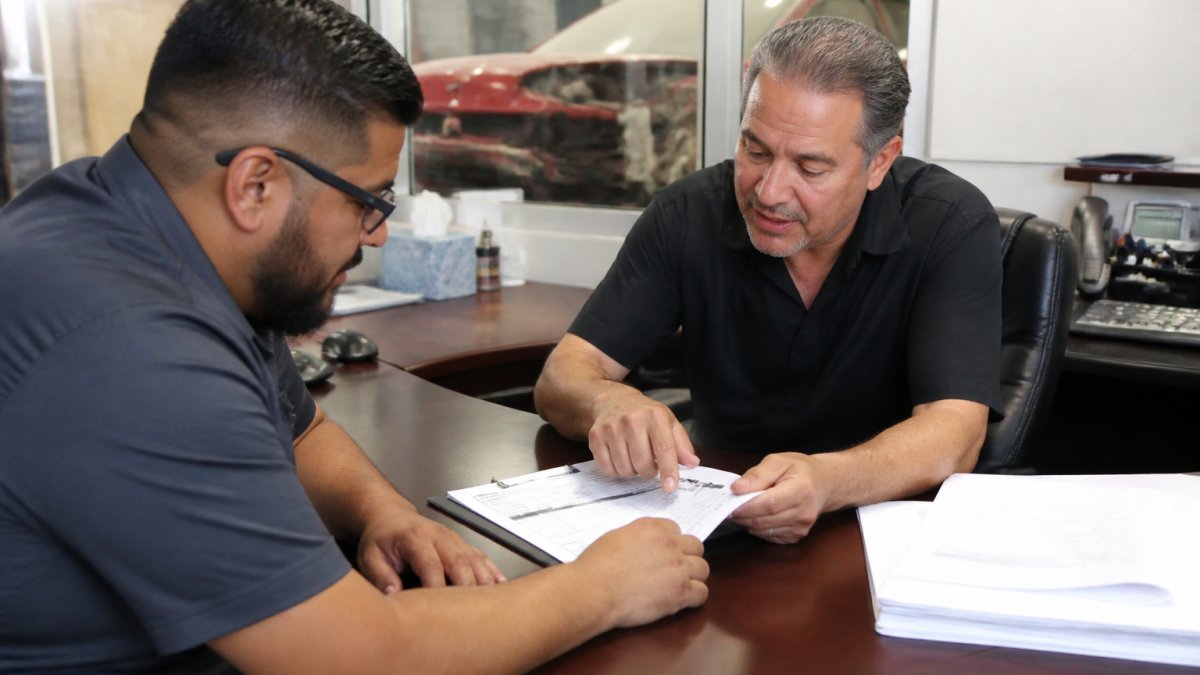
Never authorize work without a written estimate, which creates a clear agreement about what will be done and what it will cost.
A proper estimate itemizes each repair with labor time and parts cost separated. If the estimate is vague, ask for more detail.
Ask about the shop's policy on diagnostic fees, waivers if you approve the repair, and how they handle additional problems discovered during work.
Verify Parts and Labor Rates
Ask whether the shop uses OEM parts (made by your vehicle's manufacturer) or aftermarket parts (made by third parties, usually cheaper).
Both are legitimate, but OEM parts cost more. Ensure you understand which type you're getting and why.
Ask the hourly rate and estimated hours for the repair. Multiply to verify the labor charge on your estimate.
Verify Repairs and Request to See Replaced Parts
After work is complete, inspect the physical parts and audit the invoice. Most customers skip the invoice analysis, that's where hidden overcharges hide.
Inspect Replaced Parts and Cross-Check Against Invoice
Ask to see every part removed before you pay. If a part looks new or undamaged when you expected it worn, something is wrong. Take photos including part numbers.
Match each physical part to the invoice. If quantities or part numbers don't match, ask why.
Decode the Invoice for Padding and Ghost Labor
Most overcharges occur on invoices through three tactics: padding labor hours, ghost labor (work never performed), and diagnostic charges that should be waived.
Labor hour padding: Compare invoice hours against repair manual specs.
Ask the shop for the labor guide reference. Honest shops provide it; refusal is suspicious.
Ghost labor: Work listed but never performed.
If the repair took 2 hours but the invoice lists 3, ask what the extra hour covers.
Parts markup audit: Verify parts pricing against RockAuto, Amazon, or the manufacturer's website. Markup of 20-50% is normal; extreme markups are a red flag.
The invoice should specify OEM or aftermarket parts. If it just says "alternator," ask which type.
Check the Estimate Against the Final Invoice
Every line item should match your estimate. If new charges appear, ask for explanation. Legitimate additional charges should be clearly explained and approved before work was completed.
If the final invoice exceeds the estimate by more than 10%, that's a red flag. Ask why charges appeared without your approval.
Test the Repair and Document Results
Test the repair (air conditioning, check engine light, brake feel). If it didn't fix the problem, tell the shop immediately. Most reputable shops warranty their work.
Take photos or video of the repair working or not working for warranty documentation.
What to Do If a Mechanic Overcharges You
If overcharged, multiple agencies and legal remedies exist to recover your money.
Step 1: Document Everything
Gather all evidence: written estimate, final invoice, photos of parts and vehicle, written communications, repair manual specs, online pricing screenshots, and payment receipt.
Organize these into a folder. You'll need them for every step that follows.
Step 2: Contact the Shop and Request a Refund
Contact the shop in writing (email or certified mail). Explain the specific overcharge with dollar amounts and reasons. Avoid emotional language. Give the shop 10 business days to respond.
If the shop refuses or doesn't respond, move to the next step.
Step 3: File a Complaint with Your State's Attorney General
File a complaint with your state's Attorney General consumer protection division. Visit their website, complete the complaint form, provide your name, the shop's details, date of service, and description of the overcharge, and attach your estimate and invoice.
The Attorney General will contact the shop and may order a refund if consumer protection laws were violated. This typically takes 4-8 weeks.
Step 4: File a Complaint with Your State's Consumer Protection Bureau
Many states have a separate Consumer Protection Bureau. Search "[state name] consumer protection bureau" and file a complaint with the same documentation.
Step 5: Report to the Better Business Bureau (BBB)
File a complaint with the Better Business Bureau at bbb.org. While it has no legal authority, it creates a public record and affects the shop's rating.
Step 6: Dispute the Charge with Your Credit Card Company
If you paid by credit card, contact your issuer to dispute the charge. Provide your estimate and invoice. The company may reverse the charge in 30-60 days. Debit card or cash payments don't have this recourse.
Step 7: File a Claim in Small Claims Court
For overcharges over $500, small claims court is a viable option. The process is straightforward, costs are low (typically $50-$200 filing fee depending on the claim amount), and you don't need a lawyer.
To file:
- Contact your local small claims court (search "[county name] small claims court")
- Obtain a claim form from the court
- Fill out the form with the shop's name and address, your name, and the amount you're claiming
- Attach copies of your estimate, invoice, and documentation
- File the form with the court and pay the filing fee
- Serve the shop with a copy of the claim (the court will provide instructions)
The shop will have time to respond. If they don't, you may win by default. If they do respond, you'll have a hearing before a judge. Bring your documentation and explain the overcharge clearly. The judge will decide whether the shop owes you money.
Small claims court is designed for disputes like this. You don't need legal expertise. Judges expect consumers to represent themselves.
Step 8: Consult a Consumer Protection Attorney (For Large Overcharges)
If the overcharge exceeds $2,000 or involves a pattern of deceptive practices, consult a consumer protection attorney. Many offer free initial consultations. An attorney can file a lawsuit in civil court and may recover attorney fees if you win.
Search "consumer protection attorney [state name]" to find local lawyers. Many work on contingency, meaning they only get paid if you win.
Timeline and Expectations
Resolution timelines vary:
- Shop refund (if cooperative): 1-2 weeks
- Attorney General complaint: 4-8 weeks
- Credit card chargeback: 30-60 days
- Small claims court: 2-4 months
- Civil lawsuit: 6-12 months
Start with the shop directly and the Attorney General simultaneously. If those fail, pursue credit card chargeback or small claims court. Most overcharges are resolved within 2-3 months if you follow these steps.
Get a Second Opinion on Major Repairs
A second opinion costs money upfront but often saves far more. For repairs over $500, getting a second estimate is wise. This is especially true for major work like transmission rebuilds, engine repairs, or collision damage assessment.
Call another shop and explain what the first shop recommended. Ask if they'll do a free inspection and provide their own estimate. Most shops will do this. Compare the estimates carefully. Major differences might indicate one shop is overcharging or one is missing something important.
Don't just pick the cheapest estimate. A shop that quotes significantly less might be cutting corners or using lower-quality parts. Look for estimates in a reasonable range, then choose based on the shop's reputation and communication quality.
Protect Yourself: Documentation and Your Rights
Documentation is your strongest protection against scams. Keep every receipt, estimate, invoice, and email from the shop. Take photos of replaced parts before you leave. Save photos of your vehicle before and after repairs.
Understand your consumer rights. Most states require shops to provide written estimates before starting work (Auto Repair Basics). Many states require shops to get your approval before charging significantly more than the estimate.
The Federal Trade Commission provides guidance on consumer rights related to auto repair. Review their resources to understand protections in your state. Knowing your rights makes you a harder target for dishonest shops.
Request a warranty on the repair. Most legitimate shops warranty their work for 30 days or longer. This shows they stand behind their work.
To avoid auto repair scams, focus on asking questions, getting everything in writing, and verifying the work. When you're facing major repairs, choosing a shop that prioritizes your confidence over quick profits makes all the difference. Schedule an Appointment with our team today and experience the difference honest, professional service makes.
Frequently Asked Questions
How can you tell if a mechanic is scamming you?
Watch for pressure to authorize expensive repairs immediately, refusal to show you replaced parts, vague invoices without itemization, and recommendations for preventative maintenance you didn't ask about. Dishonest mechanics often use technical jargon to confuse you or claim urgent problems without a clear explanation. If something feels off, ask for a written estimate and get a second opinion before paying.
What should you do if you suspect you have been ripped off by a mechanic?
Document everything: keep your invoice, photographs of replaced parts, and any communications. Contact your state's attorney general's office or file a complaint with the Better Business Bureau. If you paid with a credit card, dispute the charge. Consider small claims court for amounts under your state's limit. Save all receipts and repair records to support your case.
How do you verify if a mechanic is using original parts?
Ask directly before authorizing repairs whether they use OEM (original equipment manufacturer) parts or aftermarket alternatives. Request to see the actual parts removed from your vehicle, legitimate shops will show you. Check your invoice for part numbers and manufacturer names. Some aftermarket parts may not fit or perform as well.
What are red flags when choosing an auto body shop?
Avoid shops that won't provide written estimates, pressure you to use specific parts suppliers, or refuse to work with your insurance company. Be cautious of shops offering unusually low prices, those without verifiable reviews, or ones that won't explain repairs in plain language. Check if they're BBB-rated and ask about their warranty on repairs and paint work before committing.