 how-to
How to Spot Dishonest Auto Shops: 7 Warning Signs
Table of Contents
- Why Some Auto Shops Cut Corners (and How to Protect Yourself)
- 7 Red Flags of Dishonest Auto Shops
- Auto Repair Estimate Red Flags to Watch For
- Questions to Ask a Mechanic Before Service
- How to Ask for a Second Opinion on Car Repairs
- How to Spot Dishonest Auto Shops: A Pre-Visit Checklist
- Conclusion: Trust Your Instincts and Your Paperwork
- Frequently Asked Questions
Last Updated: September 5, 2026
Few things feel worse than handing over your keys and wondering if the shop sees you as a customer or a mark. Learning how to spot dishonest auto shops is the best defense against inflated bills, unnecessary repairs, and parts that never match what you approved. At Rubio's Custom Repair inc, a family-owned auto body shop in Manteca with over three decades of experience, protecting yourself starts with knowing what to look for before you sign anything.
Most auto repair fraud happens in clean waiting rooms with friendly advisors who recommend extra services you never asked for. Dishonest shops rely on predictable tactics, and once you recognize them, they lose their power.
Below are the seven warning signs that separate trustworthy shops from those padding the bill, plus the questions to ask and paperwork habits that keep you protected.
Why Some Auto Shops Cut Corners (and How to Protect Yourself)
Dishonest shops exist because repair work is difficult to verify. When a technician says your control arm is worn, you cannot easily confirm it without a second pair of eyes. That information gap is where unnecessary repairs and estimate inflation take root.
The most effective protection is process, not suspicion. Honest shops welcome written estimates, show you worn parts, and explain their reasoning. Shops that resist those courtesies are telling you something important.
Consumer protection agencies advise getting everything in writing before authorizing work. A verbal quote is not a contract, and a shop that refuses to put numbers on paper leaves you with no recourse if the final bill climbs.
7 Red Flags of Dishonest Auto Shops
Spotting a dishonest shop gets easier when you know what patterns to watch for. These red flags cover the most common tactics used to inflate bills and push unnecessary work.
Red Flag 1: Vague or Verbal Estimates
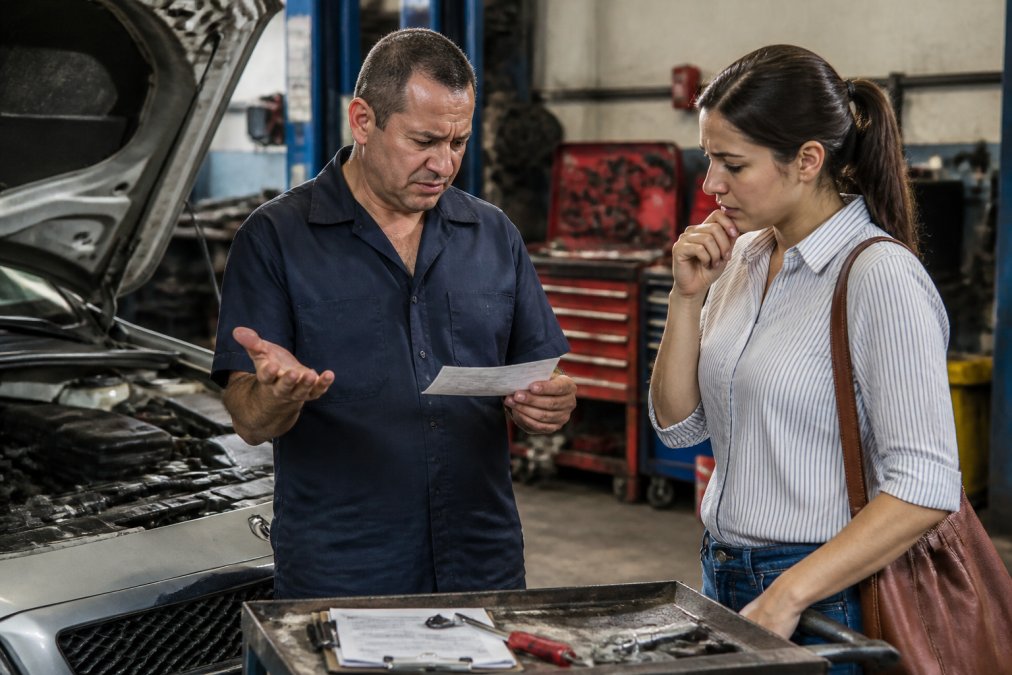
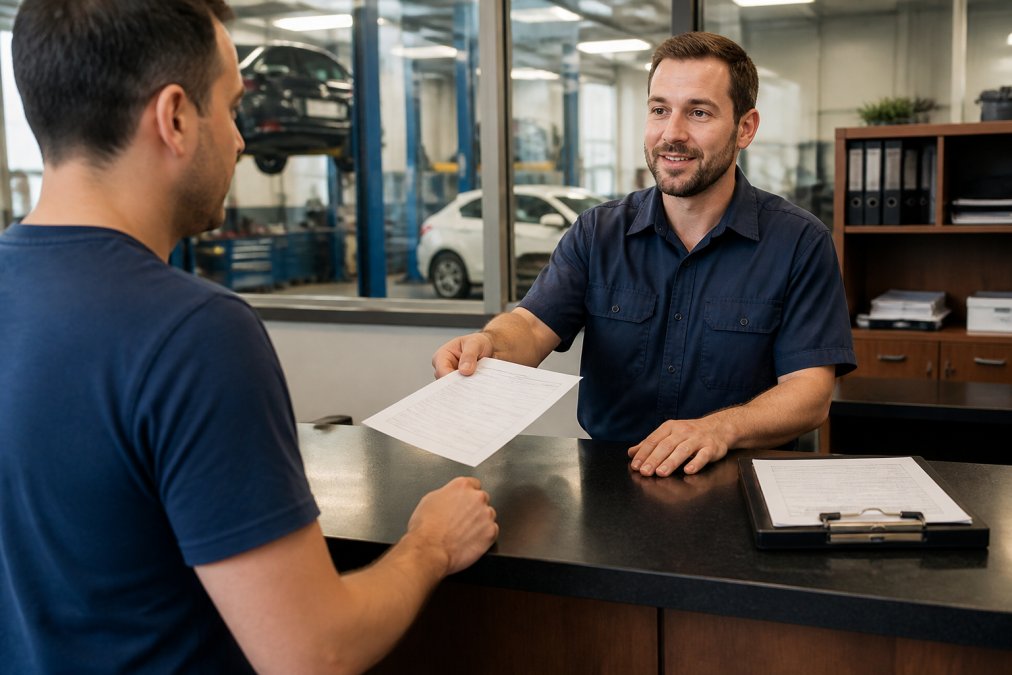
A reputable shop provides a written estimate before work begins, itemizing labor rates, parts costs, and specific repairs. If an advisor gives a rough verbal number and says they will "figure it out as they go," you are walking into an open-ended financial commitment.
Vague estimates create room for hidden fees and inflation later. A written estimate documents what was authorized, and any additional work should require your explicit approval.
Red Flag 2: High-Pressure Sales Tactics
Pressure is a warning sign, not a sales technique. A shop that insists you authorize an expensive repair immediately, warning your car is unsafe or the price will go up tomorrow, is rushing you past your better judgment.
Legitimate shops understand repairs are significant financial decisions. They give you time to think, encourage second opinions, and provide documentation to review at home. High-pressure tactics are a reliable indicator of a shop that prioritizes profit over trust.
Red Flag 3: Refusal to Show Old Parts
When a shop replaces a component, the old part belongs to you. A trustworthy shop will gladly show you the worn part, often placing it in a box for you to take home. A shop that cannot produce old parts or makes excuses should raise immediate concerns.
Auto Repair Estimate Red Flags to Watch For
Beyond the initial quote, the estimate document itself reveals a great deal about a shop's integrity. Learning to read it carefully pays for itself many times over.
Watch for these specific warning signs in any written estimate:
- Blurred line items: Costs grouped into vague categories like "miscellaneous labor" that prevent you from understanding what you are paying for
- Parts markup without disclosure: Aftermarket parts priced at OEM levels, or parts listed without specifying whether they are new, rebuilt, or salvaged parts
- Pre-authorized extras: Language that allows the shop to perform additional work without contacting you first
- Missing warranty information: No mention of warranty coverage on parts or labor, which leaves you unprotected if the repair fails
A clear estimate lists every part with its source, every labor charge with its rate, and states the warranty terms in writing. If you see estimate inflation or vague categories, ask for clarification before you authorize anything. The Federal Trade Commission guidance on auto repair emphasizes that consumers have the right to a written estimate and to approve any work before it begins.
Questions to Ask a Mechanic Before Service
Asking the right questions before service separates careful consumers from easy targets. Walk into any shop with these questions ready, and you will quickly gauge their transparency.
- "Can you provide a written estimate itemizing parts and labor?"
- "Are you using OEM parts, aftermarket parts, or salvaged parts, and how does that affect my warranty coverage?"
- "What is your diagnostic fee, and will it be applied toward the repair if I authorize the work?"
- "May I see the old parts after they are removed?"
- "Do you work directly with my insurance company, or will I need to coordinate the claim myself?"
- "What warranty do you offer on parts and labor?"
A shop that answers directly and in writing demonstrates confidence in its work. One that hesitates, deflects, or becomes defensive is showing you why you should take your business elsewhere.
How to Ask for a Second Opinion on Car Repairs
Getting a second opinion is not an insult to the first shop; it is standard practice for significant financial decisions. If an estimate exceeds a few hundred dollars, or the shop recommends unexpected work, a second opinion is a smart investment.
Take your written estimate to another shop and ask them to review it. Many reputable shops will inspect for a diagnostic fee and tell you honestly whether the work is necessary. If the second shop confirms the diagnosis and price, proceed with confidence. If estimates differ dramatically, you have just avoided a costly mistake.
An independent inspection is particularly valuable when a shop recommends repairs beyond preventative maintenance. A second pair of eyes can confirm whether a part genuinely needs replacement or the first shop was inflating the scope of work.
Using Digital Tools to Verify the Diagnosis
Before you leave the first shop, ask for the specific diagnostic trouble codes (DTCs) they pulled from your vehicle's computer. These standardized codes (like P0301 for a cylinder misfire or C0035 for an ABS wheel speed sensor) can be read for free by any independent shop or parts store.
Here is how to use digital documentation to your advantage:
- Take photos of the estimate and the check-engine light readout. Most smartphones have built-in document scanning that creates a clean PDF you can email to the second shop before you even book an appointment.
- Use a Bluetooth OBD-II scanner (available at any auto parts store for $20-$50) to read the codes yourself. This gives you a baseline you can compare against what the shop reports. If the shop says "we found a P0301 misfire" but your scanner shows no stored codes, that is a red flag.
- Ask the second shop for a written diagnostic report, not just a verbal "yeah, it needs a new alternator." A thorough shop will provide a printout showing the test results, voltage readings, or wear measurements that justify the recommendation.
- Check the parts themselves. If the first shop claims your brake pads are at 2mm, ask to see the measurement. Many shops will show you a caliper reading or a photo. If they cannot produce evidence, treat the claim with suspicion.
When a Second Opinion Is Non-Negotiable
Certain repairs warrant a second opinion almost without exception. These include:
- Transmission replacements, often quoted between $3,000 and $6,000, and misdiagnosis is common.
- Engine repairs, anything involving internal components where labor costs can exceed the value of the part.
- Air conditioning system repairs, a frequent source of unnecessary compressor replacements when the actual issue is a simple leak or relay failure.
- Any repair quoted above $500 that was not part of your original service request.
A second opinion is not just about price comparison; it verifies the diagnosis is correct, the parts are appropriate, and the labor is necessary. A shop that refuses to share diagnostic codes or test results is not giving you enough information to make an informed decision, exactly the behavior you are trying to avoid.
How to Spot Dishonest Auto Shops: A Pre-Visit Checklist
Before you choose a shop, run through this checklist to spot dishonest shops before they ever touch your vehicle.
- Check the shop's reputation through the Better Business Bureau and read recent customer reviews
- Confirm the shop is properly licensed and insured for your state
- Ask about technician certification and how long the shop has been in business
- Request a written estimate before authorizing any work
- Confirm the shop uses quality parts and ask whether they offer a repair guarantee
- Ask how they handle additional repairs discovered during service
- Verify their policy on returning old parts
- Ask whether they work directly with your insurance company
| Warning Sign | What It Looks Like | How to Respond |
|---|---|---|
| Vague estimates | Verbal quotes, no itemized breakdown | Request a written estimate before authorizing work |
| High-pressure tactics | Urgency, "price goes up tomorrow" | Walk away and seek a second opinion |
| Refusal to show parts | Excuses when you ask for old parts | Demand parts back before paying |
| Hidden fees | Blurred line items, surprise charges | Review the itemized invoice carefully |
This checklist shifts the burden of proof onto the shop. A business with nothing to hide will welcome these questions. One that relies on confusion and pressure will not.
Conclusion: Trust Your Instincts and Your Paperwork
Your instincts and paperwork are your two most reliable tools. If a shop makes you uncomfortable, pressures you to decide quickly, or refuses to put things in writing, trust that feeling and take your vehicle elsewhere.
If you have already been overcharged or had unnecessary repairs performed, knowing how to spot dishonest shops is the first line of defense; having a clear path to recourse is the second. Here is what to do if you suspect auto repair fraud.
Step 1: Document Everything Immediately
Before you make any calls, gather your evidence. This includes the original written estimate, the final invoice, any photos of old parts or the repair work, and all email or text correspondence with the shop. If you have digital records from an OBD-II scanner or diagnostic reports, include those as well. The more documentation you have, the stronger your case.
Step 2: Contact Your State's Consumer Protection Office
Every state has a consumer protection division, typically housed within the state Attorney General's office. In California, for example, the Bureau of Automotive Repair (BAR) handles complaints against auto shops and has the authority to investigate and discipline licensed facilities (bar.ca.gov). Many states have similar dedicated bureaus for automotive repair. A quick search for "[your state] auto repair complaint" will direct you to the correct agency.
Filing a complaint typically involves submitting a written statement, copies of your documentation, and a description of the issue. Most state bureaus will contact the shop on your behalf and attempt mediation. While this process can take several weeks, it creates an official record that can be useful if you decide to pursue legal action.
Step 3: Consider Small Claims Court
For disputes involving amounts under your state's small claims limit (typically $5,000 to $10,000, depending on the state), small claims court is a practical option that does not require an attorney. The filing fee is usually under $100, and the process is designed for everyday consumers. You will present your evidence, the shop will present its side, and a judge will make a decision.
Before filing, send the shop a written demand letter outlining the issue and the resolution you are seeking. This letter, sent via certified mail, often prompts a settlement before you ever step into a courtroom. It also demonstrates to a judge that you made a good-faith effort to resolve the matter directly.
Step 4: Report to the Better Business Bureau and Online Review Platforms
While the BBB does not have regulatory authority, filing a complaint there creates a public record that other consumers will see. The same applies to Google Reviews, Yelp, and the shop's social media pages. Be factual and specific in your review, include dates and amounts, and avoid emotional language. A well-documented review is more credible than a rant and more likely to prompt a response from the shop.
Step 5: Check for Warranty and Credit Card Protections
If the repair was performed recently, check whether the shop's warranty covers the issue. Many states require a minimum parts and labor warranty on auto repairs. Additionally, if you paid with a credit card, you may be able to dispute the charge through your card issuer under the Fair Credit Billing Act. This federal law allows you to challenge charges for services that were not performed as agreed, but you must act within 60 days of the statement date.
At Rubio's Custom Repair inc, we have spent over 30 years earning the trust of drivers across San Joaquin County. We provide written estimates, use original parts for most repairs, apply premium PPG products to every paint job, and back our work with a guarantee. We work directly with insurance companies and are proud of our BBB rating, because we believe transparency is not a selling point, it is the baseline.
Get started with Rubio's Custom Repair inc and experience a shop that treats your car, and your wallet, with respect.
Frequently Asked Questions
What are the red flags of an untrustworthy automobile repair shop?
Key red flags include refusing to provide a written estimate, demanding payment upfront, using high-pressure sales tactics, and not showing you the old parts they replaced. Be cautious of shops that quote labor rates but don't itemize the invoice, or that recommend extra services without clear explanations. A reputable shop will answer your questions directly and provide documentation for all authorized repairs.
How can I verify if an auto shop is using original parts?
Ask the shop directly about their parts policy before authorizing work. A trustworthy shop will tell you whether they use OEM parts, aftermarket parts, or salvaged parts, and explain the difference in warranty coverage and price. Request that the parts used be listed on your itemized invoice. You can also ask to inspect the parts before they are installed on your vehicle.
Should I get a second opinion on car repairs?
Yes, getting a second opinion is a smart move for any repair over a few hundred dollars or any time a shop recommends work you didn't expect. A second shop can verify whether the recommended repairs are necessary and whether the quoted price is fair. Many reputable shops will review another shop's estimate for free, especially for major services like brake or suspension work.
What is the $3000 rule for car repairs?
The $3,000 rule is a general guideline suggesting that if a repair estimate is close to or exceeds the value of your car, it may not be worth fixing. Instead of spending thousands on an older vehicle, you might consider using that money toward a replacement. Always get a written estimate and compare it against your car's current market value before making a decision.