 How-to
Paint Job Estimate: What to Look For Before You Sign
Last Updated: November 4, 2026
Quick Summary
A good paint job estimate lists every panel to be painted, the surface preparation steps, the materials, and labor hours for each task, rather than one lump sum. Ask for an itemized version so you can compare quotes and spot gaps before signing.
- Most of the paint job cost comes from prep work, not the paint itself.
- Ask for labor hours by task and the hourly labor rate, not one lump-sum number.
- Confirm the estimate states which panels are repaired and which are refinished.
- Compare quotes item by item for scope, number of coats, and paint specification.
- Get the warranty, payment schedule, and change-order process in writing before you approve.
Table of Contents
- What a Complete Paint Job Estimate Should Cover
- Checking Surface Area, Scope, and Measurements
- Reviewing Surface Preparation, Repairs, and Materials
- Reading Labor Hours, Rates, and the Cost Breakdown
- Painting Estimate Examples: Comparing Quotes Side by Side
- Red Flags, Exclusions, and Questions to Ask Before Approving
- What to Look for in a Paint Job Estimate in California and Booking Your Repair
- Frequently Asked Questions
Paint Job Estimate: What to Look For Before You Sign
A paint job estimate is your roadmap to the final bill, so reading it carefully matters. Understanding what a fair estimate should include before you approve any work matters.
Here is what a clear estimate should show you: the surfaces being painted, the materials, the labor, and the steps needed to prepare the car.
What a Complete Paint Job Estimate Should Cover
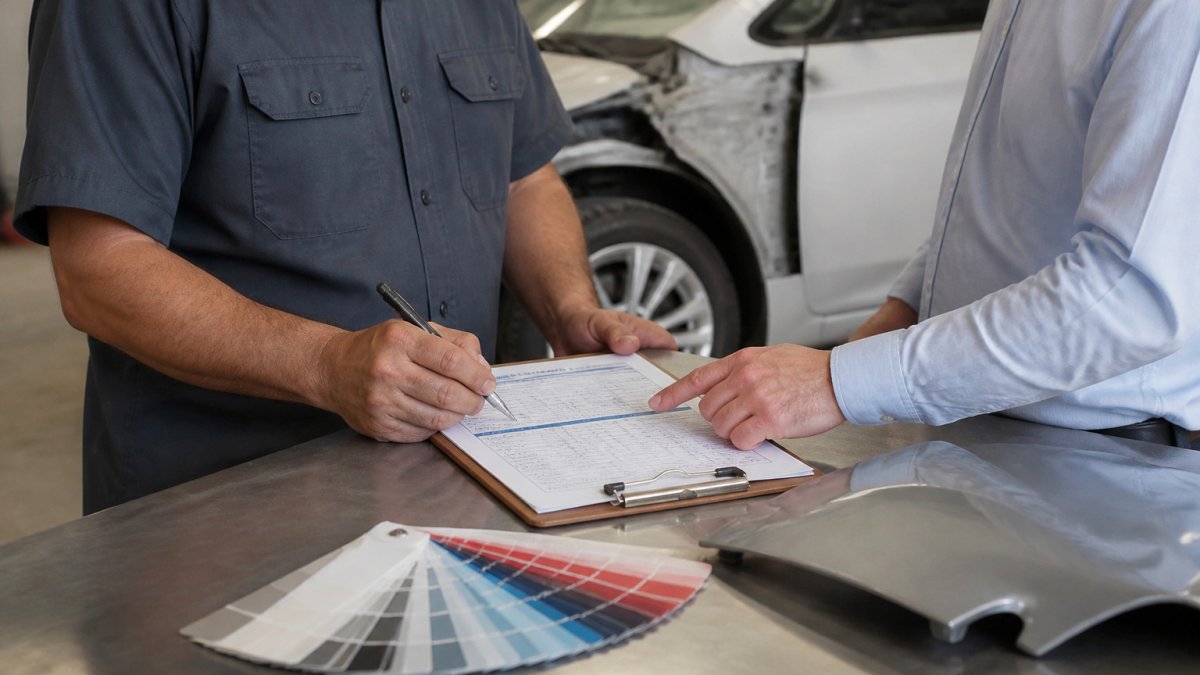
A complete estimate lists every panel, every repair, and every step. If a line is missing, ask about it before you agree.
A solid estimate usually covers:
- Scope of work: Which panels get painted, and which get repaired only
- Surface preparation: Sanding, filling, and masking
- Materials: Primer, base coat, clear coat, and supplies
- Labor: Hours for each task, not one lump sum
- Taxes and fees: Shown separately so you can compare quotes
Many shops present a single total with no detail. Ask for an itemized version. A written breakdown makes it easier to compare quotes and spot gaps.
Checking Surface Area, Scope, and Measurements
Surface area drives the amount of paint and time needed. A shop should be able to explain how it measured the damaged area.
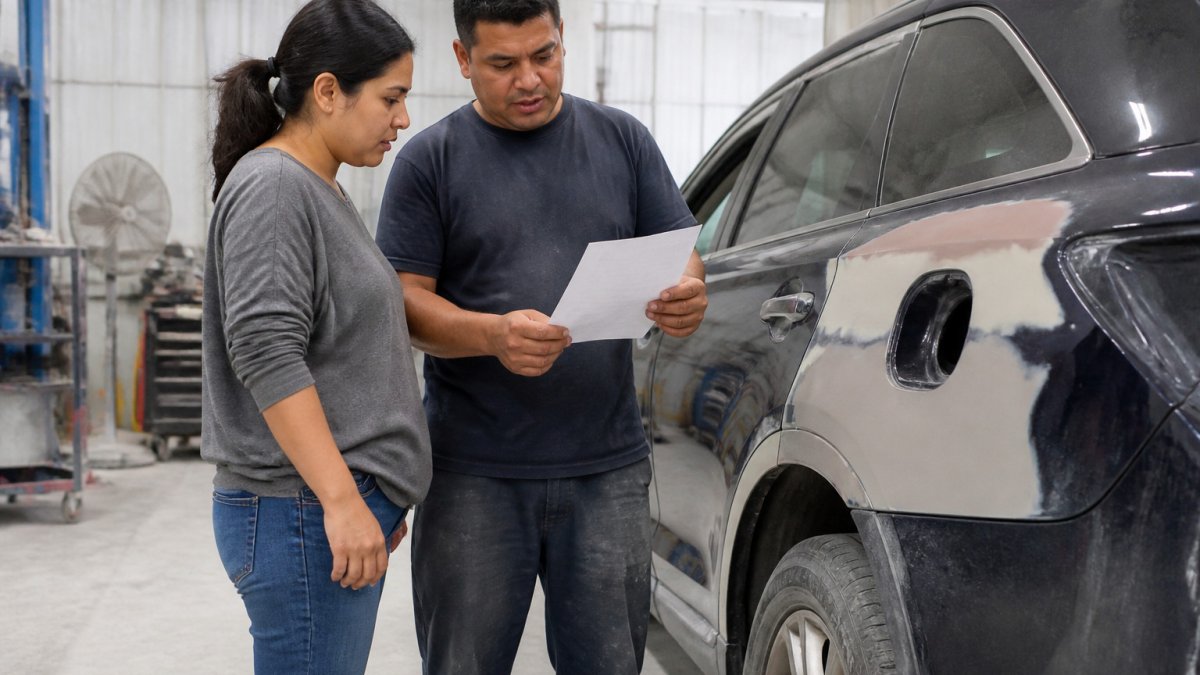
Look for these points:
- Which panels are listed, such as a door, fender, or full side
- Whether the estimate says "blend" or "refinish" for adjacent panels
- Any notes about panel size or how much area is affected
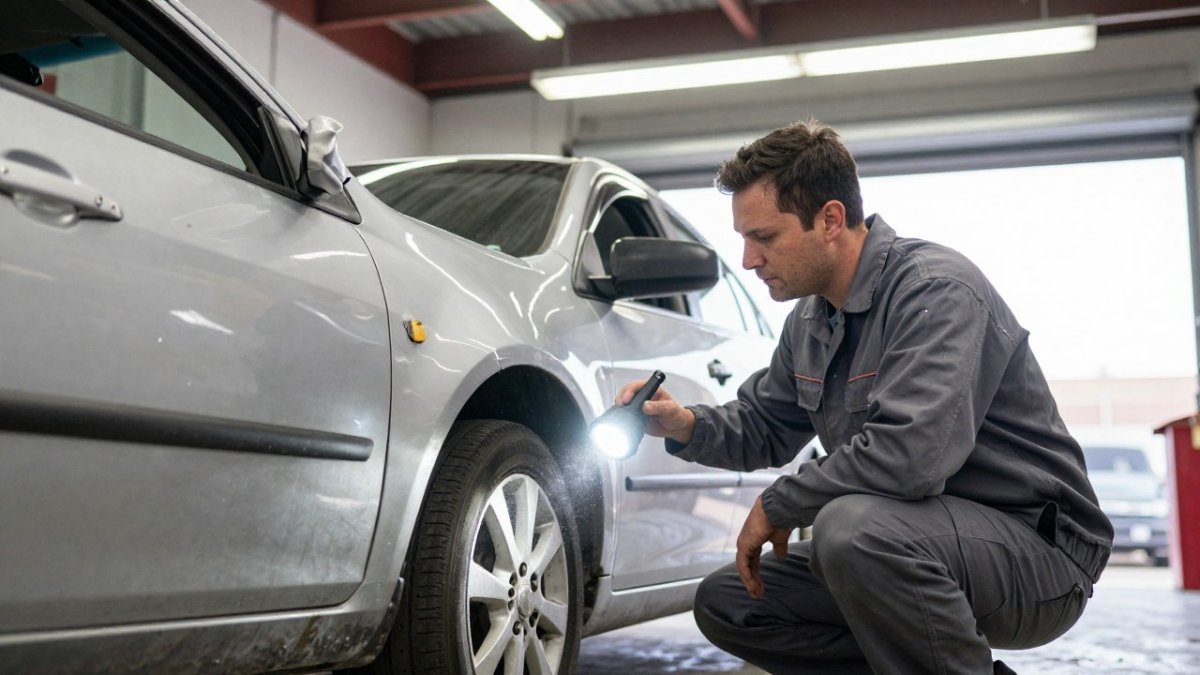
Ask the estimator to walk you through the car during the visit. Point out each panel on the estimate and confirm you both see the same damage. This short step prevents misunderstandings later.
Watch out: if the estimate lists panels you did not discuss, ask why before approving.
Reviewing Surface Preparation, Repairs, and Materials
Prep work often takes more time than painting. Dents, rust, and old paint all need attention before a new coat goes on. An estimate that skips prep will likely cost more once the work starts.
Check that the estimate includes:
- Dent repair and body filler where needed
- Sanding and priming steps
- Masking of trim, glass, and nearby panels
- Materials such as primer, base coat, and clear coat
Ask about the paint system the shop uses. Premium paint systems are a common choice for color matching and durability. Pricing depends on the specific materials and quantity needed for your vehicle, so ask for a quote specific to your car.
Reading Labor Hours, Rates, and the Cost Breakdown
Labor is usually the largest part of a paint job bill. A clear estimate shows hours for each task and a labor rate.
Useful questions to ask:
- How many hours are listed for body work versus paint work?
- What is the hourly labor rate?
- Are materials billed separately or included in the labor line?
If an estimate lists one labor number with no breakdown, ask for the hours behind it. A shop that explains its numbers is usually easier to trust.
Painting Estimate Examples: Comparing Quotes Side by Side
A lower headline price means nothing if the two estimates do not cover the same work. The only fair way to compare quotes is to line them up item by item and confirm each one describes the same scope, the same number of coats, the same paint system, and the same preparation steps. Most homeowners compare totals first; compare scope first instead.
Use this alignment framework before you look at the bottom line:
| Comparison item | What to confirm on every estimate | Why it changes the price |
|---|---|---|
| Surfaces and panels | Same panels listed, same repair-versus-repaint designation, same blend notes for adjacent panels | A quote that paints two panels instead of three is not cheaper, it is smaller |
| Preparation steps | Sanding grits, filler, primer, masking, and trim removal all named | Prep is labor-heavy; a quote that skips it will grow once work starts |
| Number of coats | Primer coats, base coats, and clear coats stated as numbers | One fewer clear coat cuts material and labor and shortens durability |
| Paint specification | Product line, finish type, and color-matching method named | Economy paint and premium paint carry different material costs and warranties |
| Repairs and body work | Dent, rust, and panel-replacement line items with quantities | Hidden repair work is the most common source of change orders |
| Exclusions | What the shop will not do, jambs, engine bay, trim, glass, blending into adjacent panels | Exclusions are where a low quote quietly becomes a high bill |
| Labor | Hours by task and the hourly rate, not one lump sum | Hours reveal whether the shop actually planned the job |
| Materials and supplies | Itemized or included, and whether taxes and fees are separate | A lump-sum materials line hides quantity assumptions |
| Payment schedule | Deposit amount, progress payments, and final payment timing | A large upfront deposit shifts risk to you |
| Warranty | Written terms, duration, and what voids coverage | Verbal promises are not warranty terms |
| Timeline | Start date, duration, and what happens if parts are delayed | Schedule assumptions affect labor pricing |
A practical way to run the comparison: put two or three estimates side by side and mark each row as "matches," "missing," or "different." Any row marked missing or different is a question for the estimator, not automatically a reason to reject the quote. A higher total that includes preparation, three coats, and a named premium paint system may be the better value; a lower total that omits prep or lists a single coat is not comparable at all.
Watch out: if one estimate lists a panel as "repair only" and another lists the same panel as "refinish," you are not comparing the same job, and the price difference is meaningless until both shops quote the same scope.
When you ask for revisions, ask each shop to restate the estimate using the same categories above. Shops that can produce a like-for-like breakdown are usually the ones whose numbers hold up after the work begins.
Red Flags, Exclusions, and Questions to Ask Before Approving
An estimate is a proposal, not a contract. Before you approve anything, separate the warning signs from the terms you need in writing.
Warning signs that should make you pause:
- A single total with no line-item breakdown of panels, prep, materials, and labor
- Vague wording such as "paint door" with no mention of repair, primer, or clear coat
- No written preparation steps, even though prep drives most of the labor cost
- Unnamed paint products or a finish type that is not specified
- Exclusions buried in fine print or left out entirely
- A deposit request that is unusually large relative to the total
- Pressure to approve the same day or before you have seen the written estimate
- Verbal-only promises about warranty, timeline, or color match
- No process described for hidden damage found after teardown
Now the terms to confirm in writing before you sign:
- Scope and exclusions. The estimate should state what is included and, just as important, what is not, jambs, engine bay, trim removal, glass, blending into adjacent panels, and any work the shop will not perform. Exclusions are where a low quote quietly becomes a high bill.
- Payment schedule. Ask for the deposit amount, any progress payments, and when the final payment is due. A common pattern is a deposit that covers materials, with the balance due at completion; a deposit that approaches the full job total shifts risk to you. Confirm whether the deposit is refundable and under what conditions.
- Change orders. Hidden damage is normal in collision and body work. The estimate should describe how the shop handles extra work found after teardown: who authorizes it, whether authorization must be in writing, and how the added cost is priced. Ask for the change-order process in writing so a phone call is not the only record.
- Warranty terms. Get the warranty in writing, including duration, what it covers (paint adhesion, finish defects, workmanship), what voids it, and whether it is prorated. Verbal assurances are not warranty terms.
- Timeline and delays. Confirm the start date, expected duration, and what happens if parts are delayed or additional repairs are needed. Schedule assumptions affect labor pricing, so a timeline that is not written down is not a commitment.
- Insurance coordination. If a claim is involved, confirm who communicates with the insurer, who handles supplements for hidden damage, and whether the estimate reflects insurer-approved rates or the shop's retail rates.
Questions to ask the estimator during the walkthrough:
- Which panels are repaired and which are refinished, and why?
- How many primer, base, and clear coats are included?
- Which paint products and finish type will be used?
- What preparation steps are included, and which are excluded?
- What is the hourly labor rate, and how many hours are estimated by task?
- What is the deposit, and what is the full payment schedule?
- How are change orders authorized and priced if hidden damage appears?
- What does the warranty cover, how long does it last, and what voids it?
- Who handles insurance supplements, and how are they documented?
- What is the cleanup and final-inspection process?
Watch out: an estimate that will not put the change-order process and warranty terms in writing is telling you something about how the job will be handled after you pay the deposit.
For more on spotting problem shops, read our guide on how to spot dishonest auto shops. It covers the warning signs that show up in estimates.
What to Look for in a Paint Job Estimate in California and Booking Your Repair
Shops may follow state rules for estimates and repairs, and your insurer may also have requirements. Ask the shop about its training and certifications before booking.
Before you book, make sure you have:
- A written estimate with an itemized breakdown
- The warranty terms in writing
- Confirmation of who handles insurance coordination
If you want to check the quality of past work, our guide to signs of poor quality auto body repair explains what to inspect. You can also review paint chip repair steps for smaller jobs.
Ready to compare your estimate? Get a collision repair quote in Manteca and bring your written estimate with you. Schedule an appointment to get your car back on the road.
Frequently Asked Questions
How do I know whether a paint job estimate is fair?
Compare at least two or three written estimates for the same job. Check that each one lists the same panels, the same surface preparation, and the same paint and clear coat. If one quote is far lower, ask what it leaves out, such as prep, blending, or materials. A fair estimate itemizes labor hours, paint and materials, and any sublet work, and it explains each line in plain terms. Ask the shop to walk you through the scope so you can see why the numbers differ.
Should an auto paint estimate list the paint products and materials?
Yes. A detailed estimate should name the paint system, clear coat, primer, sealers, and abrasives, or at least identify the product line being used. Listing materials lets you confirm the shop is using quality products rather than substitutes, and it makes comparing quotes easier. Materials are often billed separately or as a percentage of labor, so ask how they are calculated and whether they are included in the total.
Can an auto paint estimate change after repairs begin?
It can, usually when hidden damage appears once panels are removed or sanded. A reputable shop should stop, document the new damage with photos, explain the cause, and give you a revised estimate before proceeding. Ask upfront how supplements are handled, whether the shop will contact you for approval, and whether the revised amount will be confirmed in writing. Written change order terms protect both you and the shop.
What questions should I ask before approving an auto paint estimate?
Ask what surfaces are included and whether blending into adjacent panels is part of the price. Ask how surface preparation is handled, what paint and clear coat are used, and whether a warranty covers the paint finish and workmanship. Confirm the expected completion date, how insurance supplements are processed, and who to contact if the work does not meet your expectations. Get the answers in writing before you sign.