 How-to
Does Car Insurance Cover OEM Parts? What to Know
Quick Summary
Not automatically. Standard auto policies often pay only for aftermarket parts, so OEM parts coverage usually requires an optional OEM endorsement or an insurer agreement. Check your declarations page and endorsements for words like "original parts" or "OEM" to confirm what you have.
- OEM stands for original equipment manufacturer, meaning factory-installed or same-specification parts.
- Standard policies often promise only parts of "like kind and quality," which can mean aftermarket parts.
- An OEM endorsement usually raises your premium and does not eliminate your deductible.
- Get every parts commitment in writing before the shop orders parts.
Table of Contents
- What OEM Parts Are and Why They Matter After a Collision
- Does Standard Auto Insurance Cover OEM Parts?
- OEM Endorsement Auto Insurance: How the Optional Coverage Works
- OEM vs. Aftermarket Car Parts: Fit, Safety, and Cost Trade-offs
- California Insurance Rules for OEM Parts
- How to Get OEM Parts From Insurance: Step by Step
- Booking Your Collision Repair With Rubio's Custom Repair inc
- Frequently Asked Questions
What OEM Parts Are and Why They Matter After a Collision
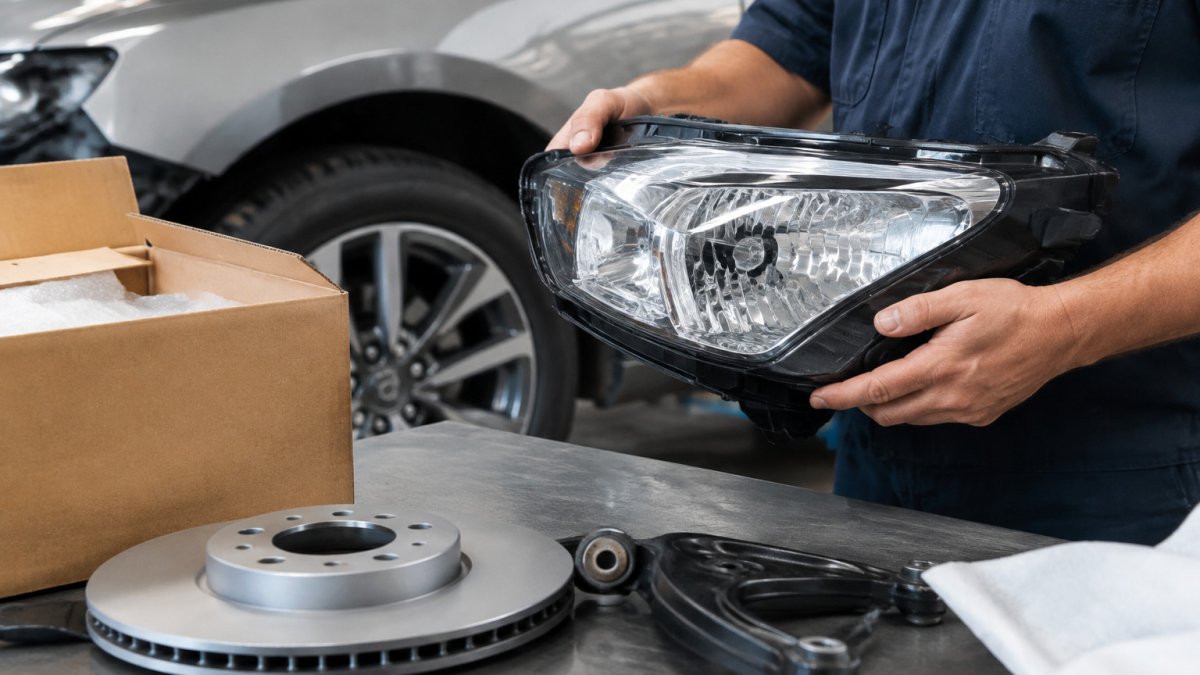
OEM stands for original equipment manufacturer. OEM parts are the components your car's maker installed at the factory, or parts made to the same specification.
Aftermarket parts are made by other companies. They are often cheaper. Some insurance industry groups argue they can be just as good, while others question that claim.
Why does this matter after a crash? Original parts are designed to fit your vehicle exactly. They can also help preserve manufacturer warranties and the car's resale value, which is why many drivers look for OEM parts coverage when choosing a policy.
Does Standard Auto Insurance Cover OEM Parts?
Standard auto insurance does not always guarantee OEM parts coverage. See how payouts and parts coverage are handled after a total loss. Many insurers treat Original Parts Replacement as optional coverage that adds to your cost. Without it, your insurer may only pay for the cost of aftermarket parts.
Repair estimates may include OEM parts, depending on your vehicle's make, model, and year. So the answer depends on your policy and your car.
Check your policy language before you assume you're covered. Look for the words "original parts," "OEM," or "original equipment" in your declarations page or endorsements.
OEM Endorsement Auto Insurance: How the Optional Coverage Works
An OEM endorsement, sometimes called original parts replacement coverage or an original equipment endorsement, is a written amendment to your auto policy that changes the parts standard your insurer must apply to covered repairs.
What the endorsement typically changes
- The parts standard. The insurer agrees to pay for OEM parts rather than like-kind-and-quality parts on covered claims.
- The claim types it touches. Most endorsements apply to first-party collision and comprehensive claims on the covered vehicle. They generally do not change how a third-party liability claim is handled, because in that situation the other driver's policy and state law control the parts decision.
- The vehicles it covers. Many endorsements apply only to vehicles within a certain age or mileage window, or only to the vehicle listed on the declarations page. A common pattern is to limit the benefit to newer models, so confirm the eligibility language before you pay for the endorsement.
- The parts it excludes. Read the exclusions carefully. Some endorsements cover only certain part categories, exclude salvaged or recycled parts entirely, or cap the OEM benefit at the cost the insurer would otherwise have paid.
How it interacts with your deductible and out-of-pocket cost
An endorsement is not free money. It usually raises your premium, and it does not eliminate your deductible. The realistic trade-off is this: you pay a higher premium every month in exchange for the insurer funding OEM parts if you file a claim.
How to verify what you actually bought
Ask your agent for the endorsement form number and read the actual form, not just the marketing description. The declarations page should show the endorsement and its premium. If the endorsement is added mid-term, confirm the effective date in writing. Keep a copy with your policy documents so you can point to it if an adjuster's estimate lists aftermarket parts.
Watch out: an endorsement that says the insurer will pay for OEM parts "when available" or "where required by law" is narrower than one that requires OEM parts outright, the qualifier is where disputes usually start.
When the endorsement may not help
If your vehicle is a total loss, the endorsement generally does not change the settlement, because the carrier pays actual cash value rather than repairing the car. If the OEM part is discontinued or on national backorder, many endorsements allow the insurer to use an alternative after documenting the unavailability.
The optional endorsement changes what parts your insurer must use, and it comes with trade-offs worth comparing before you buy.
| Aspect | What it does | Key point |
|---|---|---|
| Parts standard | Requires OEM parts on covered repairs | Replaces "like kind and quality" standard |
| Claim types | Usually first-party collision and comprehensive | Does not bind third-party liability claims |
| Vehicle eligibility | Often limited by age, mileage, or listed vehicle | Confirm eligibility language first |
| Cost | Raises premium; deductible still applies | Easiest to justify on newer, higher-value cars |
| Total loss | Generally does not change settlement | Carrier pays actual cash value |
| Discontinued parts | Insurer may use alternatives after documenting unavailability | Depends on endorsement wording |
OEM vs. Aftermarket Car Parts: Fit, Safety, and Cost Trade-offs
Each option has trade-offs. Here is a simple way to think about them:
- OEM parts: Built to exact factory specs, usually the safest fit, often more expensive
- Aftermarket parts: Lower cost, quality varies by manufacturer, fit may differ slightly
- Recycled parts: Original factory parts from another vehicle, cost-effective, condition depends on the source
For safety-related components like airbags, sensors, and structural pieces, fit and quality matter most. Learn why original car parts matter for safety, warranty, and resale value. Ask your repair shop which parts they recommend and why.
California Insurance Rules for OEM Parts
There is no single nationwide rule that guarantees OEM parts on every repair. Parts requirements come from three places: your policy language, the claim type (first-party versus third-party), and the regulations of the state where the claim is handled. That is why two drivers with identical cars can get different parts decisions. The practical move is to understand your state's framework and then work the claim process deliberately.
What state regulators generally require
Insurers generally aim to restore the vehicle to its pre-loss condition, and the parts used are typically disclosed on the estimate. Confirm the specific requirements with your state insurance department. Many states also regulate the use of aftermarket crash parts. Confirm the current disclosure and consent requirements with your state insurance department.
How to look up your state's rule
- Find your state insurance department's website (the National Association of Insurance Commissioners maintains a directory of state departments at naic.org).
- Search the site for "aftermarket crash parts," "non-OEM parts," or "original equipment parts" consumer guidance.
- Read the consumer bill of rights or claims-handling regulation your state publishes.
- If the guidance is unclear, call the department's consumer hotline and ask which rule applies to your claim type.
Your practical rights in a first-party claim
On a collision or comprehensive claim under your own policy, you are generally entitled to a written estimate, notice of the parts the insurer intends to pay for, and an explanation if the insurer declines to pay for OEM parts.
A step-by-step dispute and escalation sequence
- Get the estimate in writing. Ask the adjuster for the full estimate with part numbers and part types (OEM, aftermarket, recycled) listed line by line.
- Document your concern. Note the specific parts you want replaced with OEM components and why, warranty, safety system, or resale value.
- Request OEM parts in writing. Send an email or letter to the adjuster stating the request and citing your policy language or the state rule you believe applies.
- Ask for a supplement. If the shop finds hidden damage or the estimate omits OEM parts, have the shop submit a supplement with the OEM part numbers and pricing.
- Escalate internally. Ask for a supervisor review and a written denial that states the policy or legal basis for the decision.
- File a complaint with the state insurance department. Most departments accept consumer complaints online and will contact the insurer. This is often the fastest external pressure point.
- Consider appraisal or legal options. If your policy includes an appraisal clause, it can resolve valuation disputes; for larger disagreements, a consumer attorney or your state's consumer protection office may be appropriate.
Watch out: verbal promises from an adjuster are hard to enforce, get every parts commitment in writing before the shop orders parts, because once non-OEM parts are installed the dispute becomes much harder to unwind.
Third-party claims are different
If you are claiming against another driver's liability policy, your own OEM endorsement does not apply. The other insurer owes you the reasonable cost to repair to pre-loss condition under that state's liability rules, and the parts standard is set by that insurer's policy and the state's claims rules. You can still request OEM parts and document your position, but expect the same escalation sequence to apply to the other carrier.
How to Get OEM Parts From Insurance: Step by Step
- Check your policy. Look for OEM or original parts coverage.
- Ask about endorsements. If it's not included, ask whether you can add it.
- Request a written estimate. Confirm which parts are listed.
- Ask the shop to note the part type. Request OEM parts in writing on the estimate.
- Review supplements. Hidden damage can change the estimate, so check any updates.
- Escalate if needed. Ask your adjuster to explain denials, and request a supervisor review.
Expect the process to take some time. Get practical steps to move your claim along faster. Clear documentation helps the most.
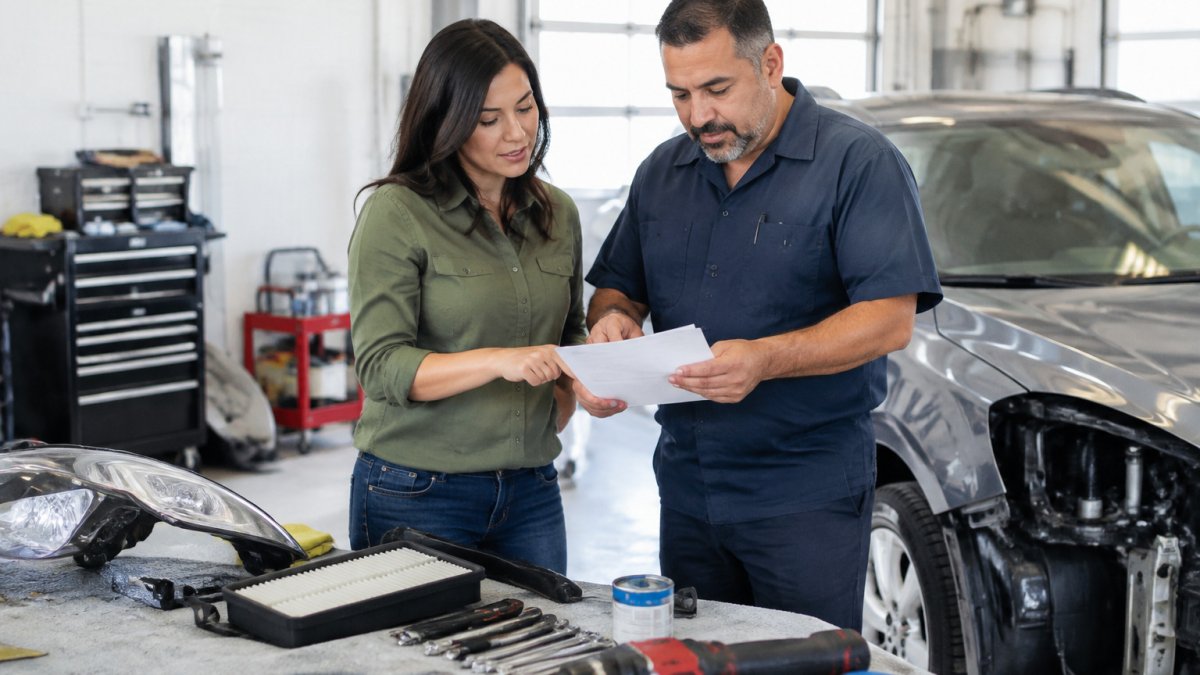
Booking Your Collision Repair With Rubio's Custom Repair inc
If you need collision repair, Rubio's Custom Repair inc is a family-owned auto body shop in Manteca, California, with over 30 years of experience. We use original parts for most repairs and premium PPG paint products, and every repair is backed by our guarantee.
Bring your insurance estimate to us and we will help you understand the parts being used. Learn how to find honest auto body shops and what to ask before booking. For current pricing, contact us directly for a quote, since costs depend on your vehicle and the damage. Schedule an appointment with Rubio's Custom Repair inc today to get back on the road.
Frequently Asked Questions
Does car insurance automatically cover OEM parts? Usually not. Many policies pay for aftermarket parts unless you add an OEM endorsement or your insurer agrees to use original parts.
How do I know if my policy covers OEM parts? Check your declarations page and endorsements for words like "original parts" or "OEM." Ask your agent to confirm in writing.
Can my insurer refuse OEM parts? Insurers may choose aftermarket parts unless your policy requires otherwise. You can dispute the decision and ask for a written explanation.
Frequently Asked Questions
Are OEM parts covered by insurance?
Standard auto policies generally do not guarantee OEM parts. Many insurers treat original manufacturer parts as an optional add-on, often called Original Parts Replacement coverage, which adds to the premium. Without that endorsement, the insurer may only pay for the cost of an aftermarket or equivalent part. Check your declarations page or ask your agent whether an OEM endorsement is on your policy. If it is not, you can ask whether it can be added before your next renewal, though it may not apply to a claim that is already open.
Which parts are not covered in car insurance?
Collision and comprehensive coverage pay for sudden damage, but they generally do not cover wear and tear, routine maintenance, or mechanical breakdowns. Parts damaged by aging, corrosion, or prior unrepaired damage are commonly excluded. Policy language varies, so read your exclusions section carefully. If a part is excluded, the repair shop or your insurer should explain the reason in writing on the estimate or claim file.
Does collision coverage pay for original manufacturer parts?
Collision coverage pays for repairs to your vehicle after an accident, minus your deductible, but it does not automatically require original manufacturer parts. Insurers may include OEM parts in estimates depending on the vehicle's make, model, and year, or when an OEM endorsement is in place. When neither applies, the insurer may approve aftermarket parts. Ask the adjuster to explain which parts are on the estimate and why, and request a written supplemental estimate if a part is changed.
Can I pay the difference to get OEM parts?
In many cases yes. If your insurer approves an aftermarket part but you want an original manufacturer part, you can usually pay the price difference out of pocket, and the repair shop can order the OEM part as long as you authorize it in writing. Ask for the cost difference in writing before the work begins so there are no surprises at pickup. Rubio's Custom Repair inc uses original parts for most repairs and can explain pricing for your specific vehicle when you request a quote.