 Ultimate guide
OEM Parts for Collision Repair: Benefits, Costs and Your Rights
Quick Summary
The main benefits of oem parts collision repair are a precise fit that matches factory mounting points, a consistent specification across every unit, and a warranty usually backed by the vehicle maker. These advantages matter most for structural components and parts that support modern driver assistance sensors. Aftermarket parts can cost less, but their fit and quality can vary.
- OEM parts are built to the same specifications as the factory parts for your specific vehicle.
- Aftermarket quality can differ between suppliers and production runs.
- Replacement parts that change sensor mounting or aim can affect ADAS performance after repair.
- Ask the shop to confirm in writing which part is installed and whether it meets the manufacturer's repair procedure.
- Keep every invoice and record part numbers to protect your warranty coverage.
Table of Contents
- What OEM Parts Are and Why They Matter After a Collision
- OEM vs Aftermarket Parts: A Side-by-Side Comparison
- OEM vs Aftermarket Parts Safety: What Crash Performance Means for You
- Fitment, Panel Gaps and ADAS Calibration on Modern Vehicles
- Impact of Aftermarket Parts on Vehicle Warranty Coverage
- How to Request OEM Parts From Your Insurance Company
- Booking Your Collision Repair With Parts You Can Trust
- Frequently Asked Questions
What OEM Parts Are and Why They Matter After a Collision
Last Updated: November 5, 2026
Choosing the right replacement parts after a crash affects how your vehicle fits, protects you in a future collision and holds its value. The benefits of using oem parts collision repair come down to three things: a precise fit, a known safety standard and a warranty backed by the manufacturer.
OEM stands for original equipment manufacturer. OEM parts are made by the company that built your vehicle, or by a supplier to that company, to the same specifications used on the assembly line. Aftermarket parts are made by other companies and are designed to fit a range of vehicles. Both can be legitimate, but they are not interchangeable in every situation.
Parts matter more after a collision than in routine maintenance. Modern vehicles are engineered around crumple zones, high-strength steel and sensors mounted in bumpers, grilles and windshields. A replacement panel that is slightly off in thickness, mounting points or bracket location can change how the structure absorbs impact and how the sensors see the road.
OEM vs Aftermarket Parts: A Side-by-Side Comparison
Most of the difference between OEM and aftermarket parts shows up in four areas: fit, consistency, warranty and price. The table below summarizes what owners typically see.
| Factor | OEM Parts | Aftermarket Parts |
|---|---|---|
| Fit | Matches factory mounting points and panel gaps | Varies by manufacturer and vehicle model |
| Consistency | Same specification across every unit | Quality can differ between brands |
| Warranty | Usually backed by the vehicle maker | Coverage depends on the supplier |
| Price | Often higher | Often lower |
Price is one reason insurers and owners sometimes ask for aftermarket parts, and aftermarket parts are often less expensive than OEM parts. Cost alone is not a measure of repair outcome, so it should be weighed against fit and warranty.
For many owners, the real question is whether the savings justify any risk to fit or coverage on their specific vehicle.
OEM vs Aftermarket Parts Safety: What Crash Performance Means for You
Safety is the most important factor in the OEM-versus-aftermarket debate, and when it comes to oem parts collision repair it is also the hardest to measure from a parts list. A bumper reinforcement, mounting bracket or structural panel is designed to deform in a specific way during a crash. If the replacement part is made from a different grade of steel or attached at a slightly different point, that behavior can change.
Aftermarket parts are not automatically unsafe, though quality can vary between suppliers. The issue is consistency. OEM parts are built to one specification for each model, while aftermarket quality can vary between suppliers and production runs.
For structural repairs, ask the shop to confirm in writing which part is being installed and whether it meets the manufacturer's repair procedure. Frame and structural work should follow the vehicle maker's published repair information.
Fitment, Panel Gaps and ADAS Calibration on Modern Vehicles
Fit is where many collision repairs succeed or fail. Panel gaps, the narrow spaces between hood, fenders, doors, and bumpers, are set by the factory to tolerances measured in millimeters. A replacement that sits even a few millimeters off will look wrong and can cause wind noise, water leaks, or trouble with door latches. OEM panels are designed to use the same mounting points as the factory part, which generally supports fit. Aftermarket panels may require additional adjustment to close a gap.
Modern vehicles add a second layer that most parts guides skip: advanced driver assistance systems (ADAS). Cameras, radar, ultrasonic sensors, and lidar are mounted behind bumpers, grilles, windshields, and side mirrors, and they are aimed at the road through openings in those parts. The mounting bracket angle, the thickness of the bumper cover, the radar-transparent properties of the plastic, and the optical clarity of the windshield glass all affect what the sensor sees.
Which systems are affected. The common ones are forward collision warning and automatic emergency braking (front radar and camera), lane departure warning and lane-keeping assist (forward camera), blind spot monitoring (rear radar in the bumper corners), rear cross-traffic alert (same rear radar), adaptive cruise control (front radar), and parking assist (ultrasonic sensors in the bumpers). A repair that touches any of those mounting locations, front bumper, rear bumper, windshield, grille, side mirror, is a candidate for recalibration.
What calibration actually is. There are two kinds. Static calibration uses targets, patterned boards or mats, placed at measured distances in front of the vehicle in a controlled bay, and the system is aimed against them. Dynamic calibration requires driving the vehicle at specified speeds on a clear road with lane markings so the camera or radar can relearn its aim. Which method applies depends on the automaker and the system; the maker's repair procedure specifies it, and a shop that guesses is guessing with your safety system.
Why OEM parts matter here. An OEM bumper cover, bracket, or windshield is built to the geometry the calibration procedure assumes. When an aftermarket cover changes the radar's field of view or a non-OEM windshield changes the camera's optical path, calibration may fail, may require extra shimming, or may pass but perform worse in low-contrast conditions. That is the practical link between parts choice and ADAS performance: the sensor is only as good as the surface it looks through.
What to ask before the repair starts. Ask whether calibration is included in the estimate, which method the manufacturer requires for your model, and whether you will receive a calibration report showing pass/fail. A common mistake is assuming a repair is finished when the panels look right; if the sensors were not calibrated after the work, lane-keeping and automatic braking may not perform as designed.
Impact of Aftermarket Parts on Vehicle Warranty Coverage
Warranty coverage is a practical reason many owners choose OEM parts. Vehicle manufacturers generally back their own components, while coverage for aftermarket parts depends on the supplier.
In most cases, a repair with aftermarket parts does not automatically void the factory warranty on the rest of the vehicle. Problems arise when an aftermarket part causes damage to a covered system, and the manufacturer then denies the related claim. Keep every invoice, record the part numbers and ask the shop to list the warranty terms on the estimate.
How to Request OEM Parts From Your Insurance Company
Requesting OEM parts from your insurer works best when the request is specific, documented, and tied to a rule the adjuster has to follow. The way to get OEM parts approved is to make your request specific, documented, and tied to a rule the adjuster has to follow. Below is a step-by-step process you can run yourself.
Step 1: Read the parts language in your policy before you call. Look for a clause that says something like "we may use new, used, or non-original equipment parts" or "like kind and quality." That phrase is the hinge.
Step 2: Get the shop's estimate in writing, line by line. Ask for each part listed by name, OEM part number, and price. Then ask the insurer for its estimate in the same format. The difference between the two documents is your evidence.
Step 3: Put the request in writing and cite the mechanism. A phone call is easy to deny later. Send an email or portal message that says: "I am requesting OEM parts for the following line items because the vehicle manufacturer's repair procedure for this model specifies [part/system], and the aftermarket substitute does not carry the manufacturer's warranty or corrosion treatment.
Step 4: Use the manufacturer's repair position statement. Most automakers publish position statements on parts and repair procedures, often titled something like "Parts and Repair Position Statement", that say structural components and parts affecting ADAS should be replaced with OEM parts and that certain repairs should follow the maker's published procedure. Ask the shop to attach the relevant statement for your make and model to the supplemental request.
Step 5: Escalate in the right order. If the adjuster declines, ask for the supervisor and repeat the written request. If the supervisor declines, file a complaint with your state's department of insurance, every state has one, and the complaint process is free. In the complaint, describe the part, the policy language, and the manufacturer statement.
Step 6: Know when you can pay the difference yourself. If the insurer will only pay for an aftermarket part, you can often authorize the shop to install the OEM part and pay the difference out of pocket. Ask the shop for the dollar difference per part before you decide, and get it in writing on the repair order.
Watch out: state rules differ on whether an insurer can require aftermarket parts and on what disclosure it owes you, confirm your state's rule with your department of insurance before you rely on any script, because a request that works in one state can be declined on statutory grounds in another.
Keep every estimate, email, and approval in one folder for your records.
Booking Your Collision Repair With Parts You Can Trust
Choosing a shop matters as much as choosing parts. Look for a shop that puts its parts sourcing in writing and explains the difference between OEM and aftermarket options. Ask whether the shop will coordinate with your insurance adjuster and what guarantee applies to the work.
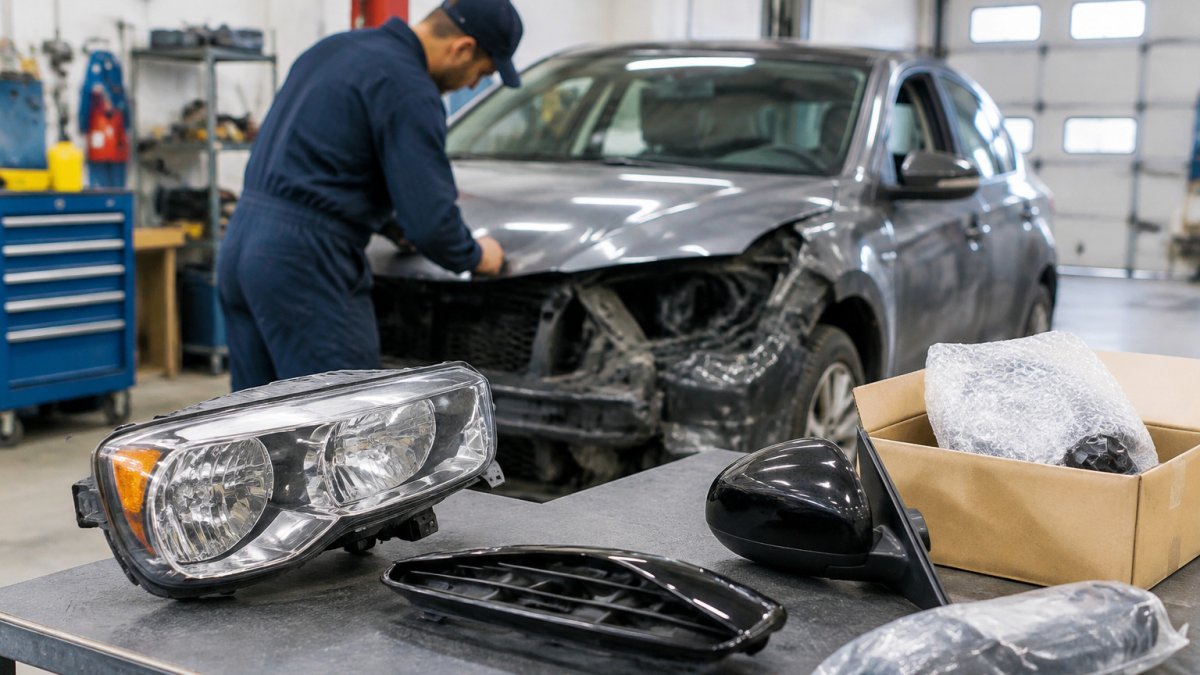
At Rubio's Custom Repair inc, we are a family-owned shop in Manteca with over 30 years of experience. We use original parts for most repairs, premium PPG paint products and a guarantee on our work. Our team can walk you through the parts options on your vehicle and help with your insurer.
You can book a vehicle body repair appointment with our team, or read how to find an honest auto body shop before you choose. If you are weighing structural concerns, our guide on whether frame repair is safe explains what to check. Schedule an appointment to discuss your repair.
Frequently Asked Questions
Can you force an insurance company to use OEM parts?
Not always. Insurers generally choose parts that meet their estimating guidelines, and many policies allow aftermarket parts unless the policy or your state requires otherwise. You can ask your adjuster in writing to justify the choice, request OEM parts for specific components, and note any safety or fitment concerns from your repair facility. If the insurer denies the request, you can ask for the denial in writing, compare estimates, and escalate the matter with your state's department of insurance if needed. Keep records of every communication throughout the claim.
Is OEM parts coverage worth it?
It depends on your vehicle, your policy and how much the repair involves. OEM parts are designed to match factory fit, finish and crash-engineering specifications, which can matter most on newer vehicles with advanced driver assistance systems and tightly tolerated body panels. Aftermarket parts often cost less than OEM parts. If you drive a newer or leased vehicle, OEM coverage or a request for OEM parts is usually worth discussing with your insurer.
Do OEM parts affect vehicle resale value?
They can. Buyers and appraisers often look for factory parts and consistent panel gaps, and a repair that clearly used original components can make documentation easier at resale. Keep your repair invoice, parts list and any warranty paperwork together. Ask your repair facility to list whether each part is OEM, aftermarket or recycled, because that record helps demonstrate the quality of the repair when you sell or trade in the vehicle.
How do I know if my body shop is using OEM parts?
Ask the shop to itemize every part on your estimate and mark its source. Your invoice should show whether each component is OEM, aftermarket, or used or recycled. You can also request the part packaging or part numbers, which usually carry the manufacturer's identification. A reputable shop will explain its parts sourcing openly, provide written documentation, and tell you when a part is not available as OEM.