 blog
blog
Book Vehicle Body Repair Today: Your 2026 Guide
Table of Contents
- Why Booking Vehicle Body Repair Today Saves You Time and Money
- How to Find Expert Collision Repair Near Me
- How Long Does Auto Body Repair Take? A Realistic Timeline
- Getting an Accurate Auto Body Repair Cost Estimate
- DIY vs. Professional Repair: When to Call a Shop
- Navigating the Insurance Claim Lifecycle
- Your Post-Repair Quality Checklist
- Frequently Asked Questions
Last Updated: September 16, 2026
Why Booking Vehicle Body Repair Today Saves You Time and Money
Booking vehicle body repair today stops the two costs that grow fastest after a collision: hidden corrosion and rental-car bleed. Delaying rarely saves money, it adds to the bill.
How to Find Expert Collision Repair Near Me
Finding expert collision repair near me starts with three checks: certifications, OEM parts policy, and written guarantees. Skip any, and you're gambling on the outcome.
What to Look for in a Certified Auto Body Shop
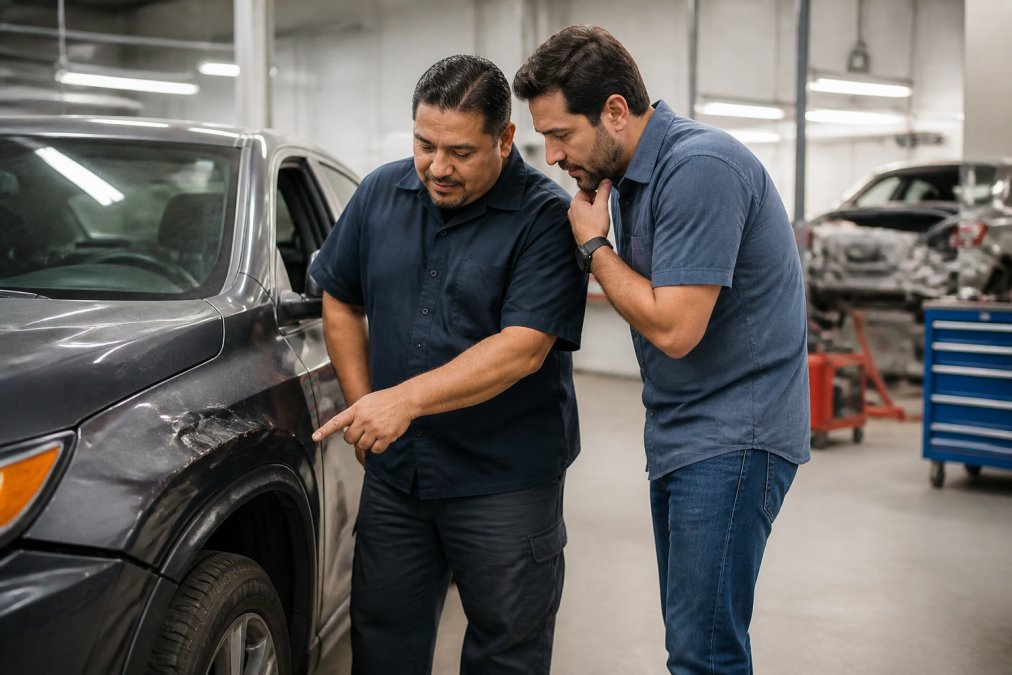
A certified technician qualification means staff have passed manufacturer-specific training and can perform structural repairs to factory spec. Modern unibody construction requires precise frame alignment; a shop without the right equipment can pull a frame out of tolerance, which you'll feel in tire wear and handling long after the paint dries.
Look for these markers:
- I-CAR or manufacturer certifications posted publicly
- A written policy on OEM parts versus aftermarket
- Documented paint systems (PPG, for example, is a common premium brand)
- A warranty that covers both workmanship and materials
- BBB rating and verifiable customer reviews
Why Local Shops Beat National Chains for Personalized Service
National chains run on volume, a model that works for oil changes, not collision repair, where every vehicle and every claim is unique. A local shop can assign one technician to your car from estimate to delivery, so you get the same person on the phone every time.
How Long Does Auto Body Repair Take? A Realistic Timeline
How long does auto body repair take? Most minor collision repairs finish in 3-7 days, moderate damage takes 1-3 weeks, and structural or frame repairs run 4-6 weeks. The range narrows once you know which panel was damaged, here it is by repair type.
Repair Time by Damage Type
These are typical shop-day estimates for a single-panel repair on a late-model vehicle, assuming parts are in stock and the insurer approves the initial estimate without a supplement.
| Damage | Typical Shop Days | What Drives the Range |
|---|---|---|
| Bumper cover scuff or crack (plastic) | 1-2 days | Whether the cover is repaired or replaced; sensor recalibration if equipped |
| Bumper cover plus absorber and reinforcement | 2-4 days | Hidden bar damage found after removal |
| Fender dent (repairable) | 2-3 days | Paint blend into the hood and door |
| Fender replacement | 3-5 days | Color match on adjacent panels; seam sealer cure time |
| Door skin or door shell | 3-6 days | Whether the inner intrusion beam is affected |
| Quarter panel (welded, not bolted) | 1-2 weeks | Sectioning vs. full replacement; structural adhesive cure |
| Frame or unibody pull | 2-4 weeks | Measuring, pulling, re-measuring, and re-corrosion protection |
| Airbag deployment with structural damage | 3-6 weeks | Clock spring, seat belt pretensioners, and module replacement |
Factors That Affect Your Repair Timeline
Four things drive the schedule more than anything else:
| Factor | Typical Impact | What Speeds It Up |
|---|---|---|
| Parts availability | Adds 2-10 days if backordered | OEM parts in stock locally |
| Insurance approval | Adds 1-5 days for adjuster review | Pre-authorized claim, direct billing |
| Repair complexity | Adds 1-3 weeks for structural work | Accurate initial estimate |
| Shop backlog | Adds 3-14 days in peak season | Booking early, before the rush |
The biggest schedule killer is a supplement, when the shop finds hidden damage after disassembly and files an amended estimate with your insurer. A thorough initial inspection reduces supplements, but no shop can eliminate them.
Planning Transportation Around the Repair
Once you have a written estimate, ask for a "promise date" and a "worst-case date." The promise date is what the shop expects; the worst-case date accounts for one supplement and one parts delay. Budget your rental or rideshare against the worst-case date.
Getting an Accurate Auto Body Repair Cost Estimate
An accurate auto body repair cost estimate depends on four inputs: parts, labor hours, paint materials, and structural work. A shop that quotes a number without inspecting the vehicle is guessing.
What to Expect During a Free Estimate
A free estimate should take 20-45 minutes and include a walk-around inspection, photos of all damage, and a written breakdown. The technician should explain which panels need repair versus replacement and why, if they can't, that's a red flag.
DIY vs. Professional Repair: When to Call a Shop
DIY repair makes sense for a small scratch or scuffed bumper cover on an older vehicle. Call a professional the moment damage involves structure, sensors, or paint matching.
Navigating the Insurance Claim Lifecycle
The insurance claim lifecycle has five stages: report, inspect, estimate, approve, and repair. Knowing what happens in each, and who is responsible, keeps you from getting stuck in the middle.
Stage 1: Report the Accident
Report to your own insurer, not just the other driver's, ideally within 24-48 hours. Every state sets its own prompt-reporting expectations, and your policy states yours. Late reporting is a common reason claims get delayed or partially denied.
Stage 2: Inspection
You have two paths here, and they are not equivalent:
- Shop inspection. You take the car to a body shop, which writes an estimate and submits it to your insurer. This produces the most accurate number because the shop can put the car on a lift and remove panels.
- Insurer inspection. The insurer sends its own adjuster or asks you to upload photos to an app. Faster, but it often misses hidden damage, which is why supplements are so common on this path.
Stage 3: Estimate and the Supplement Process
The initial estimate is a starting point, not a final bill. Once the shop disassembles the vehicle, it may find hidden damage, bent brackets, cracked plastic behind a bumper cover, a damaged radiator support, and files a supplement, an amended estimate sent to the adjuster for approval.
- A good shop photographs the hidden damage and submits the supplement before doing the work.
- A good shop does not ask you to pay the difference out of pocket while it argues with the insurer.
- A good shop tells you when a supplement is filed so you aren't surprised by a longer timeline.
Stage 4: Approval and Your Deductible
Once the insurer approves the estimate, it applies your deductible. On a $3,200 approved repair with a $500 deductible, the insurer pays $2,700 and you pay $500 directly to the shop.
Two things to confirm in writing at this stage:
- Direct bill or reimbursement. Does the shop bill the insurer directly, or do you pay the full amount and wait for a check? Direct bill is far less stressful and is standard at most established shops.
- Betterment and depreciation. On older vehicles, the insurer may deduct for prior damage or for the depreciated value of the parts being replaced. Ask for the line items.
Stage 5: Repair and Post-Repair
The shop performs the repair, and the insurer pays the approved estimate plus any approved supplements. If a supplement is denied, the shop should tell you before proceeding, you should never learn about it from your final invoice.
Diminished Value: The Claim Most Drivers Never File
If your vehicle was damaged in an accident that wasn't your fault, its resale value drops even after a perfect repair. That drop is diminished value, and in many states you can file a separate claim against the at-fault driver's insurer. The claim is time-limited and usually requires an independent appraisal, ask whether your state recognizes it, because most drivers never do and the money goes unclaimed.
Your Post-Repair Quality Checklist
A post-repair quality checklist protects you during the warranty window. Run through it before you drive off the lot.
- Paint matches under natural light, not just shop lighting
- Panel gaps are even on both sides of every repaired seam
- Doors, hood, and trunk open and close smoothly
- No overspray on glass, trim, or tires
- All sensors and cameras function (test parking assist, lane warnings)
- Written warranty documents handed over
- Final invoice matches the approved estimate
Frequently Asked Questions
How much would it cost to fix the body of a car?
The cost depends on the damage severity, parts needed, and labor rates. Minor dent removal might be a few hundred dollars, while major collision repair with frame alignment can run into thousands. Most shops offer a free estimate so you get an exact quote before committing. At Rubio's Custom Repair, we provide a detailed auto body repair cost estimate and work directly with your insurance to minimize out-of-pocket expenses.
Is it better to go to a dealership for body work?
Dealerships often outsource bodywork to local shops anyway. A certified independent shop like Rubio's Custom Repair uses OEM parts and PPG paint products, giving you the same quality without the dealership markup. For collision repair, what matters most is technician certification and a guarantee on the work, not the sign above the door.
What should I look for when choosing an auto body shop?
Check for BBB accreditation, I-CAR or ASE certifications, and real customer reviews. Ask about OEM parts, paint brands like PPG, and whether they offer a written warranty on repairs. Also confirm they handle insurance claims directly so you're not stuck coordinating. A shop with over 30 years of experience, like Rubio's Custom Repair, has the track record to back up its work.
How long does auto body repair take?
Most repairs take 3 to 10 business days depending on damage and parts availability. Minor scratch repair might be done in a day, while frame alignment or extensive collision repair can take two weeks or more. You'll get a repair timeline estimate after the initial inspection.