 ultimate-guide
Is Professional Paint Restoration Worth It?
Table of Contents
- What Professional Paint Restoration Actually Does
- Signs Your Car Needs Paint Restoration
- DIY vs. Professional Paint Correction: What Changes the Decision
- How Long Does Paint Correction Take?
- Paint Correction Cost Estimate and ROI
- Resale Value and Long-Term Benefits
- When Paint Restoration Isn't the Right Move
- Frequently Asked Questions
Last Updated: September 24, 2026
What Professional Paint Restoration Actually Does
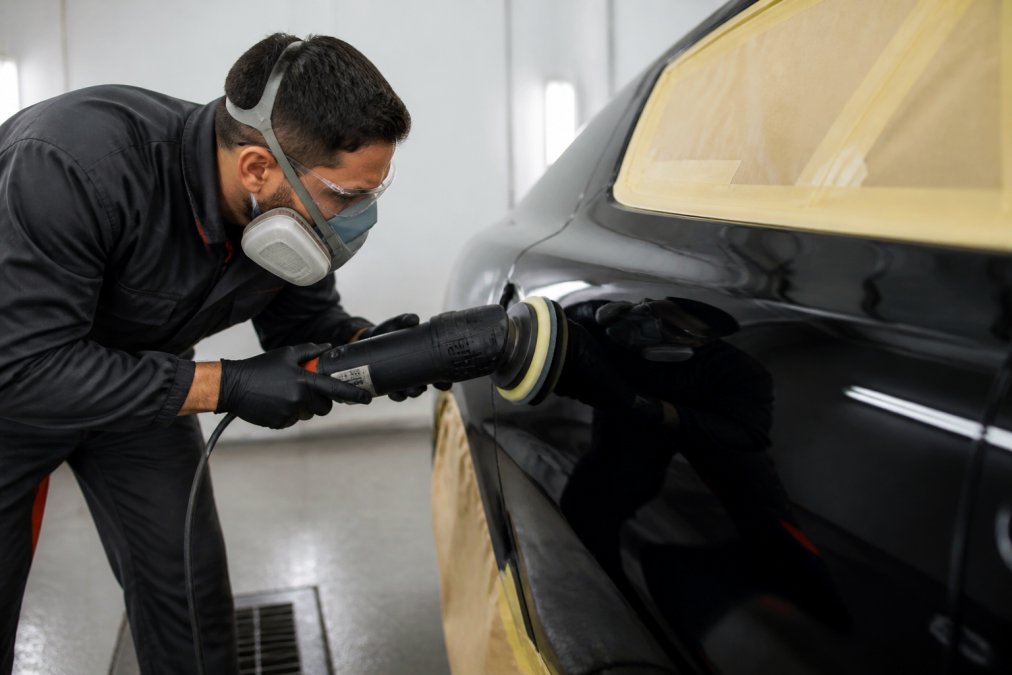
Professional paint restoration addresses surface damage that affects your vehicle's appearance and protection. At Rubio's Custom Repair inc, we've worked with countless vehicle owners who didn't realize how much their paint could be improved. Paint restoration involves removing or minimizing swirl marks, oxidation, scratches, and other surface imperfections through specialized buffing and polishing techniques.
The process typically uses rotary or dual action polishers with progressive compounds and polishes to level the clear coat and restore the paint finish. This differs from simply washing or waxing your car. Paint correction can restore significant depth and gloss to faded or contaminated paint, though it cannot repair deep scratches that penetrate the base coat or structural damage.
Paint restoration is not the same as repainting. A full repaint involves removing old paint and applying new layers, which is necessary for collision damage or severe deterioration. Paint correction works with your existing clear coat to remove surface imperfections and restore clarity. The goal is revealing the paint's original quality that oxidation, contamination, and minor damage have hidden.
Signs Your Car Needs Paint Restoration
Your vehicle shows clear signs it needs professional paint restoration when surface imperfections become visible in normal light. Swirl marks appear as fine circular scratches across the paint, typically from improper washing or automated car washes. Oxidation creates a dull, chalky appearance where the clear coat has broken down from UV exposure and environmental contamination.
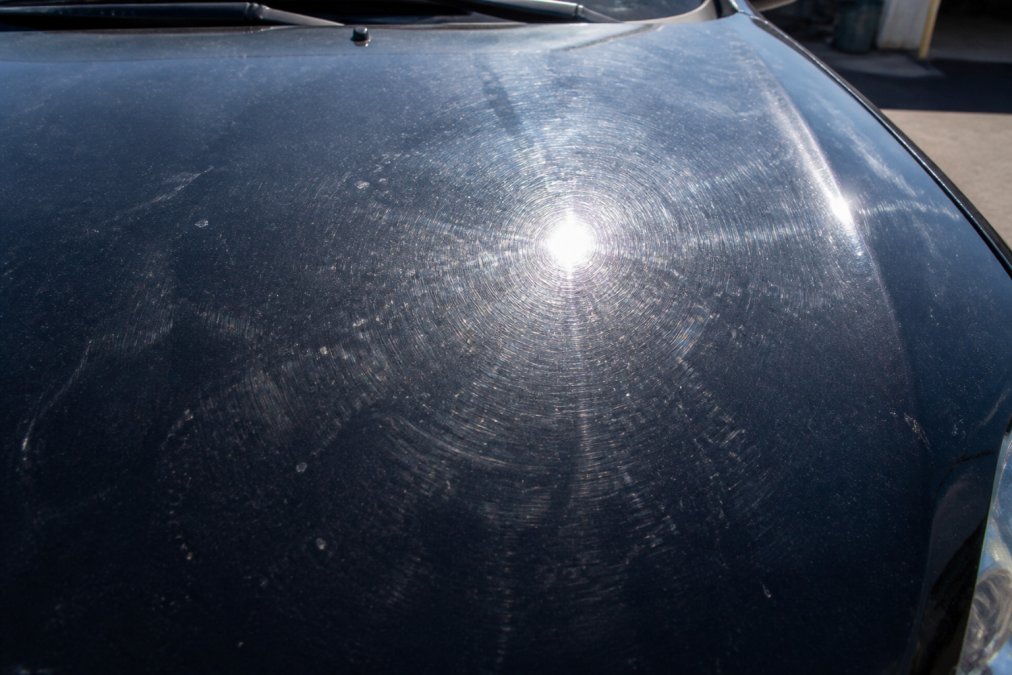
Paint contamination from industrial fallout, brake dust, or tree sap creates rough texture when you run your hand across the surface. Water spots that don't come off with normal washing indicate mineral deposits etched into the clear coat. Holograms, which are circular buffing marks from previous poor-quality work, show that improper polishing has already damaged the paint.
Check your paint condition by washing it thoroughly and examining it in bright sunlight. Run your hand across the surface to feel for roughness. Look at the reflection in the paint to see if it's clear and uniform or cloudy and uneven. If your vehicle is more than three years old and regularly exposed to weather, some level of surface imperfection is normal.
DIY vs. Professional Paint Correction: What Changes the Decision
The choice between DIY and professional paint correction depends on the damage severity, your equipment access, and your risk tolerance. DIY attempts with consumer-grade polishers can address light swirl marks and minor oxidation if you understand proper technique. However, most vehicle owners lack the experience to avoid causing holograms or uneven paint leveling.
Professional paint correction delivers superior results because technicians have invested in quality equipment, understand paint thickness limitations, and can assess damage accurately. A paint depth gauge measures how much clear coat remains, determining what level of correction is safe. Aggressive polishing on thin clear coat can burn through to the base coat, creating permanent damage.
The cost difference matters, but so does the risk. A failed DIY attempt requires professional correction afterward, doubling your total expense. Professional paint restoration from a shop like Rubio's Custom Repair inc includes the knowledge to work within your paint's specific thickness and the equipment to deliver even results across the entire panel.
For light swirl marks only, some DIY polishing may be acceptable. For oxidation, contamination, or previous poor correction work, professional restoration is the safer choice. Most vehicle owners find that professional work justifies itself through superior results and eliminated risk.
How Long Does Paint Correction Take?
Paint correction duration depends on damage severity, paint condition, and the correction method required. Light correction addressing only swirl marks typically takes 4-8 hours for a full vehicle. Medium correction involving oxidation and contamination usually requires 8-16 hours of work. Heavy correction addressing significant paint defects, multiple layers of previous poor work, or severe oxidation can require 20-40 hours or more. Single-panel correction for accident damage or localized problems takes 2-6 hours depending on the specific work needed.
Understanding the Clear Coat Budget
The real constraint on paint correction timing and feasibility is the "clear coat budget", the total thickness of clear coat available before polishing becomes unsafe. Most vehicles leave the factory with 1.5-2.0 mils (thousandths of an inch) of clear coat over the base coat. A mil is approximately 0.001 inches; for perspective, a human hair is roughly 3-4 mils thick.
Each polishing stage removes a small amount of clear coat, typically 0.1-0.3 mils per aggressive correction pass, depending on compound aggressiveness and polisher speed. Light polishing with fine compounds removes 0.05-0.1 mils. A professional paint depth gauge measures remaining clear coat thickness, determining how much correction is safely possible.
Once clear coat drops below 0.5 mils, further polishing becomes extremely risky. Aggressive correction on thin clear coat can burn through to the base coat, creating permanent damage that requires full repainting. This is why a vehicle that has already undergone multiple corrections (or was previously repainted with thin clear coat) may not be a candidate for additional correction, regardless of how much time a technician could spend on it.
How Many Times Can a Car Be Corrected?
Most vehicles can safely undergo 1-2 full paint corrections in their lifetime. A first correction on a 5-year-old vehicle with factory paint might remove 0.2-0.4 mils, leaving 1.2-1.8 mils remaining. A second correction several years later removes another 0.2-0.3 mils, bringing the vehicle to the danger threshold. A third correction is rarely advisable unless only light polishing with minimal compound is used.
Vehicles that have been previously repainted (often from collision repair) may have thinner clear coat applied during the repair process, sometimes only 0.8-1.2 mils. These vehicles have less "budget" for correction and may only tolerate one safe correction before clear coat becomes critically thin.
Why the Process Cannot Be Rushed
Quality paint restoration requires multiple polishing stages with different compounds and polishes, inspection between stages, and careful attention to paint thickness. A technician must:
- Assess initial clear coat thickness with a depth gauge
- Apply clay bar treatment to remove surface contamination
- Polish with a cutting compound (removes 0.1-0.3 mils)
- Inspect results and measure remaining clear coat
- Polish with a medium compound if needed (removes 0.05-0.15 mils)
- Inspect again and measure
- Apply a final finishing polish (removes minimal material, restores gloss)
- Apply protective coating or wax
Attempting to complete this work faster by skipping inspection stages, using overly aggressive compounds, or applying excessive polisher pressure risks burning through the clear coat or creating uneven results (holograms). Most professional shops complete full-vehicle correction over 2-5 business days, depending on their schedule and workload. The actual polishing time matters less than the quality of the finished result and the technician's discipline in staying within the vehicle's clear coat budget.
Paint Correction Cost Estimate and ROI
Professional paint restoration pricing depends on damage severity, vehicle size, and correction intensity. Light correction addressing only swirl marks and minor oxidation generally costs less than heavy correction for severe defects, multiple layers of prior damage, or significant oxidation.
Single-panel correction for accident damage or localized problems typically costs less than full vehicle restoration. Additional services like clay bar treatment, ceramic coating application, or paint protection film add to the total investment. Geographic location, shop reputation, and vehicle accessibility also influence final pricing.
Resale Value ROI Analysis
The return on investment from professional paint correction varies by vehicle age, class, and market segment. For vehicles 3-7 years old in good mechanical condition, professional paint restoration can increase resale value, depending on the severity of pre-correction paint damage. A sedan with significant oxidation and swirl marks might sell for less without correction; after professional restoration, the same vehicle can command a higher price, yielding a positive ROI on the restoration investment.
For newer vehicles (1-3 years old), the ROI is typically lower because buyers expect excellent paint condition as standard. For vehicles older than 10 years, professional correction may increase perceived value, making the cost-benefit less favorable unless the vehicle is a collector model or specialty vehicle where paint quality significantly impacts buyer perception.
Luxury and sports cars show higher ROI because buyers in those segments place greater emphasis on paint finish quality and overall detailing. A luxury sedan with poor paint might lose value; professional correction can recover some of that loss, making the investment economically sound.
Long-Term Cost Comparison
Compare professional correction against full repainting. A single-stage repaint for a sedan typically costs more than paint correction; a multi-stage, high-quality repaint runs even higher.
Resale Value and Long-Term Benefits
Professional paint restoration directly impacts your vehicle's resale value. Buyers notice paint condition immediately, often viewing it as an indicator of overall vehicle care. A vehicle with clear, glossy paint commands higher prices than one with oxidation and swirl marks, even if the mechanical condition is identical.
When Paint Restoration Isn't the Right Move
Paint restoration isn't appropriate when damage extends beyond the clear coat into the base coat or primer. Deep scratches, gouges, or areas where bare metal is visible require repainting, not polishing. Attempting correction on these areas wastes time and money without addressing the actual damage.
Frequently Asked Questions
How much does professional paint restoration cost?
Paint correction pricing depends on vehicle size, damage severity, paint thickness, and the extent of swirl marks and oxidation present. A single-stage correction costs less than multi-stage restoration. For an accurate quote tailored to your vehicle's condition, contact a shop that inspects your paint in person. Rubio's Custom Repair can provide a detailed estimate after assessing your specific needs.
What's the difference between paint correction and paint restoration?
Paint correction removes surface imperfections like swirl marks and light scratches through polishing and buffing without removing clear coat. Paint restoration goes further, addressing oxidation, contamination, and deeper defects, often including ceramic coating or paint protection film. Restoration is more comprehensive and typically lasts longer, while correction is ideal for minor cosmetic damage.
How long does professional paint correction take?
Single-stage correction typically takes 1-2 days depending on vehicle size and damage extent. Multi-stage restoration can take 3-7 days or longer if additional work like decontamination, paint leveling, or ceramic coating application is needed. The timeline also depends on paint thickness and whether structural repairs are involved. Your shop should provide a realistic timeline after inspection.
Will professional paint restoration improve my car's resale value?
Yes, professional paint restoration can increase resale value by addressing visible defects that buyers notice immediately. A vehicle with swirl marks, oxidation, and surface imperfections appears neglected and commands lower offers. Restored paint with proper finish and protection signals quality maintenance, potentially adding to your car's market value, depending on the vehicle's age and overall condition.