 how-to
Is Frame Repair Safe? What You Need to Know
Table of Contents
- Is Frame Repair Safe? The Short Answer
- Signs of Frame Damage on a Car: What to Look For
- How Frame Damage Affects Crash Protection and Vehicle Safety
- Frame Repair vs Frame Replacement: Which Is Right for Your Vehicle?
- How Long Does Frame Repair Take? Timelines and What Affects Them
- How to Tell If Frame Repair Was Done Correctly
- Making the Decision: Factors That Determine Safety and Value
- Frequently Asked Questions
Last Updated: October 12, 2026
Is Frame Repair Safe? The Short Answer
Frame repair is safe when a qualified shop follows the manufacturer's repair procedures and restores the frame to its original structural dimensions.
Your frame is the skeleton of your car, holding the engine, suspension, and cabin together while controlling how your vehicle absorbs force in a crash.
Below, we'll cover the signs of frame damage, how repair differs from replacement, and the questions to ask a shop before trusting it with your car.
Signs of Frame Damage on a Car: What to Look For
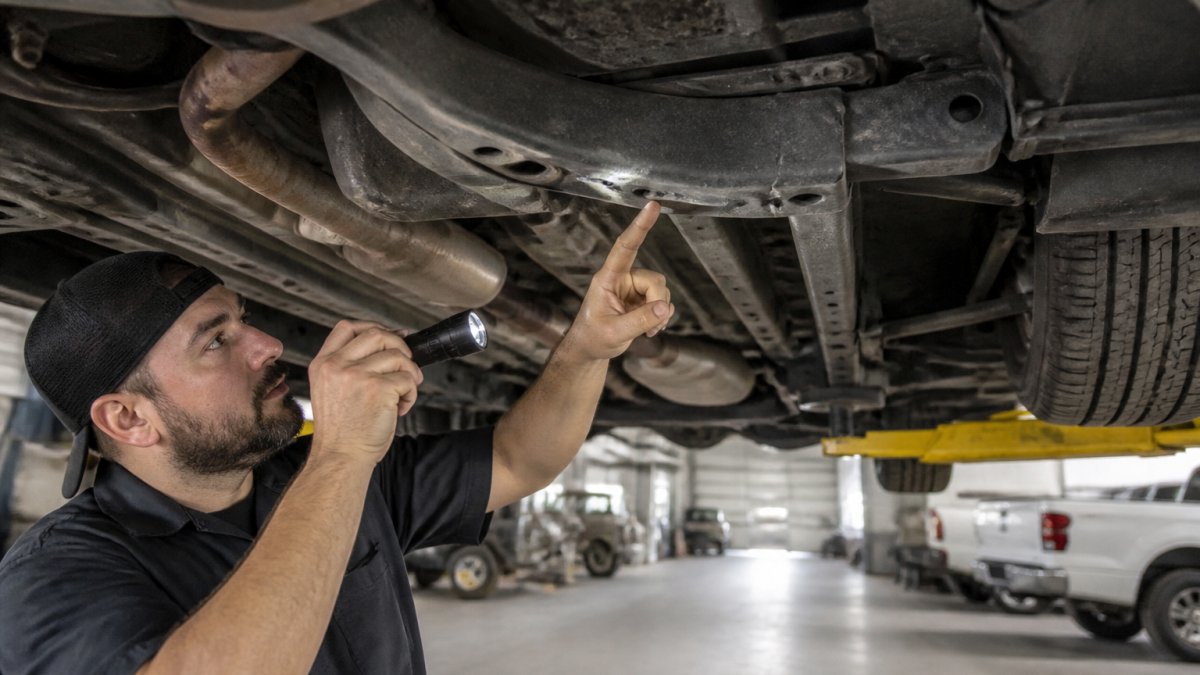
The clearest signs of frame damage are uneven panel gaps, a crooked stance, and steering that pulls even after an alignment. Some damage hides under the car, so a visual check alone won't catch everything.
Frame damage doesn't always announce itself. A hard hit can bend a frame rail while the bumper looks nearly fine.
Visual and Physical Indicators
Walk around your car and look for these:
- Panel gaps that are wider on one side than the other
- A hood, trunk, or door that sticks or won't close flush
- Tires that sit at different heights or angles
- Fresh wrinkles or creases in the engine bay or trunk floor
- Rust bubbles or flaking metal along the frame rails
- A cracked or flaking undercoating near the impact point
Rust deserves its own mention. Frame rot and rust-through weaken metal from the inside. A rusted frame can fail under normal driving, not just in a crash.
Handling and Performance Changes
Your car will often tell you before your eyes do. Watch for:
- Steering that drifts or pulls to one side
- A steering wheel that's off-center when driving straight
- Uneven or fast tire wear
- A thumping or creaking noise over bumps
- A door that suddenly needs a harder push to latch
Any of these can have other causes. But after a collision, treat them as structural warning signs until a professional says otherwise.
How Frame Damage Affects Crash Protection and Vehicle Safety
Frame damage weakens the crumple zones and occupant protection built into your vehicle.
Think of your frame as a planned sacrifice. In a crash, certain sections crush on purpose. They soak up energy so the cabin doesn't.
That's why structural integrity matters more than appearance. A car can look perfect after paint and still be unsafe if the frame wasn't restored to manufacturer specifications.
The same logic applies to suspension mounting points. If they're off by even a small amount, your handling changes.
Frame Repair vs Frame Replacement: Which Is Right for Your Vehicle?
Frame repair makes sense when damage is limited to a section that can be straightened or replaced and the rest of the structure is sound. Frame replacement is better when damage is severe, spread across multiple areas, or the frame is rusted through. The decision follows a severity-based framework weighing structural safety, repairability, cost, and manufacturer guidance.
A Severity-Based Decision Framework
Work through these questions in order. The first "stop" answer usually ends the repair path.
- Is the damage in a designated crush zone or suspension mounting point? If yes, stop and defer to the manufacturer's repair procedure. These areas are engineered to deform in a specific way, and generic straightening can defeat that design.
- Is the metal cracked, torn, or crushed rather than bent? Cracks and tears generally call for section replacement or full frame replacement, not pulling.
- Is there rust-through or frame rot? Rust-through weakens the metal from the inside. Repair on rusted-through sections is usually not viable because the surrounding metal cannot hold the repair.
- Does the damage span multiple rails or reach the cabin area? Widespread damage raises the risk that the structure cannot be restored to factory dimensions.
- Does the repair cost approach or exceed the vehicle's value? At that point, replacement or total loss is the more rational path.
- Does the manufacturer publish a repair procedure for this exact damage? If no procedure exists, that is a strong signal the damage is not considered repairable to spec.
Repair vs Replacement at a Glance
| Factor | Repair Is Often Viable | Replacement Is Often Better |
|---|---|---|
| Damage location | One rail or one section, away from crush zones | Multiple rails, cabin area, or suspension mounting points |
| Severity | Bent but not crushed | Cracked, torn, or crushed metal |
| Rust | Surface rust only | Rust-through or frame rot |
| Vehicle type | Body-on-frame truck or SUV | Unibody with widespread damage |
| Cost vs value | Repair fits the car's worth | Repair approaches the car's value |
| Manufacturer guidance | Published procedure exists | No procedure, or procedure says replace |
Why Construction Changes the Answer
Body-on-frame vehicles, like many trucks and SUVs, are often easier to repair because the frame is a separate piece that can be pulled, sectioned, or swapped.
Damage location matters just as much. A bend in the middle of a straight rail differs from damage at a crumple zone, rail end, or suspension mounting point.
That is why the same hit can mean a simple repair on one vehicle and a total loss on another.
When to Walk Away From the Repair
There are cases where the safe answer is no repair at all:
- The frame has rust-through in a structural area
- The damage reaches the cabin or multiple rails
- No manufacturer procedure exists for the damage
- The repair cost approaches the vehicle's value
- The shop cannot show you frame measurements against factory specs
Walking away is not a failure. It is the correct call when the structure cannot be restored to the dimensions and strength the vehicle was built with.
How Long Does Frame Repair Take? Timelines and What Affects Them
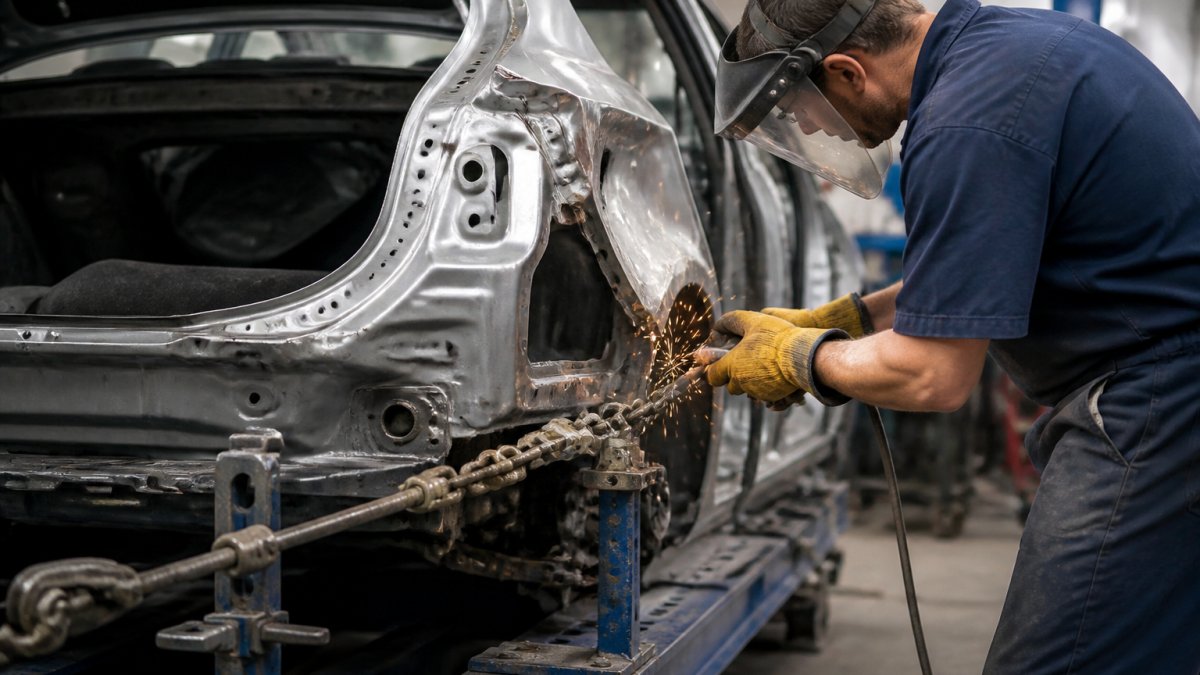
Most frame repairs take several days to a few weeks, depending on damage severity, parts availability, and whether the frame needs replacement. A minor pull on one rail moves faster than a full section replacement with paint and alignment work.
Timelines shift based on:
- How much of the frame is damaged
- Whether replacement parts are in stock or need ordering
- Whether the repair involves welding and section replacement
- Paint and refinish time after the structural work
- Insurance approval and supplement processing
Here's the honest version: the structural work is often the fastest part. Waiting on parts and insurance approvals eats more time than the pulling itself.
A shop that gives a firm timeline before inspecting the car is guessing. A good shop inspects first, then gives a realistic window.
How to Tell If Frame Repair Was Done Correctly
You can tell frame repair was done correctly by checking three things: documented frame measurements, a passing alignment, and even panel gaps after the repair. If a shop can't show measurements against manufacturer specs, you have no proof the frame is straight. Use the checklist below to verify the work before accepting the vehicle.
The Repair Verification Checklist
1. Repair documentation
- A written repair order that lists the structural work performed
- The manufacturer's repair procedure referenced by name or number
- Before-and-after frame measurement printouts
- Alignment report from after the structural work
- Photos of the damage before, during, and after repair
- Warranty terms for the structural work in writing
2. Measurements against manufacturer specifications
Modern shops use computerized measuring systems that compare your frame to factory numbers. Ask for the printout and check for:
- Datum points and control points within the manufacturer's stated tolerance
- Symmetry between left and right sides of the frame
- Ride height and suspension mounting point locations within spec
- No "close enough" language, the numbers either match the spec or they don't
If the shop cannot produce a measurement report, treat the repair as unverified. A visual inspection alone cannot confirm structural dimensions.
3. Alignment results
A four-wheel alignment after structural work is a second check on the frame. Look for:
- Camber, caster, and toe within the manufacturer's range on all four wheels
- Thrust angle close to zero, meaning the rear wheels track behind the front
- No need for aftermarket shims or offset kits to bring the car into spec
If the alignment only passes with corrective parts, that can signal the frame is still out of position.
4. Final inspection of the vehicle
- Panel gaps even on both sides
- The car sits level on flat ground
- It tracks straight with the steering wheel centered
- Doors, hood, and trunk open and close smoothly
- No new noises, leaks, or warning lights on a test drive
- Paint and refinish work matches surrounding panels
Questions to Ask Your Shop
Before you hand over your keys, ask:
- Do you measure the frame against manufacturer specifications?
- Can I see the before-and-after measurement reports?
- Will you follow the manufacturer's repair procedures for my model?
- What equipment do you use for straightening and measuring?
- Will you provide the alignment report after the structural work?
- Is the structural work backed by a guarantee, and what does it cover?
A shop that welcomes these questions is confident in its work; one that dodges them is telling you something.
What to Do If You Suspect a Bad Repair
If you already have the car back and something feels off, don't ignore it. A second opinion from a shop with structural measuring equipment is the fastest way to confirm or rule out a problem. Bring your repair documentation and ask for an independent measurement against factory specs. If the numbers are out of tolerance, that report is your evidence for a follow-up with the original shop, your insurer, or a state consumer protection agency.
Making the Decision: Factors That Determine Safety and Value
A lightly bent frame on a solid car is usually worth repairing. Widespread damage or rust-through on an older vehicle often isn't.
Think about the future, too: if you plan to sell, a repaired frame can affect resale value and must be disclosed in most cases, and a buyer who runs a vehicle history report will see the damage.
This is where the shop matters as much as the damage.
If you're weighing whether your vehicle is worth repairing, bring it in. We'll inspect the frame, show you what we find, and give you a straight answer.
Frequently Asked Questions
Can a car be safe to drive after frame damage is repaired?
Yes, if the repair is done correctly by a qualified shop using manufacturer specifications and proper equipment. A properly repaired frame can restore structural integrity and crash protection. However, the safety depends on the extent of damage, repair quality, and whether the frame was straightened or replaced. Always have a professional assessment and ask for documentation of the repair process.
How can you tell if a vehicle frame was repaired correctly?
Look for signs like uneven tire wear, misaligned panels, or handling issues. Ask for the repair invoice and alignment measurements. A correct repair will have frame measurements within manufacturer tolerances, proper welding, and no visible patches or rust. A second opinion from another shop can verify quality.
Does frame damage make a car unsafe?
It can if left unrepaired or repaired poorly. Frame damage compromises crumple zones and structural integrity, reducing crash protection. However, a proper repair can restore safety. The key is a thorough inspection and repair by a shop that follows manufacturer procedures and uses correct equipment.
Should a damaged vehicle frame be repaired or replaced?
It depends on the damage severity, vehicle age and value, and manufacturer guidelines. Minor bends may be straightened, but severe damage, rust, or cracks often require replacement. A shop should compare repair cost versus replacement cost and consider your vehicle's worth. Always get a professional opinion.
How long does vehicle frame repair take?
Typically 1 to 3 weeks, but it can vary based on damage extent, parts availability, and shop workload. Frame straightening may take a few days, while replacement could take longer. Ask your shop for a timeline and keep in mind that rushing can compromise quality.