 blog
blog
Is Mobile Car Paint Repair Worth the Cost? 2026 Guide
Table of Contents
- Mobile Paint Repair vs Body Shop: What's the Real Difference
- How Long Does Mobile Paint Repair Last?
- What to Look for in a Mobile Paint Technician
- Types of Damage Mobile Repair Handles Best
- Environmental and Weather Limitations
- Insurance Claims and Mobile Paint Repair
- DIY vs Mobile vs Body Shop: Which Makes Sense?
- Warranty and Guarantee Standards
- The Bottom Line on Cost
- Frequently Asked Questions
Last Updated: October 1, 2026
Mobile Paint Repair vs Body Shop: What's the Real Difference
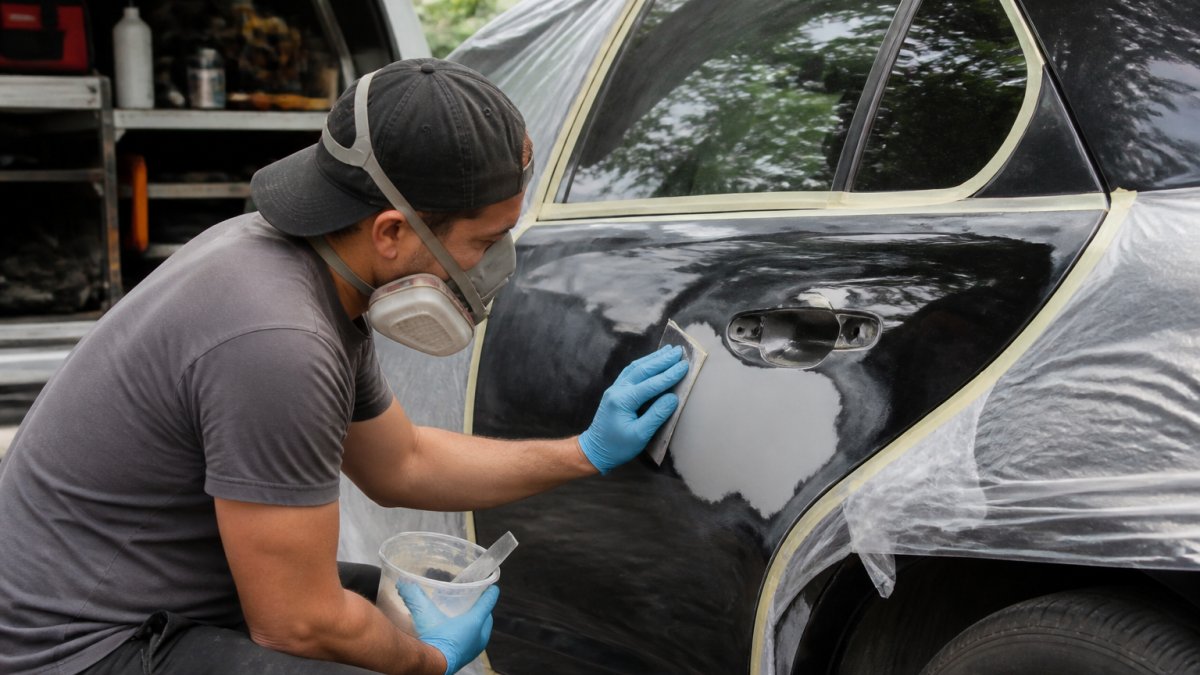
Mobile car paint repair brings the shop to your driveway: a technician arrives in a fully equipped van, preps the damaged panel on-site, and applies paint matched to your vehicle's factory color. The alternative is leaving your car at a body shop for days.
AAA guidelines on auto body repair
Cost Structure: Overhead and Labor
- Panel count and size. One door is cheaper than a door plus a fender plus a bumper cover. Blending across adjacent panels adds labor.
- Paint type and color. Tri-coat and pearl finishes require more material and more careful blending than a solid color. Some factory colors also need a tinted primer to match correctly.
- Damage depth. A scratch that stops in the clear coat is a sand-and-polish job. A scratch into primer or bare metal requires primer, base coat, and clear coat, three products instead of one.
- Travel distance. Mobile providers build mileage into the quote. A 10-mile call is not priced like a 60-mile call.
- Prep complexity. Adhesive residue, prior repaints, or rust around the damage all add prep time.
For current rates, request a quote directly rather than relying on generic online estimates, pricing varies by region and by how busy mobile providers are.
Quality and Finish: Factory vs Mobile
Modern mobile setups use professional paint systems and can match factory finish closely on small panels. The limits show up on large or complex repairs: a controlled spray booth still wins for full-panel resprays, where dust control and curing consistency matter most.
What this means in practice:
- Small cosmetic repairs, dings, scuffs, bumper corners, can match factory finish closely when the technician uses a portable enclosure and a proper paint system.
- Full-panel resprays are where mobile work most often falls short, because dust nibs and uneven cure show up across the whole panel rather than in one small area.
- Color match depends more on the technician's tinting skill and the paint system than on the location. A skilled mobile technician with a spectrophotometer and a mixing bank can match most factory colors; an unskilled one in a booth cannot.
How Long Does Mobile Paint Repair Last?
A properly applied mobile repair can last as long as a shop repair, often years, when surface preparation and curing are done correctly. Longevity depends less on where the work happens than on how.
Factors That Affect Longevity
- Surface preparation: Skipping sanding and buffing steps causes early peeling
- Paint quality: Cheap paint oxidizes fast under UV exposure
- Clear coat application: A thin clear coat offers weak UV protection
- Curing conditions: Cold or humid weather slows proper curing
What to Look for in a Mobile Paint Technician
The technician matters more than the van. Ask about certifications, check real reviews, and confirm the warranty in writing before anyone touches your paint.
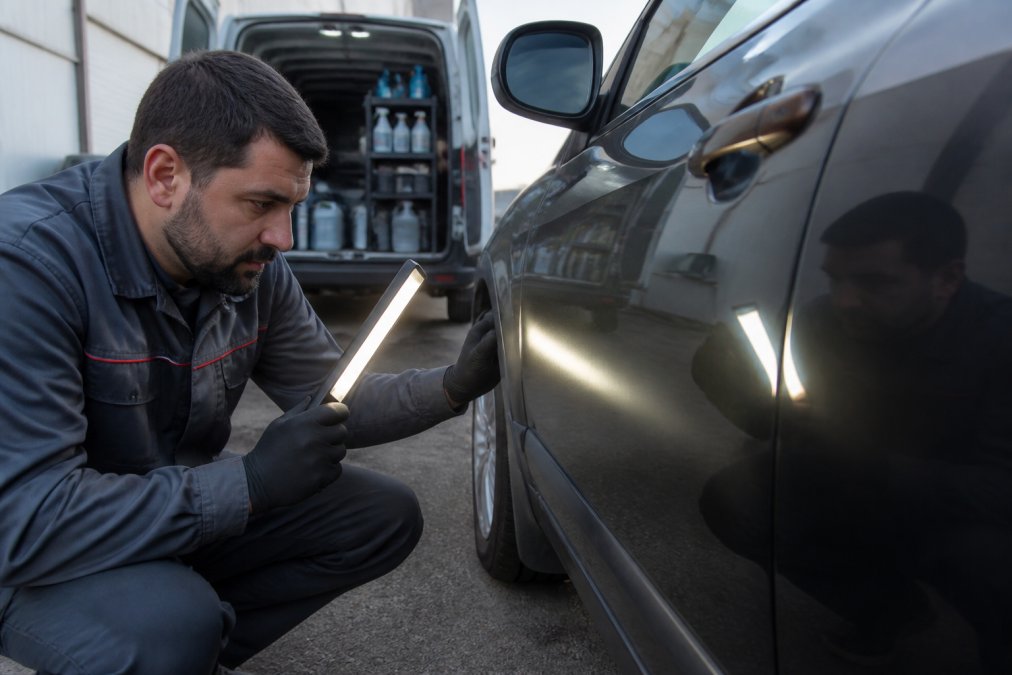
Certifications, Reviews, and Warranty
Look for training in automotive paint systems and verifiable customer feedback. A BBB rating is a useful signal, but read the actual reviews. Then confirm what happens if the color matching is off or the paint fails.
Types of Damage Mobile Repair Handles Best
Mobile repair shines on cosmetic damage: door dings, scuffs, scratches, and bumper repair, contained areas where a technician can blend paint without a full booth. Structural damage, deep dents, and large panel replacement belong in a shop; no mobile unit can safely handle frame work or major collision repair.
The Two Lines That Decide It
Line one: controlled environment. If a portable enclosure can cover the repair area, mobile is viable. If the area is a full panel or spans multiple panels, it is too large for an enclosure to control dust and cure, and a booth is required.
A Practical Damage Triage
| Damage Type | Mobile Repair | Body Shop | Why |
|---|---|---|---|
| Door dings, scuffs | Best fit | Works, costs more | Small area, outer skin only |
| Scratches to primer | Often suitable | Suitable | Requires primer + base + clear, but area is small |
| Scratches to bare metal | Sometimes suitable | Often better | Bare metal needs primer and rust treatment; cure control matters more |
| Bumper scuffs | Good fit | Good fit | Flexible plastic needs flex additive; both can do it |
| Cracked bumper cover | Not recommended | Required | Crack repair needs backing and structural prep |
| Deep dents | Not recommended | Required | Metal is stretched; needs panel work before paint |
| Creased panels | Not suitable | Required | Metal has lost its shape; paint alone will not fix it |
| Structural damage | Not suitable | Required | Frame rack and structural measurement needed |
| Full-panel respray | Not recommended | Required | Booth needed for dust and cure control |
| Multi-panel blend | Not recommended | Required | Open area too large for portable enclosure |
How to Classify Your Own Damage
Run through these questions before you call anyone:
- Can you see bare metal or rust? If yes, the repair needs primer and possibly rust treatment. Mobile can sometimes handle it, but ask how the technician plans to treat the metal before painting.
- Is the metal creased or stretched? Run your hand across the damage. If it dips or bulges, the metal has lost its shape and paint alone will not fix it. This is a shop job.
- Does the damage cross a body seam or panel gap? If it crosses into an adjacent panel, blending becomes a multi-panel job, and mobile is usually not the right fit.
- Is the damage larger than a dollar bill? Damage that fits within a dollar bill is a strong mobile candidate; larger than a sheet of paper is usually a shop candidate. Between those sizes, it depends on the panel and technician.
- Does the panel still fit correctly? Open and close the door, hood, or trunk near the damage. If it binds, rubs, or sits unevenly, the panel has moved, structural, and a shop job.
When Mobile Is Clearly the Right Call
- A parking lot ding with no paint break
- A scuff on a bumper cover that has not cracked
- A key scratch that stops in the clear coat or base coat
- A small chip on a door edge or mirror cap
- A lease-return cosmetic touch-up where the goal is to avoid a wear-and-tear charge
When the Shop Is Clearly the Right Call
- Anything that has moved the panel out of alignment
- Anything that has cracked or torn a bumper cover
- Anything that has exposed bare metal and sat long enough to rust
- Anything that spans more than one panel
- Anything tied to a collision claim where the insurer will want a shop estimate
If your damage falls in the gray zone, larger than a dollar bill but confined to one panel, with no creasing, get one mobile quote and one shop quote. The mobile quote tells you whether the job is in scope; the shop quote tells you what the booth-based alternative costs.
Environmental and Weather Limitations
Weather is the factor most guides skip. Paint needs stable temperature and low humidity to cure correctly; rain, wind, and dust can ruin a finish before it sets. A reputable technician will reschedule rather than paint in bad conditions, pushing ahead in poor weather is a red flag about quality assurance.
Insurance Claims and Mobile Paint Repair
Insurance compatibility depends on your policy and claim type. Many insurers cover cosmetic repairs but require an adjuster's approval before work begins.
DIY vs Mobile vs Body Shop: Which Makes Sense?
Each option fits a different situation, depending on damage severity, budget, and time.
- DIY: Cheapest, but color matching and clear coat work are hard to get right without experience
- Mobile: Balanced choice for small cosmetic damage and same-day service
- Body shop: Best for structural repair, large panels, and insurance-backed collision work
Warranty and Guarantee Standards
A warranty is the clearest sign of confidence. Ask what is covered, for how long, and whether it includes materials and labor.
The Bottom Line on Cost
Is a mobile car paint repair service worth the cost? For small cosmetic damage, yes: you save time, often pay less than a shop, and get a finish that holds up when done right. For structural or large-panel damage, a full shop remains the safer choice.
Frequently Asked Questions
Are mobile car paint repairs any good?
Mobile car paint repair can match body shop quality for minor damage like door dings, scuffs, and scratches when done by a skilled technician using proper surface preparation and color matching. The key difference is scope: mobile repair works best for cosmetic damage, while structural or extensive panel damage needs a full shop with a controlled spray booth. Ask about warranty and check reviews before booking.
How much does a mobile car paint repair cost?
Pricing depends on the size and number of damaged areas, paint type, and your location. Mobile services typically cost less than a body shop because the technician avoids overhead expenses like a fixed facility and multiple staff. For an accurate quote, send photos of the damage to the provider and ask for a written estimate before scheduling.
How does mobile paint repair compare to a traditional body shop?
Mobile paint repair comes to you, which saves time and often costs less because there is no shop overhead. A traditional body shop offers a controlled environment for curing, can handle structural repairs, and typically provides a longer warranty. For minor cosmetic damage, mobile is convenient and cost-effective. For collision damage or large panels, a body shop is the better choice.
What are the limitations of mobile auto body paint repair?
Mobile repair cannot handle frame damage, major collision repair, or full-panel resprays that require a spray booth. Weather matters too: rain, high humidity, and extreme temperatures can affect paint curing and finish quality. If the damage exposes bare metal or spans multiple panels, a body shop with proper equipment is the safer option.
Cosmetic damage is easy to underestimate until it spreads. Rubio's Custom Repair inc brings over 30 years of experience, original parts, and premium PPG products to every job, backed by a written guarantee and a team that works directly with your insurer. Get started with Rubio's Custom Repair inc and get back on the road with a finish you can trust.