 how-to
What Is an Insurance Claim Supplement? Auto Repair Guide
Table of Contents
- What Is an Insurance Claim Supplement and How It Differs From the Original Claim
- When Additional Damage or Costs Justify a Supplement
- An Insurance Claim Supplement Example: Hidden Damage and Code Upgrades
- How the Insurance Supplement Approval Process Works
- Insurance Supplement Turnaround Time: What to Expect
- What to Do If an Insurance Supplement Is Denied or Underpaid
- How Deductibles, Depreciation, and Limits Affect Your Supplement Payment
- Conclusion
- Frequently Asked Questions
Last Updated: October 19, 2026
What Is an Insurance Claim Supplement and How It Differs From the Original Claim
An insurance claim supplement is a formal request to your insurer for additional money after the original claim estimate turns out to be too low. It covers costs the first estimate missed, such as hidden damage found during teardown or parts the adjuster didn't price.
Here's the core difference. The original claim sets the first offer, based on what the adjuster could see. A supplement adjusts that offer once real repair work exposes what was hidden.
Most drivers assume the first check is final. It usually isn't.
- Original claim: the starting estimate, written before disassembly
- Supplement: the corrected estimate, written after teardown
- Who writes it: your body shop, with photos and line items
- Who approves it: your insurance company's adjuster
The California Department of Insurance guide to auto claims spells out how insurers must handle these requests. That matters, because a supplement is a right, not a favor.
Supplement vs. Supplemental Health Insurance: A Common Mix-Up
Search the term and you'll find two unrelated things. A property or auto claim supplement adds money to an existing damage claim. Supplemental health insurance is a separate policy that pays extra benefits alongside a major medical plan.
They share a word and nothing else. If you're reading about deductibles, adjusters, and repair estimates, you want the property-claim meaning.
When Additional Damage or Costs Justify a Supplement
A supplement is justified when the repair scope changes after the original estimate. That happens for a few predictable reasons.
Common triggers include:
- Hidden damage found after panels or bumpers come off
- Parts prices that differ from what the adjuster wrote
- Labor time that the original estimate underestimated
- Code upgrades required by local building rules
- Related damage the first inspection missed
The key test is simple. If the cost is tied to the covered loss and backed by evidence, it belongs in a supplement. If it's routine maintenance or wear, it doesn't.
A common mistake is waiting until the car is finished to raise these items. Flag them the moment they appear.
An Insurance Claim Supplement Example: Hidden Damage and Code Upgrades
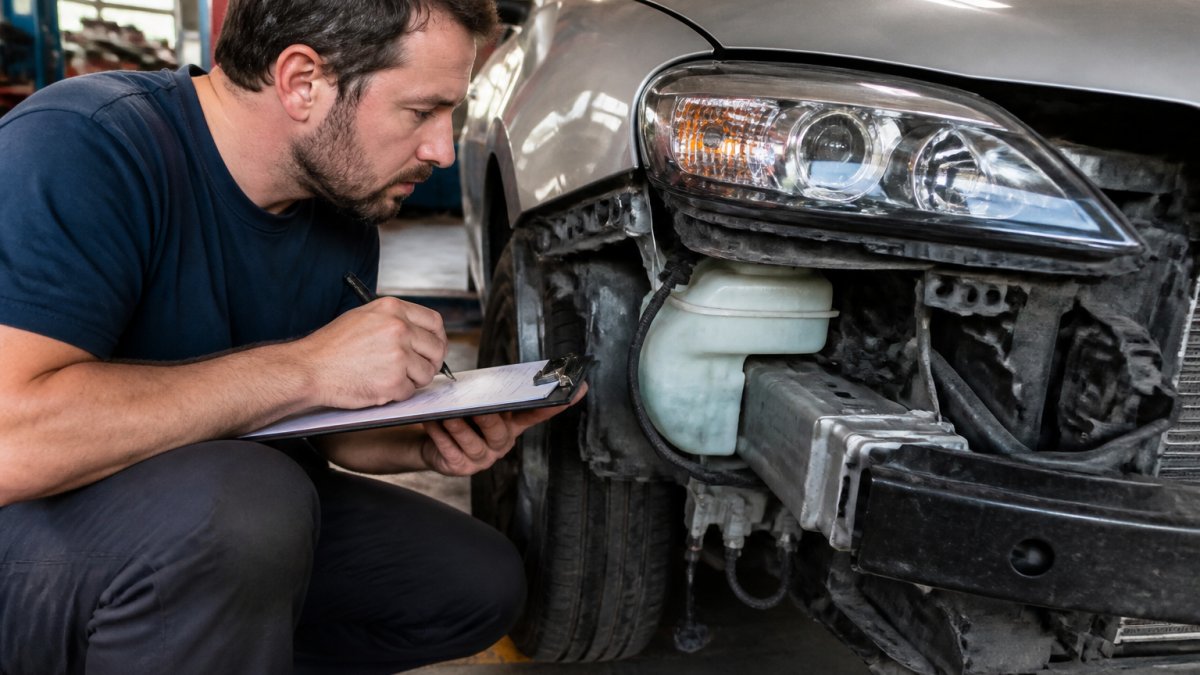
Picture a front-end collision. The original estimate covers a bumper, a headlight, and paint. Then the technician removes the bumper cover and finds a bent reinforcement bar and a cracked absorber.

Neither part was visible at the first inspection. Both are required for a safe repair. The shop photographs the damage, adds the parts and labor to a revised estimate, and submits it.
Code upgrades work the same way. The National Highway Traffic Safety Administration publishes federal safety standards that often shape these decisions.
How the Insurance Supplement Approval Process Works
The insurance supplement approval process follows a set path, but the depth is in what travels along it. Knowing the steps keeps you from feeling stuck in the middle; knowing what goes into each step is what gets the supplement approved.
- The shop documents the damage. Photos of the hidden damage before, during, and after teardown; measurements; and a revised estimate with line items that match the original estimate's format.
- The shop assembles the supplement package. This is the part most drivers never see, and it is where supplements succeed or fail. A complete package typically includes:
- A cover letter or supplement summary stating the original estimate number, the claim number, and the total additional amount requested
- The revised estimate with added and changed line items clearly marked
- Photos keyed to specific line items, not a loose camera roll
- Parts invoices or vendor quotes for any price disputes
- Manufacturer repair procedures or technical service bulletins when the original estimate omitted a required step
- A short written explanation of why each item was not visible or not priced at the first inspection
- The shop submits the supplement. It goes to your adjuster with the supporting evidence, ideally as one complete package rather than piece by piece.
- The adjuster reviews it. They compare the supplement against the original estimate, the policy, and the photos. They may approve, question specific line items, or request more proof.
- Reinspection, if needed. Some insurers send someone to see the vehicle. A reinspection is not a rejection; it usually means the dollar amount or the hidden-damage claim needs eyes on it.
- Approval and payment. The insurer issues additional payment for approved items, minus anything already paid and subject to your deductible and policy limits.
A good shop handles steps one through three for you. You shouldn't be the messenger between your body shop and your insurer. At Rubio's Custom Repair inc, we talk to adjusters directly so you don't have to.
What the Adjuster Is Actually Looking For
Adjusters are not grading your shop's paperwork for style. They are answering three questions: Is this damage tied to the covered loss? Was it reasonably hidden at the first inspection? Is the price consistent with what the insurer would pay for the same work elsewhere? A supplement that answers all three in writing, with evidence attached, moves faster than one that only asserts the cost went up.
A Sample Supplement Package, Item by Item
A reusable checklist makes the process concrete. Before a supplement goes out, confirm it contains:
- Claim number and original estimate number on every page
- Revised estimate with added items flagged
- Before, during, and after photos for each hidden-damage item
- Parts invoices or quotes for any price difference
- Labor-time justification, such as manufacturer procedures or a documented repair step
- Written explanation of why each item was missed initially
- Total additional amount requested, stated plainly
If any box is unchecked, the supplement is not ready. A complete package rarely sits in a queue; a thin one always does.
Insurance Supplement Turnaround Time: What to Expect
Insurance supplement turnaround time varies by insurer and claim complexity. Simple supplements with clear photos often move faster than ones that need a reinspection. Some approvals come back in days; others take longer when parts or code questions are involved.
What slows things down:
- Missing or blurry photos
- Estimates without clear line items
- Disagreements over labor time
- Waiting on a physical reinspection
The fix is preparation. A complete, well-documented supplement rarely sits in a queue. A thin one always does.
What to Do If an Insurance Supplement Is Denied or Underpaid
A denial isn't the end. It's usually a signal that the evidence didn't match the request, or that the adjuster read the request differently than your shop intended.
Step 1: Get the reason in writing. Ask the adjuster to state, line by line, which items were denied or reduced and why.
Step 2: Sort the denial into one of three buckets.
- Coverage denial: the insurer says the item isn't part of the covered loss. The fix is policy language and, if needed, a second opinion on what the policy says.
- Evidence denial: the insurer says the damage wasn't proven or wasn't hidden at the first inspection. The fix is better photos, measurements, and a written timeline.
- Price denial: the insurer accepts the damage but disputes the labor time or parts price. The fix is invoices, manufacturer procedures, and comparable estimates.
Step 3: Resubmit with the specific gap addressed. A targeted second request that answers the stated reason beats a repeat of the first supplement.
Step 4: Ask about the insurer's internal review process. Most insurers have a second-level review or a formal complaint channel. Ask for it by name and in writing.
Step 6: Escalate if the record supports it. If the written record shows the damage is covered and proven and the insurer still won't pay, options can include the state insurance department's consumer complaint process, a formal appraisal clause if your policy has one, or advice from a qualified professional. The Federal Trade Commission's guidance on consumer rights explains how to push back when a claim decision seems unfair.
A denial handled as a paperwork problem, with a written reason and a targeted response, is far more likely to be reversed than a denial handled as an argument.
How Deductibles, Depreciation, and Limits Affect Your Supplement Payment
Three numbers decide what actually lands in your pocket: your deductible, depreciation, and your policy limits.
- Deductible: subtracted once per claim, not per supplement
- Depreciation: the gap between actual cash value and replacement cost
- Policy limits: the ceiling your total payout can't exceed
A supplement raises the approved repair cost. It doesn't change your deductible. So if your deductible is already applied, additional approved work doesn't mean a second deduction.
Here's how the pieces fit together:
| Factor | What It Does | Effect on Your Supplement |
|---|---|---|
| Deductible | Your out-of-pocket share | Applied once per claim |
| Depreciation | Reduces payout until repairs are done | Often recoverable after repair |
| Policy limits | Caps total payout | Supplement can't exceed it |
| Betterment | Charges you for upgrades | Rare, but possible on code items |
Depreciation is the one drivers forget. Many policies release it once repairs are complete, so ask your insurer whether that applies to your claim.
Conclusion
The gap between the first estimate and the real repair cost is where most drivers lose money. A supplement closes that gap, but only if someone documents it properly and submits it on time.
That's the part we handle every day. Rubio's Custom Repair inc brings over 30 years of experience, original parts for most repairs, and premium PPG paint products to every job. We work directly with your insurer, back our work with a guarantee, and currently offer 50% off your deductible for a limited time.
Schedule an appointment with Rubio's Custom Repair inc and let us handle the supplement while you get back on the road.
Frequently Asked Questions
What is an insurance claim supplement for auto repairs?
An insurance claim supplement is a formal request to your insurer for additional money beyond the original claim estimate. It is filed when a shop discovers damage that was not visible during the first inspection, such as hidden frame damage, additional parts that need replacement, or code-required upgrades. The supplement adds new line items to the approved scope of work so the repair can be completed correctly. It does not replace the original claim; it revises it.
Does an insurance supplement mean my claim was denied?
No. A supplement is a normal part of the repair process, not a denial. Insurers write initial estimates based on what an adjuster can see, and hidden damage often only appears once panels are removed. Filing a supplement simply means the repair scope changed. Your original claim stays open and approved while the new items are reviewed. A denial is a separate decision that applies to specific line items, not to the claim as a whole.
How long does the insurance supplement approval process take?
Insurance supplement turnaround time varies by insurer and complexity, but many supplements are reviewed within a few business days to a couple of weeks. Supplements with clear photos, measurements, and itemized estimates move faster. Delays usually come from missing documentation or back-and-forth between the adjuster and the shop. Ask your shop to submit the complete package at once and to follow up with the adjuster if there is no response within a week.
What should I do if my insurer does not approve all of the supplement?
Ask the insurer for a written explanation of which line items were denied and why. Then have your shop provide supporting evidence, such as photos, OEM part numbers, or code citations, and request a re-review. If the denial stands, you can escalate to a supervisor, request an independent appraisal if your policy allows it, or file a complaint with your state insurance department. Keep every document in one file so nothing gets lost.