 how-to
Avoiding Hidden Auto Repair Fees: 2026 Guide
Table of Contents
- How to Spot Dishonest Auto Shops Before You Hand Over the Keys
- Requesting Itemized Repair Estimates: What Must Be on Paper
- Unauthorized Car Repairs Laws: Your Rights When a Shop Acts Without Approval
- Reading an Itemized Bill: How to Audit Every Line for Hidden Auto Repair Fees
- Negotiation Scripts for Declining Upsells and Questioning Charges
- Preventing Hidden Auto Repair Fees With Routine Maintenance and Service Records
- Frequently Asked Questions
Last Updated: September 13, 2026
How to Spot Dishonest Auto Shops Before You Hand Over the Keys
Avoiding hidden auto repair fees starts long before you see the bill. It starts the moment you walk into a shop and pay attention to how they talk about your car. At Rubio's Custom Repair inc, we've seen many drivers get burned by padded invoices and phantom repairs, and most of those situations were preventable with a five-minute conversation upfront.
The pattern is predictable. A shop quotes you one number, then calls two hours later with "additional findings." A service advisor pressures you to approve work you never asked for. The final bill includes line items you can't match to anything on your original estimate.
Here's what most guides get wrong: they tell you to "find a reputable shop" without explaining how to actually test one. So below, we'll show you exactly how to screen a shop before you commit, what a legitimate written estimate must contain, and the scripts you can use when someone tries to upsell you into work you don't need.
What separates a trustworthy shop from a risky one?
A trustworthy shop gives you a written estimate before touching your car, explains every charge in plain language, and never performs work without your explicit authorization. Those three behaviors separate honest operators from the rest. If any one is missing, walk away.
When you're evaluating an unfamiliar shop, look for these signals:
- Technician certification displayed openly. Ask what certifications the technicians hold. Shops proud of their credentials will tell you without hesitation.
- A clear process for repair authorization. They should hand you paperwork to sign before work begins, not after.
- Willingness to show you the problem. A trustworthy mechanic will walk you to the bay and point at the worn part.
- No pressure to decide immediately. Legitimate repairs rarely require a same-minute decision.
The red flags are just as consistent. A shop that refuses to put an estimate in writing, dodges questions about labor hours, or adds a vague "shop supplies fee" without explanation is telling you something. Listen to it.
Requesting Itemized Repair Estimates: What Must Be on Paper
An itemized repair estimate must list parts, labor hours, the labor rate, and any additional fees as separate line items. A single lump-sum figure is not an estimate; it's a guess you'll be held to. Request the itemized version every time, even for small jobs.
The Federal Trade Commission's guidance on auto repair is clear that you're entitled to a written estimate and that a shop cannot charge more than a set amount without your approval. Use that. When you ask for an itemized estimate, here's what should appear on the page:
| Estimate Element | What It Should Show | Why It Matters |
|---|---|---|
| Parts | Each part named, with OEM or aftermarket specified | Lets you compare prices and verify quality |
| Labor | Hours per task at a stated labor rate | Prevents padded labor hours |
| Diagnostic fee | Stated upfront, and whether it's waived if you approve repairs | Stops surprise charges |
| Shop supplies fee | A defined amount or percentage | Uncapped fees are a common padding tactic |
| Environmental disposal fee | A fixed charge for fluid and part disposal | Should be small and consistent |
| Taxes | Calculated on parts and labor as applicable | Verifies the final total |
If a shop hands you an estimate missing any of these, ask them to revise it before you sign anything. That request alone filters out a lot of bad actors.
Auditing a Digital Invoice Line by Line
Most guides stop at "get an itemized estimate." The harder skill is auditing the digital invoice the shop emails or texts you before you pay. Here is a repeatable checklist:
- Export or screenshot the invoice. Save a PDF or image so the line items can't be edited after the fact.
- Reconcile every line against the approved estimate. Highlight anything that wasn't on the original.
- Flag percentage-based fees. A "shop supplies" charge set at a percentage of the total scales up with the repair, which is how a small job quietly grows.
- Look for bundled labor. "R&R" (remove and replace) lines sometimes hide overlapping hours for the same component.
- Check for a second diagnostic charge. Some invoices bill a diagnostic fee even after the shop credited it verbally.
- Verify core charges and returns. A core charge should be refunded when the old part is returned; confirm it isn't left on the final total.
- Confirm tax is applied only to taxable lines. In many jurisdictions, labor is taxed differently than parts.
When you get the digital invoice, do the audit before you hand over a card. Discrepancies caught at the counter are far easier to resolve than charges disputed weeks later.
Unauthorized Car Repairs Laws: Your Rights When a Shop Acts Without Approval
Unauthorized car repairs laws in most states protect you from being charged for work you never approved. The general principle across state consumer protection statutes is that a repair shop must obtain your authorization before performing work, and it cannot charge you for unauthorized repairs. If a shop does the work anyway and demands payment, you have grounds to dispute the charge.
The specifics vary by state, and this is where competitors' generic advice falls apart. California, for example, has its own Automotive Repair Act enforced through the state's Bureau of Automotive Repair, which requires written estimates and customer authorization before repairs begin. If you're in another state, the USA.gov consumer complaint portal can point you toward the right agency for your situation.
Finding Your State's Specific Protections
Most states have an automotive repair act, a consumer protection statute, or a motor vehicle repair regulation that governs estimates, authorization, and billing. The names differ, but the pattern is consistent. To find yours:
- Search your state attorney general's website for "auto repair" or "motor vehicle repair."
- Look for a dedicated licensing board (some states license repair shops; others do not).
- Check whether your state requires a written estimate above a dollar threshold, and whether it caps how much a shop can exceed that estimate without new authorization.
- Note the complaint process and any deadline for filing.
A few states go further than the baseline. Some require shops to return replaced parts on request. Some prohibit charging for work not authorized in writing. A handful require shops to post a customer bill of rights. Knowing which applies to you turns a vague grievance into a specific, citable complaint.
What to Do If a Shop Performs Unauthorized Work
- Do not pay the disputed portion. Pay only what you authorized in writing.
- Request the repair order and itemized bill in writing.
- Document everything. Keep the original estimate, any texts or emails, and the final invoice.
- File a complaint with your state's consumer protection agency or attorney general's office.
- Dispute the charge with your credit card company if you paid by card. Under the Fair Credit Billing Act, you generally have 60 days from the statement date to dispute a billing error (consumerfinance.gov).
The key is the paper trail. A shop that skipped authorization usually also skipped documentation, which works in your favor.
Verbal authorization is the most common trap. If you approve work over the phone, ask the shop to email or text you the revised estimate before they start. A written record of what you actually approved is the difference between a winnable dispute and a he-said-she-said.
Reading an Itemized Bill: How to Audit Every Line for Hidden Auto Repair Fees
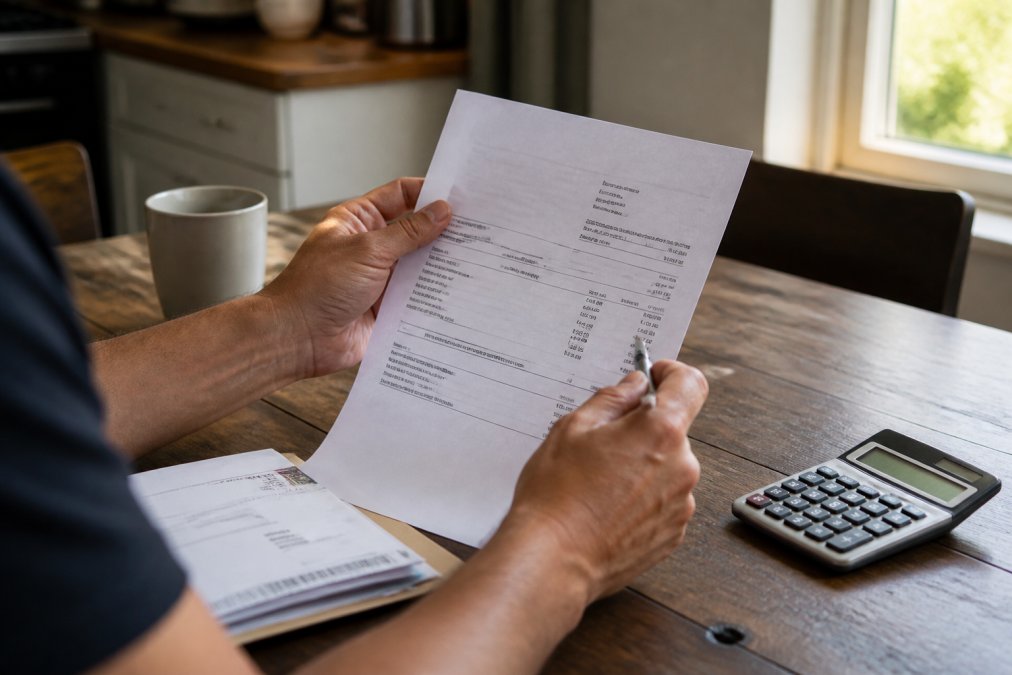
Digital invoice auditing is where most drivers leave money on the table. Before you pay, compare the final bill against your original written estimate line by line. Any charge that wasn't on the estimate, or that grew without explanation, deserves a question.
Walk through the bill with these checks:
- Match every part to the estimate. If a part appears that you didn't approve, ask why.
- Verify labor hours. A job quoted at two hours shouldn't bill at four without a documented reason.
- Scan for duplicate charges. Shop supplies fees sometimes appear twice.
- Check the parts markup. OEM parts and aftermarket parts carry different costs; confirm which you received.
- Confirm the diagnostic fee treatment. If it was supposed to be waived, make sure it was.
If a line doesn't add up, ask the service advisor to explain it before you sign or pay. You're not being difficult. You're doing exactly what a careful consumer should do.
The single most effective habit for avoiding hidden auto repair fees is comparing the final itemized bill against the original written estimate, line by line, before you pay. Discrepancies caught at the counter are far easier to resolve than charges disputed weeks later.
Negotiation Scripts for Declining Upsells and Questioning Charges
You can decline recommended work without conflict, and you can question a charge without accusing anyone of fraud. The trick is having the words ready before you're put on the spot. Here are scripts you can use word for word.
When a shop recommends extra work you didn't ask for:
"Thanks for flagging that. I'd like to get a second opinion before I approve anything beyond the original estimate. Can you note the recommendation on my repair order so I have it in writing?"
When a charge appears that wasn't on the estimate:
"This line wasn't on the estimate I approved. Can you walk me through what it covers and why it's being added now?"
When you're pressured to decide immediately:
"I understand you'd like an answer today, but I'm not comfortable authorizing work I haven't reviewed. I'll get back to you by tomorrow."
When you want the old parts back:
"I'd like the replaced parts returned to me when the job is done. Please note that on the repair order."
Asking for old parts back is one of the most underused tactics. A shop that did the work will hand them over without issue. A shop that billed you for work it didn't do will suddenly have a problem.
Preventing Hidden Auto Repair Fees With Routine Maintenance and Service Records
Breakdown prevention is cheaper than breakdown repair, and a documented service history is your best defense against unnecessary repairs. When you can show a shop that you've kept up with preventative maintenance, you remove their most common justification for padding the bill.
Keep a simple maintenance log for your vehicle:
- Oil and filter changes with dates and mileage
- Tire rotations, alignments, and replacements
- Brake inspections and fluid flushes
- Battery tests and replacements
- Any prior repairs with receipts
Stick to the service interval in your owner's manual. Fluid flushes, in particular, are a frequent upsell target, so knowing what your manufacturer actually recommends protects you from being sold work your car doesn't need.
One more thing worth doing: get a second opinion on any repair estimate above a certain dollar threshold you set for yourself. A reputable shop won't be offended. The ones that pressure you hardest are usually the ones with the most to hide.
Hidden auto repair fees thrive on urgency and unclear paperwork, and both are things you can control. The next time you need collision repair or paint work in the Manteca area, bring the same scrutiny to the shop that you'd bring to any major purchase. At Rubio's Custom Repair inc, we're a family-owned shop with over 30 years of experience, we use original parts for most repairs and premium PPG products, and every job is backed by our guarantee. If you've been burned before and want a shop that puts the estimate in writing and stands behind the work, schedule an appointment with us.
Frequently Asked Questions
What are common hidden fees in auto repair estimates?
Watch for shop supplies fees, environmental disposal fees, and parts markup that isn't itemized separately from labor. Some shops also add fluid flushes or inspections you never approved. A written estimate should list every charge individually, including labor hours at a stated labor rate and whether parts are OEM or aftermarket. If a fee appears without explanation, ask the service advisor to justify it in writing before you authorize any work.
Are verbal repair estimates legally binding?
In most states, verbal estimates are harder to enforce than written ones. Many state consumer protection statutes require shops to provide a written estimate before starting work and to get your authorization for any amount exceeding it. Without a written record, proving what was agreed becomes your word against theirs. Always request a written estimate and keep a copy. If a shop resists putting numbers on paper, that alone is a red flag worth walking away from.
What should I do if a mechanic performs unauthorized work?
First, do not pay for the unauthorized portion. Ask for an itemized bill showing exactly what was approved versus what was added. Under many state unauthorized car repairs laws, a shop cannot charge for work you did not authorize. Send a written dispute letter citing your state's consumer protection statute, and keep copies of all correspondence. If the shop refuses to adjust the bill, file a complaint with your state attorney general's office and consider small claims court.
How do I request an itemized invoice for car repairs?
Ask before work begins. Tell the service advisor you want a written estimate that separates parts, labor hours, the labor rate, and any shop or disposal fees. After the repair, request a final itemized bill and compare it line by line against the estimate. If new charges appeared, ask for a written explanation of each one. Keep every document, since a paper trail is your strongest tool if you need to dispute hidden auto repair fees later.