 Comparison
Alternatives to Dealership Collision Repair in Manteca
Last Updated: November 19, 2026
Quick Summary
Independent collision centers are a strong alternative to dealership collision repair in Manteca, especially for vehicles out of warranty or when you want a second estimate. Compare itemized written estimates, confirm parts types, OEM procedures, timelines and warranty terms in writing, and check the shop's licensing with the California Bureau of Automotive Repair.
- Ask whether the shop uses OEM procedures and has the scan tools and calibration equipment your vehicle needs.
- Get an itemized written estimate listing labor hours, parts labeled OEM, aftermarket or recycled, and sublet work.
- Compare the shops' posted body and paint labor rates rather than only the final totals.
- Get the workmanship and paint warranty in writing before authorizing any repairs.
- Verify a shop's license and complaint history through the California Bureau of Automotive Repair at bar.ca.gov.
Table of Contents
- Why Drivers in Manteca Look Beyond the Dealership Body Shop
- Dealership vs. Independent Shop: A Side-by-Side Comparison
- How Long Collision Repair Time Really Takes
- Insurance Choice and Your Rights in California
- Pros and Cons of Choosing an Independent Shop in Manteca
- A Checklist for Vetting a Body Shop Before You Authorize Repairs
- Booking Your Estimate at Rubio's Custom Repair
- Frequently Asked Questions
Why Drivers in Manteca Look Beyond the Dealership Body Shop
Fewer franchised dealerships are keeping body shops on site.
For Manteca drivers, the real question is simpler. Who can repair your vehicle properly, at a fair price, and get it back to you on a timeline you can plan around? Rubio's Custom Repair inc is a family-owned and operated auto body shop in Manteca, California, focused on collision repair and paint. This guide explains how independent collision centers compare with dealership repair so you can make that call with clear criteria.
Collision repair has also grown more technical.
Dealership vs. Independent Shop: A Side-by-Side Comparison
Here is a comparison of a dealership body shop and an independent collision center on the factors that often decide the outcome: who controls the repair plan, which parts go on the car, who talks to the insurer, and what happens if something is wrong afterward.
| Factor | Dealership Body Shop | Independent Collision Center |
|---|---|---|
| Repair plan authority | Service department and warranty process may shape the estimate; advisor may be a call center | Estimator and technician usually in the same building; you can ask to speak with the person writing the estimate |
| Parts | Often manufacturer (OEM) parts; availability tied to the brand's parts network | OEM, aftermarket, or recycled parts depending on the job and your authorization; confirm in writing |
| OEM procedures | Brand-specific procedures and scan tools are typically on hand | Many independent shops subscribe to OEM procedure databases and buy or rent brand-specific scan tools; ask which ones |
| Insurance | May be a direct repair program (DRP) shop for some insurers | May be a DRP shop, or may work on an open-repair basis where you assign the claim |
| Warranty | Manufacturer warranty on parts; dealership workmanship warranty varies | Shop workmanship and paint warranty; ask for it in writing before authorizing work |
| Scheduling | Loaner and drop-off tied to dealership hours and volume | Often more flexible drop-off; confirm hours and after-hours key drop |
| Best for | Newer vehicles still under a manufacturer warranty with brand-specific calibration needs | Out-of-warranty vehicles, second opinions, and owners who want a named local contact |
Who Chooses the Shop in California
A common pattern: the insurer writes an initial estimate, the shop you choose writes its own estimate, and the two are reconciled through a supplement as hidden damage is found. Ask any shop whether it handles supplements and authorizations directly with your insurer, or whether you will be the one relaying documents.
Comparing Written Estimates Line by Line
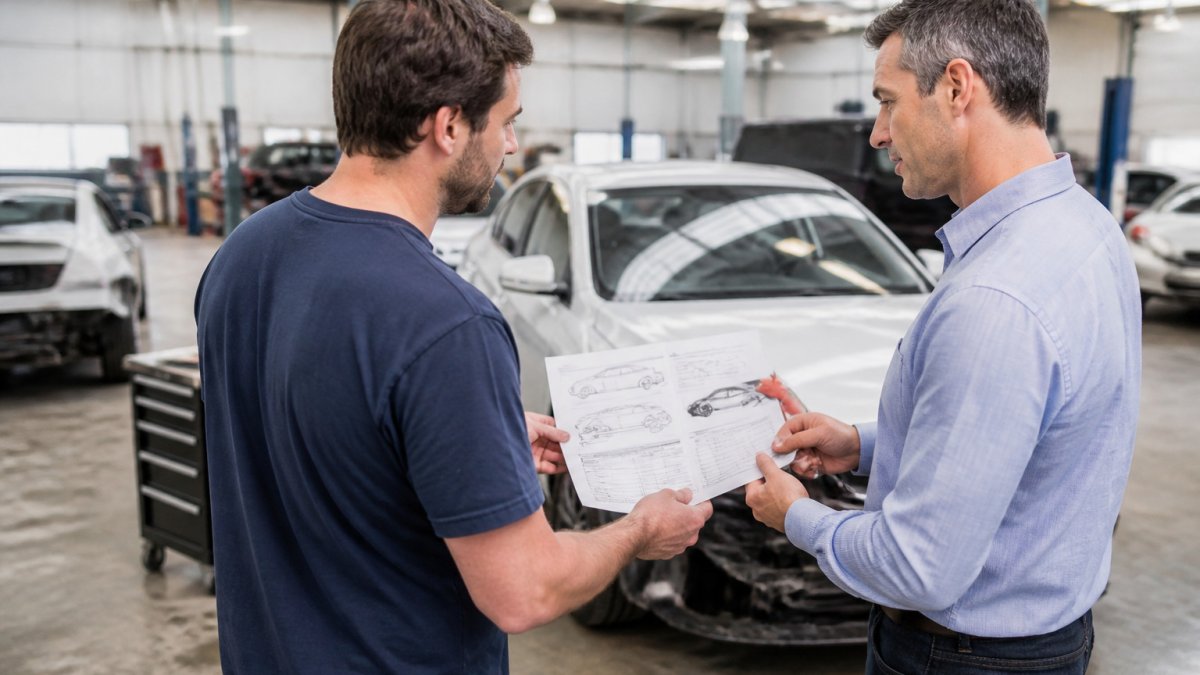
A written estimate is only useful if it is itemized enough to compare. Look for labor hours by operation (body, paint, frame, mechanical), the parts list with each part identified as OEM, aftermarket, or recycled, paint and materials as a separate line, and any sublet work such as alignment, glass, or ADAS calibration. Two totals that differ can hide very different parts choices or a missing calibration line.
Watch out: an estimate that lists a single lump sum for 'body labor' or omits calibration and scan costs is not comparable to an itemized estimate, and the gap often shows up as a supplement after the car is already apart.
OEM Procedures, Parts, and Warranty Implications
Ask any shop whether it follows OEM repair procedures for your make and model, whether it performs pre- and post-repair scans, and whether it has the scan tools and calibration equipment your vehicle's driver-assistance systems require. If your vehicle is under a manufacturer warranty, read the warranty terms before authorizing non-OEM parts, because some warranties address aftermarket parts specifically.
When the Dealership Is the Better Call
A dealership body shop can be the better choice when your vehicle is new enough that brand-specific calibration, software, or warranty terms are central to the repair. An independent shop can be the better choice when you want a second estimate or a shop that is closer to home. Neither is automatically cheaper; the most reliable comparison is two itemized written estimates for the same damage.
How Long Collision Repair Time Really Takes
Collision repair time depends on the damage, parts availability and whether the vehicle needs structural or ADAS calibration work. The most reliable way to plan is to ask the shop for an estimated completion date at drop-off and a supplemental estimate process if hidden damage appears.
Watch out: a shop that gives no timeline or never updates you on progress is hard to plan around. Ask how the shop communicates status changes before you authorize work.
Insurance Choice and Your Rights in California
If you use an independent shop, ask whether it works directly with your insurer or needs you to coordinate the claim.
Pros and Cons of Choosing an Independent Shop in Manteca
Pros
- Local accessibility and easier drop-off and pickup
- Direct communication with the people doing the work
- Competitive estimates when you compare written quotes
- Often more flexible scheduling
Cons
- Make-specific procedures and tooling may be more limited than at a dealership
- Parts sourcing can vary, so confirm what the estimate includes
- Shop quality varies widely, so vetting matters
Best for: Owners of out-of-warranty vehicles who want a local shop with a named contact.
Skip if: Your vehicle is under manufacturer warranty and the warranty requires dealership repair.
A Checklist for Vetting a Body Shop Before You Authorize Repairs
Most ranking pages tell you to 'check reviews' and 'ask about warranties.' That is not enough to choose between two shops. Use this checklist as a repeatable vetting process, and write the answers down so you can compare shops on the same criteria. For a step-by-step walkthrough, see how to choose a body shop.
Credentials and Equipment
- Ask which industry certifications the shop holds and whether they are current. Common ones include I-CAR training for technicians and OEM or brand-specific certification programs; a shop should be able to name them.
- Ask whether the shop has a frame bench or structural repair equipment, a downdraft paint booth, and ADAS calibration equipment (targets, scan tools, or a calibration bay). If your vehicle has driver-assistance features, calibration capability is not optional.
- Confirm the shop performs pre-repair and post-repair diagnostic scans and can show you the scan report.
- Ask whether the shop is a direct repair program (DRP) shop for any insurer, and which ones. A DRP relationship is not good or bad by itself, but it tells you how the shop usually gets paid.
The Written Estimate
- Get an itemized written estimate, not a verbal range. It should break out body labor hours, paint labor hours, parts (each labeled OEM, aftermarket, or recycled), paint and materials, and sublet work such as alignment, glass, or calibration.
- Ask for the shop's posted body and paint labor rates so you can compare rates, not just totals.
- Ask how supplements are handled when hidden damage is found, who authorizes them, and how you will be notified before additional work begins.
- Confirm in writing whether the shop uses OEM procedures for your make and model, and whether it will provide documentation of those procedures with the repair.
Timeline and Communication
- Ask for an estimated completion date in writing and ask what could move it (parts backorders, supplement approvals, calibration scheduling).
- Ask how status updates are shared (text, call, online portal) and how often.
- Ask who your point of contact is and whether you can speak with the estimator or technician directly.
Warranty and Payment
- Get the workmanship and paint warranty in writing, including duration and what voids it.
- Ask whether the warranty covers both parts and labor and whether it is honored if you move or sell the vehicle. Learn more about what warranty coverage includes and how to file.
- Confirm accepted payment methods and whether the shop bills your insurer directly or expects payment from you with reimbursement later.
Reviews and References
- Read recent reviews for patterns, not just star ratings: look for comments about communication, timeline accuracy, and how the shop handled problems.
- Ask for references from customers with a similar vehicle and repair type.
- Check the shop's license and complaint history through the California Bureau of Automotive Repair (BAR) at bar.ca.gov, and confirm the shop is licensed for the work it is quoting.
California Consumer Resources
- The California Department of Insurance (insurance.ca.gov, 1-800-927-4357) can answer questions about repair-shop choice and claim handling.
- The California Bureau of Automotive Repair (bar.ca.gov) handles licensing and consumer complaints about auto repair shops.
- Keep copies of the estimate, authorizations, supplements, and final invoice; these are the documents you will need if a dispute arises.
Watch out: a shop that will not put the parts type, labor rates, or warranty terms in writing before you authorize work is telling you something about how the repair will go if a problem comes up later.
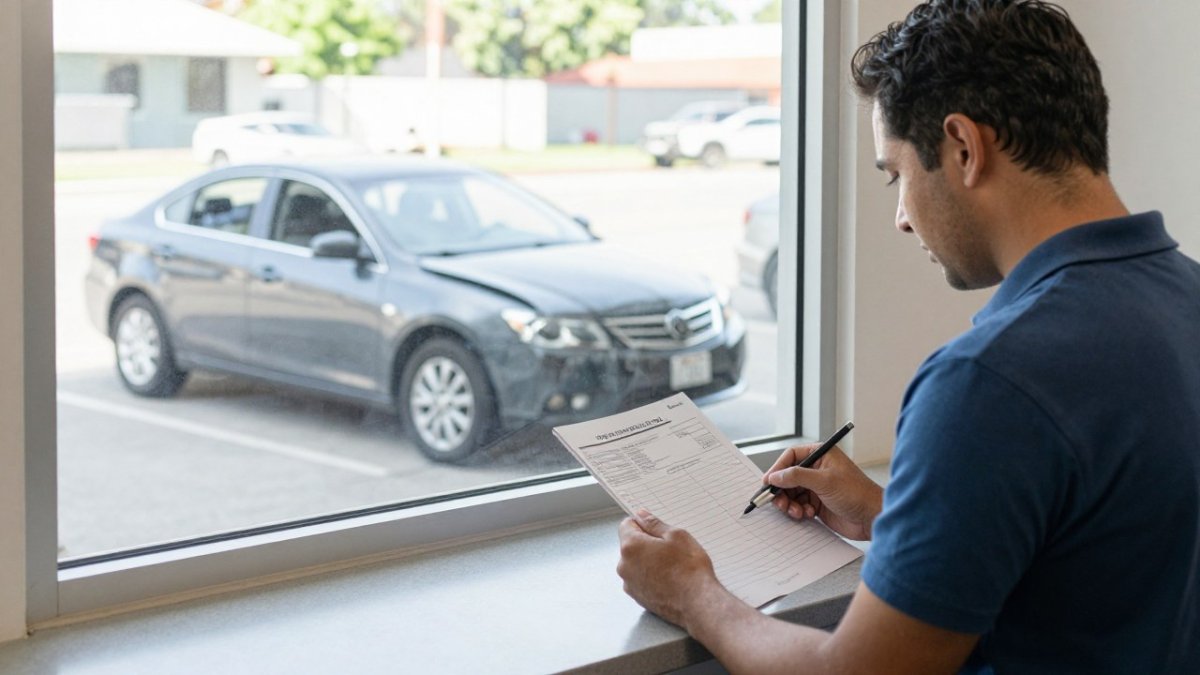
Booking Your Estimate at Rubio's Custom Repair
If you want to compare an independent option, Rubio's Custom Repair inc is a family-owned auto body shop in Manteca with more than 30 years of experience in collision repair and paint. The shop uses original parts for most repairs and PPG paint products, and it stands behind its work with a guarantee. Use the checklist above when you speak with them, and ask for a written estimate before you authorize any work. For current pricing or a quote, contact Rubio's Custom Repair inc directly.
Rubio's Custom Repair inc helps Manteca drivers get collision and paint work done right, with a written estimate and clear communication at every step. Schedule an appointment to compare your options and get back on the road.
Frequently Asked Questions
Should I go to the dealership for collision repair?
Not automatically. Dealership body shops can perform repairs to manufacturer procedures, but not every dealership keeps a body shop on site. An independent collision shop in Manteca can be a practical alternative if it uses OEM repair procedures, provides a written estimate, and can explain how it handles parts and warranty coverage. Ask the shop to confirm these details before you authorize any work.
Are dealership collision centers more expensive?
They often can be, but pricing depends on the damage, parts, labor rates and the insurer's requirements, so no single figure applies. Compare written estimates from two or three shops that itemize labor hours, parts and paint materials. Rubio's Custom Repair inc does not publish price lists, so request a written estimate from the shop directly for current pricing.
Can I choose my own collision repair shop after an accident?
In most cases, yes. You can take your vehicle to the shop you choose, even if your insurer recommends a preferred network shop. Your insurer may still need to approve the estimate and coordinate the claim, so tell the shop you are working with an insurance company. Ask the shop how it handles insurer communication and supplemental estimates before you authorize repairs.
What should I ask a Manteca body shop about parts, paint, and repair warranties?
Ask whether the shop uses original equipment parts or aftermarket parts for each repair, and whether your insurer approves that choice. Ask what paint system and materials are used for refinishing and how color matching is checked. Request the warranty terms in writing, including what is covered for workmanship and how long the coverage lasts. Rubio's Custom Repair inc uses original parts for most repairs and PPG paint products, and can explain its guarantee in detail during an estimate.