 how-to
How Long for Collision Repair? Timelines & Process
Table of Contents
- How Long for Collision Repair? A Realistic Timeline
- The Auto Body Repair Process Steps That Shape Your Timeline
- Factors Affecting Collision Repair Time: Why Estimates Change
- Does the Insurance Claim Approval Process Slow Things Down?
- What to Expect During the Repair: A Week-by-Week Breakdown
- Common Mistakes That Add Days to Your Repair
- Conclusion: Getting an Accurate Estimate for Your Collision Repair
- Frequently Asked Questions
Last Updated: September 7, 2026
How Long for Collision Repair? A Realistic Timeline
Most vehicle owners expect a collision repair to take one to two weeks, but the timeline depends heavily on damage extent, parts availability, and insurance claim speed. A minor bumper scuff might take two to three business days, while structural damage requiring frame alignment can stretch past three weeks. At Rubio's Custom Repair inc, a family-owned shop with over 30 years of experience, the biggest factor is rarely the labor, it's the surrounding process: teardown, supplemental estimates, and parts procurement.
Collision repair restores a damaged vehicle to its pre-accident condition, from cosmetic dents to structural damage affecting safety systems. Understanding this process is the first step toward a realistic expectation, because visible damage is often just a fraction of what needs fixing underneath.
Below, we'll walk through the auto body repair process steps, the factors affecting collision repair time, and what you can do to avoid common delays.
The Auto Body Repair Process Steps That Shape Your Timeline
Every collision repair follows a similar sequence. The first step is the initial estimate, where a technician assesses visible damage, but this estimate is rarely final. Once the vehicle is disassembled in teardown, hidden damage almost always surfaces.
The core steps are:
- Initial estimate and documentation (1-2 hours)
- Vehicle disassembly and teardown (1-2 days)
- Supplemental estimate for hidden damage (1-2 days)
- Parts ordering and procurement (1-5 days, depending on availability)
- Structural repair and frame alignment if needed (2-5 days)
- Body work: filling, sanding, and shaping (1-3 days)
- Paint and refinish, including paint matching (2-4 days)
- Reassembly and quality control (1-2 days)
- Final inspection and safety systems calibration (1 day)
The paint and refinish stage is where shops with premium equipment deliver consistent results. Paint matching is an art; rushing it produces mismatched panels that stand out for years.
Factors Affecting Collision Repair Time: Why Estimates Change
Several factors affecting collision repair time push your vehicle's timeline outward. Vehicle complexity is the first: a modern car packed with sensors requires ADAS calibration after any repair touching the bumper or windshield, which adds a day on its own. The National Highway Traffic Safety Administration guidance on crash repair emphasizes that safety systems must function correctly after a collision, and that includes recalibrating cameras and radar units.
Parts availability is the second major variable. OEM parts often ship faster than expected, but aftermarket or backordered parts mean waiting on the supply chain. The repair facility's workload also matters; a busy shop with dozens of cars ahead of yours will have a longer queue.
Hidden Damage Discovery After Teardown
This frustrates every vehicle owner. The visible dent on your door might hide a bent inner structure, suspension repair needs, or compromised safety systems. Once technicians begin disassembly, they document findings and submit a supplemental estimate to your insurance adjuster, adding two to three days, unavoidably.
Does the Insurance Claim Approval Process Slow Things Down?
The insurance claim approval process is frequently the single largest source of delay in collision repair, caused by a workflow bottleneck known as the approval loop. Your shop cannot order parts or begin structural repair until the adjuster approves the initial estimate, but that approval is rarely a single event. It is a cycle of submission, review, and re-submission that can stall your repair for days.
Here is how the loop actually works and where the downtime accumulates:
-
Initial estimate submission. After the shop writes the first estimate, it is sent to the insurer. For minor damage, this can be approved within hours via an automated system. For moderate to severe damage, the adjuster may need to schedule an in-person inspection, which can take 2-3 business days depending on their workload (insurance.ca.gov).
-
The teardown trigger. If the visible damage suggests hidden issues, the adjuster must authorize a teardown before the shop can disassemble the vehicle. This authorization is a separate step that many owners don't realize exists. Without it, the shop cannot legally begin disassembly, and the clock stops.
-
Supplemental estimate review. Once teardown reveals hidden damage, which happens on nearly every moderate or severe collision, the shop submits a supplemental estimate. This document goes back into the approval queue. If the adjuster disagrees with any line item, they may request photos, documentation, or a re-inspection. Each round of back-and-forth adds 1-2 business days.
-
Parts approval and procurement. After the supplemental estimate is approved, the insurer must approve the parts list. If the shop ordered OEM parts but the insurer's policy favors aftermarket or recycled parts, a negotiation begins. This parts approval is a separate step that can add another 1-3 days.
The most effective way to shorten this loop is to choose a shop with established digital estimating and communication systems with your insurer. Many modern shops use software that submits supplements electronically and tracks approval status in real time. If your shop is still faxing or emailing PDFs, expect slower turnaround.
A shop that answers "yes" to all three is far more likely to keep your repair on schedule.
Another overlooked factor is the difference between a drive-in estimate and a teardown estimate. A drive-in estimate is based on visible damage only and is almost always lower than the final cost. A teardown estimate, requiring disassembly before quoting, is far more accurate. If your insurer pushes for a drive-in estimate, push back, it will only delay the inevitable supplemental approval later.
Finally, your insurer's claims processing speed varies by state and company. Some states require adjusters to inspect vehicles within a certain number of days; others have no such requirement. Your shop's estimator will know the local rules and can tell you whether your insurer is known for fast or slow approvals, use that to set realistic expectations.
What to Expect During the Repair: A Week-by-Week Breakdown
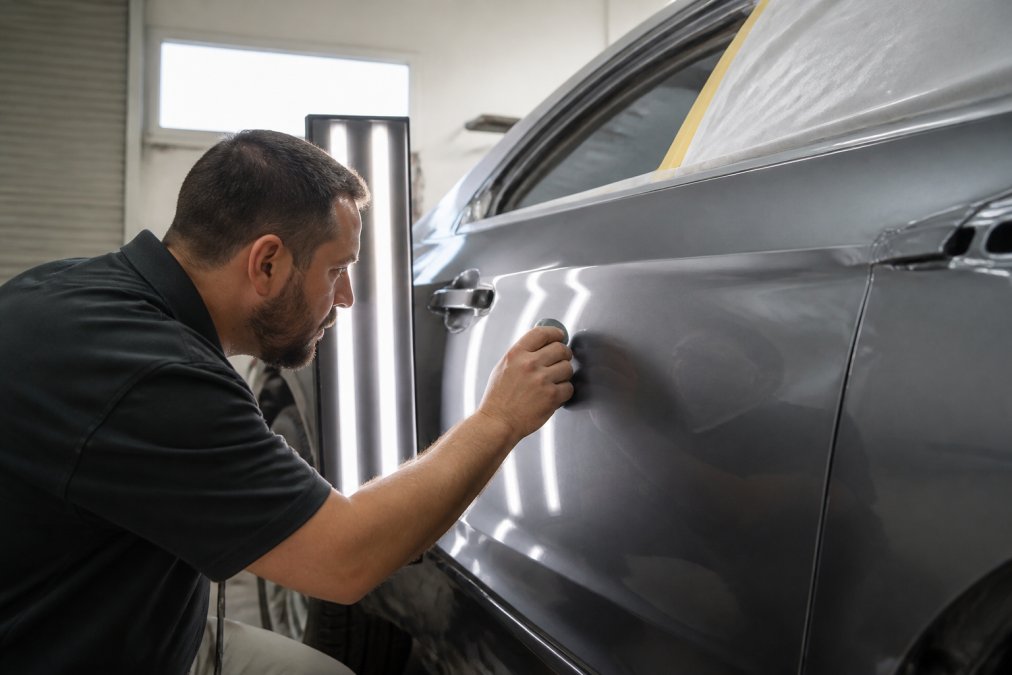
For a moderate collision, here is a realistic week-by-week view of the repair timeline.
Week 1: Assessment and disassembly. The vehicle is dropped off, the initial estimate is written, and teardown begins. Hidden damage is documented and the supplemental estimate is submitted to insurance. Expect limited visible progress during this phase because the work is happening underneath the panels.
Week 2: Parts and structural work. Once parts arrive, technicians begin the actual collision repair. Structural damage requires frame alignment on a frame machine. Suspension repair and safety systems installation happen here. By the end of week two, the vehicle should be in primer.
Week 3: Paint and assembly. The paint and refinish stage begins with careful paint matching. After the paint cures, reassembly starts. Quality control checks, final inspection, and ADAS calibration wrap up the process. Most moderate repairs are complete by the end of week three.
The table below summarizes how severity maps to timeframe:
| Damage Severity | Typical Timeline | Key Steps | Primary Delay Risk |
|---|---|---|---|
| Minor (scratches, small dents) | 2-5 business days | Cosmetic repairs, paint touch-up | Paint curing time |
| Moderate (bent panels, bumper damage) | 1-2 weeks | Teardown, parts replacement, paint | Parts availability |
| Major (structural damage) | 2-4+ weeks | Frame alignment, suspension repair, safety systems | Insurance approvals, parts sourcing |
Common Mistakes That Add Days to Your Repair
Vehicle owners make several avoidable mistakes that stretch their repair timeline. The most damaging ones are not about the repair itself, they are about logistics and communication. Here is what actually costs you days, and how to avoid it.
Mistake 1: Waiting to coordinate a rental car. If you wait until drop-off to arrange transportation, you will lose at least a day of repair time while the shop waits for your rental coverage decision. Your policy may include rental reimbursement, but it often has a daily cap and maximum days. Before drop-off, confirm your coverage limits and book the rental for the same day. Some shops partner with rental agencies for courtesy cars or discounted rates, ask during your estimate.
Mistake 2: Ignoring the teardown phase. The single biggest reason timelines extend is hidden damage discovered after teardown. Owners who expect a fixed price and date before teardown are set up for frustration. Teardown is the only way to see behind panels and identify structural damage, bent mounting points, or compromised safety systems. Ask for a teardown estimate: the shop disassembles damaged areas, documents everything, then gives a realistic timeline. This adds 1-2 days upfront but saves you from a surprise 2-week extension later.
Mistake 3: Choosing a shop that doesn't communicate with your insurer. Some shops expect you to act as the messenger with the insurance adjuster, creating a slow, error-prone loop. A shop that handles insurance coordination directly, submitting estimates, scheduling inspections, negotiating supplements, will move your claim faster. Ask who handles insurance communication; if the answer is "you do," consider another shop.
Mistake 4: Not documenting the damage yourself. Your own photos and notes help the shop and adjuster catch everything on the first estimate. Take photos from multiple angles, including close-ups of scratches, dents, and misaligned panels. Note warning lights, unusual noises, or fluid leaks. This reduces the chance of a slow supplemental approval later.
Mistake 5: Overlooking parts sourcing logistics. The difference between OEM, aftermarket, and recycled parts can add days. OEM parts are typically the most expensive but ship fastest if in stock (the FTC). Aftermarket parts are often cheaper but may need ordering from a distributor, adding 2-3 days. Recycled parts depend on local availability and may require inspection or reconditioning. Ask which parts the shop plans to use and whether they are in stock. If backordered, ask if an alternative is available and whether your insurer will approve it.
Mistake 6: Skipping the quality control check. At pickup, do not just look at the paint. Check panel gaps, door alignment, and trunk closure. Test all lights, sensors, and cameras. If your vehicle required ADAS calibration, ask for the calibration report. Catching a problem at pickup is far faster than discovering it a week later.
Conclusion: Getting an Accurate Estimate for Your Collision Repair
The honest answer to "how long for collision repair" is that it depends on damage severity, parts logistics, and insurance processing, but most moderate repairs fall between one and three weeks. The best way to get an accurate timeline is to choose a facility that performs a proper teardown before quoting a final date, rather than one that guesses from photos alone.
When you work with a shop that has spent over 30 years refining its process, you benefit from established relationships with parts suppliers and insurance companies. Our team uses original parts for most repairs and premium PPG products for paint that matches and lasts, and every repair is backed by a guarantee. We also help coordinate your claim so you are not caught in the middle.
Frequently Asked Questions
How long do most collision repairs take?
Most collision repairs take anywhere from one to three weeks. Minor cosmetic repairs like a bumper replacement or dent removal can be done in a few days. Moderate damage involving door panels or fenders usually takes seven to ten business days. Major structural damage often requires three weeks or more. The specific timeline depends on parts availability, the shop's workload, and how quickly the insurance claim approval process moves. Your repair facility can give you a more precise estimate after the initial inspection.
What is the difference between minor and major collision repair timelines?
Minor collision repairs cover cosmetic issues like dents, scratches, and bumper scuffs. These typically take one to three days because they don't require structural work or extensive parts replacement. Major collision repair involves structural damage, frame alignment, suspension repair, or replacing large panels. These jobs take two weeks or longer because they require vehicle disassembly, teardown to find hidden damage, parts procurement, and careful paint and refinish work. Major repairs also need more time for quality control and final inspection.
Will the car be the same after collision repair?
A properly done collision repair can return your vehicle to its pre-accident condition, but the result depends on the shop's skill and the repair process steps they follow. A reputable body shop will use quality parts and paint products for accurate paint matching. Ask your repair facility about their service guarantee before authorizing work.
Getting an accurate estimate for your collision repair starts with a shop you can trust. Schedule an appointment at Rubio's Custom Repair inc, and let our experienced team assess the damage, coordinate with your insurer, and get you back on the road with a repair that is guaranteed.