 how-to
Does Car Insurance Cover Paint Scratches? What to Know
Table of Contents
- Does Car Insurance Cover Paint Scratches? The Short Answer
- Comprehensive vs. Collision Coverage for Paint Damage
- Deductibles and Out-of-Pocket Costs: When Filing Makes Sense
- The Average Cost of Car Paint Repair and What Drives It
- The Impact of Minor Claims on Insurance Premiums
- How Long Does Collision Repair Take for Paint and Bodywork?
- DIY Repair vs. Professional Body Shop: What You Need to Know
- Documentation Requirements and Leased vs. Owned Vehicles
- Conclusion: Making the Right Call on Your Paint Scratches
- Frequently Asked Questions
Last Updated: October 2, 2026
Does Car Insurance Cover Paint Scratches? The Short Answer
Does car insurance cover paint scratches? Sometimes, but it depends on what caused them. A parking lot scrape from another driver is usually covered.
The answer almost always comes down to one thing: how the damage happened, not how bad it looks.
Here's the good news. Once you know which coverage applies and how your deductible works, the decision gets a lot clearer.
When Coverage Applies and When It Doesn't
Coverage applies when another party or a covered event caused the scratch. That includes collisions, vandalism, and hit-and-run incidents. It does not apply to damage your car simply accumulated over time.
- Covered: Another driver sideswipes you, someone keys your door, or you hit a pole
- Usually not covered: Door dings, shopping cart scrapes, and road debris
- Never covered: Fading, rust, or wear and tear from age
The key distinction is accidental damage versus wear and tear. Insurance exists for the first. It does not pay to refresh a car that's simply getting old.
Comprehensive vs. Collision Coverage for Paint Damage
Comprehensive coverage pays for paint damage from non-collision events. Collision coverage pays when your car hits something or gets hit. Knowing which one applies to your situation decides whether you file at all.
Comprehensive typically handles:
- Vandalism, like keyed paint or spray paint
- Hail and storm damage
- Theft and fire damage
- Hitting an animal
Collision handles:
- Hitting another vehicle
- Hitting a fence, pole, or guardrail
- Single-car accidents
Which Coverage Handles Which Scenario
A hit-and-run in a parking lot usually falls under collision if you can't identify the other driver. Vandalism falls under comprehensive. This matters because your deductible can differ between the two.
Check your policy declarations page before you call anyone. It lists both deductibles separately, and that number drives your whole decision.
Deductibles and Out-of-Pocket Costs: When Filing Makes Sense
File a claim only when the repair cost clearly exceeds your deductible, and the projected premium increase over the next three years still leaves you ahead. The deductible comparison is the first gate, not the whole decision. Most guides stop there.
Start with two numbers from your policy declarations page: your comprehensive deductible and your collision deductible. They are often different.
A Simple Three-Year Cost-Benefit Framework
Run this before you call your insurer:
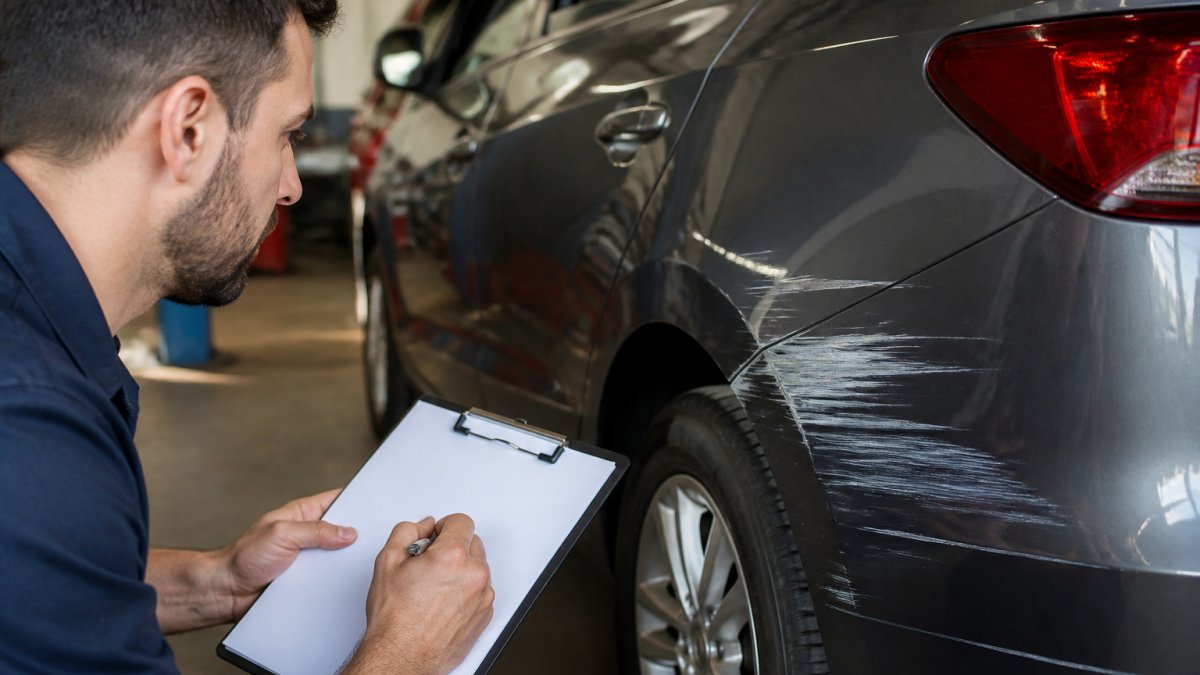
- Get a written repair estimate. Ask the shop to itemize parts, labor, paint materials, and blending. A verbal number is not enough to make this call.
- Subtract your applicable deductible. If the estimate is $900 and your deductible is $500, your insurer pays $400, and you've now filed a claim.
- Estimate the premium impact. Ask your agent directly: "If I file this claim, what happens to my rate at renewal, and how long does it follow me?" Most insurers surcharge for three years, though the amount varies widely by carrier and state.
- Multiply the annual increase by three. If your premium rises $120 per year, that's $360 over the surcharge period. Add that to your deductible.
- Compare total out-of-pocket. Claim path: $500 deductible + $360 in higher premiums = $860. Cash path: $900 repair, no premium change. In this example, filing saves you $40, barely worth the record.
A common pattern is that small claims under roughly $1,500 rarely pay off once the three-year premium impact is included. The exact break-even depends on your carrier, your state's rating rules, and whether you have accident forgiveness.
What Actually Drives the Premium Increase
Not all claims hit your rate the same way:
- At-fault claims raise rates more than not-at-fault claims, and in some states a not-at-fault claim cannot be surcharged at all.
- Comprehensive claims, vandalism, hail, theft, are often treated more leniently than collision claims, because they aren't tied to your driving.
- Your no-claims discount is the hidden cost. Losing a 20% discount on a $1,800 annual premium costs $360 per year, which can dwarf a small repair bill.
- Accident forgiveness only applies if you bought it, and it typically forgives one at-fault accident, not a pattern.
When Paying Cash Wins
Pay out of pocket when:
- The repair is close to or below your deductible.
- The repair is small enough that the three-year premium impact exceeds the insurer's payout.
- You're mid-policy and a claim would wipe out a long no-claims streak you'd rather protect.
- The damage is cosmetic and the car is older, so resale value won't recover the cost either way.
File when:
- The repair is well past your deductible, think two to three times the deductible or more.
- The damage came from a clearly covered event with a documented third party.
- The car is leased or financed and the damage will trigger charges at lease end or reduce trade-in value.
The Average Cost of Car Paint Repair and What Drives It
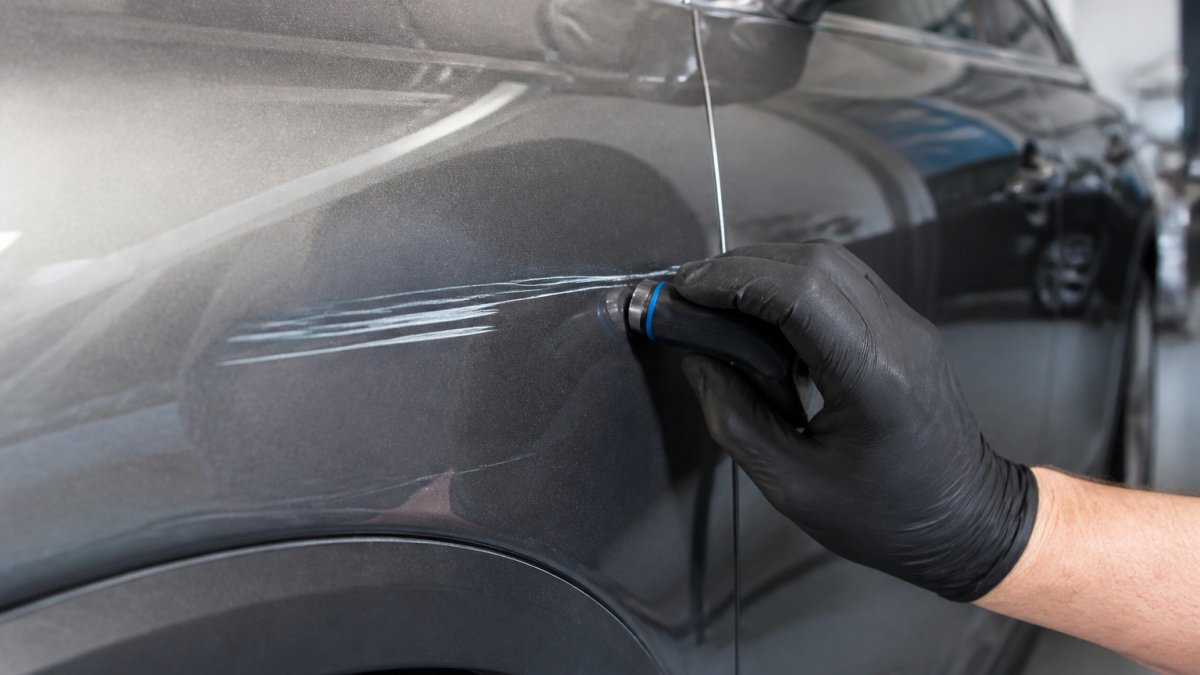
The average cost of car paint repair varies widely based on damage depth and the number of panels involved. A light surface scratch costs far less to fix than damage that cuts through the clear coat into the base coat.
What drives the price:
- Depth: A clear-coat scratch buffs out. A base-coat scratch needs refinishing.
- Panel count: Damage spanning two panels costs more than one.
- Paint match: Tri-coat and pearl finishes take more labor to match.
- Blending: A good shop blends into adjacent panels so the repair disappears.
Paint depth matters more than most people realize. A technician uses a gauge to measure how much material sits above the metal. That reading tells them whether the scratch needs a simple polish or a full respray.
The Impact of Minor Claims on Insurance Premiums
The impact of minor claims on insurance premiums can last for years. Even a small claim signals risk to your insurer, and that signal follows you at renewal.
Most insurers weigh two things: your claim history and your no-claims bonus. A single at-fault claim can raise your rate, and it can wipe out a discount you earned over several claim-free years.
How insurers typically respond:
- A first minor claim may only trim your discount
- Multiple claims in a short window raise rates sharply
- At-fault claims hurt more than not-at-fault claims
- Some policies offer accident forgiveness, but you usually pay for it upfront
How Insurers Weigh Claim History and No-Claims Bonuses
Your no-claims bonus is a discount, not a guarantee. File a claim and you may lose it, even if the payout was small. Run the math on the premium increase over three years before you decide. Often, the total cost of a small claim beats the repair bill itself.
How Long Does Collision Repair Take for Paint and Bodywork?
How long does collision repair take? For paint and bodywork, most jobs take a few days to a couple of weeks. The exact timeline depends on parts availability, the extent of damage, and paint curing time.
- Minor scratch and buff: Same day to one day
- Single-panel refinish: Two to four days
- Multi-panel repair with blending: One to two weeks
- Structural damage plus paint: Several weeks
The biggest delay is usually parts. If your repair needs original parts that are backordered, the clock stops until they arrive. A shop that works directly with your insurer can often speed up approvals and keep the job moving.
DIY Repair vs. Professional Body Shop: What You Need to Know
DIY paint repair works for shallow clear-coat scratches. Professional repair is the safer call for anything deeper. A touch-up pen can hide a light scratch, but it won't fix one that's cut into the base coat.
DIY makes sense when:
- The scratch is shallow and you can feel it with a fingernail only barely
- The car is older and cosmetic perfection isn't the goal
- You're comfortable with polish and a buffer
A professional body shop makes sense when:
- The scratch is deep or spans multiple panels
- You need a color match that holds up in sunlight
- The car is leased, financed, or headed for resale
- You want a guarantee behind the work
Documentation Requirements and Leased vs. Owned Vehicles
Two angles most guides skip: the paperwork that decides whether your claim is paid, and who actually owns the car when the repair decision gets made.
Documentation Checklist for a Paint Scratch Claim
Adjusters deny or delay claims for missing evidence far more often than for coverage disputes. Before you call your insurer, assemble:
- Photos from multiple angles. Shoot the full panel, a close-up of the scratch, and a wider shot showing the car's position, especially in a parking lot, where context proves the event.
- A dated photo of the odometer and license plate. This ties the damage to the vehicle and the timeframe.
- The other driver's information if anyone else was involved: name, phone, insurer, policy number, plate, and vehicle description.
- A police report number. For hit-and-run, vandalism, or any incident over your state's reportable threshold, a report is the strongest single document you can hold. Some insurers require it for vandalism and theft claims.
- Witness names and contact info if anyone saw the event.
- Your own written timeline of what happened, in plain language, before memories blur.
- The repair estimate from a licensed shop, itemized.
Missing any of these can stall a claim for weeks. A police report in particular is often the difference between a paid vandalism claim and a denied one.
Leased Vehicles: The Lease-End Standard Changes Everything
On a leased car, you don't decide whether the scratch is worth fixing, the leasing company does, at turn-in. Most lease contracts include a wear-and-tear guide that sets a dollar threshold for excess damage. Scratches longer than a set length, or any scratch that catches a fingernail, typically exceed normal wear and trigger a charge.
The math flips for lessees:
- Repair before turn-in at a shop of your choosing, with documentation, usually costs less than the leasing company's assessed charge.
- Skip the repair and you may pay a disposition fee plus a damage charge set by the lessor's inspector, often higher than an independent shop's quote.
- Keep every receipt. A documented professional repair with a warranty protects you if the inspector disputes the work.
Owned and Financed Vehicles
On an owned car, the decision is purely financial: repair cost versus resale or trade-in impact versus premium impact. A financed car sits in between, your lender typically requires you to carry comprehensive and collision coverage, so the coverage question is settled, but you still choose whether to file.
Conclusion: Making the Right Call on Your Paint Scratches
The right call comes down to three numbers: your deductible, the repair estimate, and the long-term premium impact. Get an estimate first, compare it to your deductible, and think past this month.
When you need paint and bodywork done right, Rubio's Custom Repair inc is here to help.
Schedule an appointment with Rubio's Custom Repair inc and get back on the road in no time.
Frequently Asked Questions
Is it worth claiming insurance for a scratch?
It depends on the repair cost versus your deductible. If the repair estimate is close to or below your deductible, filing a claim makes little financial sense. For example, a $400 scratch repair with a $500 deductible means you pay everything out of pocket anyway, and you still have a claim on your record. Filing only makes sense when the damage significantly exceeds your deductible and you have the right coverage type for the cause of damage.
Will my insurance go up if I claim a scratch?
A minor claim can affect your premium, though the impact varies by insurer and your claim history. Many companies offer accident forgiveness for a first claim, and some states prohibit surcharges on certain comprehensive claims like vandalism. The impact of minor claims on insurance premiums typically fades after three to five years. Before filing, ask your adjuster directly how the claim will affect your rate.
Are minor scratches covered by insurance?
Coverage depends on the cause and your policy type. Scratches from a collision fall under collision coverage. Scratches from vandalism, falling objects, or animal contact fall under comprehensive coverage. Normal wear and tear, door dings in parking lots with no identified at-fault party, and cosmetic damage from age are generally excluded. Review your policy exclusions before assuming you are covered.
Does a deductible apply to cosmetic paint repairs?
Yes, a deductible applies to any covered claim, including cosmetic paint repairs. You pay the deductible amount before your insurer covers the rest. If the repair estimate is $1,200 and your deductible is $500, you pay $500 and your insurer pays $700. If the estimate is below your deductible, you cover the full amount and there is no benefit to filing a claim.