 blog
blog
Affordable Auto Body Paint Jobs: What to Expect in 2026
Table of Contents
- What Makes Auto Body Paint Jobs Affordable in 2026
- What Is the Average Cost of a Car Paint Job?
- Is a Mobile Car Paint Repair Service Worth the Cost?
- DIY vs. Professional Paint Jobs: A Cost-Benefit Breakdown
- Collision Repair, Dent Removal, and Scratch Repair: What Affordable Service Covers
- How to Maintain a New Car Paint Job
- Conclusion
- Frequently Asked Questions
Last Updated: September 14, 2026
What Makes Auto Body Paint Jobs Affordable in 2026
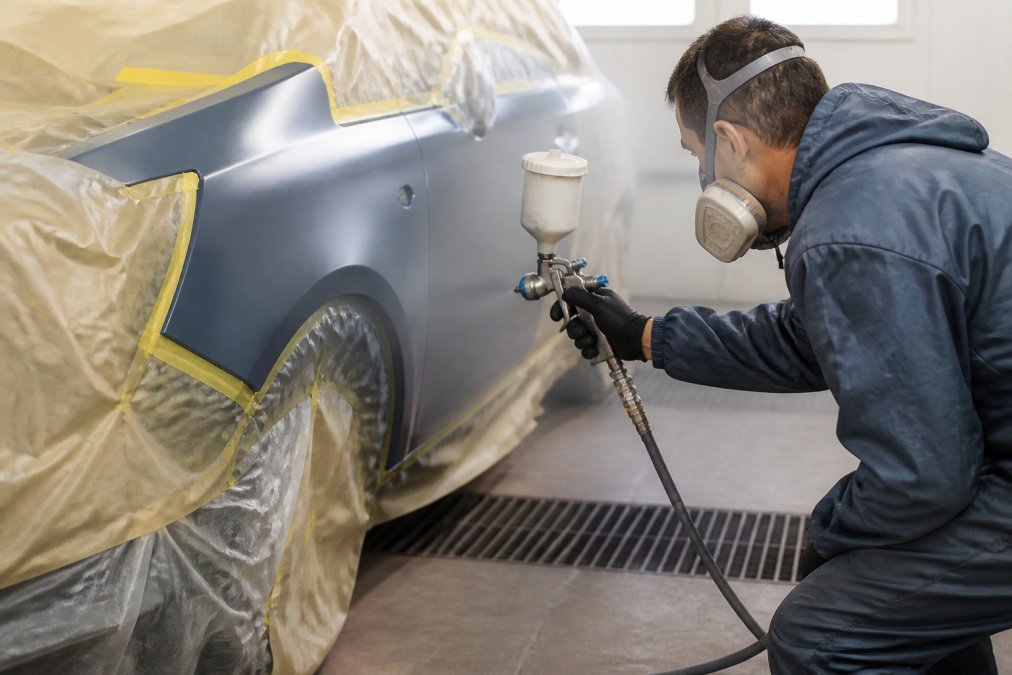
Affordable auto body paint jobs are not the cheapest quote you can find; they are the best balance of durable materials, correct surface preparation, and honest labor pricing. At Rubio's Custom Repair inc, we understand the importance of proper preparation to ensure a lasting repair. The gap between a cheap respray and a proper refinish almost always comes down to what happens before the paint ever touches metal.
Understanding affordable auto body paint starts with knowing where your money actually goes. Most of the cost sits in labor and materials, not in the color itself.
Paint Quality Tiers Explained
Automotive paint systems generally fall into three tiers, and each one changes both the price and the lifespan of the finish.
- Economy single-stage: Color and gloss in one product. Fast to apply, lowest cost, fades sooner under sun exposure.
- Basecoat-clearcoat: A color layer sealed under a separate clearcoat. This is the standard for modern vehicles and offers better UV protection and depth.
- Premium multi-stage: Basecoat, clearcoat, and sometimes a mid-coat pearl or custom tint. Best durability and color accuracy, highest labor time.
The tier you choose affects paint durability more than the brand name on the can. A premium product applied over poor surface preparation will still fail.
Factors Influencing Paint Price
Several variables move the number on your estimate, and none of them are arbitrary.
- Vehicle size and panel count: A compact car needs less material than a full-size truck.
- Damage severity: Dents, rust remediation, and prior bodywork add prep hours.
- Color complexity: Tri-coat and pearl finishes require more steps and more color matching time.
- Paint type: Economy, basecoat-clearcoat, and premium systems carry different material costs.
Labor costs dominate every estimate. Prep, sanding, masking, and paint booth time add up faster than the paint itself.
What Is the Average Cost of a Car Paint Job?
There is no single average cost of a car paint job, because the range depends on vehicle size, paint tier, and how much bodywork is needed. A small panel respray and a full vehicle restoration sit at opposite ends of the same spectrum. Any shop quoting one flat number without inspecting your vehicle is guessing.
What you can control is how the estimate is built. A transparent quote breaks out materials, labor hours, and any bodywork separately, so you can see exactly what you're paying for and where you could scale back.
Full Car Paint Jobs vs. Panel-by-Panel Work
Full car paint jobs cover the entire exterior in one consistent color, which is the right call when the finish is faded, mismatched, or damaged across multiple panels. Panel-by-panel work repaints only the damaged sections and costs less, but it demands excellent color matching to blend into the surrounding paint.
| Approach | Best For | Trade-off |
|---|---|---|
| Full repaint | Faded or mismatched overall finish | Higher cost, longer shop time |
| Panel-by-panel | Isolated dents or scratches | Blend risk on older paint |
If your paint is failing everywhere, patching one panel at a time usually costs more over two years than doing it once.
Is a Mobile Car Paint Repair Service Worth the Cost?
A mobile car paint repair service is worth the cost when the damage is small, cosmetic, and confined to the top layer of paint, a keyed door, a parking-lot scuff, a stone chip on a bumper cover. For anything involving bare metal, rust, filler, or panel deformation, a fixed body shop with a downdraft paint booth delivers a more durable result, and the price gap is usually smaller than people assume once you account for rework.
The real question is not "mobile or shop" but "what does the environment do to the clearcoat." Automotive clearcoat cures through a chemical cross-linking reaction that is sensitive to three variables: temperature, humidity, and airborne contamination (pubmed.ncbi.nlm.nih.gov). A controlled booth holds those variables inside a narrow window. A parking garage, driveway, or open lot does not. When clearcoat cures outside that window, the common outcomes are solvent pop (tiny blisters where trapped solvent escapes late), dust nibs (contaminants bonded into the finish), and uneven gloss (orange-peel texture from inconsistent flash time).
When Mobile Repair Actually Makes Sense
- Single-panel cosmetic scratches that do not reach primer or metal.
- Bumper scuffs on plastic covers, where a spot blend is acceptable and the panel is not structural.
- Fleet or lease turn-in touch-ups, where the goal is passing an inspection rather than a decade of durability.
- Wheel and lower rocker chips, where the repair area is small and low-visibility.
When to Insist on a Booth
- Any repair over bare metal. Primer needs a clean, controlled surface or adhesion fails.
- Rust remediation. Corrosion must be cut out, treated, and sealed, none of which happens in a driveway.
- Tri-coat, pearl, or metallic colors. These require controlled flash times and a color-match test panel; outdoor temperature swings make blending unpredictable.
- Anything on a horizontal surface (hood, roof, trunk lid), where UV exposure and contamination are worst.
The Cost Math Most People Skip
A mobile repair often quotes lower because it skips booth time, masking, and disassembly. But if the finish fails within a year, peeling clearcoat, visible blend line, dust nibs under the gloss, the redo costs more than the original shop quote would have. A useful rule of thumb: if the repair area is larger than a dollar bill, or if you can feel the damage with a fingernail, get a booth quote before you book mobile.
DIY vs. Professional Paint Jobs: A Cost-Benefit Breakdown
DIY paint work looks cheaper on paper and rarely stays that way. The spray equipment, respirator, primer, basecoat, clearcoat, and sanding supplies add up quickly, and the learning curve shows in the finish.
Professionals bring three things a home setup can't easily match: a spray booth, a trained eye for color matching, and a warranty. A common mistake is underestimating prep time. Most first-time DIY painters spend more hours sanding than spraying, and uneven prep is what causes peeling later.
- DIY best for: tiny touch-up services on hidden areas, non-critical cosmetic fixes.
- Professional best for: anything visible, anything involving metal, anything you want guaranteed.
If the panel faces the sun or a buyer's eye, pay a shop.
Collision Repair, Dent Removal, and Scratch Repair: What Affordable Service Covers
Affordable service should cover the full repair chain, not just the visible damage. Collision repair straightens structural and cosmetic panels, dent removal restores panel shape, and scratch repair addresses the paint layer itself. A shop that only sprays over damage is selling you a problem with a deadline.
What most quotes never explain is that these are three different trades with three different cost drivers, and knowing which one your damage actually needs is the single best way to avoid overpaying.
Collision Repair: Structural vs. Cosmetic
Collision repair splits into two categories. Structural repair involves the unibody or frame, the parts that determine whether the vehicle tracks straight and protects occupants in a second impact. Cosmetic collision repair covers bolt-on panels (fenders, doors, bumper covers, hoods) that can be replaced or refinished without touching the frame.
Structural work requires a frame machine and measuring system, and it is almost always an insurance claim. Cosmetic work is where most out-of-pocket savings live, because a skilled shop can often repair a panel rather than replace it. The trade-off: repair preserves the factory panel and its corrosion protection, while replacement is faster and sometimes cheaper on heavily creased metal.
Dent Removal: Paintless vs. Conventional
Paintless dent repair (PDR) pushes the metal back from behind the panel using specialized rods, leaving the factory paint intact. It is the cheapest option when it applies, because there is no sanding, priming, or spraying.
PDR works when:
- The paint is not cracked or chipped.
- The dent is on a panel the technician can reach behind (doors, fenders, hoods, roofs).
- The metal is not stretched past the point of memory, sharp creases and dents near panel edges usually fail this test.
Conventional dent repair is required when the paint is broken, when the metal is stretched, or when the dent sits over a brace or double-wall section. That means filler, sanding, primer, and a blend into the surrounding paint, which is why a dent that looks small can cost several times a PDR quote.
Scratch Repair: Depth Determines the Fix
Scratches fall into three depth tiers, and the fix changes at each one:
- Clearcoat scratches: visible only in certain light, no color loss. Often polishable without repainting.
- Basecoat scratches: color is missing, primer may show. Requires a spot blend and clearcoat.
- Primer or metal scratches: bare metal is exposed. Requires prep, primer, basecoat, and clearcoat, and if rust has started, remediation before any of it.
A shop that quotes a single "scratch repair" price without checking depth is guessing. Ask them to run a fingernail test across the scratch and tell you which tier it is.
Rust Remediation: The Hidden Cost Driver
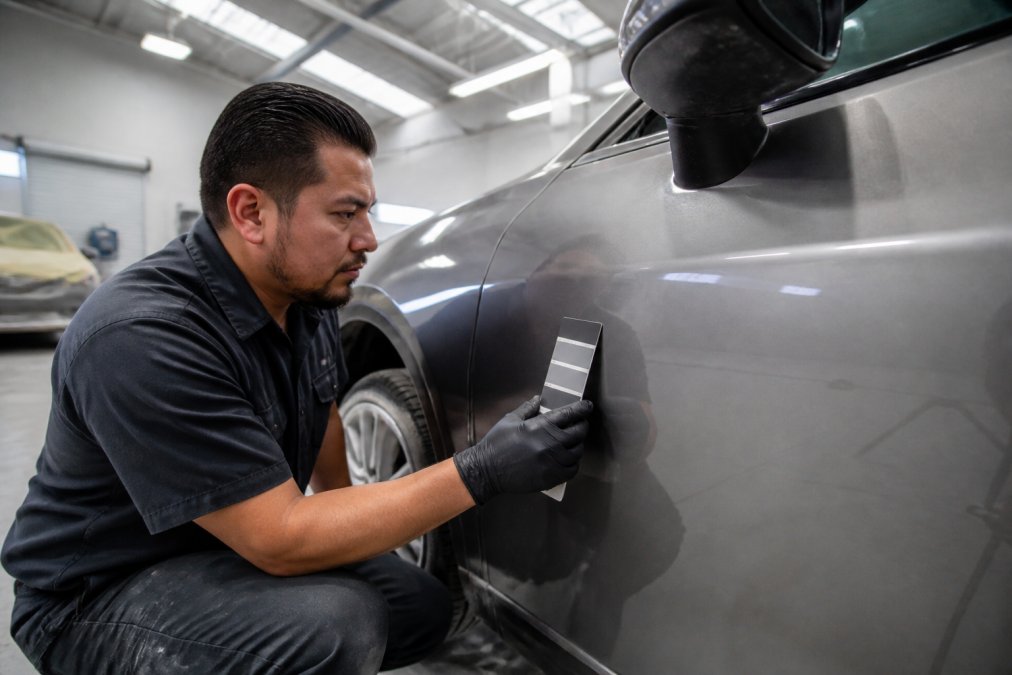
Rust is not a paint problem; it is a metal problem. Surface rust (orange, powdery) can often be sanded, treated with a converter, and sealed. Scale rust (flaking, pitted) means the metal has lost thickness and must be cut out and replaced with welded patch panels. If a shop quotes you a paint-only fix on scale rust, the corrosion will bubble back through within a season or two. Proper surface preparation, primer application, and sealing are what keep a repair from returning.
How Insurance Coordination Changes the Math
If the damage came from a collision, your insurer typically pays for repair to pre-loss condition using original equipment manufacturer (OEM) or approved aftermarket parts, minus your deductible (So You've Had an Accident, What's Next?). Two things matter here:
- OEM vs. aftermarket parts: OEM parts fit and finish better but cost more; aftermarket parts are cheaper but can require extra prep, which eats the savings.
- Deductible handling: some shops will cover part of your deductible as a promotional offer, which is worth asking about directly.
For cosmetic damage you are paying out of pocket, ask the shop to quote both a repair and a replace option for any damaged panel. The cheaper path is not always the one you would guess.
Free Estimates and Quotes: What to Ask Before You Commit
A free estimate is only useful if you know what to ask. Use this checklist before you hand over your keys:
- Is the quote itemized by labor hours and materials?
- How many hours of surface preparation are included?
- Will you use original parts or aftermarket?
- What paint system and brand are you spraying?
- Is there a written warranty on the paint and the repair?
- Do you handle insurance coordination directly?
A shop that answers all six without hesitation is one worth trusting. One that dodges the warranty question is not.
How to Maintain a New Car Paint Job
How to maintain a new car paint job comes down to protecting the clearcoat, because the clearcoat is what shields your color from UV damage. The first 30 days matter most while the paint fully cures (pubmed.ncbi.nlm.nih.gov).
- Wait before washing: avoid harsh detergents and automatic brushes for the first month.
- Hand wash with pH-neutral soap: grit and stiff brushes scratch fresh clearcoat.
- Wax or seal after curing: a quality sealant adds a sacrificial layer against UV and contaminants.
- Park smart: shade and covered parking slow fade and oxidation.
- Fix chips early: a small touch-up today prevents rust remediation tomorrow.
Buffing and polishing should be light and infrequent on new paint. Aggressive polishing removes clearcoat you can't get back.
Conclusion
Getting a finish that lasts without overpaying comes down to understanding prep, paint tiers, and what a real estimate should include. Too many car owners learn this after a cheap job fails.
At Rubio's Custom Repair inc, we back every repair with original parts for most jobs, premium PPG products, and a written guarantee, plus a limited-time 50% off deductible offer. Our family-owned shop has restored vehicles for this community for over 30 years, and we'll walk you through a free estimate before you commit to anything. Schedule an appointment with Rubio's Custom Repair inc and get back on the road with a finish that holds up.
Frequently Asked Questions
What's the typical price for a paint job on a car?
There is no single price because cost depends on the size of the vehicle, how much bodywork is needed, the type of paint used, and whether you need a full respray or just a few panels. A small scratch repair costs far less than a full car paint job. The best way to get an accurate number for your vehicle is to request a free estimate from a local shop that can inspect the damage in person.
What are the differences between a budget paint job and a premium restoration?
A budget paint job typically covers surface prep, a basecoat, and a clearcoat with minimal disassembly. A premium restoration includes full disassembly, rust remediation, primer application, block sanding, and multiple clearcoat layers for deeper gloss and longer paint durability. The gap in labor hours and materials is what separates the two. If you plan to keep the vehicle for years, the premium tier often costs less over time because the finish holds up longer.
Are mobile paint repair services a cost-effective alternative to traditional shops?
Mobile services can be cost-effective for small scratch repair and dent removal because they skip the overhead of a fixed shop and come to you. For larger collision repair, full panel resprays, or work that needs a paint booth for a dust-free finish, a traditional body shop usually delivers better results. Mobile providers also may not offer a paint warranty, so ask about coverage before booking.
Should I choose a chain shop or a local independent body shop for painting?
Chain shops often advertise low starting prices, but those quotes usually cover minimal prep and single-stage paint that may fade faster. Independent shops tend to spend more time on surface preparation, color matching, and clearcoat application, which affects how long the finish lasts. Ask both types of shops what is included: sanding, primer, basecoat brand, clearcoat layers, and warranty terms. The answers tell you more than the headline price.